Connect with us

Economy

Board to Disqualify NCDF Payment Defaulters from Oil Contracts

Published

on

By Modupe Gbadeyanka

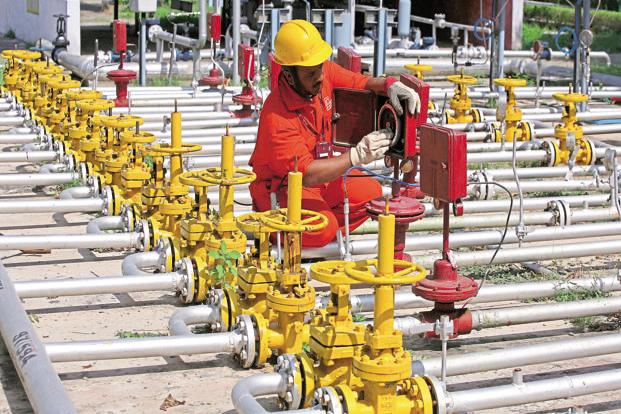
Oil and Gas Companies that default in the deduction and remittance of one percent of the value of contracts they executed in the upstream sector of the oil and gas industry will henceforth be disqualified from participating in tenders for new contracts.

This warning was given by the Nigerian Content Development and Monitoring Board (NCDMB) and also indicated plans to conduct a forensic audit of the industry to track and recover due payments on the Nigerian Content Development Fund (NCDF) held by some companies.

The NCDF was established by Section 104 of the Nigerian Oil & Gas Industry Content Development (NOGICD) Act of 2010 and provides that one percent of every contract in the upstream sector of the Nigeria Oil and Gas industry shall be deducted at source and paid into the Fund.

The Board manages the Fund and employs it for projects, programmes and activities directed at increasing Nigerian Content in the Oil & Gas industry.

Speaking in Lagos at the Stakeholders Forum on the NCDF Remittances, the Executive Secretary of the Board, Engr. Simbi Wabote stated that some companies were defaulting in their deduction and remittance on contracts they executed.

He noted that the Forum provided a window for all covered entities to understand the channels for paying the one percent NCDF to the Board before the audit, adding that there were no exemptions for players in the upstream sector.

He charged companies to make the remittance to the NCDF TSA Account with the Central Bank of Nigeria (CBN) stressing that NCDMB does not operate an account in any commercial bank.

Giving a background to the Fund, Mr Wabote explained that the NCDMB focused the early years in collections, putting in place the Operating Model for utilization of the Fund, establishing the NCDF Advisory Committee for efficient governance of the Fund and creating confidence and trust of industry stakeholders.

According to him, “The Board opened up the Fund for utilization from 2013, based on the approved operating model that segmented 70% of the Fund to financing Commercial interventions and 30% for Developmental initiatives and activities carried out by the Board on behalf of the industry.

“Under Commercial interventions, the Fund was leveraged to provide 30% Partial Guarantee to commercial banks for loans granted to oil and gas service companies towards financing project execution, asset acquisition or facility upgrade. It also provided 50 percent interest rebate on performing loans. Beneficiaries of the Fund include Ladol, Starz and Vandrezzer.”

Speaking further, the Executive Secretary stated that Developmental Interventions covered Capacity Development Initiatives (CDIs) including training programmes, NCCF administration, establishment of NOGICJQS, establishment of oil and gas parks, direct equity participation by the Board in high impact projects as well as compliance monitoring activities carried out by the Board on behalf of the industry

The introduction of the Treasury Single Account (TSA) policy by the Federal Government and the need to deepen accessibility of the Fund for critical activities, he said, created the need to re-engineer the Operating Model of NCDF

He noted that “to enhance accessibility to the Fund, the Board in July 2016 signed a Memorandum of Understanding (MOU) with the Bank of Industry (BOI) to establish the Nigerian Content Intervention Fund (NCI Fund).

He confirmed that the Board was at the verge of finalizing the processes for release of the initial $100 Million (N31 Billion) to BOI for the pilot phase. Once this was concluded, he said, the Board will conduct a roadshow and publicise the requirements for accessing it.

He stated that only contributors to the Fund with manufacturing proposals in the oil and gas industry can approach BOI for the NCI Fund facility. The Fund has a single obligor limit of $10 million and tenor of up to 5-10 years on the basis of 8 percent interest rate.

In his presentation, the General Manager, Finance and Accounts, NCDMB, Mr Obinna Ofili explained that remittances of the NCDF has to be made in the currency of the contract, notably, Naira, USD, GBP and EUR.

He confirmed that though the Act provided that deduction should be based on awarded contract sums, the Board adopted the invoice model to make it convenient for stakeholders.


Modupe Gbadeyanka is a fast-rising journalist with Business Post Nigeria. Her passion for journalism is amazing. She is willing to learn more with a view to becoming one of the best pen-pushers in Nigeria. Her role models are the duo of CNN's Richard Quest and Christiane Amanpour.

Advertisement
Click to comment

Leave a Reply

Your email address will not be published. Required fields are marked *

Economy

Customs Street Chalks up 1.08% on Renewed Buying Pressure

Published

on

Customs Street NGX

By Dipo Olowookere

A 1.08 per cent growth was further printed by the Nigerian Exchange (NGX) Limited on Friday on improved appetite for Nigerian stocks.

Data showed that the insurance sector lost 0.61 per cent yesterday due to profit-taking as the energy space gave up 0.08 per cent, while the commodity counter closed flat.

However, the industrial goods landscape appreciated by 2.06 per cent, the banking index improved by 1.31 per cent, and the consumer goods sector expanded by 0.83 per cent.

At the close of business on Customs Street, the All-Share Index (ASI) increased by 1,563.92 points to 147,040.07 points from 145,476.15 points and the market capitalisation went up by N996 billion to N93.722 trillion from N92.726 trillion.

UAC Nigeria led the advancers’ log yesterday after it grew by 10.00 per cent to N96.80, Transcorp Hotels jumped by 9.71 per cent to N172.80, Royal Exchange appreciated by 8.89 per cent to N1.96, Ikeja Hotel soared by 8.74 per cent to N31.10, and Veritas Kapital leapt by 8.07 per cent to N1.74.

On the flip side, Union Dicon declined by 10.00 per cent to N6.30, ABC Transport slipped by 9.88 per cent to N3.10, AXA Mansard depreciated by 7.19 per cent to N12.90, FTN Cocoa lost 4.62 per cent to trade at N4.75, and Guinea Insurance dropped 3.36 per cent to finish at N1.15.

A total of 38 stocks ended on the gainers’ table and 17 stocks finished on the losers’ table, representing a positive market breadth index and strong investor sentiment.

Traders transacted 361.6 million equities for N14.8 billion in 21,051 deals yesterday versus the 1.9 billion equities worth N19.2 billion traded in 23,369 deals a day earlier, showing a decline in the trading volume, value, and number of deals by 80.97 per cent, 22.92 per cent, and 14.20 per cent, respectively.

The busiest stock for the session was Zenith Bank with 59.5 million units worth N3.6 billion, Access Holdings traded 46.1 million units valued at N973.0 million, Fidelity Bank exchanged 29.4 million units for N560.4 million, FCMB transacted 27.9 million units worth N293.9 million, and Tantalizers sold 13.0 million units valued at N29.8 million.

Continue Reading

Economy

Nipco, 11 Plc Crash OTC Securities Exchange by 4.76%

Published

on

NIPCO LPG Depot

By Adedapo Adesanya

Energy stocks influenced the 4.76 per cent loss recorded by the NASD Over-the-Counter (OTC) Securities Exchange on Friday, December 5.

The culprits were the duo of 11 Plc and Nipco Plc,with the former shedding N32.17 to end at N291.83 per share compared with the previous day’s N324.00 per share, and the latter down by N21.00 to sell at N195.00 per unit versus the previous session’s N216.00 per unit.

Consequently, the NASD Unlisted Security Index (NSI) slumped by 170.16 points to 3,401.37 points from 3,571.53 points and the market capitalisation lost N101.81 billion to close at N2.035 billion from the N2.136 trillion quoted in the preceding session.

The OTC securities exchange suffered the decline yesterday despite the share prices of three companies closing green.

Central Securities Clearing System (CSCS) Plc was up by N1.80 to close at N39.80 per share compared with Thursday’s price of N38.00 per share, Air Liquide Plc appreciated by N1.09 to N11.99 per unit from N10.90 per unit, and FrieslandCampina Wamco Nigeria Plc grew by 78 Kobo to N56.57 per share from N55.79 per share.

During the session, the volume of transactions rose by 6,885.3 per cent to 18.2 million units from 4.3 million units, the value of transactions ballooned by 10,301.7 per cent to N389.7 million from N347.2 million, but the number of deals declined by 29.7 per cent to 26 deals from 37 deals.

Infrastructure Credit Guarantee Company (InfraCredit) Plc ended the day as the most traded stock by value on a year-to-date basis with 5.8 billion units worth N16.4 billion, followed by Okitipupa Plc with 170.4 million units valued at N8.0 billion, and Air Liquide Plc with 507.5 million units worth N4.2 billion.

InfraCredit Plc also finished the day as the most traded stock by volume on a year-to-date basis with 5.8 billion units transacted for N16.4 billion, followed by Industrial and General Insurance (IGI) Plc with 1.2 billion units sold for N420.2 million, and Impresit Bakolori Plc with 536.9 million units worth N524.9 million.

Continue Reading

Economy

Naira Depreciates to N1,450/$1 at Official Forex Market

Published

on

Naira-Dollar exchange rate gap

By Adedapo Adesanya

The Naira depreciated further against the US Dollar in the Nigerian Autonomous Foreign Exchange Market (NAFEX) on Friday, December 5, as FX demand pressure mounts.

The Nigerian currency lost N2.60 or 0.18 per cent against the greenback to close at N1,450.43/$1 compared with the previous day’s N1,447.83/$1.

Equally, the domestic currency declined against the Pound Sterling in the official forex market during the session by N4.48 to trade at N1,935.45/£1, in contrast to Thursday’s closing price of N1,930.97/£1 and shrank against the Euro by 43 Kobo to end at N1,689.17/€1 versus the preceding session’s rate of N1,688.74/€1.

Similarly, the local currency performed badly against the US Dollar at the GTBank FX counter by N2 to close at N1,455/$1 versus Thursday’s N1,453/$1 but traded flat at the parallel market at N14.65/$1.

As the country gets into the festive period, pressure mounted on the local currency reflecting higher foreign payments and lower FX inflows.

However, there are expectations that the Nigerian currency will be stable, supported by interventions by to the Central Bank of Nigeria (CBN) in the face of steady dollar Demand and inflows from Detty December festivities that will give the Naira a boost after it depreciated mildly last month.

Traders cited by Reuters expect that the Naira will trade within a band of N1,443-N1,450/$1 next week, buoyed by improved FX interventions by the apex bank.

As for the crypto market, it was down yesterday due to profit-taking associated with year-end trading. However, the December 1-Year Consumer Inflation Expectation by the University of Michigan fell to 4.1 per cent from 4.5 per cent previously and 4.5 per cent expected. The 5-Year Consumer Inflation Expectation fell to 3.2 per cent from 3.4 per cent previously and 3.4 per cent expected.

With the dearth of official economic data of late, these private surveys have taken on a new level of significance and the market banks of them to make decisions.

Cardano (ADA) depreciated by 5.7 per cent to $0.4142, Dogecoin (DOGE) slid by 5.1 per cent to $0.1394, Ethereum (ETH) dropped by 3.9 per cent to $3,039.75, Solana (SOL) declined by 3.8 per cent to $133.24, and Litecoin (LTC) fell by 3.7 per cent to $80.59.

Further, Bitcoin (BTC) went down by 2.6 per cent to sell at $89,683.72, Binance Coin (BNB) slumped by 2.2 per cent to $883.59, and Ripple (XRP) shrank by 2.1 per cent to $2.04, while the US Dollar Tether (USDT) and the US Dollar Coin (USDC) remained unchanged at $1.00 each.

Continue Reading

Trending