Connect with us

General

Security Agencies Not Using NIN-SIM Policy to Track Kidnappers—Pantami

Published

on

Isa Pantami

By Modupe Gbadeyanka

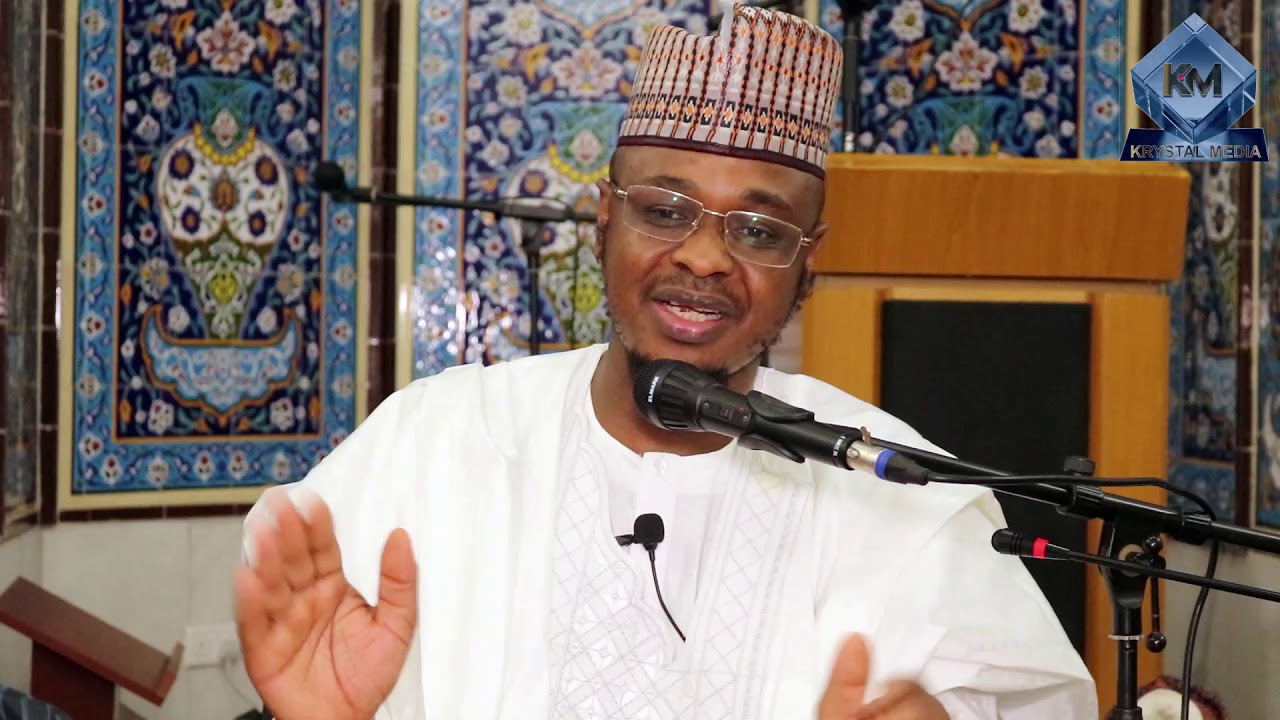
The former Minister of Communication and Digital Economy, Mr Isa Ali Pantami, has blamed security agencies in the country, including the Nigeria Police Force (NPF), for the rise in insecurity, particularly kidnapping in the country.

He said the organisations saddled with the responsibility of securing the nation have failed to use the policy he championed during his time at the federal government to tackle insecurity.

Recall that in the thick of the COVID-19 pandemic in 2020, Mr Pantami, despite the stay-at-home directive by former President Muhammadu Buhari, forced many Nigerians out of their homes to the National Identity Management Commission (NIMC) centres across the country for the linkage of the National Identity Number (NIN) to their SIM cards.

When criticised for this then, he maintained that the NIN-SIM policy was to address the rising insecurity as it would enable the government to effectively track the payment of ransom to kidnappers and bandits as well as their movements.

But despite this, banditry and kidnapping have increased and last week, it was reported that kidnappers killed one of the six sisters abducted in Abuja.

The victim, Ms Nabeeha Al-Kadriyar, was killed over the failure of her family to pay the N60 million demanded as ransom. Only N10 million was paid and the abductors threatened to eliminate the others if the balance was not paid.

This generated reactions on social media, with an appeal to raise the remaining money through crowdfunding to pay the kidnappers.

Mr Pantami, in a post on Sunday on X, formerly known as Twitter, said a friend of his had agreed to pay N50 million to the kidnapper for the release of the girls.

This raised questions about the effectiveness of the NIN-SIM policy he initiated and while responding, he blamed the security agencies for not embracing the scheme.

“NIN-SIM policy has been working. However, the relevant institutions fighting criminality are to be requested to ensure they utilise it effectively when a crime is committed,” he said, stressing that the “lack of utilising it is the main problem.”

“While in office, I know of three instances where the policy was utilised, and it led to the success of their operations,” he added.

“On the lack of utilisation, I am more worried than anyone, as my life was threatened by criminals for reintroducing it, including on BBC Hausa and national dailies; I resisted and ensured its implementation.

“If it is not being utilised by the relevant institutions in charge of securing lives and property, then I am more frustrated than any person, as I sacrificed my life and ignored all the threats to life.

“This is just a point out of 100 on the policy. May the Almighty rescue all the kidnapped and bring absolute peace and stability to Nigeria, and may He (SWT) continue to guide our leaders and help them always in discharging their responsibilities,” he disclosed.


Modupe Gbadeyanka is a fast-rising journalist with Business Post Nigeria. Her passion for journalism is amazing. She is willing to learn more with a view to becoming one of the best pen-pushers in Nigeria. Her role models are the duo of CNN's Richard Quest and Christiane Amanpour.

General

NYSC Records: Niger Delta Group Suggests Suspension of Tunji-Ojo

Published

on

olubunmi tunji-ojo

By Aduragbemi Omiyale

A group known as the Niger Delta Think Tank on Good Governance has called on President Bola Tinubu, to set up an independent panel to investigate the controversies surrounding the National Youth Service Corps (NYSC) records of the Minister of Interior, Mr Olubunmi Tunji-Ojo.

The organisation led by Mr Gregory Oritsetimihin noted that the demand was not an attempt to indict the Minister but a principled appeal for accountability, due process, and public confidence in Nigeria’s institutions.

Addressing journalists on Monday at a press conference, the group also recommended the suspension of the Minister pending the outcome of the probe, describing such a step as an administrative safeguard rather than a punitive action.

The organisation said it was worrying that the nothing concrete had been done by the inquiry by a notable media organisation, Premium Times, on the matter after invoking the Freedom of Information Act.

According to the group, an official response issued by the NYSC on August 8, 2023, confirmed that the Minister was mobilised for national service in 2006, absconded from the programme, and later resurfaced in 2019, when he was re-mobilised and redeployed to the Federal Capital Territory (FCT). The statement further noted that his Certificate of National Service was eventually issued in February 2023, several years after the expected completion period.

“These facts were not drawn from speculation or social media narratives but were provided directly by the NYSC itself,” the group stated.

The think tank also clarified that universities, rather than the NYSC, are responsible for the mobilisation of graduates, stressing that issues relating to mobilisation, redeployment, and certification are matters of serious institutional responsibility and require objective and transparent review.

It described absconding from the NYSC scheme as a violation of existing laws and civic obligations, warning that unresolved questions surrounding the programme especially involving a serving public official could damage public trust and reinforce perceptions of selective accountability.

While urging calm, the organisation appealed to the President to demonstrate leadership by constituting an independent panel to review the matter and make its findings public.

According to the group, a transparent review would protect the integrity of the Presidency, uphold the credibility of the NYSC, and safeguard the reputation of the Minister.

“Accountability is not persecution, and inquiry is not condemnation,” the think tank said, adding that Nigeria’s democracy is strengthened when issues are addressed openly and in line with due process.

Continue Reading

General

NDIC Seeks EFCC Enhanced Support on Asset Tracing, Recovery

Published

on

Alpha Merchant Bank NDIC

By Adedapo Adesanya

The Nigeria Deposit Insurance Corporation (NDIC) has sought an enhanced collaboration with the Economic and Financial Crimes Commission (EFCC) in areas including asset tracing, recovery, and management.

This was hinged on a recent visit by the chief executive of the corporation, Mr Thompson Oludare Sunday, to the chairman of the anti-graft agency, Mr Ola Olukoyede.

Speaking at the occasion, Mr Sunday stressed that the visit offered an opportunity for formal engagement with the EFCC for further collaboration between the two organizations.

“We aim to further strengthen our collaboration, deepen institutional synergy and explore additional avenues for mutual support in the pursuit of national financial system stability. The EFCC has been our partner and we want this to continue. We look forward to an expanded and more impactful partnership between our two esteemed institutions,” Mr Sunday said.

Further in his request, he stated that the NDIC sought to leverage on the EFCC’s technical expertise in asset tracing, recovery and management, particularly in cases involving debtors of banks in liquidation.

“Your experience has and will continue to greatly enhance our recovery efforts. Additionally, we have that strategic responsibility for prosecuting individuals whose actions contribute to the failure of banks. We therefore seek closer collaboration with the Commission in this critical area.”

On his part, Mr Olukoyede, remarked that both agencies of government have a longstanding record of collaboration, pledged to amplify the working relationship.

He emphasized that the NDIC and EFCC are like inseparable twins, working together for years. He reminded the NDIC’s boss that the EFCC had been supporting his agency in the area of investigation, while the NDIC had been supporting the EFCC in the area of training.

“So, there has been this mutually beneficial relationship between NDIC and EFCC and we never intend to stop. We’ll continue to take it to a higher level, and continue to strengthen it,” he said.

Mr Olukoyede reiterated that his policy directive was to stimulate the Nigerian economy with the anti-graft war, leverage productive entities and enhance the capacities of other government agencies through needful interventions.

“One of the things I promised when I resumed was to use the instrumentality of this work to stimulate the economy, not just to make noise all over the place; to strengthen and encourage the internal processes of entities that are doing well and design fraud risk assessment for them. That was what necessitated my establishing a new department called Fraud Risk Assessment and Control.

“We don’t have to always wait for money to be stolen. Let us work with you and stakeholders in the economy to fine tune our system and make sure that we clean our financial ecosystem. You’re a key player in that area, and we are always willing to collaborate with you,” he added.

Continue Reading

General

Again, Nigeria’s Electricity Grid Collapses, Triggers Nationwide Blackout

Published

on

Electricity Subsidy Q1 2024

By Adedapo Adesanya

Nigeria’s electricity grid collapsed again on Tuesday morning, cutting power supply nationwide after generation and load allocation dropped to zero across all distribution companies,.

The incident marks the second recorded collapse of the national power grid in 2026, the second as well in five days following last Friday’s inclident.

This also means the third time in one month after a similar failure on December 29, 2025.

The system failure occurred at about 10:50 a.m, when electricity allocation to all electricity distribution companies fell to zero. Data from the grid operator showed that power generation plunged to zero megawatts, triggering a total shutdown of supply across the country.

A review of the national distribution load profile at the time of the incident indicated that all distribution companies, including Abuja, Eko, Benin, Enugu, Ibadan, Ikeja, Jos, Kano, Kaduna, Port Harcourt and Yola, recorded zero load, confirming a nationwide outage.

All 23 power generation plants connected to the national grid reportedly lost output during the incident, resulting in zero power allocation to each of the 11 electricity distribution companies.

As of time of filing this report, no official confirmation has been provided by the government authorities.

Continue Reading

Trending