Connect with us

Economy

FG Maps Disputed Oil Wells to Reset Derivation Revenue

Published

on

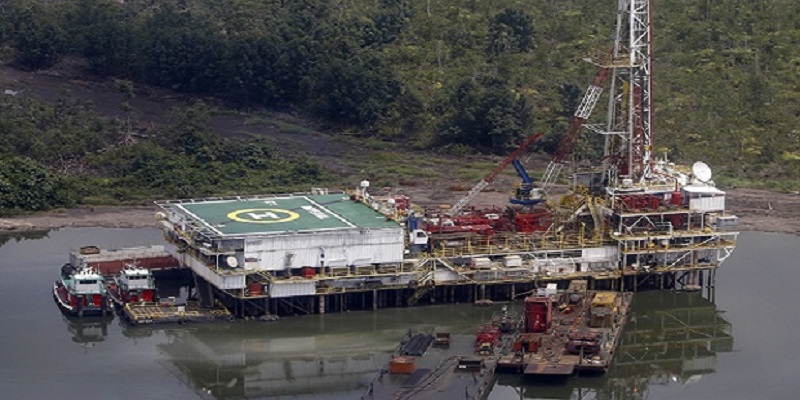
Disputed Oil Wells

By Adedapo Adesanya

The federal government has launched the plotting of coordinates of disputed and newly drilled oil and gas wells, a critical process that could redefine derivation revenue flows and fiscal entitlements among Nigeria’s oil-producing states.

The exercise, formally flagged off by the Revenue Mobilisation Allocation and Fiscal Commission (RMAFC) in Abuja, follows the October 2025 flag-off of verification in the Niger Delta, triggered by petitions from the Governors of Anambra, Delta, Imo, Edo, Ondo and Rivers States, seeking clarity on ownership and boundaries of oil and gas resources.

According to the commission’s chairman, Mr Mohammed Bello Shehu, the process is a constitutional necessity rather than a political choice.

“This is not optional; it is a constitutional obligation,” Mr Shehu said. “The Constitution provides that 13 per cent of revenue from minerals, especially crude oil and gas, should be paid to the states where they are produced, and this is why the verification and plotting of coordinates of the new and disputed oil and gas wells must be done transparently and correctly.”

Mr Shehu disclosed that the Inter-Agency Technical Committee (IATC), comprising the National Boundary Commission (NBC), Office of the Surveyor-General of the Federation (OSGoF); Nigerian Upstream Petroleum Regulatory Commission (NUPRC), and RMAFC, has completed the verification phase and is now moving to the plotting stage.

“The IATC has verified the coordinates, and the next phase is to plot them, which will lead to resolving the location of the disputed oil and gas wells and properly attributing newly drilled wells to their rightful owners,” Mr Shehu said.

According to the RMAFC chairman, the exercise covers Akwa Ibom, Cross River, Bayelsa, Ondo, Rivers, Delta and offshore locations, where overlapping claims frequently emerge whenever new oil fields come on stream.

“Disputes arise when new fields are developed, because multiple states may lay claim,” he explained. “But it is the facts on ground that will reveal who actually owns what, and where ownership must be shared.”

To guarantee credibility, Mr Shehu revealed that the Commission conducted extensive fieldwork between September 2025 and January 2026, covering creeks, high seas and offshore terrains.

“We went to the field ourselves, and where we could not physically access, we deployed drones to take the coordinates,” he said. “All data collected were witnessed by representatives of the affected states.”

He assured that RMAFC would remain neutral throughout the process.

“RMAFC will be an unbiased umpire and will deploy justice, equity and fairness for which it is known,” he stated.

The Secretary to the Commission, Mr Joseph Okechukwu Nwaze, said the exercise reflects strong inter-agency cooperation.

“This process reinforces confidence in RMAFC as a neutral institution committed to fairness in revenue administration and fiscal federalism,” he said.

On her part, the Director, Crude Oil Department, Mrs Khadija Kumo, described the initiative as “timely and critical to the future of energy governance in Nigeria,” adding that “data-driven decision-making must now define oil and gas administration.”

Coordinator of the IATC, Mr Folorunsho Aderinwala, lauded the commission for providing full institutional support, noting that it enabled the committee to successfully complete verification across difficult terrains.

The mapping of coordinates is expected to become one of the most consequential fiscal governance exercises in Nigeria’s oil and gas sector in recent years, potentially redrawing the economic map of the Niger Delta.


Adedapo Adesanya is a journalist, polymath, and connoisseur of everything art. When he is not writing, he has his nose buried in one of the many books or articles he has bookmarked or simply listening to good music with a bottle of beer or wine. He supports the greatest club in the world, Manchester United F.C.

Click to comment

Leave a Reply

Your email address will not be published. Required fields are marked *

Economy

Naira Slips to N1,343/$ at NAFEX

Published

on

Naira-Dollar exchange rate gap

By Adedapo Adesanya

The Naira sold at N1,343.64/$1 Nigerian Autonomous Foreign Exchange Market (NAFEX) on Friday, April 17, after shedding N1.34 or 0.10 per cent against the greenback from the previous day’s rate of N1,342.30/$1.

In the same vein, the Nigerian currency depreciated against the Pound Sterling in the same market window during the session by N5.03 to quote at N1,824.39/£1 versus the previous rate of N1,819.36/£1, and lost N10.05 against the Euro to sell at N1,591.14/€1 versus N1,581.09/€1.

At the GTBank FX desk, the exchange rate of the Naira to the Dollar remained unchanged at N1,355/$1, and it also maintained stability in the parallel market at N1,375/$1.

Interbank liquidity increased to N124.34 million from N74.255 million the previous day, data from the Central Bank of Nigeria (CBN) showed.

Meanwhile, external reserves remain at $48.70 billion, down from the 2009 peak of $50 billion amidst uncertainties in the global commodities market.

Global oil prices dropped sharply on Friday after Iran signalled that the Strait of Hormuz would remain open to commercial shipping during a temporary ceasefire in the Middle East.

Crypt assets also gained on the news from Iran’s foreign minister, who declared the Strait of Hormuz open, drawing a positive response from President Donald Trump. The development helped ease worry around risky assets like crypto.

Meanwhile, the cryptocurrency market was bullish, as traders weighed possible scenarios ahead of next week’s US-Iran cease-fire deadline.

Ethereum (ETH) appreciated by 3.2 per cent to $2,410.53, Bitcoin (BTC) jumped by 2.8 per cent to $77,124.22, Ripple (XRP) rose by 2.7 per cent to $1.47, Binance Coin (BNB) expanded by 2.5 per cent to $643.97, Dogecoin (DOGE) added 1.0 per cent to close at $0.0988, Cardano (ADA) improved by 0.9 per cent to $0.2578, Solana (SOL) soared by 0.4 per cent to $88.53, and TRON (TRX) gained 0.4 per cent to sell at $0.3275, while the US Dollar Tether (USDT) and the US Dollar Coin (USDC) traded flat at $1.00 apiece.

Continue Reading

Economy

Brent, WTI Tumble Over 9% on Hormuz Reopening Signal

Published

on

Brent crude futures

By Adedapo Adesanya

Oil prices plunged by 9 per cent on Friday after Iran said passage for all ​commercial vessels through the Strait of Hormuz was open for the remaining ceasefire period.

Brent crude futures lost $9.01 or 9.07 per cent to trade at $90.38 a barrel, while the US West Texas Intermediate (WTI) crude futures depreciated by $10.48 or 11.45 per cent to finish at $83.85 a barrel.

Iran said Friday that the Strait of Hormuz is “completely open” for the remainder of the Israel-Lebanon ceasefire, bolstering hopes of a breakthrough in the weeks-long crisis over the crucial oil route.

Iran had maintained its blockade of the strait despite a two-week ceasefire with the US, which expires on Tuesday, and previously said it would not open the key waterway while Israel continued to strike Lebanon.

Business Post had reported that oil prices weakened to around $88 per barrel after Iranian Foreign Minister Seyed Abbas Araghchi posted on X that “all commercial vessels” would be allowed to pass through the strait throughout the remainder of the ten-day ceasefire in Lebanon.

US President Donald Trump thanked Iran on Truth Social, but stressed that the US naval blockade of the regime’s ports would remain “in full force and effect” until a peace deal was completed. “This process should go very quickly in that most of the points are already negotiated,” he added.

A second round of truce talks between the US and Iran is expected to take place as oil tankers are beginning to test the waters at the Strait of Hormuz.

Despite the fact that all ships can sail through the Strait of Hormuz, this passage needs to be coordinated with Iran’s Islamic Revolutionary Guard Corps (IRGC).

Market analysts noted that if these initial tankers make it through, flows will begin to partially normalise. However, a handful of vessels does not equal restored capacity. The backlog alone will take significant time to clear, and producers across the region are still dealing with disrupted output and logistics.

Prices had already fallen earlier in the Friday session as possible ​further talks between the US and Iran over the weekend and a 10-day ceasefire between Lebanon and Israel raised investors’ hopes that the war in the Middle East could be ‌nearing an ⁠end.

The American President also said on Friday that the US has banned Israel from further bombing in Lebanon, using a harsher tone than usual with the ​longtime US ally.

Continue Reading

Economy

Nigerian Exchange Extends Stock Trading Hours to 4:00 pm

Published

on

exposure to Nigerian stocks

By Dipo Olowookere

The daily stock trading hours on the floor of the Nigerian Exchange (NGX) have been expanded by an hour to 4.00 pm after extensive stakeholder engagement, ensuring alignment and operational readiness ahead of the go-live date.

A statement from the bourse on Friday said the extension was approved by the Securities and Exchange Commission (SEC).

Before now, trading activity on Customs Street resumed from 9.30 am to 2:30 pm, but from Monday, April 27, 2026, the resumption time would be 9.00 am, and the closing gong would be struck by 4.00 pm from Monday to Friday.

It was explained that this action was taken “to deepen market liquidity, enhance price discovery, and broaden investor access.”

The NGX has witnessed renewed investor interest due to increased awareness of equities lately, especially as the nation and the global community await the much-anticipated listing of Dangote Refinery shares later in the year, all things being equal.

The statement also noted that this extended trading window would provide greater flexibility for investors, improve responsiveness to market-moving information, and support broader participation across the market.

The development builds on the momentum of Nigeria’s recent reclassification to Frontier Market status by FTSE Russell, reinforcing NGX’s global positioning and enhancing its attractiveness to a broader pool of domestic and international investors.

It further stated that this reform reflects strong regulatory collaboration and underscores the SEC’s continued commitment to advancing market development initiatives. Alongside Nigeria’s Frontier Market reclassification, it signals a deliberate shift towards a more accessible, liquid, and globally competitive market.

With this development, NGX reinforces its position as a leading multi-asset exchange, deepening liquidity, improving market access, and supporting efficient capital formation within Nigeria’s financial markets.

Continue Reading

Trending