Connect with us

Economy

Arise’s Investment in CAL Bank to Boost Ghana’s Economy

Published

on

By Dipo Olowookere

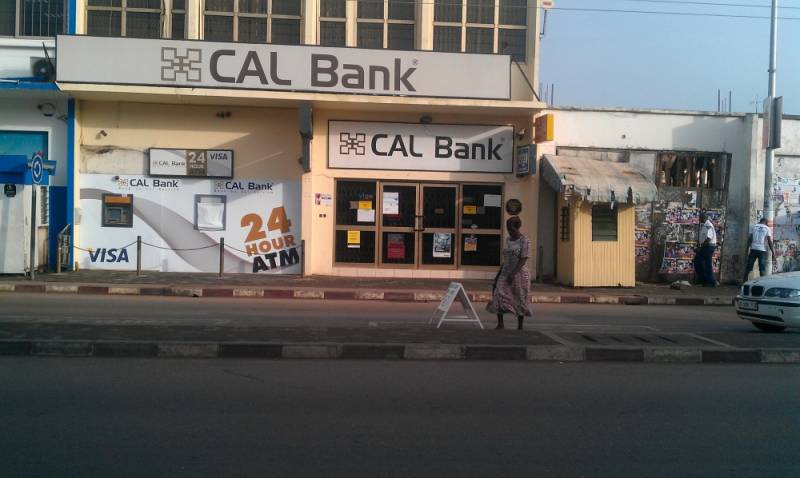
The recent acquisition of a 27.7 percent stake in CAL Bank in Ghana by newly formed investment company, Arise, is set to boost the banking sector in the country.

The shareholding in CAL Bank was acquired by Arise from DPI, a leading Africa-focused private equity firm with assets in excess of $1 billion under management. Settlement is to be effected on 14 February 2017.

Arise, a collaborative partnership between international companies, Norfund, FMO and Rabobank take and manage minority stakes in Sub-Saharan African Financial Service Providers (FSPs) with the core aim of building strong and stable institutions that serve retail, Small and Medium Enterprises (SMEs), the rural sector, and clients who have not previously had access to financial services.

“The main objective of establishing this company was to strengthen and develop effective, inclusive financial systems in Africa in order to contribute to economic growth and poverty reduction,” said Arise CEO, Deepak Malik.

“We are excited to partner with CAL Bank, the 3rd largest bank in Ghana based on loans advanced and a listed company on the Ghana Stock Exchange. The institution has a strong track record of delivering high growth and solid performance and with the support of Arise is well-positioned to deliver future growth in Ghana, one of Africa’s core emerging economies” added Malik.

Speaking from the bank’s Head Office, Mr. Frank Adu Jnr. CEO of CAL Bank remarked: “This landmark transaction will mark the successful exit of a leading private equity investor, despite a challenging macro environment in Ghana. We look forward to continuing a fruitful partnership with Arise as the new shareholders in CAL Bank”.

Webber Wentzel and Bentsi-Enchill, Letsa & Ankomah acted as legal counsel to Arise on the transaction, while IC Securities acted as Transaction Broker on the transaction. PwC Transaction services and Genesis Consulting Analytics acted as due diligence advisors to Arise.

An approval in principle of a $50 million bridging loan by Arise is set to boost the banking sector in Uganda.

According to Arise Chief Executive Officer, Deepak Malik the company will provide a $50 million bridging finance facility to dfcu Ltd in Uganda.

“The facility was availed on commercially-agreed terms, to enable commencement of the recapitalisation of dfcu Bank in the short term, while complying with regulatory capital thresholds” he said.

dfcu Bank recently concluded an agreement with the Bank of Uganda to purchase the assets and assume the liabilities of Crane Bank Limited (CBL), which was in receivership.

The acquisition of CBL will allow dfcu Bank to diversify it service offerings to its clients and make banking more accessible to the public. Further, the integration will enhance dfcu Bank’s competitive edge against peers in the retail and Small Medium Enterprise (SME) sector.

Juma Kisaame, Managing Director dfcu Bank commented, “The acquisition gives us the impetus to achieve our strategic objective of building a robust retail operation with multiple delivery channels whilst consolidating our position as a key player in the SME market segment. It also supports our goal of promoting financial inclusion in Uganda and we welcome the Arise partnership as a contributor to building a stronger financial sector in Sub Saharan Africa”.

“Arise supports the planned expansion of dfcu Bank. We foresee the integration as a catalyst for creating a strong and efficient Ugandan bank, which will have extensive local representation and scalability of distribution (via branch and digital channels)” said Malik.

“This partnership speaks directly to the mandate of Arise, which is to collaborate with local Financial Service Providers (FSPs) in Sub Saharan Africa to boost economic growth through strengthening the banking sector”, he added. Arise is committed to developing inclusive financial systems in Africa and partners with sustainable FSPs to strengthen their ability to supply capital and financial services to SMEs, the rural sector and unbanked people.

“Arise is supportive of dfcu Bank’s growth ambitions, which will enable the organisation to improve its market position and efficiencies. In addition, we believe that this transaction is a catalyst for improved returns to all stakeholders”, concluded Malik.


Dipo Olowookere is a journalist based in Nigeria that has passion for reporting business news stories. At his leisure time, he watches football and supports 3SC of Ibadan. Mr Olowookere can be reached via [email protected]

Click to comment

Leave a Reply

Your email address will not be published. Required fields are marked *

Economy

Nigeria Accesses $1.5bn from UAE Lender’s $5bn Swap Deal

Published

on

First Abu Dhabi Bank

By Adedapo Adesanya

Nigeria has received the first tranche of its $5 billion derivatives financing arrangement with the First Abu Dhabi Bank (FAB), the United Arab Emirates’ largest lender.

According to a Bloomberg report published on Friday, the federal government drew about $1.5 billion over the past two weeks through a Total Return Swap (TRS) transaction with the lender.

The report stated that Nigeria will provide naira-denominated securities valued at 133.3 per cent of the loan amount as collateral for the transaction, while international financial institutions continue to express concerns about the risks associated with such derivative-based financing structures.

The financing is expected to support the government’s debt management strategy by replacing more expensive borrowings while helping finance the country’s fiscal deficit.

The first tranche is priced at 395 basis points above the Secured Overnight Financing Rate (SOFR), rising to SOFR plus 400 basis points thereafter.

The transaction further expands Nigeria’s financial relationship with First Abu Dhabi Bank, which had earlier provided about $1.2 billion to support the construction of a section of the ongoing Lagos-Calabar Coastal Highway.

The swap deal has come with much scrutiny from critics and international organisations. Recall that the International Monetary Fund (IMF), after a consultation visit, warned Nigeria against the deal, noting that such transactions are ‌often opaque and complex.

“Our view is that the transactions in these types of structures carry risks. Usually they are opaque, so the terms are not always ⁠very transparent when we reviewed these instruments across countries,” according to the IMF’s mission chief in Nigeria, Mr Christian Ebeke.

Mr Ebeke said Nigeria could instead issue eurobonds to finance its deficits or other means to raise funding, including on concessional terms.

The Senate in April gave its approval to the agreement put forward by President Bola Tinubu, who said his administration intends to use proceeds from the total return swap to refinance expensive debt and pay for infrastructure.

Continue Reading

Economy

Nigeria Needs More Taxpayers, Not Higher Taxes—Oyedele

Published

on

FIRS taxes

By Adedapo Adesanya

The Minister of Finance and Coordinating Minister of the Economy, Mr Taiwo Oyedele, yesterday clarified that the federal government is not increasing taxes but making efforts to raise the tax net.

Mr Oyedele made this remark on Thursday while receiving a delegation from the Chartered Institute of Taxation of Nigeria (CITN) at his office in Abuja.

He hailed the institute for introducing a National Tax Awareness Day and for supporting the current tax reforms of the federal government.

The minister charged the institute to double its effort in public enlightenment, stressing that many Nigerians still view taxation as a means for the government to take money from citizens.

He reiterated that the priority of the government is not to increase tax rates but to broaden the tax base by ensuring that all eligible taxpayers meet their obligations.

“We are still not getting enough revenue from taxes.

“It is not about increasing taxes but making sure that those who are supposed to pay taxes. We want to promote fairness in tax administration,” he said.

Nigeria is challenged by the inability to generate adequate revenue from taxation despite ongoing reforms, stressing that a significant number of eligible taxpayers have yet to fulfil their civic obligations.

He said the challenge facing the country was not necessarily about raising tax rates but ensuring that individuals and businesses that ought to pay taxes do so in a fair and transparent system.

The minister also commended the institute for supporting the federal government’s tax reform agenda and promoting public understanding of taxation, but urged it to intensify its advocacy efforts, noting that many Nigerians still harbour misconceptions about taxation.

According to him, many citizens continue to view taxation merely as a tool for the government to take money from the people rather than as a critical instrument for national development.

“We are still not getting enough revenue from taxes. It is not about increasing taxes, but making sure that those who are supposed to pay taxes. We want to promote fairness in tax administration,” he added.

Mr Oyedele stressed that if Nigeria succeeds in building an efficient and equitable tax system, the impact on infrastructure, public services and economic development would be transformative, challenging the institute to introduce annual awards for the country’s most tax-compliant individuals and organisations as a means of encouraging voluntary compliance and recognising responsible taxpayers.

Continue Reading

Economy

Akara, Kulikuli, Roasted Corn Business Not Capital Intensive—Remi Tinubu

Published

on

remi tinubu

​By Modupe Gbadeyanka

Nigeria’s First Lady, Mrs Oluremi Tinubu, has given Nigerians business advice that may not involve a lot of money to start.

Speaking with newsmen recently, the wife of President Bola Tinubu said businesses like akara (fried bean cake), kulikuli (a crunchy snack from roasted peanuts or groundnuts) and roasted corn can be set up without breaking the bank.

She disclosed that to support her husband’s Renewed Hope agenda, she has provided funding packages to traders and others to the tune of N3.5 billion.

“To start akara business doesn’t take a lot of money. To start roasting corn and kuli-kuli doesn’t take much. We didn’t give them a loan; we gave it to them as a grant,” she stated.

She further said, “We’ve encouraged Nigerians as best as we could, what is within our hands, I have given, and I keep giving. Those are the things we’ve done.”

“I remember giving for TB (tuberculosis) when I heard of many TB cases; I gave N2 billion, to breast cancer, I gave N1 billion, and to [tackle] malnutrition, I gave N500 million.

“These are the things we’ve been doing to assist the government. So, we’ve had impact in agriculture, social investment, education (as scholarship and ICT training) and others. We are still open to doing more,” she disclosed.

Continue Reading

Trending