

Sports
Uncertainty Between State Governments and the Federal Government Keeps Nigeria’s Gambling Market in Limbo

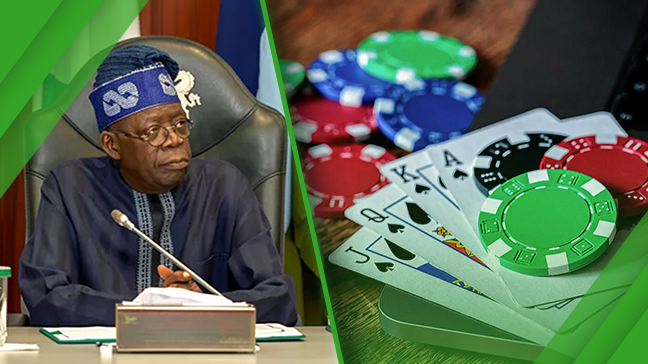
The crisis in gambling regulation in Nigeria shows no sign of easing. The standoff between state regulators and the federal authorities has entered a new phase after President Bola Ahmed Tinubu rejected a bill in December to centralize oversight of the industry. Now businesses and investors are waiting to see whether 2026 will bring any clarity at all.
Ben Cowe, Marketing Director at Logifuture, outlined the industry’s position in an interview with iGB. The company is a sportsbook platform provider for Bet9ja, the country’s largest betting operator.
What the bill proposed—and why it was rejected
The Central Gaming Bill would have established a national commission that would assume responsibility for centralized regulation of the entire gaming industry. The drafters intended the model to resemble the former Lotteries Act, which is no longer in force.
However, President Tinubu considered that the bill directly contradicts a 2024 Supreme Court decision. The Supreme Court ruled that gambling should be regulated at the state level rather than by the federal government. The bill’s rejection means that a “clean” transition from the federal model to a fully state-based one has still not been formalized.
Business expectations and a call for “common sense”
Despite the prolonged deadlock, Cowe is cautiously optimistic. “We hope 2026 will be the time when common sense prevails,” he said.
According to him, all participants in the process need to “collectively find a system that will work.” Possible formats being discussed in the industry include:
- national legislation with a single rulebook;
- a federal-level coordinating body;
- aligned local committees operating in step with the sector’s interests.
Why the industry needs rules—and what happens without them
Cowe outlined several reasons why businesses are interested in the swift emergence of a clear regulatory framework:
- market safety and protecting players from unfair practices;
- protecting operators from a “rules-free market” scenario;
- the risk of the expansion of offshore operators that pay no taxes and have no obligations to users;
- establishing clear requirements and transparent oversight.
“We don’t want Nigeria to become a free-for-all that offshore operators can simply jump into, grab market share, and not pay taxes,” Cowe stressed.
How the uncertainty affects Logifuture and Bet9ja
Regulatory chaos certainly puts pressure on the legal team, compliance, and licensing. However, operationally the situation looks stable. “Does it affect us day to day? Not really,” Cowe admitted.
The factors ensuring this stability are quite specific:
- Bet9ja is licensed and operates in every state that issues licenses and also, as Cowe put it wryly, “in some states that don’t exactly issue licenses—but act as if they do”;
- more than 20,000 retail outlets operate across the country;
- online access to the Bet9ja platform has not been disrupted.
A unified model and investors
A stronger and clearer regulatory framework could serve as a kind of “green light” for investors, lowering the barrier to entry by making the rules more predictable.
At the same time, the market is maturing. Consolidation is already underway, and a small group of operators dominates. A new brand will require serious investment in building its image, distribution channels, and infrastructure. Even with clear rules, a quick payback is unlikely, and market entry will be strategic and long-term.
Customer acquisition methods are proving effective internationally
In the gambling sector, Nigeria is gradually becoming closer to developed countries with their mature online casino markets. For example, new projects in Europe, the US, or New Zealand have to use a wide range of tools to attract players. These include affiliate marketing, partnerships with streamers and influencers, as well as no deposit casino sign up bonuses and other promotions used to attract newcomers. In Nigeria, all these tools are also being used and deliver results. Moreover, while people in Western countries mostly play for entertainment, in comparatively lower-income Nigeria, as in other countries in the region, people want to make money this way. And bonus offers are even more appealing to them.
Demographics and betting economics
On paper, Nigeria looks highly attractive. More than 1 million people turn 18 each year, creating a “steady pipeline” of new consumers.
However, Cowe cautioned against inflated expectations. The average player’s “wallet size,” the average stake, and other metrics that determine revenue do not point to a fast return on investment. Any entry into this market requires a willingness to take a long-term approach.
A double layer of uncertainty remains
Businesses are counting on a coordinated regulatory system, but until it emerges, the sector will continue to operate amid a tug-of-war over authority between the federal level and the states. The question of which model will ultimately prevail remains open.


