Connect with us

Economy

FG Sets March 2024 for OB3 Gas Pipeline Completion

Published

on

OB3 Gas Pipeline

By Adedapo Adesanya

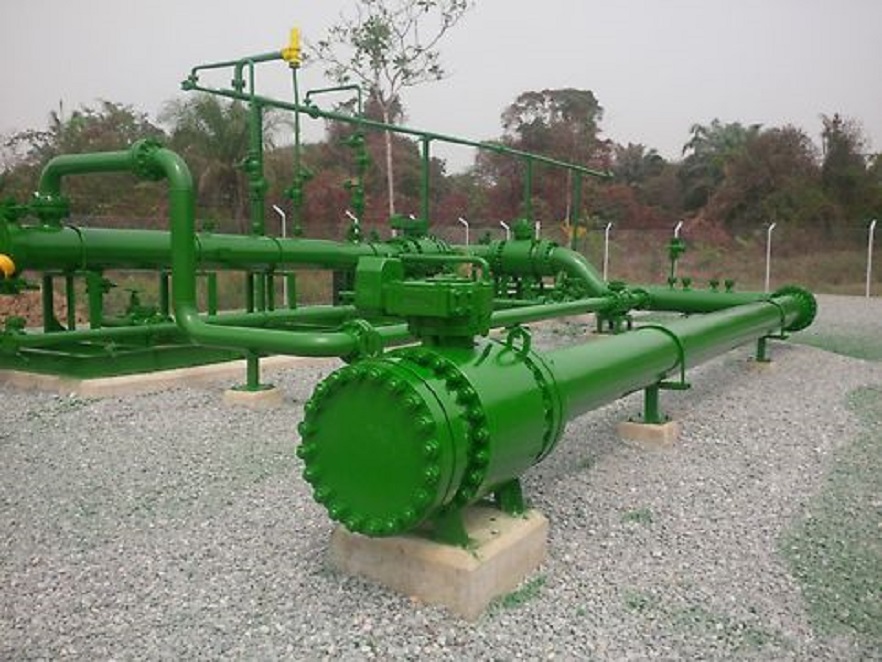
The federal government has set March 2024 for the completion of the Obiafu-Obrikom-Oben (OB3) gas pipeline.

This was disclosed by the Minister of State for Petroleum Resources (Gas), Mr Ekperikpe Ekpo, in his industry address during the opening ceremony of the 7th edition of the Nigeria International Energy Summit (NIES 2024) at the Presidential Villa, Abuja on Tuesday.

According to him, the projected completion timeline was in alignment with the estimates provided by Oilserv Limited.

The pipeline is expected to deliver 2 billion cubic feet of natural gas per day from the Obiafu, Obrikom, and Oben fields to the Ajaokuta-Kaduna-Kano (AKK) pipeline.

Mr Ekpo had during a Senate Committee on Gas meeting led by Senator Agom Jarigbe, assured that the contractors were dedicated towards fulfilling their promise before the end of 2023.

The Minister of State Gas Resources then lauded the progress made in erecting crucial gas infrastructure projects nationwide, emphasising the significance of the development in advancing Nigeria’s economy.

While expressing confidence in the government’s commitment to ensuring the timely completion and successful commissioning of these transformative initiatives, Ekpo also extended commendations to the Nigerian National Petroleum Company Limited Group for their unwavering dedication and proactive efforts in driving forward the OB3 pipeline project to its imminent completion.

The OB3 gas pipeline project, is a major pipeline project spanning 127 km with a 48-inch diameter, stretching from the Obiafu-Obrikom gas plant near Omuku, Rivers State, to Oben, Edo State.

The OB3 pipeline project is expected to commercialise over 2 billion cubic feet of gas per day and generate billions in revenue as well as create thousands of employment opportunities for Nigerians.

It is planned to feed the Asa North-Ohaji South, ANOH, gas project, one of the largest greenfield gas condensate development projects, that will produce 600 million standard cubic feet of gas per day, an equivalent of approximately 2.4 gigawatts of electricity for the country.


Adedapo Adesanya is a journalist, polymath, and connoisseur of everything art. When he is not writing, he has his nose buried in one of the many books or articles he has bookmarked or simply listening to good music with a bottle of beer or wine. He supports the greatest club in the world, Manchester United F.C.

Click to comment

Leave a Reply

Your email address will not be published. Required fields are marked *

Economy

Oando Secures Exclusive Gas Supply Deal for Bayelsa’s 60MW Power Plant

Published

on

Bayelsa 60MW power plant

By Aduragbemi Omiyale

The 60-megawatt (MW) Independent Power Plant (IPP) in Yenagoa, Bayelsa State, commissioned about a week ago by President Bola Tinubu, will receive gas supply from Oando Plc.

The indigenous energy solutions provider secured this exclusive gas supply deal through its upstream Joint Venture (JV) with Nigerian National Petroleum Company E&P Limited (NEPL).

Under the agreement, the company will deliver 11.2 million standard cubic feet per day (11.2 MMSCFD) through the Elebele Valve Station, interconnected with a major trunkline, ensuring an uninterrupted feedstock supply to the power plant.

This supply is underpinned by a long-term gas supply arrangement, providing a stable and predictable revenue stream while supporting higher-value domestic gas monetisation and diversifying the JV’s revenue base, Oando said in a statement on Thursday.

The Bayelsa State IPP is expected to deliver stable electricity to tens of thousands of homes, alongside commercial and industrial users in Yenagoa and its environs, reducing reliance on self-generation and lowering end-user power costs.

The plant operates as a fully integrated system, combining gas supply, embedded generation, and a ring-fenced distribution network.

The reliance on Oando for gas supply to the facility underscores its commitment to strengthening Nigeria’s power sector.

This builds on a proven track record of delivering first-of-its-kind projects, including the development and operation of Nigeria’s first combined cycle power plant, the flagship Okpai IPP, Akute IPP in Ogun State, and the Alausa IPP in Lagos, one of the earliest embedded generation projects in the country.

“This project reflects our long-standing commitment to Bayelsa State and its people. By enhancing power reliability, we are helping to unlock new opportunities for businesses, improve living standards, and stimulate broader economic growth across the State.

“Our integrated approach, connecting gas to demand and delivering stable energy where it is needed most, ensures that development is both sustainable and inclusive. As one of the largest employers in Bayelsa, we are proud to deepen our contribution to the state’s progress,” the chief executive of Oando, Mr Wale Tinubu, stated.

The deal demonstrates the potential for gas-to-power developments across the JV’s infrastructure footprint, reinforcing Oando’s strategy to deepen participation in Nigeria’s domestic gas value chain.

It further highlights public-private collaboration as an effective model for infrastructure delivery, with scope for broader application across future developments in Nigeria.

Continue Reading

Economy

Oil Prices up on Doubts Over US-Iran Talks, as Supply Risks Persist

Published

on

oil prices cancel iran deal

By Adedapo Adesanya

Oil ​prices were up on Thursday amid scepticism that forthcoming peace talks between the US and Iran would  ‌resolve disruptions to Middle Eastern energy supplies caused by the ongoing war.

Brent crude futures climbed $4.46 or 4.7 per cent to $99.39 per barrel, and the US West Texas Intermediate (WTI) crude futures gained $3.40 or 3.7 per cent to settle at $94.69 a barrel.

The US-Israeli war with Iran stands as the largest-ever disruption of global oil and gas supplies due to Iran’s ​interruption of traffic through the Strait of Hormuz, which typically carries about 20 per cent of the world’s oil and liquefied natural ​gas flows.

Reuters reported that American and Iranian negotiators have scaled back their expectations for a comprehensive peace deal and are instead ​seeking a temporary memorandum to prevent a return to conflict.

Iran, which has faced crippling US sanctions for years, wants a memorandum to include unfreezing some Iranian funds ​in return for allowing more ships through the strait. The US is demanding a halt to Iran’s nuclear enrichment work for 20 years, while Iran wants to limit it to three to five years. It also wants a timetable for lifting the sanctions imposed on the country by the United Nations, the US and the European Union (EU).

US President Donald Trump later said the Middle East nation is very close to a deal with Iran, an assertion he has previously made.

With the US blockade of Iranian ports announced after the collapse of peace talks over the weekend, the disruption ⁠could ​increase, although some US-sanctioned tankers have made it through.

Oil benchmarks barely reacted to his remarks, just as the markets also did not ​react to his announcement of a 10-day ceasefire between Israel and Lebanon in their related conflict, starting Thursday.

The supply disruptions are straining global ​oil inventories, particularly for jet fuel in parts of Asia and Africa. For instance, Nigerian airlines threatened to ​suspend all flight operations from April 20, unless there is an easing of crippling jet fuel ‌prices, which they accused the country’s fuel marketers of artificially inflating.

The International Monetary Fund (IMF) has downgraded global growth and warns of a potential recession if the Iran war drags on.

Continue Reading

Economy

NGX All-Share Index Rises 1.23% to 211,901.01 points

Published

on

All-Share Index NGX

By Dipo Olowookere

For the fourth straight trading session, the Nigerian Exchange (NGX) Limited ended on a positive note with a further 1.23 per cent growth on Thursday.

This was influenced by demand for large-cap equities like MTN Nigeria, Aradel, First Holdco and others.

According to data from Customs Street, the energy index grew by 4.76 per cent, the banking counter appreciated by 2.49 per cent, and consumer goods sector expanded by 0.34 per cent.

But the insurance and the industrial goods indices came under selling pressure, losing 0.74 per cent and 0.03 per cent, respectively, which did not put the bourse at risk.

Consequently, the All-Share Index (ASI) closed higher by 2,583.60 points to 211,901.01 points from 209,317.41 points, and the market capitalisation grew by N1.663 trillion to N136.436 trillion from N134.773 trillion.

Guinea Insurance and Trans-Nationwide Express were the best-performing stocks for the session after gaining 10.00 per cent each to sell for N1.21 and N5.50 apiece, as Aradel chalked up 9.99 per cent to trade at N1,547.50, Ecobank appreciated by 9.97 per cent to N61.20, and DAAR Communications improved by 9.93 per cent to N1.66.

The worst-performing stock was Ikeja Hotel, which depleted by 9.73 per cent to N33.40. Coronation Insurance lost 8.77 per cent to quote at N2.60, CAP went down by 8.61 per cent to N95.00, International Energy Insurance crashed by 8.18 per cent to N3.03, and McNichols slumped by 5.82 per cent to N6.31.

Unlike the preceding session, investor sentiment was strong yesterday, with 43 price gainers and 21 price losers, showing a positive market breadth index.

A total of 585.0 million equities valued at N34.8 billion exchanged hands in 45,559 deals during the trading day versus the 706.4 million equities worth N41.9 billion traded in 46,231 deals on Wednesday, indicating a decline in the trading volume, value, and number of deals by 17.19 per cent, 16.95 per cent, and 1.45 per cent, respectively.

Zenith Bank remained the busiest stock for the day with 61.7 million units sold for N7.6 billion, as UBA traded 45.9 million units worth N2.1 billion, Access Holdings exchanged 42.8 million units for N1.2 billion, Secure Electronic Technology transacted 38.5 million units valued at N37.5 million, and GTCO recorded a turnover of 25.3 million units worth N3.2 billion.

Continue Reading

Trending