Economy
Oil & Gas: NCDMB Vows to Exceed 28% Nigerian Content

By Modupe Gbadeyanka
The Nigerian Content Development and Monitoring Board (NCDMB) says it is working to surpass the current 28 percent Nigerian Content in the oil and gas sector of the economy.
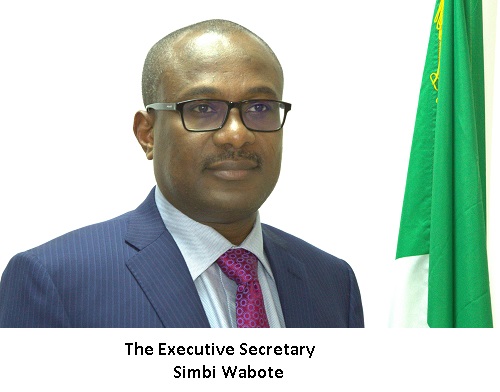
Mr Simbi Wabote, the Executive Secretary of the board, told News Agency of Nigeria (NAN) on Tuesday that they were working to increase the participation of Nigerians in the manufacture of more inputs for the oil industry.
“What we have achieved so far is 28 per cent value retention within the country; that shows the extent of provision of goods and services by Nigerians using components manufactured in the country.
“In the past, industry operators simply give out figures for contracts awarded to Nigerian firms that end up relying on imported goods, but we have devised a more realistic way to assess Nigerian content.
“The current 28 per cent shows the level of value retention within the country, but we are still behind our target; the important thing is that we are making steady progress.
“We are currently working with Nigerian entrepreneurs to leverage on procurement which accounts for over 50 per cent of the cost of projects in the sector, and manufacturing of components will increase the Nigerian content,” he said.
Mr Wabote expressed concern that indigenous companies in the industry had not accessed the $600 million Local Content Development fund.
He said that only three indigenous firms had accessed the fund so far and promised that bureaucratic bottle necks would be removed to enable more indigenous companies to access the fund.
Mr Wabote also said that the board had reduced the compliance approval cycle from two years to one year and would soon achieve its target of six months cycle.
He disclosed that two out of the three pipe mills supported by the board had commenced local production of pipes for the oil and gas sector.
The executive secretary added that six pipe coating mills were also on-stream, adding that the NCDMB had compelled oil firms to patronize the mills to reduce capital flight.
Mr Wabote said that dwindling oil prices had reduced investment in the sector and compelled the board to be more efficient in its operations.
Economy
Naira Stable at N1,357/$1 at Official Market, N1,395/$1 at Black Market
By Adedapo Adesanya
The Naira maintained stability against the United States Dollar in the different segments of the foreign exchange (FX) market on Friday, August 14, according to data obtained by Business Post.
At the Nigerian Autonomous Foreign Exchange Market (NAFEM), the local currency remained unchanged at N1,357.65/$1, but lost N6.05 against the Pound Sterling to trade at N1,840.10 versus the previous session’s N1,834.05/£1, and depreciated against the Euro by N4.70 to sell for N1,571.70/€1 compared with the preceding day’s N1,567.00/€1.
At the black market, the Nigerian currency traded flat against the Dollar at N1,395/$1, but gained N3 at the GTBank forex desk to quote at N1,364/$1 versus Thursday’s exchange rate of N1,367/$1.
Data from the Central Bank of Nigeria (CBN) showed that interbank FX transactions surged by 51.2 per cent to $119.594 million from $79.097 million. These transactions were executed in 137 deals, higher than the 98 deals recorded a day earlier.
FX inflows from exporters, remittances and other sources, alongside demand from importers and individuals requiring Dollars, continue to shape market conditions.
Meanwhile, the cryptocurrency market recovered yesterday after experiencing a downturn in the previous sessions following reports that index provider MSCI has proposed new “non-operating company” screens for its Global Investable Market Indexes. Although the framework does not explicitly target cryptocurrency, it evaluates whether a company’s core operating assets constitute more than 50 per cent of its total holdings.
Heavy digital asset treasury adopters, including Strategy and Metaplanet, fail the proposed criteria and face potential removal during upcoming index rebalancings. While inclusion in major equity benchmarks previously allowed passive index funds and ETFs to automatically acquire these stocks, their removal could trigger forced institutional selling.
Dogecoin (DOGE) grew by 0.7 per cent to $0.07, Binance Coin (BNB) expanded by 0.6 per cent to $611.34, Ethereum (ETH) added 0.4 per cent to trade at $1,879.65, and Bitcoin (BTC) increased by 0.2 per cent to $63,045.87, with Ripple (XRP), the US Dollar Tether (USDT), and the US Dollar Coin (USDC) flat at $1.00, respectively.
But Cardano (ADA) lost 1.2 per cent to trade at $0.1795, TRON (TRX) shed 0.4 per cent to finish at $0.3323, and Solana (SOL) declined by 0.2 per cent to $75.60.
Economy
Tanker Attacks, Stalled US-Iran Peace Pact Buoy Oil Prices
By Adedapo Adesanya
Oil price climbed over $1 a barrel on Friday on tanker attacks and a lack of progress on a peace agreement between the President Donald Trump administration and Iran’s leadership.
Brent futures settled at $88.52 a barrel after gaining $1.45 or 1.67 per cent, and the United States’ West Texas Intermediate crude futures finished at $82.40, up $1.15 or 1.42 per cent.
Market analysts noted that new attacks on tankers and lack of progress on a cease-fire agreement, which, in turn, is making traffic in the Strait of Hormuz constrained, adding pressure to the waterway through which 20 per cent of global supply can pass.
Two vessels from the state-owned Abu Dhabi National Oil Company were attacked while transiting the strait on Thursday. Iran’s Revolutionary Guards have previously threatened action against vessels transiting the strait if they are linked to its adversaries or fail to comply with Iranian directives.
As the US and Iran made claims over control of the strait, shipping traffic through the channel fell below the month’s average. Before US-Israeli attacks on Iran began in late February, the strait handled about one-fifth of global oil and liquefied natural gas supplies.
The US said it could maintain a naval blockade of Iran indefinitely and increase economic pressure on Tehran in response to stalled ceasefire talks.
The country’s Treasury Secretary Scott Bessent said there will be more announcements coming next week because “we are going to apply measures like have never been seen in the history of economic isolation of a country.”
Crude oil exports from Russia’s Sheskharis terminal at the Black Sea port of Novorossiysk were suspended on Friday following a drone attack, adding to disruptions at one of the country’s key export outlets.
The Organisation of the Petroleum Exporting Countries (OPEC) had slashed its outlook for 2026 global oil demand growth to 580,000 barrels per day, a stark contrast to the International Energy Agency’s 1.6 million barrels per day decline, marking the fourth straight month when the Vienna-based organisation was forced to curb its forecast amidst the Hormuz crisis.
In its monthly report, the IEA predicted that global supply will fall by 4.3 million barrels per day in 2026, pushing the Q3 deficit to 1.8 million barrels per day even as record fuel prices lead to an unprecedented 1.6 million barrels per day demand destruction.
Economy
Recapitalisation: NIA Says Seven New Insurers Have Met Threshold
By Adedapo Adesanya
The Nigerian Insurers Association (NIA) has disclosed that seven additional insurance companies have secured full recapitalisation approval from the National Insurance Commission (NAICOM), bringing the industry-wide recapitalisation exercise to a successful conclusion.
In a statement on Friday, NIA Chairman, Mrs Ebelechukwu Nwachukwu, said the milestone represented significant progress towards building a stronger, more competitive and trusted insurance market in Nigeria.
She said the seven companies, alongside the 41 insurance companies and two reinsurance companies earlier approved, had demonstrated resilience, financial discipline and corporate strength by successfully completing the final verification process.
“Having successfully navigated the rigorous final verification process, these companies, alongside the earlier approved 41 insurance companies and two reinsurance companies, have demonstrated exceptional resilience, corporate fortitude, and financial discipline,” Mrs Nwachukwu said.
She added that the successful recapitalisation had positioned the companies to deliver greater value to policyholders and contribute to deeper insurance penetration nationwide.
Mrs Nwachukwu commended NAICOM for its regulatory oversight during the exercise, describing the commission’s approach as fair, structured and focused on strengthening market integrity.
“NAICOM’s strategic foresight and structured execution have elevated the Nigerian insurance industry, reinforcing its position within the broader financial sector as a substantially stronger, highly resilient, and globally competitive market,” she said.
The NIA chairman reaffirmed the association’s commitment to supporting insurance companies as they adapt to new regulatory requirements under the Nigerian Insurance Industry Reform Act (NIIRA) 2025.
She said the association would continue to work with NAICOM to promote a sustainable and future-ready insurance sector.
Mrs Nwachukwu also assured policyholders, investors and other economic stakeholders that the recapitalised industry was better positioned to support economic growth.
“With this recapitalization complete, the Nigerian insurance sector enters a transformative era. The industry is fully equipped to settle genuine claims promptly, absorb higher local and international risks, and serve as a cornerstone of financial stability, directly supporting President Bola Ahmed Tinubu’s vision of achieving a $1 trillion economy by 2030,” she said.