

World
Exploring Russia’s Support of Africa’s Coupists

By Kestér Kenn Klomegâh
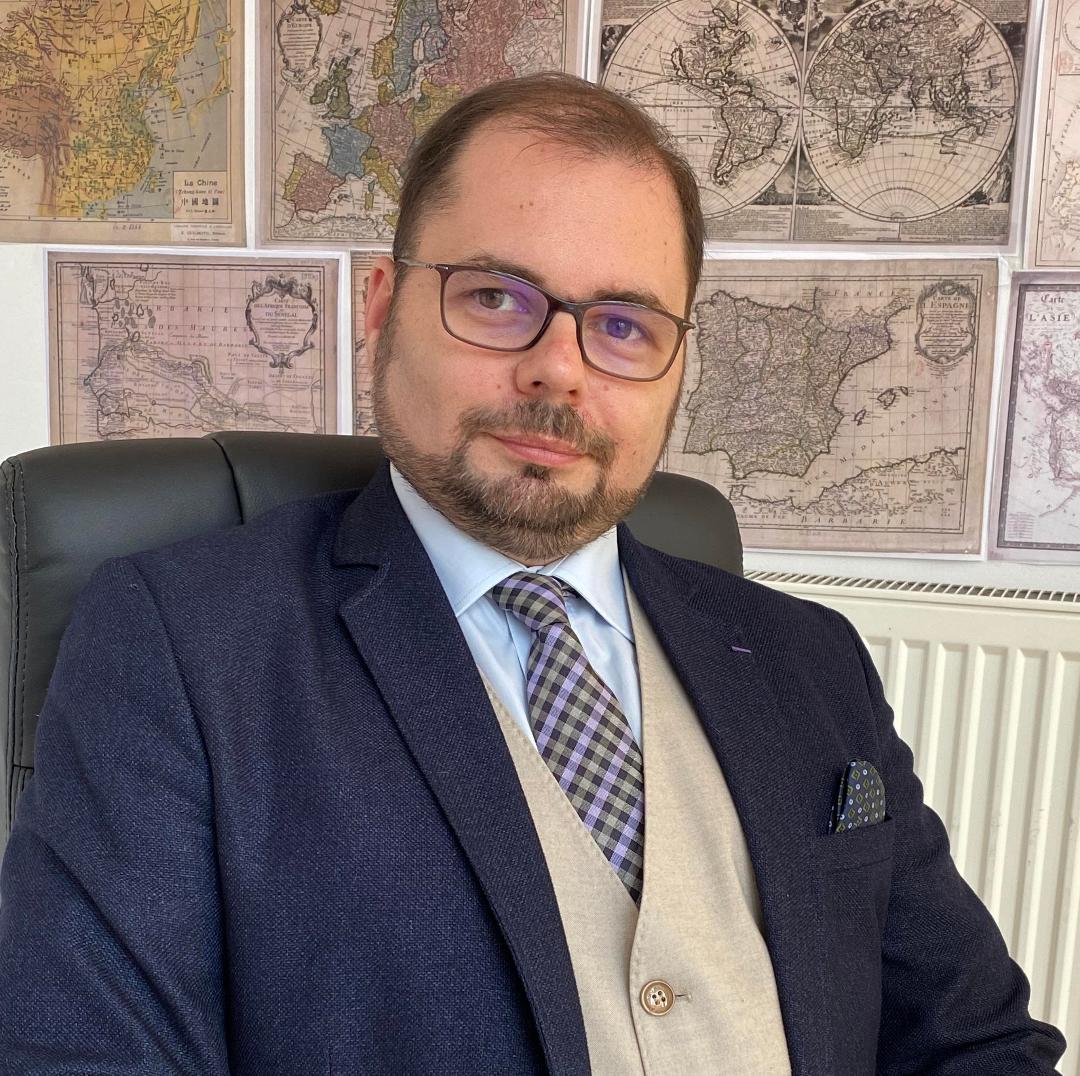
In this insightful interview, Professor Sergiu Mișcoiu at the Faculty of European Studies, Babes-Bolyai University in Cluj-Napoca (Romania), where he serves as a Director of the Centre for International Cooperation and as Director of the Centre for African Studies, discusses the political situation in the French-speaking West African countries, the existing multiple challenges and Russia’s diplomacy within the context of current geopolitical changes and the scramble for influence in Africa. Here are the interview excerpts:
To begin with, what are your arguments that Russia supports military coup plotters (Burkina Faso, Mali, Niger et cetera) in Africa?
The logic behind backing the coups is quite evident and relates to the strategy of Russia to fight against the West and to (re)entrench itself in Africa. As the former presidents of the three countries have been supported by the United States, the European Union, and above all, France, the only strategic option of a Russian re-emerging empire opposing the West was to back all the anti-Western forces wherever they might act and whoever they would be.
Since the late 2000s, Russia has been increasingly preoccupied with preparing the ground for anti-Western operations. The progressive entrenchment of the Kremlin-guided paramilitary groups (starting with the infamously Groupe Wagner) in the Central African Republic, then in Mali and to a lesser extent in other parts of Central and Western Africa, has only been the visible peak of the iceberg.
More effective were the troll farms populating the sub-continent with pro-Russian influencers and deploying campaigns of disinformation, which targeted especially the French and UN contingents deployed to fight the jihadist groups. These campaigns contributed to turning the public opinions of those states against the West and more importantly against their presidents, who were denounced as being the “Occident’s puppets”.
While the operations of the coups themselves were most probably not directly coordinated by Russia, the attitude of the national military forces and of the mass of demonstrators who backed the coups was shaped by Russia. The fact that the new juntas in power immediately made declarations and gestures (such as state visits) of rapprochement towards Russia testifies once more of a mechanical convergence of interests between the new strongmen in Bamako, Ouagadougou and Niamey, to which Russia has abundantly contributed over the last decade.
As it explicitly shows, Russia is seemingly interested in military governance in Africa. Does that set the precedence for future military takeovers in Africa?
The outcome of the coups in the three Sahel states encouraged Russia to pursue its strategy in other African countries. Nonetheless, the dismantlement of the Wagner Group and the difficult reorganization of its remaining elements made the Kremlin’s task more difficult, as some axes of penetration into the decision-making and military milieus of the African countries have been strongly shaken, although the new high responsible for the operations, Vladimir Alexeyev, makes substantive efforts to regain control over the remaining networks.
Moreover, the amplitude of Dimitri Prigozhin’s finally aborted rebellion against the Kremlin raised some questions in the minds of many African political, business and military supporters of Moscow. Among those questions, the most important is the following: If the Russian regime itself was on the verge of facing a military attack against its capital, how could it guarantee our support in the eventual case we will try to conduct coups similar to those in the Sahel countries? Consequently, the other would-be putschists’ enthusiasm for following the Sahelian coups’ path has naturally diminished.
Do transitions from democratic governance to military governments have any meaning for fighting growing trends of neo-colonialism in Africa?
Neo-colonialism in Africa has been a growing reality since the end of the Cold War and reached a pinnacle by the early 2000s. Then, the combined effects of September 11 and the anti-neocolonial activism of some leaders such as Laurent Gbagbo in the Ivory Coast rebalanced the power relations making the West increasingly dependent on the strategic support of the “friendly” African heads of state.
More salient in the case of the former French colonies, this process could be suggestively described by the transformation of the “Françafrique” into the “Afrique-France”, with Gabon’s historical leader Omar Bongo gaining unprecedented leverage, going so far as he was able to influence the composition of the French governments of those times. But once again, this page was turned with the world economic crisis of 2008-2011 and with the considerable growth of the jihadist attacks, leading to the destabilization of Mali and the risk of generalization over the entire Sahelian region.
The French-led anti-jihadist operations Serval and then Barkhane, deployed in Mali and reshaped later on into an international security task force with a wider focus on the Sahel, have implicitly deprived to some extent the democratically elected presidents of Niger, Burkina and Mali of their autonomy in matters related to national security and political strategy. This was seen by many as the ultimate proof of the return to colonialism. As the results of the fight against Islamist terrorism have been increasingly modest, especially after 2019, the contestation of the Western-backed presidents has become widespread at different levels of society, of the institutions and of the security forces. This explains the popular support for the series of coups perpetrated in the three countries and shows the important potential that anti-neo-colonialism has as a galvanizer of the discontented peoples of Africa.
Despite the above narratives, do you think the 15-member regional economic bloc, must be firm with the ‘Silence-the-Guns’ policy adopted several years ago by the African Union?
The Economic Community of West African States (ECOWAS) was caught in the trap of its transformation from a quasi-economic organization to a semipolitical one. If by 2010, the policy of sanctions against illegitimate governments and the direct interventions it operated (like the one in The Gambia against the former president Yahya Jammeh, who refused to leave power after losing the elections in 2017) encountered a relative success, the more recent policies proved inefficacious, culminating with the July 2023 postponed and ultimately cancelled intervention against the putsch in Niger. The legitimacy of ECOWAS has been strongly contested by the new military regimes. At the same, the ‘Silence-the-Guns’ AU-inspired policy has proved idealist, especially when it comes to the conflicts in the Sahel that multiplied “under the watch” of the two organizations.
A research report from the South African Institute of International Affairs (SAIIA) describes Russia as ‘a virtual investor’ in Africa, most of its limitless pledges and several bilateral agreements largely aimed at luring (woo-ing) African states and leaders to support its ‘special military operation’ in neighbouring Ukraine. What are your expert views and arguments here?
Vladimir Putin has intended to restore the mightiness of the Soviet Union, including its influence over the African continent. But unlike the USSR, Russia didn’t and doesn’t dispose of the financial and logistic resources needed to massively invest in the key sectors. To compensate for its economic debility, the
The Kremlin inaugurates almost insignificant but ostentatious investment projects and at the same aggressively promotes the anti-Western discourse (“Russia helps, the West takes”).
Moreover, it uses the dependence of several African countries on Russian cereals to “adjust” their positions about the illegal Russian war against Ukraine, especially when it comes to votes taken in the UN General Assembly. A strategy of combination between the Russian para-military presence and massive resource grabbing was applied in the Central African Republic (CAR), where President Faustin-Archange Touadéra saved his seat by relying on a Russian praetorian guard, while in exchange he accepted to formally or informally grant extended rights of exploitation of many gem mines to the companies led by Kremlin-friendly oligarchs, who are the new de facto rulers of the respective mining areas and implicitly of some wider regions in the CAR. Seen as a “laboratory” for the further expansion of this toxic model, the CAR is praised by the Russian military-business elites, who suffer because of the international sanctions, as an Eldorado, proving once again the particularly aggressive neocolonial strategy that Moscow is implementing while criticizing the West.
In practical terms and compared to China, do you think Russia has made a visible impact on the economy and infrastructure development in the continent since the collapse of the Soviet era in 1991?
China has disposed of important financial resources and has been at least between the 1990s and the end of the 2010s incomparably less violent than Russia in spreading its influence all over the African continent. Being led by a regime that spoused the “state capitalist” system, China was capable of using most opportunities provided by the intensive globalization process to extend its presence and consolidate its soft economic power. It succeeded in impressing via its investments in the road and railway infrastructures, in ports, in some major public buildings and other sectors. As compared to China, Russia made almost no difference through its modest investments and bet its entire strategy on this mixture of, on one hand, the renewal of the former USSR networks and the reification of the Soviet past, and on the other, the direct intrusion in the domestic conflicts of the most vulnerable African states.
Can we conclude this discussion with the significance of peace, justice and strong state institutions (UN SDG 16), what has been achieved over the past few years, the challenges and the way forward in West Africa?
Unfortunately, SDG 16 is an untouchable horizon for most African states at this stage. The return of the jihadist threat in several regions of the Sahel, Western Sahara, but also Central and Western Africa, with the extension of the operations of various groups affiliated with Al-Qaeda, ISIS or Boko Haram has engendered an important security crisis that crucially affected the stability of the African states.
The series of coup d’états and unconstitutional replacements of the former or acting leaders (in Guinea, Mali, Burkina Faso, Chad and Niger) was a response to the ineptitude of the democratic institutional settings to guarantee the basic rights of the citizens, starting with the rights to live and security. The new geopolitical thick division caused by the 2022 Russian invasion of Ukraine contributed to the aggravation of the security context, especially in terms of food and human security, and deprived many African governments of their capacity to negotiate with multiple actors at different levels, as they are now constrained to pick sides and to act accordingly, like during the Cold War era. If the actual trends continue, I am not optimistic at all about the possibility of getting closer to meeting this SDG.


