Feature/OPED
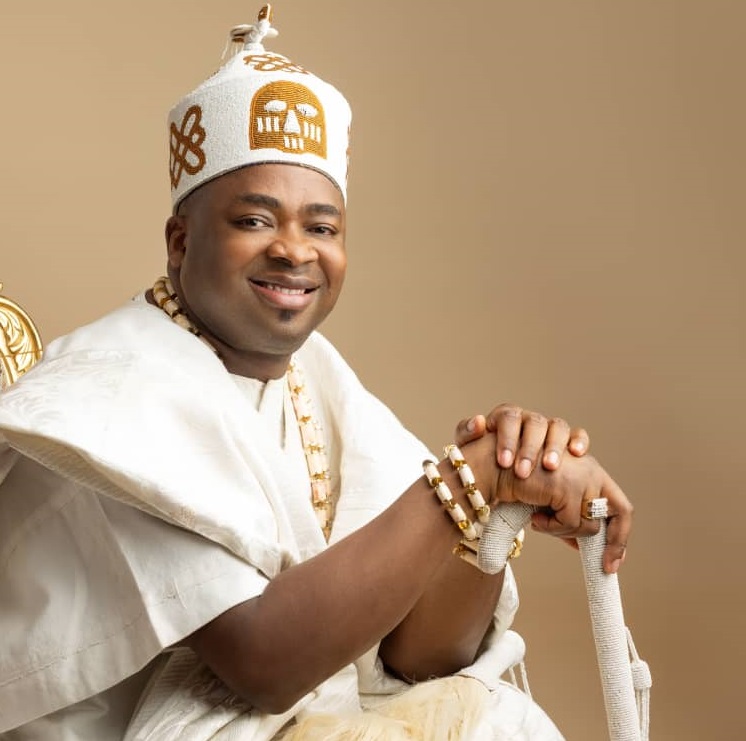
Elegushi…14 Years on, Unscathed, Unsullied, Undaunted
By Temitope Oyefeso
It seemed just like yesterday when he was crowned as the 21st Elegushi and the second to wear a beaded crown. But that was back in 2010; 14 years ago!
Unbeknownst to the kingmakers and council of chiefs of the Ikate-Elegushi kingdom, they were only fulfilling a divine assignment; choosing the son, who was just 34 years old, to step into the legendary shoes of his late father.
They didn’t envisage that they were crowning not just a prince that is steeped in the rich pedigree of his forebears, but also a benevolent and visionary leader who would rewrite the story of the coastal community.
In a society often plagued by turmoil and uncertainty, Oba Saheed Ademola Elegushi, Kusenla the third, has stood unwaveringly for 14 years, unscathed and untainted by the ebbs and flows of time and power. With a deep sense of duty and dedication to his community, Oba Elegushi embarked on a journey of innovation, inclusivity, and transformation.
His reign, marked by stability, progress, and integrity, serves as a beacon of hope and inspiration for his subjects and an observant nation.
Under Oba Elegushi’s leadership, the Ikate-Elegushi kingdom has experienced unprecedented progress, prosperity, and development across various sectors. From infrastructure, and education, to healthcare and commerce, the kingdom has undergone a remarkable transformation, becoming a hub of tourism and investment opportunities in Lagos State.
One of Oba Elegushi’s key priorities has been the empowerment and development of the youth in his domain. Recognising the potential of young people as the kingdom’s future, he has implemented numerous initiatives to support their education, skills development, and entrepreneurship. Through scholarships, vocational training programs, and youth empowerment schemes,
Oba Elegushi has enabled countless young people to realize their full potential and contribute to the growth of their community.
Despite the pressure, challenges, and obstacles that pockmark kingship and public office, Oba Elegushi remains undaunted, leading with integrity and humility while inspiring a new generation of leaders to follow in his footsteps and shaping a legacy that will endure for a long time.
In an era plagued by fake news and divisive characters, Oba Elegushi’s ability to unite and inspire serves as a powerful reminder of the potential for positive change when guided by the principles of integrity and compassion. His eventful reign so far is a testament to the enduring power of leadership rooted in service, selflessness, and a deep commitment to the common good.
As we reflect on his 14 years of steadfast and storied leadership, it is clear that Oba Saheed Elegushi’s impact goes far beyond the borders of his kingdom. His unwavering commitment to peace, development, and national cooperation has positioned him as a respected statesman, advocating for development and championing causes that promote unity and inclusivity.
Thus, as a grateful and gracious people, we can only show our appreciation by carrying forward his vision of a more just, peaceful, and prosperous society.
May his sterling examples continue to inspire us to strive for excellence, to embrace integrity, and to always seek the greater good in all we do.
May your reign continue to be peaceful and prosperous, Your Majesty.
Temitope Oyefeso is Special Assistant on Public Affairs to His Majesty
Feature/OPED
GLO@23: How Billionaire Otunba Mike Adenuga Built a Telecom Empire That Refuses to Sell Out
By Bodex Hungbo
In a corporate world where corporate giants regularly swap boardrooms like trading cards and sell off equity at the first sign of volatility, one legendary tycoon continues to prove that absolute control is the ultimate power move. That man is Otunba Mike Adenuga Jr., the visionary billionaire whose dense belief in indigenous enterprise gave birth to Globacom, the telecom powerhouse affectionately known across the continent as Glo.
As Globacom marks a monumental 23-year milestone, the spotlight shines brightly not only on the company’s extraordinary ascent, but on the enduring legacy of its founder. Adenuga stands as the only Nigerian to establish, nurture, and retain 100% sole ownership of a national telecommunications network; one that has evolved into one of Africa’s most recognisable, resilient, and influential brands.
While rival networks scrambled through endless corporate restructuring, foreign buyouts, hostile takeovers, and high-stakes rebrandings, “The Bull” pulled off what many in international finance considered impossible: holding complete control of Nigeria’s proudest homegrown tech giant for over two decades without surrendering a single inch of authority.
From the very beginning, Adenuga refused to follow the standard playbook written by foreign multinationals. When Globacom officially launched in August 2003, the market was heavily dominated by well-funded international operators who insisted that certain consumer-friendly models were economically impossible in Africa. Sceptics openly declared that a wholly indigenous, single-owner startup could never go toe-to-toe with established global giants.
Adenuga didn’t just compete; he single-handedly revolutionised the entire landscape.
At a time when competitors claimed that charging consumers per second rather than per minute was technically unfeasible, Glo introduced per-second billing on day one. By charging 1 kobo per second, Globacom shattered the status quo overnight, forcing the entire telecom industry to follow suit. That single disruptive move democratised mobile access, saved everyday Nigerians billions of Naira, and transformed mobile phones from luxury items for the elite into essential tools for the masses.
Adenuga’s commitment to self-reliance went far beyond marketing strategies; it was backed by monumental capital investments in hard infrastructure. To ensure that Glo would never be beholden to external actors, he funded game-changing projects directly from his own vision and capital.
Chief among these milestones was the construction of Glo-1, a multi-million-dollar, high-capacity submarine fibre-optic cable stretching over 9,800 kilometres directly from the United Kingdom to Nigeria. Single-handedly funded without taking a single dollar in foreign equity, Glo-1 provided West Africa with unprecedented broadband capacity, drastically improving internet speeds, powering corporate enterprises, and anchoring the region’s digital economy.
Alongside this undersea marvel, Globacom built an extensive terrestrial fibre-optic backbone across Nigeria, expanding coverage into underserved rural communities and providing the critical pipeline for modern data services, mobile banking, and digital commerce.
The fierce independence that defines Globacom is a direct reflection of its founder’s personal journey. Adenuga’s rise is the ultimate story of relentless African grit. Long before he was dubbed “The Bull” of African commerce, a young Adenuga drove taxis and worked security jobs in the United States to pay his way through university.
Returning to Nigeria with a sharp mind and an insatiable work ethic, he built his fortune brick by brick. He conquered hard commodities, established a presence in oil and gas with Conoil, mastered corporate banking, and ultimately turned his sight toward telecommunications. Every venture was driven by the same philosophy: absolute dedication, hands-on execution, and a fierce refusal to settle for second best.
Despite commanding a multi-billion-dollar fortune, Adenuga remains famously reclusive. Operating largely away from public cameras and party circuits, he chooses to let his work speak for him. His quiet philanthropy, strategic investments, and relentless job creation have lifted thousands of families and injected vital energy into the broader West African economy.
Beyond cell towers and fibre-optic lines, Globacom transformed itself into an iconic symbol of African pride. Recognising the power of local culture long before global streaming platforms arrived, Adenuga turned Glo into the largest single corporate promoter of African entertainment and sports.
Glo flooded the creative industry with record-breaking sponsorship deals and endorsements, signing Nollywood legends, musical powerhouses, and sports heroes as brand ambassadors. From sponsoring the prestigious CAF African Footballer of the Year Awards and the Nigerian Premier League to funding cultural festivals, comedy tours, and reality shows, Glo actively elevated African talent to global prominence.
Through these cultural investments, the brand cultivated an emotional connection with millions of subscribers, proving that an African brand could stand tall, celebrate its heritage, and deliver world-class service without losing its soul.
Industry analysts frequently cite Globacom as more than just a corporate success; it is an enduring case study in what happens when visionary local leadership is matched with long-term capital and solid determination. Over 23 years, Glo has weathered fierce market competition, rapid technological transitions from 2G to 5G, and volatile macroeconomic shifts, all while maintaining its position at the top tier of African telecommunications.
As customers, industry leaders, and well-wishers celebrate GLO@23, the milestone serves as a powerful tribute to a titan who dared to build on his own terms.
Today, Globacom isn’t merely a telecom network; it stands as living proof of African capability, self-determination, and industrial excellence. As the green network prepares for its next era of digital expansion, artificial intelligence integration, and next-generation connectivity, one truth remains crystal clear across Africa’s business landscape: The Bull is still on the throne, and his legacy is built to last.
Feature/OPED
The Risk of Calling Alex Otti ‘Another Sam Mbakwe’
By Blaise Udunze
Do you know that history rarely produces leaders whose names become synonymous with development? In Nigeria’s post-independence political history, only a few governors have achieved that distinction. And, among them stands Dee Sam Mbakwe, whose tenure as Governor of the old Imo State between 1979 and 1983 permanently and to date altered public expectations of what purposeful leadership could accomplish.
One outstanding fact that can’t be erased is that even more than four decades after leaving office, Mbakwe’s name remains shorthand for visionary governance. It has been on record that across today’s Imo, Abia, Ebonyi and parts of Rivers State, the territories carved out of the old Imo State, roads, educational institutions, hospitals and industrial estates associated with his administration still shape public memory to date. His lasting and enduring legacy demonstrates an important principle that visibly shows that governments are remembered less for political speeches or white elephant projects in print than for institutions and infrastructure that survive them.
Today, a similar conversation is unfolding in Abia State. Governor Alex Otti, now in the middle of his first term, is increasingly being compared with the legendary Mbakwe. While noting that it is not a risk, such comparisons should neither be dismissed as political enthusiasm nor accepted as settled history. They deserve careful examination through the lens of governance, economics and institutional transformation. History ultimately rewards evidence, not sentiment.
The more important and inevitable question, therefore, is whether Abia is merely experiencing another burst of public infrastructure or whether it is witnessing the emergence of a developmental state that is strongly built and anchored on long-term economic transformation because the distinction truly matters.
Apt attention is drawn to the view that development economists have long argued that sustained economic growth depends not on isolated projects but on complementary investments in infrastructure, energy, institutions, human capital and productive enterprise. Roads without electricity rarely attract industries. Schools without jobs encourage migration. Fiscal discipline without investment suppresses growth. Successful governments integrate these sectors into a coherent development strategy.
Measured against this framework, Otti’s administration appears to be pursuing something more ambitious than conventional public works.
For decades, the majority of those in the know and who have visited could attest that Abia’s deteriorating road network represented the visible face of state failure. Aba, once known as the commercial heartbeat of the South-East and also one of Africa’s largest clusters of small and medium-scale manufacturers, gradually lost competitiveness as logistics costs rose and businesses struggled with decaying infrastructure.
Economic theory is unequivocal in that infrastructure reduces transaction costs, improves productivity and attracts private investment.
Recognising this reality, the Otti administration has made infrastructure renewal its most visible priority. By its third anniversary, the government reported completing more than 414 road projects covering over 860 kilometres, including strategic economic corridors such as Port Harcourt Road, Ohanku Road, Aguiyi Ironsi Boulevard, Omenuko Bridge and numerous urban and rural link roads.
The significance extends beyond asphalt. This is to say that every rehabilitated road lowers transport costs, improves market access, reduces vehicle operating expenses and enhances the competitiveness of manufacturers, traders and farmers. There must be an understanding that infrastructure, in this context, becomes an economic policy rather than merely a construction programme.
The symbolism of these projects recalls Sam Mbakwe’s philosophy that public works should stimulate production rather than merely create political visibility. Like Mbakwe, Otti appears to recognise that infrastructure is not an end in itself but the foundation upon which economic prosperity is built.
If roads defined Mbakwe’s administration, reliable electricity may ultimately define Otti’s.
Few constraints have damaged Nigeria’s industrial competitiveness more than unreliable power supply. Recognising this, the administration has leveraged the Aba Integrated Power Project developed by Professor Barth Nnaji’s Geometric Power as a catalyst for wider economic transformation.
It is worth noting that Governor Otti has openly acknowledged that more reliable electricity provided the confidence to introduce electric buses into Abia’s transportation system, describing Geometric Power as “a landmark investment” that lays the foundation for industrial growth, energy security, and cleaner transportation. Hence, it has become the goose that lays the golden eggs, as his admission is significant because it demonstrates an understanding that electricity is not merely a utility but an engine of economic growth.
Development is rarely driven by isolated projects. It occurs when infrastructure complements infrastructure. Electricity powers factories. Roads move goods. Efficient transportation expands labour mobility. Water improves public health. Digital infrastructure attracts investment. Together, they create an ecosystem capable of sustaining economic growth.
Professor Barth Nnaji’s disclosure adds another historical dimension to this story. Long before entering politics, Alex Otti played a critical role in securing financing for the Geometric Power Project during his banking career at First Bank and later Diamond Bank. He also helped facilitate the restructuring of the project’s foreign currency obligations from dollars to naira. This continuity suggests that Otti’s commitment to industrial infrastructure predates his governorship. Unlike politicians who discover development after assuming office, his engagement with productive investments appears rooted in decades of experience within Nigeria’s financial system.
One of the enduring criticisms of many Nigerian states is their dependence on monthly allocations from the Federation Account Allocation Committee (FAAC), with limited attention paid to expanding internally generated economic activity. Sam Mbakwe challenged that model through industrial estates and productive public investments.
Otti appears to be pursuing a twenty-first-century version of the same philosophy.
The proposed $145 million solar manufacturing plant in Isiala Ngwa South, government support for Ultimum Limited’s multimillion-dollar beverage manufacturing facility, efforts to operationalise the long-delayed Isiala Ngwa Inland Dry Port and continued urban renewal in Aba all point towards an economy increasingly oriented towards production rather than consumption.
These initiatives matter because investment decisions respond to confidence. Capital flows where infrastructure is reliable, institutions are predictable, and governments demonstrate policy consistency. Every new factory expands employment. Every logistics hub reduces business costs. Every industrial investment broadens the state’s future tax base. This is how economies become less dependent on federal allocations and more reliant on productive enterprise.
Modern development extends beyond physical infrastructure. Recognising this reality, the administration has invested in healthcare, expanded educational reforms, upgraded public hospitals, recruited teachers and healthcare personnel and partnered with the Federal Government, the United Nations Development Programme (UNDP) and TETFund to establish Nigeria’s first Manufacturing Technology University Innovation Pod at Michael Okpara University of Agriculture, Umudike.
The symbolism is significant. While Mbakwe built institutions for an industrial economy, Otti appears to be preparing Abia for an innovation-driven economy where manufacturing increasingly depends on technology, research and advanced skills. Development today requires not only roads and bridges but also intellectual infrastructure.
Beyond healthcare and education, the rehabilitation of the Ubakala and Ariaria Water Schemes underscores the administration’s recognition that access to potable water remains a critical driver of public health and productivity. Likewise, it would be said that the rollout of electric buses, commissioned by the Director-General of the World Trade Organisation, Dr Ngozi Okonjo-Iweala, represents an early attempt to align Abia’s transportation system with global trends in sustainable urban mobility. The basic fact is that these initiatives reinforce the idea that development is most effective when sectors are integrated rather than treated as isolated government programmes, which has been a norm with many states.
Perhaps the least visible but most consequential reform lies in governance itself.
Markets respond not merely to infrastructure but to credibility. Businesses invest where contracts are respected. Banks lend where institutions function. Citizens willingly pay taxes where governments deliver services.
Against this backdrop, efforts to improve fiscal discipline, reduce inherited liabilities, clear more than N40 billion in salary and pension arrears, strengthen transparency and restore confidence in public administration become economic reforms in their own right.
Governance is itself infrastructure. It lowers uncertainty, attracts investment, encourages entrepreneurship and expands opportunity.
One cannot overlook the growing external validation of Abia’s transformation. Members of the Presidency’s Renewed Hope Media Team, after touring projects across the state, publicly acknowledged the scale of infrastructural renewal taking place. The willingness of investors to commit $145 million to a solar manufacturing facility, the collaboration between the Abia State Government, the Federal Government, UNDP and TETFund on innovation projects, and ongoing discussions around the Abia International Airport all point to increasing confidence in the state’s development trajectory.
This matters because no state government possesses sufficient resources to finance development alone; as such, partnerships also come to the rescue. Sustainable economic transformation depends on attracting private investment, fostering productive partnerships and creating an enabling environment where businesses can flourish and remain sustainable.
Notwithstanding, understand that comparisons with Sam Mbakwe should be aptly approached with caution. History has already delivered its verdict on Mbakwe, and there must be this understanding that his reputation has endured because successive generations continued to experience the value of the infrastructure and institutions he built.
Alex Otti’s story is still being written. Many flagship projects remain under construction. The proposed Abia International Airport, the planned FIFA-standard stadium in Aba, the expansion of industrial clusters, the operationalisation of the Isiala Ngwa Inland Dry Port and other strategic initiatives must ultimately translate into measurable improvements in economic performance.
The true indicators of success will not simply be kilometres of roads completed or projects commissioned. They will include higher internally generated revenue, increased private investment, expanded manufacturing output, lower unemployment, stronger small and medium-sized enterprises, improved educational outcomes, wider healthcare access, increased exports and rising household incomes.
These are the metrics that distinguish transformational governance from routine administration.
Nigeria has never lacked development plans. What it has often lacked is disciplined execution.
Sam Mbakwe demonstrated that purposeful leadership could transform public expectations even within a single tenure. Alex Otti appears to be pursuing a similar path under far more difficult macroeconomic conditions characterised by high inflation, fiscal constraints, exchange-rate volatility, elevated public debt and heightened public scrutiny.
Whether he ultimately joins the ranks of Nigeria’s truly transformational governors will depend less on today’s commendations than on tomorrow’s outcomes.
If the institutions being built endure, if industries expand, if investors continue to choose Abia, if innovation flourishes and if ordinary citizens experience sustained improvements in their quality of life, history may indeed place Alex Otti alongside Sam Mbakwe.
For history has always reserved its highest honours not for politicians who merely won elections, but for leaders who fundamentally changed the economic destiny of their people.
Blaise, a journalist and PR professional, writes from Lagos and can be reached via: bl***********@***il.com
Feature/OPED
The Kaduna Peace Model, HURIWA and Northern Governors: Promise, Proof or Anagnorisis?
By Sani Abdulrazak, PhD
The fundamentality of securing our lives and property, especially in Northern Nigeria, cannot be overemphasised. Any other responsibility comes after this for a responsible government. Sadly, for close to two decades, Northern Nigeria has been a gallows of despair, rape, and death. From banditry and freelance killings that scratch, pierce, and are ruining the North West, to the bloody insurgency that barks and bites in the North East, to farmers-herder conflicts in the North Central, leaving behind a scorching trail of rancour and sorrow of unimaginable proportion for millions, Kaduna State was one of the worst-hit states in terms of banditry and kidnappings, ethno-religious conflicts, and freelance killings.
But in the last three years, the state has metamorphosed into one of the most peaceful in the region via the Kaduna Peace Model. More so, the recent endorsement of the Kaduna Peace Model by the Human Rights Writers Association of Nigeria (HURIWA) deserves thoughtful examination rather than unquestioning acceptance. HURIWA’s position has brought renewed attention to Kaduna State’s approach to conflict management and peacebuilding. The endorsement raises an important policy question: Has Kaduna developed a governance model capable of reducing conflict in a sustainable manner, and if so, why have other northern states not moved to adapt it? These questions deserve answers rooted in facts rather than political loyalties.
The phrase “Kaduna Peace Model” does not point to or refer to a single law, policy document, or institutional framework. Rather, it describes an evolving approach that combines conventional security operations with community engagement, dialogue among stakeholders, collaboration with traditional and religious institutions, support for security agencies, conflict mediation, and development interventions in communities affected by violence. Instead of relying exclusively on military responses, the approach seeks to address some of the social and political conditions that often sustain insecurity. Whether this amounts to a distinct governance model remains open to debate. Nevertheless, it reflects a broader understanding that lasting peace requires more than the deployment of armed personnel. Security may suppress violence temporarily, but durable peace depends equally on trust, inclusion, justice, and economic opportunity.
The next question is unavoidable: Has the approach worked?
The evidence suggests that Kaduna today presents a different security picture from that of three years ago, although not an entirely peaceful one. Around 2023, the state remained one of Nigeria’s most violence-affected regions. Conflict trackers documented frequent attacks, kidnappings, and communal violence, with 85 recorded conflict incidents resulting in 261 fatalities in the final quarter of 2023 alone. Entire communities lived under constant fear, farming activities were disrupted in several local government areas, and many roads within the state became synonymous with insecurity.
Recent years, however, indicate a significant degree of improvement in almost all parts of the state. Some communities have resumed agricultural activities, commercial movement has improved along previously troubled corridors, and government engagement with local communities has become more visible. These developments suggest that violence has, in almost all areas of the state, reduced in intensity. Yet such observations should not be mistaken for a declaration of victory.
A meaningful assessment, however, goes beyond casualty figures alone. It must also consider whether displaced persons have returned home, whether schools operate without interruption, whether farmers cultivate their lands without fear, whether markets function normally, and whether citizens genuinely perceive improvements in their daily security. Peace, as we know it, is not merely the absence of gunfire; it is the restoration of ordinary life.
It is within this context that HURIWA’s endorsement should be understood.
Civil society organisations play an important role in recognising promising governance practices, encouraging innovation, and stimulating public debate. Their endorsements can influence policy conversations and encourage governments to learn from one another. However, endorsements are neither official certifications nor substitutes for independent evaluation. Every governance model, regardless of who praises it, must remain open to scrutiny, evidence, and continuous improvement.
The larger question, therefore, is whether the Kaduna experience can be replicated elsewhere across Northern Nigeria.
It is a fact that certain principles underlying the Kaduna approach are broadly applicable. Community dialogue, cooperation between government and traditional institutions, investment in local peacebuilding, and stronger collaboration with security agencies are strategies that have relevance beyond Kaduna’s borders. But due to the non-uniformity and complexity of the hydra-headed nature of insecurity across Northern Nigeria, it becomes almost impossible for the model to work across the whole of Northern Nigeria. The security dynamics of Kaduna differ from those of Zamfara, Katsina, Sokoto, Niger, Benue, Plateau, or Borno. Banditry, communal conflicts, terrorism, farmer-herder disputes, and transnational criminal networks vary significantly in their causes and manifestations. A strategy that succeeds in one environment cannot simply be copied into another without adjustment.
This probably explains why other northern governors have not simply adopted what is popularly described as the Kaduna Peace Model. Effective governance is context-specific. Every state possesses different demographic realities, institutional capacities, historical grievances, and security challenges. Replication without adaptation risks producing disappointing outcomes. If northern states are to draw lessons from Kaduna’s experience, several adjustments are necessary. Independent conflict assessments should precede policy adoption. Local governments must become stronger partners in peacebuilding. Traditional and religious leaders should be integrated into structured dialogue mechanisms rather than informal consultations alone. Reliable security data should guide decision-making, while transparent monitoring systems should measure outcomes beyond political narratives. Economic recovery, youth employment, and access to justice must complement security interventions if peace is to endure.
Despite its widely acknowledged contributions to reducing insecurity and fostering dialogue over the past three years, the Kaduna Peace Model is not without significant shortcomings. One of its most notable weaknesses is the absence of a clearly documented framework that defines its philosophy, guiding principles, operational structure, implementation strategy, monitoring indicators, and evaluation mechanisms. Consequently, much of what is described as the “Kaduna Peace Model” exists in practice rather than in a codified, replicable document, making independent assessment, institutional continuity, and adaptation by other jurisdictions difficult. Furthermore, the model remains heavily dependent on the commitment of the incumbent political leadership, raising concerns about its sustainability beyond the current administration. While it has contributed to stabilising many communities, it has yet to comprehensively address the underlying structural drivers of conflict, including competition over natural resources and historical grievances, and questions persist regarding transparency, measurable performance indicators, accountability, and the extent of participation by women, youth, victims, and other marginalised groups. These limitations suggest that although the model has demonstrated practical value, its long-term effectiveness would be strengthened through formal documentation, institutionalisation, a robust implementation framework, and regular independent evaluation.
Possibly the greatest lesson from Kaduna is not that it has discovered a perfect formula for peace. No society has. Rather, it demonstrates that conflict management increasingly demands governance approaches that extend beyond military deployments alone. Therefore, HURIWA’s endorsement should not be viewed as the conclusion of the conversation but as its beginning. Whether the Kaduna Peace Model becomes a genuine reference point for other states will depend less on public commendation than on rigorous evidence, independent evaluation, and its ability to produce durable improvements in the lives of ordinary citizens.
In governance, therefore, the true measure of peace is not the number of endorsements the Kaduna Peace Model receives. It is the number of lives it has protected, the communities restored, and the confidence with which citizens wake each morning believing that tomorrow will be safer than yesterday.
Sani Abdulrazak, PhD, is a writer, researcher and public affairs analyst based in Zaria, Kaduna State