Connect with us

Economy

Stock Investors Loses N74bn as Inflation Numbers Dampen Mood

Published

on

Attract Stock Investors

By Dipo Olowookere

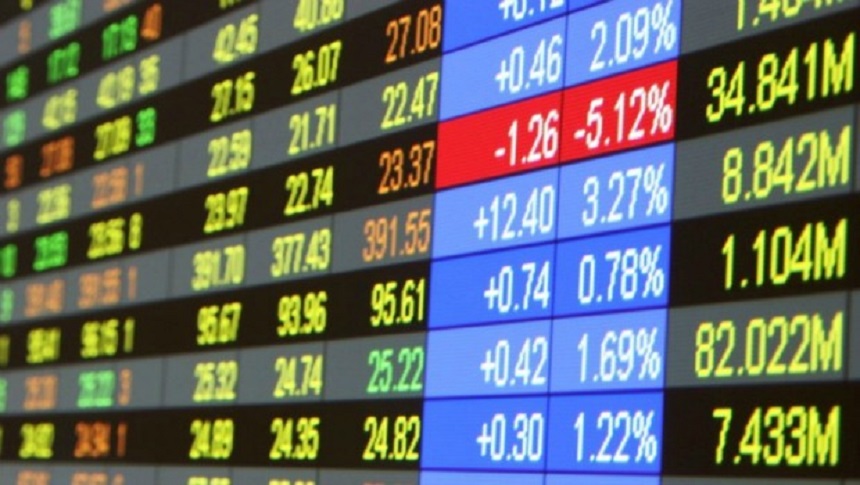
It was another awful day for stock investors at the Nigerian Exchange (NGX) Limited as the market further declined by 0.13 per cent on Wednesday.

The loss recorded at Customs Street at midweek was influenced by selling pressure, triggered by another rise in the inflation rate in the country.

The National Bureau of Statistics (NBS) yesterday disclosed that the average prices of goods and services increased by 33.69 per cent in April 2024 from 33.20 per cent in March 2024.

The soaring inflation rate was attributed to the hike in the prices of food items, which pushed the food inflation to 40.53 per cent in the period under review.

The jump in inflation only signals another tightening of the monetary policies by the Central Bank of Nigeria (CBN) next week, when it meets to decide what the benchmark interest rate should be.

The Governor of the CBN, Mr Yemi Cardoso, recently hinted that the cost of borrowing would remain high until inflation cools.

The inflation numbers on Wednesday spurred traders to further book profit, weakening the All-Share Index (ASI) by 130.56 points at the close of the session to 97,343.42 points from 97,473.98 points, as the market capitalisation declined by N74 billion to N55.058 trillion from N55.132 trillion.

Business Post reports that investor sentiment was poor yesterday as the bourse closed with 30 price losers and 13 price gainers, implying a negative market breadth index.

FTN Cocoa and PZ Cussons lost 10.00 per cent each to sell for N1.44 and N20.25 apiece, Sterling Holdings decreased by 9.89 per cent to N4.01, The Initiates slumped by 9.78 per cent to N2.03, and UAC Nigeria contracted by 9.76 per cent to N13.40.

Conversely, Custodian Investment appreciated by 9.63 per cent to N10.25, International Energy Insurance gained 9.29 per cent to close at N1.53, Sovereign Trust Insurance rose by 7.89 per cent to 41 Kobo, NPF Microfinance Bank soared by 7.10 per cent to N1.96, and Champion Breweries surged by 6.11 per cent to N3.30.

The panic selling at midweek raised the trading volume and value by 15.98 per cent and 22.41 per cent, respectively, while the number of deals retreated by 7.77 per cent.

Investors bought and sold 355.6 million shares worth N7.1 billion in 7,333 deals during the trading day versus the 306.6 million shares worth N5.8 billion transacted in 7,951 deals on Tuesday.

GTCO topped the activity chart with the sale of 71.9 million equities valued at N3.0 billion, Custodian Investors traded 65.5 million stocks for N785.3 million, Access Holdings exchanged 24.2 million shares valued at N416.7 million, Tantalizers transacted 21.3 million equities worth N12.4 million, and Prestige Assurance sold 17.5 million stocks for N9.0 million.


Dipo Olowookere is a journalist based in Nigeria that has passion for reporting business news stories. At his leisure time, he watches football and supports 3SC of Ibadan. Mr Olowookere can be reached via [email protected]

1 Comment

1 Comment

  1. Pingback: Daily Business Headlines – MAY 16, 2024 – Alpha Morgan Capital Managers Limited

Leave a Reply

Your email address will not be published. Required fields are marked *

Economy

Excitement as Invest in Lagos Summit 3.0 Kicks Off

Published

on

lagos view

By Aduragbemi Omiyale

Lagos State is currently agog because of the high-profile guests in the city for the Invest in Lagos Summit 3.0 commencing today, Monday, June 8, 2026.

The programme, which ends tomorrow, is themed Lagos: Business Gateway to Africa. It will feature a line-up of sessions focused on Lagos as Africa’s Global Gateway, the Future of Technology and Innovation, Unlocking Investment, Building the Cities of the Future, Global Partnerships for Growth, Talent, Creativity and Culture, and Energy and Sustainability.

The event is being put together by the Lagos State government and Commonwealth Enterprise and Investment Council (CWEIC).

The venue of the summit, Eko Hotel and Suites, is already lively, with the Lagos State Governor, Mr Babajide Sanwo-Olu; the Minister of Finance and Coordinating Minister for the Economy, Mr Taiwo Oyedele; the co-chair of the Lagos Finance and Investment Council (LFIC), Aigboje Aig-Imoukhuede; and the chief executive of Moniepoint Incorporated, Mr Tosin Eniolorunda, amongst others expected to speak.

The workshop is designed to position Lagos as Africa’s premier destination for investment, trade, innovation, infrastructure development, and economic partnerships.

It is focused on unlocking investment opportunities and accelerating sustainable economic growth. It will bring together high-level participants from across the public and private sectors to explore opportunities in technology, infrastructure, energy, manufacturing, finance, creative industries, and urban development.

According to the Lagos Commissioner for Information and Strategy, Mr Gbenga Omotoso, the programme has been carefully structured to move beyond conversations and focus on actionable outcomes that can stimulate investment inflows into Lagos State.

He said the conference will provide a platform to showcase the state’s investments in transportation, technology, energy, manufacturing, tourism, and urban development, while also highlighting opportunities for local and international investors.

“Invest in Lagos 3.0 is more than a conference; it is a strategic platform designed to connect investors with opportunities, facilitate meaningful partnerships, and showcase Lagos as Africa’s most attractive investment destination.

“Through this summit, we are bringing together government leaders, global investors, development institutions, and business executives to explore opportunities that will unlock growth, create jobs, and accelerate economic development across Lagos and Nigeria,” the Commissioner, who doubles as the Head of the Media Subcommittee, stated.

The gathering will also feature investment pitches by governors, exhibitions by participating organisations, networking opportunities, a gala dinner, and site visits to major infrastructure and industrial projects, including the Dangote Petroleum Refinery, Lagos Free Zone, Lagos Port, and RusselSmith’s advanced manufacturing facility.

Continue Reading

Economy

Nigeria to Frustrate Illegal Fishing Via €59m West Africa Ocean Initiative

Published

on

illegal fishing

By Adedapo Adesanya

The federal government has expressed readiness to leverage the €59 million West Africa Sustainable Ocean Programme (WASOP) as part of intensified efforts to combat illegal, unreported and unregulated (IUU) fishing while strengthening sustainable management of its marine resources.

The Minister of Marine and Blue Economy, Mr Adegboyega Oyetola, made this known in Abuja during a meeting with the European Union Ambassador to Nigeria, Mr Gautier Mignot, where both sides reaffirmed their commitment to deepening cooperation on maritime security and sustainable ocean governance.

Welcoming the EU Ambassador, Mr Oyetola commended the group for its longstanding partnership with Nigeria, particularly its support for maritime stability in the Gulf of Guinea, a region critical to global shipping and regional economic development.

He noted that the West Africa Sustainable Ocean Programme (WASOP) presents a timely opportunity to strengthen coordinated action against illegal fishing, improve ocean governance, and promote sustainable exploitation of marine resources across West Africa.

He said Nigeria is keen to fully engage with the programme to attract technical and financial support that will enhance enforcement capacity and boost the country’s blue economy ambitions.

The Minister stressed that illegal fishing remains a major threat to the marine ecosystem and coastal livelihoods, warning that IUU fishing continues to deplete fish stocks, undermine food security, and erode the economic well-being of coastal communities.

He said: “Illegal, unreported, and unregulated (IUU) fishing is a direct threat to national security, food sovereignty, and the survival of our coastal communities. We cannot afford to stand by and watch our marine ecosystems be depleted and economic livelihoods eroded.

“We are calling for an era of stronger international collaboration, backed by aggressive monitoring and uncompromised enforcement systems, to permanently dismantle these illicit operations and safeguard our waters.”

Mr Oyetola also highlighted ongoing reforms in Nigeria’s maritime sector under the National Policy on Marine and Blue Economy, which prioritises innovation, private sector investment, and sustainable development of ocean resources.

He referenced key milestones in the sector, including improvements in port operations and logistics, as well as enhanced maritime security.

He further noted that Nigeria is strengthening initiatives aimed at expanding its maritime infrastructure and improving competitiveness in global trade.

The Minister also reiterated the need for broader cooperation beyond piracy control, urging development partners to support Nigeria in addressing environmental crimes, human trafficking, and illegal fishing in a more integrated and coordinated manner.

He sought increased technical assistance from the European Union, particularly in surveillance systems, fisheries monitoring, and enforcement capacity to strengthen Nigeria’s ability to curb IUU fishing across the Gulf of Guinea.

On his part, Mr Mignot reaffirmed the European Union’s commitment to strengthening maritime cooperation with Nigeria and supporting regional efforts to ensure safer and more sustainable oceans.

He highlighted the West Africa Sustainable Ocean Programme (WASOP), a major EU-funded initiative designed to promote integrated ocean governance, sustainable fisheries management, and protection of coastal and marine ecosystems across West African countries.

According to him, the programme will support improved coordination among coastal states, strengthen enforcement mechanisms, and promote a more inclusive and sustainable blue economy in the region.

Continue Reading

Economy

65 Equities Drown Nigerian Exchange by 3.11% in Five Days

Published

on

Nigerian Exchange 1

By Dipo Olowookere

The Nigerian Exchange (NGX) Limited recorded a 3.11 per cent week-on-week loss last week as a result of the decline suffered by 65 equities. In the preceding week, the bourse ended with 51 price decliners.

In the five-day trading week, 23 equities appreciated compared with 34 equities a week earlier, while 58 equities remained unchanged versus 61 equities in the preceding week.

Business Post reports there was no room for the bulls in the week, as all other indices closed in red, except for the sovereign bond, which finished flat.

ABC Transport lost 24.73 per cent to trade at N6.21, University Press shrank by 17.07 per cent to N5.10, Eterna crashed by 12.92 per cent to N30.00, John Holt slipped by 12.09 per cent to N14.90, and First Holdco decreased by 11.43 per cent to N62.00.

On the flip side, International Energy Insurance gained 60.62 per cent to sell for N7.26, Abbey Mortgage Bank expanded by 47.24 per cent to N9.35, Tripple Gee grew by 9.80 per cent to N4.37, Ikeja Hotel increased by 9.45 per cent to N44.00, and RT Briscoe soared by 8.86 per cent to N14.86.

At the close of business, market participants traded 3.966 billion shares worth N175.659 billion in 343,587 deals, in contrast to the 2.398 billion shares valued at N111.480 billion transacted in 241,313 deals a week earlier, which had only three trading sessions due to the Sallah holiday.

The financial services industry led the activity chart with 2.690 billion stocks sold for N69.975 billion in 134,882 deals, contributing 67.83 per cent and 39.84 per cent to the total trading volume and value, respectively.

The services sector exchanged 323.601 million shares worth N6.443 billion in 25,906 deals, and the ICT segment traded 176.039 million equities valued at N27.892 billion in 40,837 deals.

Access Holdings, Abbey Mortgage Bank, and Sterling Holdco accounted for 1.290 billion units worth N17.560 billion in 17,768 deals, contributing 32.53 per cent and 10.00 per cent to the total equity turnover volume and value, respectively.

Continue Reading

Trending