Economy
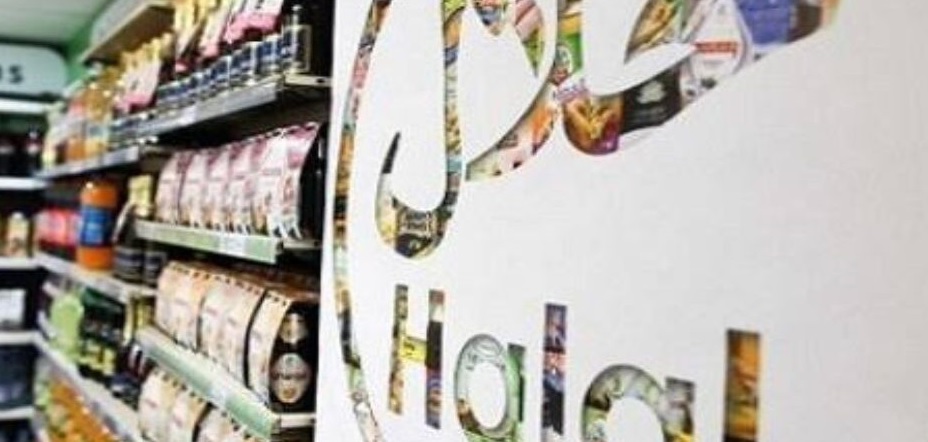
Nigeria Inaugurates Strategy to Tap into $7.7trn Global Halal Market
By Adedapo Adesanya
President Bola Tinubu on Thursday inaugurated Nigeria’s National Halal Economy Strategy to tap into the $7.7 trillion global halal market and diversify its economy.
President Tinubu, while inaugurating the strategy, called for disciplined, inclusive, and measurable action for the strategy to deliver jobs and shared prosperity across the country.
Represented by Vice-President Kashim Shettima, he described the unveiling of the strategy as a signal of Nigeria’s readiness to join the world in grabbing a huge chunk of the global halal economy already embraced by leading nations.
“As well as to clearly define the nation’s direction within the market, is expected to add an estimated $1.5 billion to the nation’s Gross Domestic Product (GDP) by 2027. It is with this sense of responsibility that I formally unveil the Nigeria National Halal Economy Strategy.
“This document is a declaration of our promise to meet global standards with Nigerian capacity and to convert opportunity into lasting economic value. What follows must be action that is disciplined, inclusive, and measurable, so that this Strategy delivers jobs, exports, and shared prosperity across our nation.
“It is going to be chaired by the supremely competent Minister of Industry, Trade and Investment.”
The president explained that the halal-compliant food exports, developing pharmaceutical and cosmetic value chains would position Nigeria as a halal-friendly tourism destination, and mobilising ethical finance at scale,” by 2030.
“The cumulative efforts “are projected to unlock over twelve billion dollars in economic value.
“While strengthening food security, deepening industrial capacity, and creating opportunities for small-and-medium-sized enterprises across our states,” he added.
Allaying concerns by those linking the halal with religious affiliation, President Tinubu pointed out that the global halal economy had since outgrown parochial interpretations.
“It is no longer defined solely by faith, but by trust, through systems that emphasise quality, traceability, safety, and ethical production. These principles resonate far beyond any single community.
“They speak to consumers, investors, and trading partners who increasingly demand certainty in how goods are produced, financed, and delivered. It is within this broader understanding that Nigeria now positions itself.”
Tinubu said many advanced Western economies had since “recognised the commercial and ethical appeal of the halal economy and have integrated it into their export and quality-assurance systems.”
President Tinubu listed developed countries, including the United Kingdom, France, Germany, the Netherlands, the United States, Canada, Australia, and New Zealand.
“They are currently among the “leading producers, certifiers, and exporters of halal food, pharmaceuticals, cosmetics, and financial products.”
He stated that what these developed nations had experienced is a confirmation of a simple truth, that “the halal economy is a global market framework rooted in standards, safety, and consumer trust, not geography or belief.”
The president explained that the Nigeria national halal economy strategy is the result of careful study and sober reflection.
He added that it was inspired by the commitment of his administration of “to diversify exports, attract foreign direct investment, and create sustainable jobs across the federation.
“It is also the product of deliberate partnership, developed with the Halal Products Development Company, a subsidiary of the Saudi Public Investment Fund.
“And Dar Al Halal Group Nigeria, with technical backing from institutions such as the Islamic Development Bank and the Arab Bank for Economic Development in Africa.”
The Minister of Industry, Trade and Investment, Mrs Jumoke Oduwole, said the inauguration of the strategy was a public-private collaboration that has involved extensive interaction with stakeholders.
Mrs Oduwole, who is the Chairperson, National Halal Strategy Committee, said that the private sector led the charge in ensuring that it is a whole-of-government and whole-of-country intervention.
The minister stressed that what the Halal strategy had done for Nigeria “is to position us among countries that export Halal-certified goods across the world.
The minister said, “We are going to leverage the African Continental Free Trade Area (AfCFTA) to ensure that we export our Halal-friendly goods to the rest of Africa and beyond to any willing markets; participation is voluntary. “
She assured that as the Chairperson, her ministry would deliver on the objectives of the strategy for the prosperity of the nation.
The Chairman of Dar Al-Halal Group Nigeria L.td, Mr Muhammadu Dikko-Ladan, explained that the Halal Product Development Company collaborated with the group in developing the strategy.
“In addition to the strategy, an export programme is underway involving the Ministry of Trade and Investment, through which Nigerian companies can be onboarded into the Saudi Arabian market and beyond.£
Mr Dikko-Ladan described the Strategy as a landmark opportunity for Nigeria, as it creates market access and attracts foreign direct investment.
Economy
Stock Market Drops 1.02% as BUA Cement Leads Losers’ Chart
By Dipo Olowookere
The bears quickly took control of the Nigerian Exchange (NGX) Limited on Wednesday, plunging the stock trading platform by 1.02 per cent after the Central Bank of Nigeria (CBN) left the benchmark interest rate at 26.50 per cent.
The bourse sank at midweek as BUA Cement led the losers’ chart, after closing lower by 10.00 per cent to N414.00. CAP lost 9.99 per cent to trade at N210.35, eTranzact shrank by 7.03 per cent to N17.20, International Breweries depreciated by 5.38 per cent to N12.30, and Deap Capital crashed by 4.92 per cent to N5.80.
On the flip side, Zichis led the gainers’ chart after it chalked up 9.99 per cent to sell for N32.04, ABC Transport rose by 9.99 per cent to N8.26, Japaul expanded by 9.95 per cent to N4.09, LivingTrust Mortgage Bank grew by 9.92 per cent to N4.21, and FTN Cocoa soared by 9.91 per cent to N10.76.
Business Post observed that despite the loss, investor sentiment remained bullish, as Customs Street finished yesterday with 42 price gainers and 24 price losers, indicating a positive market breadth index.
The insurance counter was the only riser at midweek, closing higher by 0.80 per cent due to bargain-hunting in the space.
However, profit-taking in the other sectors was responsible for the contraction recorded by the stock market on Wednesday.
The industrial goods segment lost 3.84 per cent, the consumer goods sector depreciated by 0.45 per cent, the banking index slumped by 0.31 per cent, and the energy industry dropped 0.10 per cent.
As a result, the All-Share Index (ASI) moderated by 2,573.05 points to 249,062.37 points from 251,635.42 points, and the market capitalisation depleted by N1.619 trillion to N159.661 trillion from N161.280 trillion.
A look at the activity chart showed that 600.2 million shares worth N32.7 billion exchanged hands in 58,958 deals on Wednesday compared with the 704.0 million shares valued at N32.2 billion transacted in 64,539 deals on Tuesday, implying a jump in the trading value by 1.55 per cent, and a shortfall in the trading volume and number of deals by 14.74 per cent, and 8.65 per cent, respectively.
Access Holdings led the activity chart with a turnover of 56.0 million units valued at N1.4 billion, Japaul transacted 49.9 million units worth N202.9 million, Zenith Bank traded 36.7 million units for N4.8 billion, Sterling Holdings sold 25.9 million units valued at N200.8 million, and Fidelity Bank exchanged 21.7 million units worth N499.6 million.
Economy
Oil Prices Slide 6% as Trump Says Iran Talks in Final Stages
By Adedapo Adesanya
Oil prices fell about 6 per cent on Wednesday after US President Donald Trump said that negotiations with Iran were in the final stages.
Brent crude futures went down by $6.26 or 5.63 per cent to $105.02 a barrel, and the US West Texas Intermediate (WTI) crude futures decreased by $5.89 or 5.66 per cent to $98.26 per barrel.
Despite saying talks with Iran were in the final stages, Mr Trump warned of further attacks unless Iran agreed to a deal, making investors remain wary about the outcome of peace talks as disruption to Middle Eastern supply continued.
Iranian foreign ministry spokesperson, Mr Esmaeil Baghaei, said Iran was ready to develop protocols for safe shipping traffic in cooperation with other coastal states.
Iran and the US have been in a stalemate for weeks now as Tehran blockades the Strait of Hormuz and Washington blockades Iranian ports. Hormuz is one of the world’s most important trade routes for oil and gas supplies.
Three supertankers crossed the Strait of Hormuz on Wednesday, carrying oil bound for Asian markets, after waiting in the Gulf for more than two months with 6 million barrels of Middle East crude on board. The number of vessels crossing the strait remains well below the 130 or so ships that crossed daily before the war.
Analysts at Citi said that they expect Brent crude to rise to $120 a barrel in the near term, stating that oil markets are underpricing the risk of prolonged supply disruption, and Wood Mackenzie estimated that it could approach $200 if the Strait of Hormuz stays largely shut until the end of the year.
The CEO of the state oil company of the United Arab Emirates (UAE), Mr Sultan Al Jaber, said on Wednesday that it will take at least four months to get back to 80 per cent of pre-conflict flows.
Crude oil inventories in the US decreased by 7.9 million barrels during the week ending May 15, according to new data from the US Energy Information Administration (EIA) released yesterday. The EIA’s data release follows figures by the American Petroleum Institute (API) that were released a day earlier, which reported that crude oil inventories saw a draw of 9.1 million barrels in the period.
Economy
Investors Eye Investment Opportunities in Dangote Refinery
By Aduragbemi Omiyale
The planned listing of the Dangote Petroleum Refinery & Petrochemicals on the Nigerian Exchange (NGX) Limited is already attracting interest from South African investors and others.
The leadership of South Africa’s Government Employees Pension Fund (GEPF), alongside the Public Investment Corporation and Alterra Capital Partners, were recently at the Lagos-based facility.
The chairperson of GEPF, Mr Frans Baleni, said that the refinery stands as evidence that Africa can execute transformational infrastructure projects when backed by visionary leadership, long-term investment and strong technical expertise.
According to him, the significance of the project extends well beyond Nigeria’s borders, noting that it should reshape how Africa thinks about itself.
“The Dangote Refinery and Petrochemicals Complex is a powerful demonstration that, with visionary leadership and long-term capital, that perception no longer holds. This is the kind of African-led industrial scale that institutional investors on this continent should be backing,” he said.
Also speaking, the chief executive of PIC, Mr Patrick Dlamini, described the refinery as one of the most transformative industrial projects undertaken on the continent, saying it is reshaping global perceptions about Africa’s industrial capabilities and economic potential.
He said PIC, which manages about $230 billion in assets largely on behalf of South Africa’s Government Employees Pension Fund, is actively seeking long-term partnerships aligned with infrastructure development, industrialisation and economic transformation across Africa.
“There is real strategic alignment between Dangote’s industrial agenda and how we are positioning our portfolio, and we look forward to exploring meaningful avenues for collaboration,” he stated.
While receiving his visitors, the chief executive of Dangote Group, Mr Aliko Dangote, said the proposed listing is designed to democratise wealth creation and give Africans direct access to participate in the continent’s industrial transformation.
“We are opening the doors for investors to participate directly in Africa’s industrial future and the prosperity it will create,” Mr Dangote said, adding that the refinery project reflects the scale of untapped opportunities within Africa’s energy market, particularly as most countries on the continent remain dependent on imported refined petroleum products despite growing industrial demand and rising consumption.
The billionaire industrialist noted that demand for products such as polypropylene, aviation fuel and refined petroleum products has exceeded earlier projections, reinforcing the commercial viability of the refinery and shaping future expansion plans.
-
Feature/OPED6 years agoDavos was Different this year
-
Travel/Tourism10 years ago
Lagos Seals Western Lodge Hotel In Ikorodu
-
Showbiz3 years agoEstranged Lover Releases Videos of Empress Njamah Bathing
-
Banking8 years agoSort Codes of GTBank Branches in Nigeria
-
Economy3 years agoSubsidy Removal: CNG at N130 Per Litre Cheaper Than Petrol—IPMAN
-
Banking3 years agoSort Codes of UBA Branches in Nigeria
-
Banking3 years agoFirst Bank Announces Planned Downtime
-
Sports3 years agoHighest Paid Nigerian Footballer – How Much Do Nigerian Footballers Earn