

General
Nigeria’s 2027 Presidential Election Campaign Kicks Off

By Adedapo Adesanya
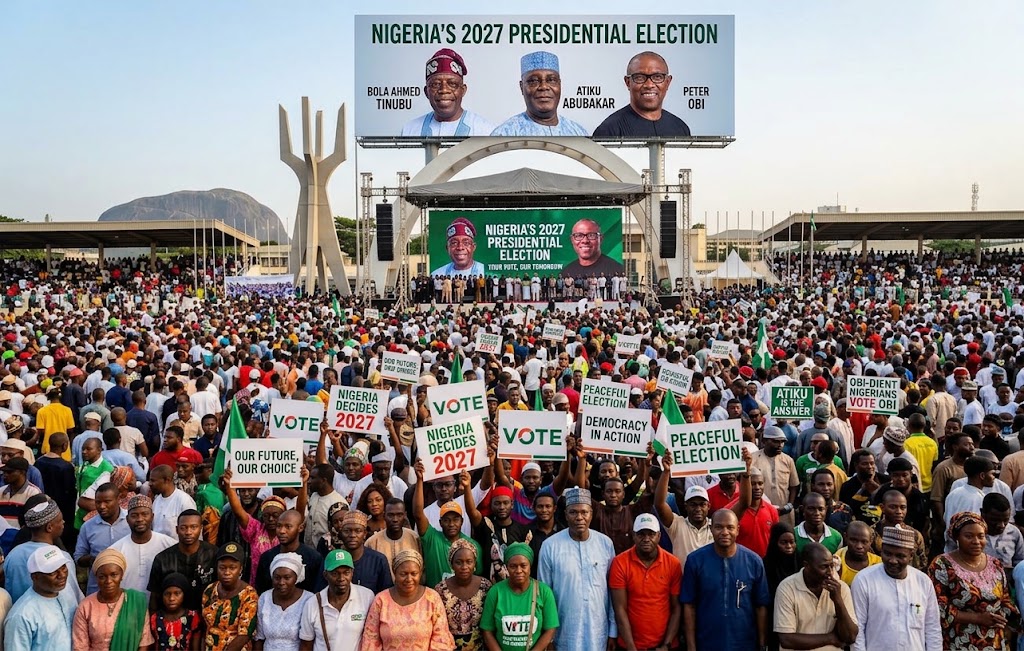
Campaigns for Nigeria’s 2027 presidential election officially kicked off on Wednesday, August 19, 2026, setting the stage for a closely watched contest in which President Bola Tinubu is seeking a second term amid widespread economic hardship and insecurity.
President Tinubu, who is seeking re-election on the platform of the ruling All Progressives Congress (APC), faces a divided opposition led by former Vice President, Mr Atiku Abubakar of the African Democratic Congress (ADC) and Mr Peter Obi, who is running under the Nigeria Democratic Congress (NDC).
The presidential election is scheduled for January 16, 2027, alongside elections for the National Assembly. Governorship and state assembly elections will follow on February 6.
The campaign season is expected to be a test for Mr Tinubu’s administration over its record since taking office in May 2023, particularly the impact of its economic reforms and its handling of insecurity.
Upon his assumption of office, the President scrapped the petrol subsidy and subsequently introduced major foreign exchange reforms and policies that the government says have improved fiscal stability and restored investor confidence.
However, the reforms triggered a sharp rise in the cost of living, with many households struggling with higher food, transport and other living costs.
Reuters reported that nearly 80 per cent of Nigerians surveyed by risk advisory firm SBM Intelligence believe the country is heading in the wrong direction, with economic hardship and insecurity among their main concerns.
Security is also expected to feature prominently in the campaign, as killings, kidnappings and other forms of violence continue to affect parts of the country despite government claims that military operations have improved security in some areas.
Tinubu’s re-election bid will also be tested by the performance of the APC, which has been in power nationally since 2015. The opposition is expected to campaign on the argument that more than a decade of APC rule has failed to deliver sufficient improvements in living standards and security.
Analysts told Business Post that despite voter dissatisfaction, the president retains a significant political advantage from the opposition’s fragmentation. Several prominent opposition figures remain divided, while the APC has strengthened its political base through defections from opposition parties. Thirty-one of Nigeria’s 36 state governors are currently members of the ruling party.
The 2027 elections are, therefore, expected to be shaped by the competing narratives of Mr Tinubu’s reform agenda and the opposition’s criticism of the economic and security conditions facing Nigerians.
For the President, the campaign will provide an opportunity to convince voters that the hardship associated with his reforms will translate into improved living standards, while his challengers will seek to turn widespread dissatisfaction into a unified anti-incumbent vote.



Pingback: Tinubu Directs Finance Minister to Give Reforms Scorecard to Nigerians | Business Post Nigeria