

World
US-Africa Business Summit: Partnering for Sustainable Success

By Kestér Kenn Klomegâh
The Corporate Council on Africa (CCA) held the US-Africa business summit in Dallas, Texas, on May 6-9 with the theme US-Africa Business: Partnering for Sustainable Success gathered several African leaders, senior US and African government officials, and corporate business executives to review performance, discuss existing challenges and chart future pathways into the commercial spheres across Africa.
While it aims at forging strategic partnerships and exploring investment opportunities, the participants gain important insights from industry experts and business thought leaders. Principally the Texas summit hosted the largest African diaspora population of any state in the United States. Dallas, as the location of headquarters and major business operations for a large number of Fortune 1000 firms, was the ideal location to facilitate the exchange of ideas and strategies that will shape the future of US-Africa business relations and private sector-led economic growth both in the United States and on the African continent.
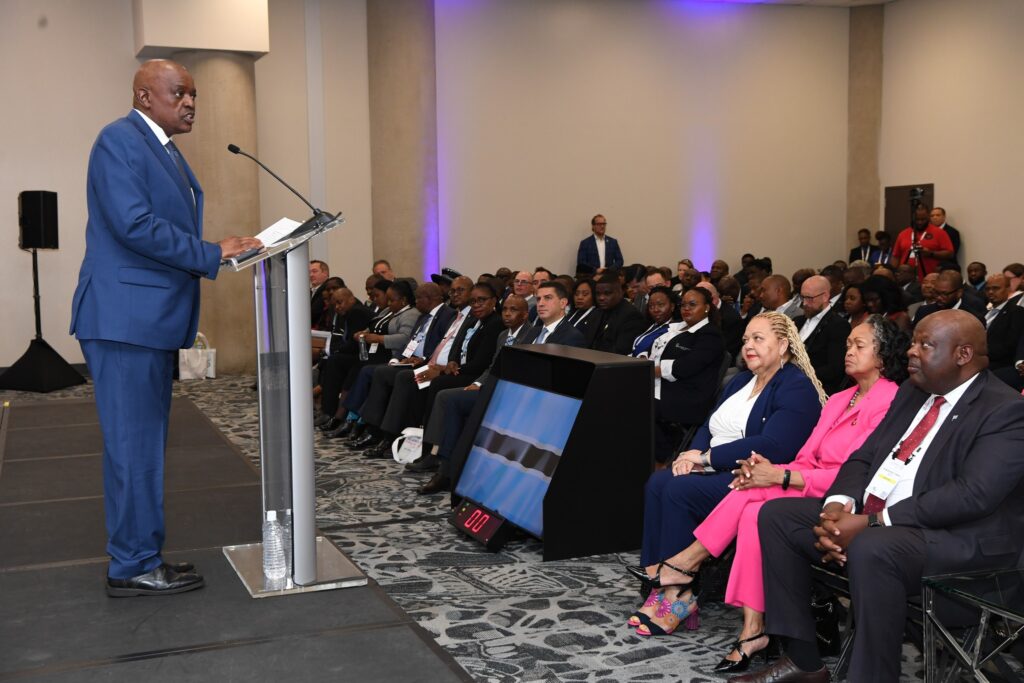
Speeches and discussions were delivered successfully. Among the African leaders who delivered speeches included President Mokgweetsi E.K. Masisi of the Republic of Botswana, President Faure Gnassingbé of the Republic of Togo, and Dr. Lazarus McCarthy Chakwera of the Republic of Malawi. The presence of large numbers of African leaders and representatives, in fact, underscored the importance of the summit as a platform for high-level discussions and economic partnerships between the United States and Africa.
Dr Mokgweetsi E.K. Masisi, President of the Republic of Botswana, has made a strong case for Botswana as a top investment destination, citing the country’s stability, progressive policies, and strategic initiatives promoting economic growth and sustainability.
The Botswana leader spoke during the ‘Doing Business in Botswana’ session in Dallas, Texas. Addressing a strong audience of potential investors, and summit attendees, President Masisi outlined Botswana’s strategic priorities under the ‘Reset Agenda,’ which aims for significant post-pandemic recovery and sustainable development. He emphasized vital areas such as digitization, value-chain development, and green energy, highlighting the country’s commitment to digital innovation and boosting key economic sectors such as agriculture, tourism, and mining.
President Masisi also called for enhanced women’s role in trade during the summit’s panel session, organized by the African Women’s Entrepreneurship Program (AWEP) in partnership with the United States Department of Commerce Commercial Law Development Program (CLDP), the Africa Women and Youth Empowerment Group (AWYEG), and the Corporate Council on Africa.
President Masisi pointed out women’s significant economic contributions, particularly through informal cross-border trade valued at $17.6 billion. In spite of their contributions, women frequently face exploitation and violence, with little protection. To address these challenges, Botswana’s head of state emphasized the importance of the African Continental Free Trade Area (AfCFTA), which is expected to boost Africa’s income by $450 billion by 2035 and significantly increase intra-African exports.
Standard Bank, the leading bank and financial services group in Africa, championed the vital role of global trade, economic development and robust partnerships at the opening of a power-packed U.S.-Africa business summit. With Texas as an international business hub and home of a large and vibrant African diaspora community, the event carries significant weight for Dallas, a gateway to global markets and cross-cultural connections.
“Trade and investment are economic lifelines, and this meeting links immense potential in Africa with the powerhouse market of the United States,” said Anne Aliker, Standard Bank’s Group Head, Corporate and Investment Banking, Client Coverage. “Both offer abundant growth opportunities, leveraging Africa’s markets and resources while providing avenues for US businesses to diversify.”
African countries’ effective participation in the ever-evolving international trade landscape is central to boosting the continent’s development. While African exports of goods and services have registered faster growth in the past decade, the volumes remain low, stagnant and heavily skewed toward primary goods.
Aliker said the policymakers must broaden their perspective beyond conventional methods to engage actively in today’s broad markets. Although Africa has about 18% of the world’s population, it has only about 2.9% of global GDP and only 2.2% of world exports. According to the US Census Bureau, Africa exported $38.1 billion worth of goods to the U.S. and imported U.S. goods worth $28.6 billion in 2023.
“Trade is deeply rooted in Africa’s history and essential for its future development. We’re committed to using our position, presence and insight to inform and grow the continent’s trade ecosystem,” she said.
Discussions over the reauthorization of the African Growth and Opportunity Act (AGOA), a cornerstone of US efforts to cultivate deeper economic relations with sub-Saharan Africa, allowing countries there to export certain products to the US duty-free. Last July, the Biden administration reported facilitating more than 900 deals across 47 African countries since 2021, for an estimated $22 billion in two-way trade and investment. Also, the US private sector sealed investment deals exceeding $8.6 billion.
Fielding questions on the sidelines, Jonathan Stember says the growth potential in Africa is considerable and the US must rethink its business mindset and strategy towards Africa. As a prominent figure in political and corporate global campaigns for over 25 years, Jonathan Stember says there are broad areas of win-win partnerships and cooperation between US firms and entities and Africa.
Creating a reliable partnership, whether in Africa or globally, mirrors the challenges inherent in any business endeavour—it demands dedication and perseverance. Mutual trust is key for success among all parties involved. Communication, a fundamental aspect of human interaction, plays a crucial role in nurturing these partnerships. Our efforts have resulted in the establishment of bridges that facilitate connections between Africa and the US, fostering mutual growth and understanding. Africa presents an array of prospects spanning technology, youth empowerment, food security, trade and commerce, and the establishment of sustainable economies.
During the business sessions, CCA was proud to partner with the Millennium Challenge Corporation (MCC) to celebrate its 20th anniversary and highlight MCC’s $10.4 billion US government investment in infrastructure across more than 24 African countries. From power projects to roads, ports, education, ICT, health and more —MCC’s 42 country-driven development programs address binding constraints to economic growth. A high-level event celebrating MCC’s 20th anniversary featured distinguished guests, including President George W. Bush and other notable U.S. government and African leaders.
MCC has worked side-by-side with partner countries to deliver on priorities that promote entrepreneurialism, private sector business investment and job creation for two decades. MCC’s anniversary event promises to set the tone for the summit, showcasing government and private sector commitment to partnership, US-Africa trade, investment, business, and sustainable economic development.
The US-Africa business summit served as a platform for African and US private sector and government representatives to engage at the highest levels on a range of issues impacting the US-Africa economic relationship. The sessions focused on key sectors including agribusiness, energy, health, infrastructure, security, trade facilitation, ICT, creative industries, and finance.
The participants networked with key private sector and government officials, explored new business opportunities, interacted with potential business partners, and forged new business deals. In addition, the gathering also served as an opportunity to shape and advocate for effective US-Africa trade and investment policies. Over the last 30 years, CCA has hosted over 50 US and African Heads of State and over 15,000 participants at its summits.
One distinguishing feature in US-African relations is the Global Development Alliance (GDA) is USAID’s premier model for public-private partnerships. Its connectivity and support for the African-American diaspora in immeasurable. According to World Bank Statistics, remittance inflows to sub-Saharan Africa soared from $49 billion in 2021 to an estimated $68 billion. Beyond remittances, Africa stands to benefit largely from the input of its diaspora considered progressive in the United States.
Over the years, African leaders have been engaging with their diaspora, especially those excelling in sports, academia, business, science, technology, engineering and other significant fields that the continent needs to optimize its diverse potentials and to meet development priorities. These professionals primarily leverage various sectors and act as bridges between the United States and Africa. President Joe Biden has created the African Diaspora Advisory Council as part of the presidency. It has been working closely together to deepen and fortify America’s strategic partnerships with the African diaspora in the interests of sustaining meaningful stability between Africa and the United States.
Until today, the Young African Leaders Initiative (YALI) continues to run various educational and training programs including short professional courses, conferences and seminars for Africans. It has some other economic development programs, like the Academy for Women Entrepreneurs program. Since its inception in 2019, this program has provided more than 5,400 women throughout Africa with the training and networks they need to start and scale small businesses.
The United States is not only the undisputed leader of the free world but also home to the most dynamic African diaspora. The African diaspora ranks amongst the most educated immigrant groups and is found excelling and making invaluable contributions in all sectors of life-business, medicine, healthcare, engineering, transportation and more. The contribution of the African diaspora is not negligible, we see more of them appointed to senior government positions by President Joe Biden.
US Trade Representative Katherine Tai also told the gathering there about the necessity to establish more investment, in addition to market access. The duty-free access for nearly 40 African countries has boosted development, and fostered more equitable and sustainable growth in Africa. The AGOA offered promise as a “stepping stone to address regional and global challenges” with Africa’s young and entrepreneurial population. The future is Africa, and engaging with this continent is the key to prosperity for all of us, according to Katherine Tai.
The last 2023 business summit was a tremendous success which took place in Botswana. The participants – most importantly – private sector corporate executives looked at Africa and the United States engaging in strategic dialogue on the key issues and opportunities driving US-Africa trade, investment, and commercial engagement. “The pace of engagement with Africa by President Biden and his Cabinet Secretaries is unprecedented, especially the strong focus on supporting private sector trade and investment deals. There can be no mistaking the strength of President Biden and his Administration’s commitment to and engagement with Africa,” says Corporate Council on Africa chairperson Florie Liser.
The Texas business summit was organized by the Corporate Council on Africa (CCA) in conjunction with the Millenium Challenge Corporation (MCC), which is an independent U.S. Government agency that partners with developing countries to reduce poverty through economic growth. The US Trade and Development Agency and Foreign Affairs’ Africa Department offered its full-fledged support.
The Corporate Council on Africa (CCA) is the leading U.S. business association focused solely on connecting business interests in Africa. According to its reports, the CCA was established in 1993 and has been pivotal in promoting business and investment between Africa and the United States, serving as a trusted intermediary for over three decades. Its primary mission is to strengthen commercial relations between Africa and the United States of America.



Pingback: US-Africa Business Summit: Partnering for Sustainable Success » rarticlesub