Connect with us

General

How Africa’s Largest Payments Network is Integrating Social Mission With Business Aspirations

Published

on

Funmi Dele-Giwa

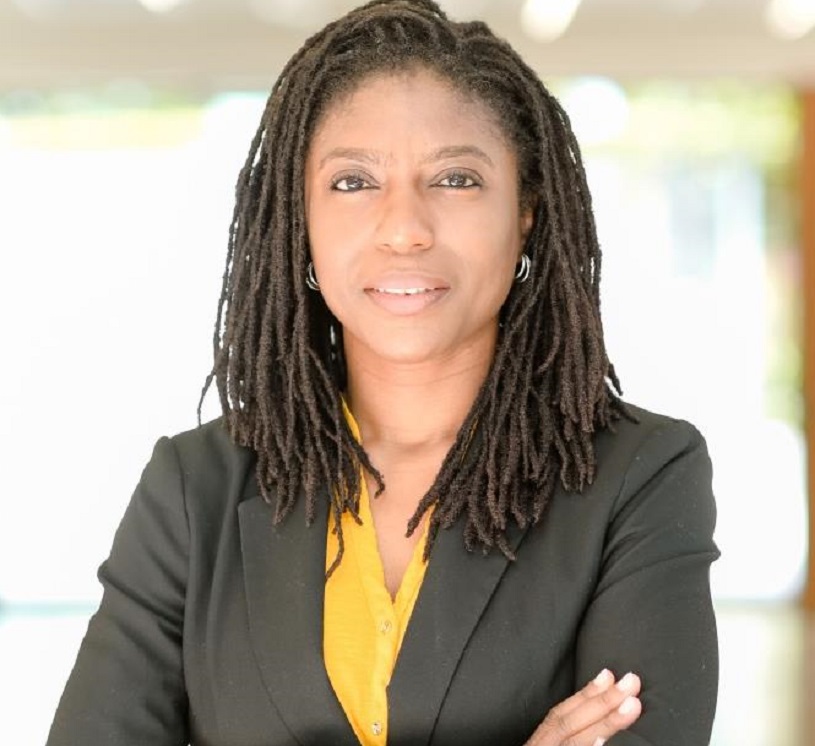
Being deliberate about creating a “greater purpose” is essential to building an authentic corporate culture, engaging stakeholders, and navigating the evolving landscape of corporate philanthropy. This is the philosophy behind Africa’s largest digital payments network, Onafriq’s, extensive growth and vision to unify the continent’s digital payments landscape according to its General Counsel and Chief Risk Officer Funmi Dele-Giwa. 

Dele-Giwa recently shared insights into the organisation’s unique position at the intersection of social impact and commercial ambition at the Women in Payments Symposium EMEA, held in London. During her speech, she delved into the company’s journey in delivering greater financial access and connecting all of Africa into a single integrated network that empowers both individuals and businesses.

“The purpose of Onafriq from the very onset was one of providing financial access to marginalised individuals on the African continent and having a positive impact in the countries we operate in and the clients we serve,” she said. “That is why Onafriq was built on the back of a strong belief that mobile money would serve as a strong enabler of financial access to millions of under- or unserved Africans.”

Established nearly 15 years ago with the mantra of “making borders matter less”, the company aims to facilitate cross-border payment services within Africa – as well as in and out of Africa. This is underpinned by the vision of its Founder and CEO Dare Okoudjou, that making a payment anywhere in the world, to anywhere across the globe should be as easy and as painless as it is to make a phone call.

Today, Onafriq’s payments network connects more than 1,300 cross-border payment corridors providing access to more than 500 million mobile wallets and 200 million bank accounts across 40 African markets. This vast digital infrastructure is a testament to its position as the “network of networks”, enabling services like cross-border payments, remittances, card issuing, agency banking and more, which facilitate seamless money flow from, to, and across the continent. 

During her talk at the symposium, Dele-Giwa noted that remittance services were a key example of this marriage of concepts, having particularly emerged as a powerful tool for boosting economic growth and financial empowerment. By partnering with international remittance companies, the Onafriq network enables the significant pool of migrant workers from Africa in the diaspora to send and receive money efficiently and affordably. She notes, however, that remittances are not just the privy of the global north to south, as there is significant intra-Africa remittance demand which has traditionally remained unmet. Through partnerships with mobile network operators (MNOs) across the Continent, Onafriq is bridging gaps between countries like Kenya and Uganda, as well as Cameroon and Nigeria, by digitising and facilitating intra-Africa remittance flows.

“Strategic collaborations between key sectors of Africa’s financial services landscape are key to unlocking the full potential of remittances as a catalyst for economic growth and development,”  said Dele-Giwa. “As such, fostering robust partnerships between payment networks and mobile money platforms is important to enabling greater remittance flows given the widespread adoption of mobile wallets across the continent.”

Another way that Onafriq is blending the principles of social betterment with business objectives is by empowering small businesses in Africa to flourish and grow by enabling access to a wider range of choices in disbursing or collecting digital payments over cash. Onafriq’s partnership with One Acre Fund is an example of how the company’s network has contributed to providing small-scale farmers with asset-based financing services.

“Our work to open up markets and connect people to opportunities continues to empower the African gig economy, enabling GDOs to deliver cash assistance to needy communities and international merchants to pay local creators, influencers and artists, as well as helping small traders to sell their goods across borders, by simplifying the ways they can pay and can get paid,” said Dele-Giwa.

Another notable aspect of Onafriq’s journey of positive social impact, according to Dele-Giwa, is its commitment to empowering women. Through its agent network in Nigeria, women entrepreneurs are able to generate additional income by becoming agents, and by using the Baxi point of sale device they can easily manage payments for their shops and market stalls. Furthermore, partnerships with organisations like the One Acre Fund helped to empower women in small-scale farming, amplifying their economic participation.

For those seeking to emulate Onafriq’s success, Dele-Giwa noted that it was important to align their social mission with the innovation and collaboration needed to achieve a positive impact while pursuing commercial success.

“Let’s remember, it’s not just about the services we offer. It’s about the impact we make while doing so,” she said. “It’s important to share those impactful stories of empowerment and positive change delivered as a result of your products and services, but it is also important to create a set of impact metrics to measure success by. This way you are always able to hold yourself accountable to employees, shareholders, regulators, clients, and other stakeholders.”


General

Rivers Speaker, 15 Other Lawmakers Leave PDP for APC

Published

on

rivers speaker Martin Amaewhule defect

By Modupe Gbadeyanka

The Speaker of the Rivers State House of Assembly, Mr Martin Amaewhule, has defected to the All Progressives Congress (APC).

At the plenary on Friday, Mr Amaewhule joined the ruling party from the opposition Peoples Democratic Party (PDP), along with 15 other members of the state parliament.

This development comes some months after they had earlier declared their support for the APC in the wake of a crisis with the state governor, Mr Sim Fubura.

The lawmakers had an issue with Mr Fubura, which led to a state of emergency declared on the oil-rich state by President Bola Tinubu in March 2025.

This embargo was only lift in September 2025 after the duration of the six-month emergency rule in the state.

A few days ago, members of the Rivers Assembly passed a vote of confidence on President Tinubu, backing him to remain in office till 2031, when he would have spent eight years in office if re-elected in 2027.

Announcing their defection today, the lawmakers pinned their decision on the crisis rocking the PDP at the national level.

It is not certain if their political godfather, Mr Nyesom Wike, who is the current Minister of the Federal Capital Territory (FCT), will join them in APC.

Mr Wike, who governed Rivers State from 2015 to 2023, has been accused of instigating the crisis in the opposition PDP. He was expelled from the party last month at a national convention held in Ibadan, Oyo State.

Continue Reading

General

Nigeria Risks Brain Drain in Energy Sector—PENGASSAN

Published

on

energy sector

By Adedapo Adesanya

The Petroleum and Natural Gas Senior Staff Association of Nigeria (PENGASSAN) has warned that Nigeria risks massive brain drain in the oil and gas sector due to poor remuneration.

The president of PENGASSAN, Mr Festus Osifo, said at the end of the National Executive Council (NEC) meeting of the union on Thursday in Abuja that the industry was facing challenges arising from Naira devaluation and inflation, noting that, oil and gas skills remained globally competitive.

Painting an example, he said, “A drilling engineer in Nigeria does the same job as one in the US or Abu Dhabi,” noting that the union must take steps to bridge the wage gap to prevent members from leaving the country for better opportunities abroad.

“If we don’t act, the brain drain seen in other sectors will be child’s play,” he said.

According to him, PENGASSAN has recorded significant gains through collective bargaining across oil and gas branches.

“We signed numerous agreements across government agencies, IOCs, service and marketing sectors,” he said.

He said the agreements brought relief to members facing rising costs of living, adding that, the association’s duty is to protect members’ jobs and enhance their pay.

Mr Osifo urged companies delaying salary reviews and those foot-dragging as a result of the prevailing economic realities, to do the needful.

He said the industry employed some of the nation’s best talents, making competitive pay critical to retaining skilled workers.

“This industry recruits the best. Companies must provide the best conditions,” he said.

On insecurity, Mr Osifo urged government to take decisive action against terrorism and kidnappings across the country.

“We are tired of condemnations. government must expose sponsors and protect citizens,” he said.

He urged government at all levels to prioritise tackling insecurity through better funding and equipment for security agencies.

Mr Osifo said PENGASSAN supported calls for state police to improve local security response, adding that decentralising policing will protect citizens better than rhetoric.

He also said economic indicators meant little, if food prices remained high and farmers could not return to farms due to insecurity.

“Nigerians want to see food on the table, not macroeconomic figures,” he said, urging the government to coordinate fiscal and monetary policies to ensure economic gains reach households.

Continue Reading

General

Bill Seeking Creation of Unified Emergency Number Passes Second Reading

Published

on

Unified Emergency Number

By Adedapo Adesanya

Nigeria’s crisis-response bill seeking to establish a single, toll-free, three-digit emergency number for nationwide use passed for second reading in the Senate this week.

Sponsored by Mr Abdulaziz Musa Yar’adua, the proposed legislation aims to replace the country’s chaotic patchwork of emergency lines with a unified code—112—that citizens can dial for police, fire, medical, rescue and other life-threatening situations.

Lawmakers said the reform is urgently needed to address delays, miscommunication and avoidable deaths linked to Nigeria’s fragmented response system amid rising insecurity.

Leading debate, Mr Yar’adua said Nigeria has outgrown the “operational disorder” caused by multiple emergency numbers in Lagos, Abuja, Ogun and other states for ambulance services, police intervention, fire incidents, domestic violence, child abuse and other crises.

He said, “This bill seeks to provide for a nationwide toll-free emergency number that will aid the implementation of a national system of reporting emergencies.

“The presence of multiple emergency numbers in Nigeria has been identified as an impediment to getting accelerated emergency response.”

Mr Yar’adua noted that the reform would bring Nigeria in line with global best practices, citing the United States, United Kingdom and India, countries where a single emergency line has improved coordination, enhanced location tracking and strengthened first responders’ efficiency.

With an estimated 90 per cent of Nigerians owning mobile phones, he said the unified number would significantly widen public access to emergency services.

Under the bill, all calls and text messages would be routed to the nearest public safety answering point or control room.

He urged the Senate to fast-track the bill’s passage, stressing the need for close collaboration with the Nigerian Communications Commission (NCC), relevant agencies and telecom operators to ensure nationwide coverage.

Senator Ali Ndume described the reform as “timely and very, very important,” warning that the absence of a reliable reporting channel has worsened Nigeria’s security vulnerabilities.

“One of the challenges we are having during this heightened insecurity is lack of proper or effective communication with the affected agencies,” Ndume said.

“If we do this, we are enhancing and contributing to solving the security challenges and other related criminalities we are facing,” he added.

Also speaking in support, Senator Mohammed Tahir Monguno said a centralised emergency number would remove barriers to citizen reporting and strengthen public involvement in security management.

He said, “Our security community is always calling on the general public to report what they see.

“There is a need for government to create an avenue where the public can report what they see without any hindrance. The bill would give strength and muscular expression to national calls for vigilance.”

The bill was referred to the Senate Committee on Communications for further legislative work and is expected to be returned for final consideration within four weeks.

Continue Reading

Trending