Connect with us

General

Court Orders Forfeiture of $1.4m Linked To Emefiele

Published

on

Emefiele for terrorism financing

By Adedapo Adesanya

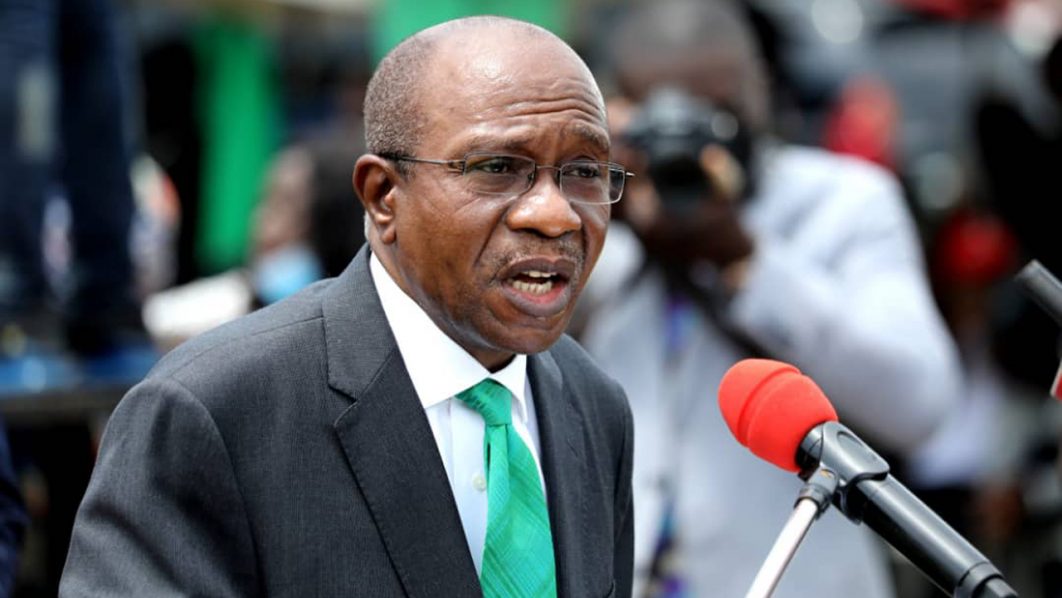
A Federal High Court sitting in Lagos has again ordered the interim forfeiture of the sum of $1.4 million linked to the embattled, former governor of the Central Bank of Nigeria (CBN), Mr Godwin Emefiele.

Justice Ayokunle Faji ordered the forfeiture of the money to the Federal Government of Nigeria and adjourned the matter to June 25 for a hearing of the final forfeiture of the money.

The judge ordered the Economic and Financial Crimes Commission (EFCC) to publish the interim forfeiture order in a national newspaper for anyone interested in the money sought to be forfeited to appear before the court and show cause within 14 days why the final order of forfeiture of the said sum should not be made.

The court made the above orders while granting an ex parte application moved by the counsel to the EFCC, Mrs Bilikisu Buhari-Bala.

The money forfeited in the interim is said to be in Donatone Limited’s account and domiciled in Titan Bank Limited.

At Wednesday’s proceedings, Mrs Buhari-Bala told the court that the orders sought are pursuant to Section 17 of the Advance Fee Fraud and Other Fraud-related Offences Act No. 14, 2006, and Section 44 (2)(B) of the 1999 Constitution of the Federal Republic of Nigeria.

She also said that the court had the statutory powers under the provisions of section 17 of the Advance Fee Fraud and Other Related Offences Act, 2006 to grant the reliefs being sought.

“That the funds sought to be forfeited are reasonably suspected to be proceeds of unlawful activities,” she said.

Mrs Buhari-Bala also told the court that the motion Exparte is supported by an affidavit deposed to by one David Jayeoba, an investigator with the EFCC.

In the affidavit, the deponent stated that his commission received credible and directed intelligence which led to the tracing of funds reasonably suspected to be proceeds of unlawful activities warehoused in the Donatone Limited (DL) Titan Trust Bank account, which funds are reasonably suspected to be part of proceeds of unlawful activities.

The deponent stated that the EFCC whilst investigating the alleged monumental fraud carried out by Mr Emefiele and his cronies, discovered a huge amount of money warehoused and concealed in the account of Donatone Limited, domiciled in Titan Trust Bank.

He stated that investigation revealed that some of the brains behind the fraudulent concealment of funds reasonably suspected to have been proceeds of unlawful activities of Emefiele are the natural persons behind Donatone Limited, Uzeobo Anthony and Adebanjo Olurotimi, who are directors at Donatone Limited.

The deponent further stated the following “Between 2021 and 2022, when accessibility to Forex in Nigeria was difficult, several international entities operating in Nigeria had to resort to different means to source Forex.

“That Uzeobo Anthony and Adebanjo Olurotimi used the firm, to collect bribes and gratification on behalf of Godwin Emefiele, to get approval for accessing Forex. And that one of the entities (NP) paid a total sum of $26,552 million, into the account of a firm domiciled in Titan Trust account number 2000000500.

“That the said credits came into the account of the firm on November 9, 2021: $6,450,000; November 5, 2021: $6,050,000.00; December 16, 2021: $5,400,000.00; December 23, 2021: $652,000; January 31 2022; $3,000,000.00 and September 21, 2022: $5,000,000.00.

“The investigation traced the funds to having been fixed into interest-yielding accounts, dissipated and laundered through a foreign account in Mauritius, and transported back to Nigeria under disguise.

“That of the total sum of $26, 555, 000.00 US Dollars received by the firm, the balance standing in the said account as at today is the sum of $1, 426, 175.14 million.

“That it is the balance in the account that the applicant seeks to forfeit to the Federal Government of Nigeria, which has been traced to be the proceeds of unlawful activities of (GE) and his cronies. That investigation further revealed that the international entities sourcing for forex were pressured into parting with huge funds to access forex during the period.

“That the signatories to the account warehousing the sum of $1, 426, 175.14 million USD, sought to be forfeited are at large and are making frantic efforts to dissipate the funds electronically. And based on our investigation findings, the funds sought to be forfeited are proceeds of unlawful activities of (GE) and his cronies. And that it is in the interest of justice to grant this application.”

It would be recalled that Justice Yelim Bogoro had on May 25, 2024, ordered an interim forfeiture of $4.7m, N830m, and some property assets linked to Emefiele

The monies forfeited to the federal government in the interim were said to be warehoused in First Bank; Titan Bank and Zenith Bank, being operated by Omoile Anita Joy, Deep Blue Energy Service Limited, Exactquote Bureau De Change Ltd; Lipam Investment Services Limited, Tatler Services Limited, Rosajul Global Resources Ltd and TIL Communication Nigeria Ltd.

While the properties forfeited in the interim are: His properties forfeited to the Federal Government include 94 Units of an 11-floor building under Construction at 2, Otunba Elegushi 2nd Avenue (Formerly Club) Road, Ikoyi, Lagos; AM Plaza, 11-floor office space, situate on 1E, Otunba Adedoyin Crescent, and Lekki Peninsula Scheme 1, Lagos.

Others are Imore Industrial Park 1, Esa Street, Imoore Land purchased with (Deep Bive Industrial Town, Oriade LCDA, Amuwo Odofin LGA, Lagos, Mitrewood and Tatler Warehouse (Furniture Plant at Bogije) near Elemoro Lagos, Owolomi Village, Ibeju-Lekki LGA, Lagos and two properties purchased from Chevron Nigeria, Closed PFA Fund, Block B. Lot twin completed property in Lakes Estate, Lekki, Lagos.


Adedapo Adesanya is a journalist, polymath, and connoisseur of everything art. When he is not writing, he has his nose buried in one of the many books or articles he has bookmarked or simply listening to good music with a bottle of beer or wine. He supports the greatest club in the world, Manchester United F.C.

Advertisement
Click to comment

Leave a Reply

Your email address will not be published. Required fields are marked *

General

Salary Benchmarking To Ensure Competitive Compensation

Published

on

Salary benchmarking

Salary benchmarking is the systematic process of comparing an organization’s pay rates, bonus programs, and total rewards against market standards. This article walks through why benchmarking matters, how to prepare and run an analysis, the best data sources and tools, and how to turn findings into defensible pay structures and ongoing processes.

Why Salary Benchmarking Matters For Online Businesses And Agencies

Without benchmarking, organizations risk three costly outcomes: underpaying (leading to high turnover and loss of institutional knowledge), overpaying (inflating fixed costs and reducing agility), or misallocating compensation across roles (creating internal inequities and morale problems).

For agencies that pitch retainer-driven services, predictable labor costs tied to market rates enable healthier margins and clearer pricing decisions. For in-house ecommerce teams, benchmarking supports workforce planning when launching new product lines or scaling paid acquisition efforts.

Finally, benchmarking is not only financial: it signals professionalism to candidates.

Key Data Sources And Tools For Accurate Benchmarks

High-quality benchmarking blends public data, commercial platforms, and human intelligence.

Public Government And Aggregated Salary Data

Bureau of Labor Statistics (BLS) or national equivalents provide reliable occupational wage ranges, useful for baseline comparisons and compliance checks.

Industry Surveys, Salary Platforms, And Niche Reports

Platforms such as Payscale, Glassdoor, LinkedIn Salary, and specialized reports for marketing and tech roles give role- and location-specific distributions.

Recruiter Intelligence And Peer Networks

Recruiters and hiring agencies provide real-time insight into candidate expectations and accepted offers. Professional networks, Slack communities, and agency owner peer groups can also offer current market anecdotes that databases miss.

Internal Payroll Data And Turnover Metrics

Historical payroll, hiring velocity, offer-acceptance rates, and exit interview themes help normalize market data against internal realities. Using multiple inputs helps find a defensible midpoint.

How To Conduct A Benchmark Analysis Step By Step

A repeatable process keeps benchmarking actionable and defensible.

  1. Gather data from at least three sources: one government/aggregate, one commercial salary platform, and one recruiter/peer input.
  2. Normalize data for location and experience. Convert salaries to equivalent cost-of-living or remote-adjusted values if the company has distributed teams.
  3. Adjust for total compensation. Include expected bonus, commissions, equity, and benefits to compare total rewards, not just base pay.
  4. Build a comparison table with target percentiles (25th, 50th, 75th) for each role and highlight gaps vs. current pay.
  5. Prioritize changes. Use a matrix that weighs business impact, retention risk, and budget feasibility to recommend immediate, near-term, and deferred adjustments.

This framework produces a clear narrative: where pay is behind, how much closing the gap will cost, and which adjustments will most protect revenue and client delivery.

Translating Benchmark Results Into Pay Structures And Budgets

Benchmark results must become predictable pay structures.

Normalize Data For Location, Experience, And Role Level

Apply consistent location multipliers and level definitions (junior, mid, senior, lead) so internal fairness stands up to scrutiny.

Build Pay Bands, Ranges, And Target Percentiles

Create bands with minimums, midpoints, and maximums tied to the chosen target percentiles. Bands help managers make consistent offer decisions and reduce bias.

Model Total Cost Of Hire And Budget Impact

Factor in employer taxes, benefits, onboarding costs, and ramp time. Present scenarios that show both absolute costs and return-on-investment when a higher-paid senior reduces client churn or improves campaign ROI.

Design Salary Bands, Bonus Structures, And Noncash Benefits

Consider sales- or performance-linked bonuses for account managers and revenue-attributed roles. Align Compensation To Performance, Retention, And Career Paths

Tie movements within bands to objective competency milestones (e.g., “strategic link acquisition that improves DR by X points” or “reduced time-to-rank for client cohort”), creating transparent merit progression that drives retention.

Communicating, Implementing, And Ensuring Pay Equity

Change management is as important as the numbers.

Gain Leadership Buy-In And Set Change Management Steps

Present benchmarking findings with clear ROI scenarios and phased implementation options. Leadership will respond to cost/benefit clarity, show how targeted raises stabilize revenue-generating roles.

Communicate Changes To Employees And Handle Pushback

Be transparent about methodology and timelines. Provide managers with scripts explaining why adjustments are happening and how employees can progress to higher bands.

Document Compliance, Pay Equity, And Recordkeeping Practices

Maintain audit-ready records of data sources, decision rationales, and salary matrices. Regularly run pay-equity checks by gender, race, and tenure to avoid legal and moral risks.

Thoughtful communication reduces rumors and ensures raises are seen as strategic investments, not arbitrary rewards.

Ongoing Monitoring: KPIs, Review Cadence, And Market Adjustments

Benchmarking isn’t a one-off. It requires monitoring and simple KPIs.

Track Competitive Positioning, Turnover, And Time To Fill

KPIs should include average comp vs. market percentile, voluntary turnover by role, offer-acceptance rate, and time-to-fill for critical positions. These metrics signal when the market has shifted.

Schedule Regular Reviews And Trigger-Based Market Rechecks

A typical cadence is an annual formal benchmark with quarterly spot checks for priority roles. Trigger-based rechecks, when turnover spikes, when offer-acceptance drops below a threshold, or when the market is disrupted, keep pay competitive between formal cycles.

With a small set of KPIs and a clear review cadence, agencies and online businesses can avoid reactive panic hires and keep compensation aligned with strategy and market reality.

Conclusion

Salary benchmarking equips online businesses and agencies to hire and retain the right talent without sacrificing profitability. When done well, benchmarking clarifies where to invest, makes offers defensible, and reduces turnover among roles that materially affect client outcomes and rankings.

Continue Reading

General

BPP Confirms N1.1trn Savings from Procurement Reforms in 2025

Published

on

procurement standard BPP

By Adedapo Adesanya

The Bureau of Public Procurement(BPP) said the ongoing procurement reforms saved the federal government over N1.1 trillion between January and December 2025.

The Director-General of the bureau, Mr Adebowale Adedokun, revealed this while defending the agency’s 2026 budget before the Senate Committee on Public Procurement in Abuja on Thursday.

The bureau also reported reduced contract approval timelines, additional cost savings, and tougher sanctions imposed on erring contractors and non-compliant government officials.

Mr Adedokun appealed for increased budgetary allocation in 2026 to enhance service delivery, create jobs, and strengthen institutional capacity for procurement oversight.

He further revealed that the bureau received N4.032 billion in 2025 and sought higher funding to reinforce anti-corruption efforts under the administration of President Bola Tinubu.

Earlier, the Chairman of the Senate Committee, Mr Olajide Ipinsagba, a lawmaker from Ondo North, underscored the bureau’s strategic role in driving socioeconomic development and promoting fiscal discipline.

Mr Ipinsagba assured the agency of legislative support while urging strict accountability and prudent utilisation of public funds allocated for its operations.

BPP reforms were committed to deepening transparency, compliance, and efficiency in Nigeria’s public procurement system. Some of them include adherence to a 21-day timeline, as mandated by the Public Procurement Act 2007. Also, the BPP is required to review cases, issue a written decision within 21 working days of receiving the complaints, and state the corrective actions, reasons for rejection, or remedies granted.

There are also plans to streamline approval processes, standardise documentation, and automate workflows to ensure timely and transparent procurement decisions.

Continue Reading

General

FCT Council Elections: Police Impose 12-Hour Curfew

Published

on

FCT Council Elections

By Adedapo Adesanya

The Federal Capital Territory (FCT) Command of the Nigeria Police Force (NPF) has announced a 12-hour restriction on movement across Abuja and its environs ahead of the council elections scheduled for Saturday, February 21, 2026.

In a statement, the Police Public Relations Officer of the FCT Command, Mrs Josephine Adeh, said the movement will be restricted to ensure security and the smooth conduct of the polls.

“The Commissioner of Police, FCT Command, Miller G. Dantawaye, psc., has announced a restriction of movement across the Federal Capital Territory from 6:00 AM to 6:00 PM on Saturday, 21st February, 2026, in view of the scheduled Area Council Elections,” the statement read.

The police clarified that the restriction will apply to all residents, except essential service providers and duly accredited election officials.

The command also called on residents to remain peaceful and cooperate with security agencies.

“The FCT Police Command urges residents to remain peaceful, law-abiding, and cooperate with security agencies to ensure a safe, free, and credible electoral process,” the statement added.

Meanwhile, the FCT Minister, Mr Nyesom Wike, declared Friday a work-free day ahead of the council elections.

In a broadcast, Mr Wike said the decision, approved by President Bola Tinubu, is to enable residents to travel to their communities to vote.

In contrast to the police announcement, the minister declared a separate restriction of movement across the FCT from 8:00 p.m. on Friday to 6:00 p.m. on Saturday, directing security agencies to ensure compliance.

Mr Wike urged residents to turn out in large numbers and conduct themselves peacefully, expressing optimism that the polls would produce leaders who would promote development and stability in the territory.

In the meantime, the Independent National Electoral Commission (INEC) says preparations for the elections are at an advanced stage, with strong voter participation recorded during the PVC collection exercise.

INEC disclosed that 1,587,025 Permanent Voter Cards (PVCs) have been collected across the FCT, representing a 94.4 per cent collection rate out of the 1,680,315 registered voters.

Security agencies have assured residents of adequate deployment across the territory to maintain order, as authorities emphasise the need for a peaceful, free, and credible electoral process.

Continue Reading

Trending