General
FG to Commission Gas Facility Thursday in Delta After Strike Suspension
By Adedapo Adesanya
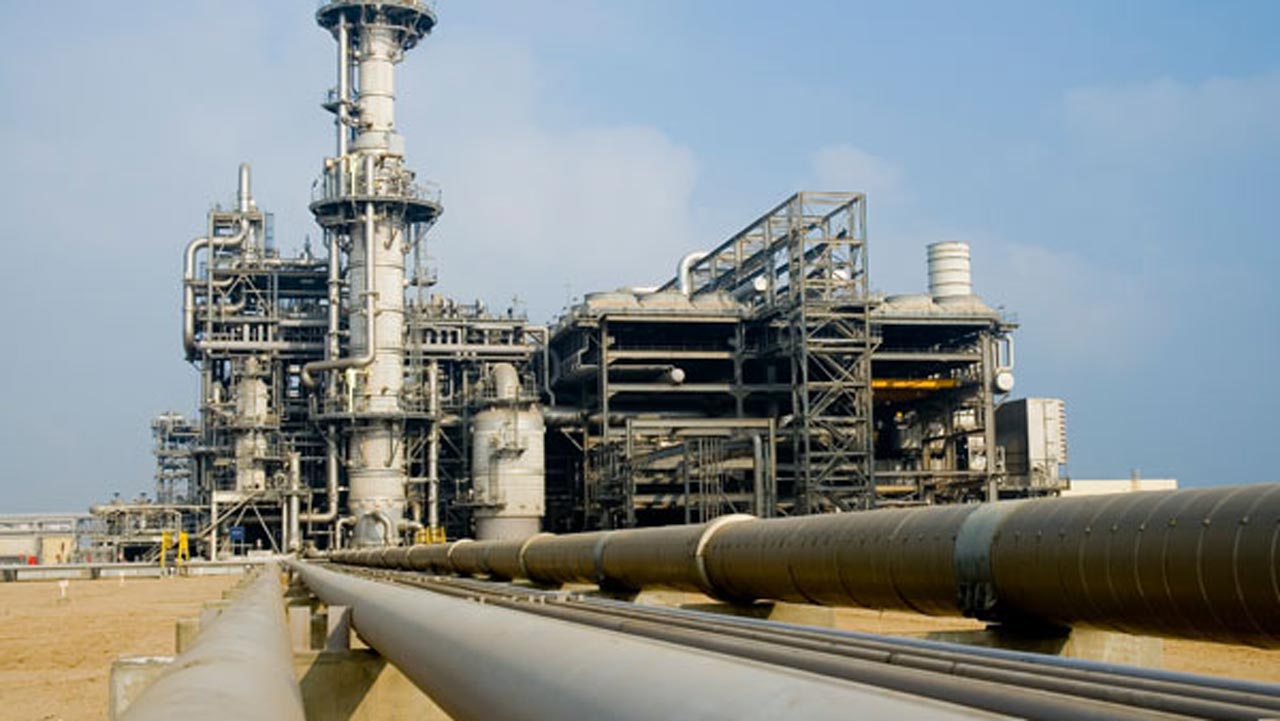
The commissioning of the 300MMscfd capacity Kwale gas gathering and injection facility in the Niger Delta will resume after it was put on hold following the nationwide industrial strike by the Labour Unions on Monday.
According to a statement by the Nigerian Content Development and Monitoring Board (NCDMB), the technical commissioning will now be held on Thursday, June 6, 2024, after its successful completion as organised labour suspended the strike temporarily on Tuesday.
The injection facility located in the Umusam Community, near Kwale in Delta State, Niger Delta, is a joint venture between Nedogas Development Company Limited (NDCL), Xenergi Limited and NCDMB Capacity Development Intervention Company, in collaboration with the NNPC Gas Infrastructure Company (NGIC), a subsidiary of the Nigerian National Petroleum Company (NNPC) Limited.
The formal commissioning ceremony will be performed by the Minister of State for Petroleum Resources (Gas), Mr Ekperikpe Ekpo, and will be supported by the Governor of Delta State, Mr Sheriff Francis Orohwedor Oborevwori, and the Executive Secretary of NCDMB, Mr Felix Ogbe.
The KGG facility was designed to handle stranded gas resources in Nigeria’s OML 56 oil province, by providing the opportunity for independent operators in the area, to monetise natural gas from their fields through the gas gathering, compression, injection and metering infrastructure of the KGG for quick market access.
The KGG hub, which has been tied into the NGIC-owned and operated 48-inch OB-3 gas trunk line, is now fully commissioned with gas injection capacity totalling approximately 50 MMscfd comprising 20MMscfd from the Nedogas Plant, located 3km away in Energia’s Ebendo field, and another 30 MMscfd coming from the Matsogo field operated by Chorus Energy Limited. Injected gas volumes are gradually and steadily being ramped up.
“This project represents a significant milestone in Nigeria’s decade of gas initiative, as well as a major achievement in the quest to provide gas into the OB3 trunk line and monetise natural gas resources from the OML 56 producer cluster,” according to the statement.
With the successful injection of gas from the Energia/Oando JV and the Chorus-operated Ebendo and Matsogo fields respectively into the OB3, NCDMB said the KGG Facility is now poised to receive additional gas from nearby fields, including those operated by First Hydrocarbon Nigeria (FHN), Pillar Oil, and Midwestern Oil & Gas, all aimed at positioning KGG as a fully-fledged gas-gathering facility and hub, with single point injection of up to 300 MMscfd of gas into the OB3 via the KGG tie-in.
The plan is to expand the capacity of the KGG facility to 600 MMscfd in the second phase.
In addition to the gas delivery obligations of the facility, the KGG will also be supplying the Delta State Economic Zone (DSEZ) from an integrated supply node within the manifold at the hub.
NCDMB’s equity investment in NDCL is one of the strategic projects geared towards actualising FG’s aspirations in key areas of the oil and gas industry. Most of NCDMB’s third-party investments are targeted at actualising the Federal Government Decade of Gas programme.
“The investments are in line with the Board’s mandate to build capacity and catalyze local projects in the Nigerian oil and gas industry as enshrined under the Nigeran Oil and Gas Industry Content Development (NOGICD) Act,” the statement added.
With an estimated 180 billion cubic feet of proven Natural gas reserves, Nigeria has the ninth largest concentration in the world, however, sadly enough, the country continues to flare significant quantities of associated gas which have relegated the health and environmental well-being of Nigerians to the background for over 60 years.
The government has continuously said that natural gas remains a relatively clean fossil fuel, and represents a viable transition to renewable energy which plays a pivotal role in powering the growth of developing economies like Nigeria.
“The KGG facility is set to create hundreds of direct and indirect jobs for indigenes of the host and nearby communities,” the statement added.
General
Judge Withdraws from EFCC Cases Against Former AGF Malami
By Adedapo Adesanya
Justice Obiora Egwuatu of the Federal High Court in Abuja has recused himself from the two cases involving the former Attorney General of the Federation, Mr Abubakar Malami, filed by the Economic and Financial Crimes Commission (EFCC).
Mr Egwuatu was recently reassigned the cases by the Chief Judge of the Federal High Court, and he disclosed that he withdrew for personal reasons and in the interest of justice.
The cases against Mr Malami were formerly before Justice Emeka Nwite of the same court, who was a vacation judge during the festive season.
Mr Egwuatu’s recusal comes after the civil suit for the forfeiture of 57 properties allegedly linked to Mr Malami was called for mention.
The former AGF, his wife, and son are facing a 16-count money laundering charge. They were granted bail on January 7 in the sum of N500 million with two sureties by Justice Emeka Nwite of the Federal High Court in Abuja.
Justice Nwite stated that the sureties must have landed property in Asokoro, Maitama, and Gwarinpa.
The judge added that the trio must submit their travel documents to the court.
The former Minister of Justice is facing a fresh persecution over the arms and ammunition found in his house by the Department of State Service (DSS). The arms were reportedly uncovered at his Kebbi country home by the operatives of the EFCC during a search.
The anti-graft agency handed the weapon to the secret police for a comprehensive probe, citing a lack of constitutional authority to investigate the possession.
Similarly, the former AGF was accused of knowingly abetting terrorism financing by refusing to prosecute terrorism financiers whose case files were brought to his office as the AGF in the last administration for prosecution. Alongside his son, the lawyer was accused by the DSS of engaging in conduct in preparation to commit an act of terrorism by having in their possession and without a licence, a Sturm Magnum 17-0101 firearm, 16 Redstar AAA 5’20 live rounds of Cartridges and 27 expended Redstar AAA 5’20 Cartridges.
General
NLNG Says Low-Risk Key to Unlocking Value in Nigeria’s Gas Industry
By Adedapo Adesanya
Nigeria LNG (NLNG) has reaffirmed that a well-structured, low-risk approach in Nigeria’s energy sector is essential to unlocking investments, accelerating economic development and strengthening energy security.
NLNG’s General Manager, Production, Mr Nnamdi Anowi, said this at a panel session titled De-Risking Investments in African Oil and Gas Projects during the Sub-Saharan Africa International Petroleum Exhibition and Conference (SAIPEC) in Lagos, noting that when oil and gas projects are perceived as too risky, investors tend to withdraw, leading to stalled projects, job losses, and missed revenue opportunities critical for national growth.
According to a statement by Mrs Anne-Marie Palmer-Ikuku, Manager, Corporate Communication and Public Affairs, he stated that reducing risks in oil and gas projects, beyond being a business strategy, was a matter of national importance for Nigeria’s economy, energy security, and long-term development.
He further explained that for NLNG, lowering risk means keeping gas flowing reliably, meeting long-term contracts, and ensuring the company remains a trusted supplier to global and domestic markets.
He said this will allow investors to fund projects at a lower cost, which ultimately benefits both companies and the country.
Mr Anowi also highlighted the importance of good infrastructure, local skills, and modern technology in reducing everyday operational risks.
He said that when pipelines, processing facilities, and digital systems work well, projects are safer, cheaper to run, and more reliable over time.
“If we reduce risk the right way and work together, investment will come; the next decade must focus on growing proven, bankable projects that deliver real value to the country, ” he further said.
In his closing remarks, Mr Anowi noted that Africa and Nigeria in particular are investable when risks are planned for and managed carefully, not ignored.
General
NUPRC, NNPC Pledge Deeper Collaboration for Operational Efficiency
By Adedapo Adesanya
The Nigerian Upstream Petroleum Regulatory Commission (NUPRC) and the Nigerian National Petroleum Company (NNPC) Limited have pledged to deepen collaboration to boost operational efficiency.
This was the outcome of a meeting between the managements of the NUPRC and the NNPC at the commission’s corporate headquarters in Abuja, where the chief executive of the former, Mrs Oritsemeyiwa Eyesan, said the two oil regulators, as creations of the Nigerian government, have similar goals.
“As major instruments of the government in the industry, we are aligned toward the same goal, and I think this is pivotal, and we must not lose this golden opportunity,” she disclosed.
Further addressing the NNPC team, led by its chief executive, Mr Bayo Ojulari, Mrs Eyesan said the NUPRC is focused on reducing the cost of operations by harmonising fees and rents to make Nigeria’s oil and gas sector more competitive.
To this end, the NUPRC boss revealed that the agencywas working closely with the Oil Producers Trade Section, OPTS, to address the multiplicity of fees and rents to improve Nigeria’s competitiveness.
“We are working with the industry on harmonising the fees and rents that we charge. The whole idea is to harmonise and reduce it to the barest minimum so that we can reduce the cost of operations,” she said.
Mr Eyesan further stated that the Commission is working on enhancing measurement and hydrocarbon accounting.
“We have done the first phase, which is to audit what we already have. The second phase, which will commence shortly, will be the real implementation of the metering standards, and this entire programme will entail us having a data centre and having all the meters in all our locations to standard,” she stated.
The NUPRC boss said the Host Community Development Trust (HCDT) had so far been a success but maintained that there was a need to fully utilise these funds for its intended purpose, as this would enhance community peace and improve the operating environment.
Mrs Eyesan encouraged NNPC, as the country’s national oil company, to participate in the ongoing 2025 licensing round and deepen exploration.
In his remarks, the NNPC GCEO reiterated the need for an improved relationship between the national oil company and the regulator.
Mr Ojulari hailed Mr Eyesan, noting that, “Your antecedents, your track records, your integrity, your forthrightness and clarity for those who have had the privilege of interacting with you, excite the industry.”
He said the NUPRC had continued to demonstrate exceptional leadership in terms of regulation and has been promoting transparency and shaping an enabling environment crucial for investment and operational excellence, which is good for the industry.
The NNPC boss said the national oil firm had recently launched the national gas master plan, which would boost the country’s gas production.
Mr Ojulari said critical projects like the OB3 and the AKK gas pipeline have continued to progress. He also presented a copy of the Gas masterplan to the CCE.
He, however, maintained that there was a need to reduce the cost of operation in Nigeria to attract fresh investments and boost Nigeria’s energy security. This, he said, would not be possible without the NUPRC’s regulatory role.
“As the national energy company operating commercially under the Petroleum Industry Act, our success is intertwined with the regulatory stewardship, which we are absolutely confident will be taken to the next level. We believe that deepening this partnership will greatly enhance our ability to unlock more value for Nigeria,” he stated.
-
Feature/OPED6 years agoDavos was Different this year
-
Travel/Tourism10 years ago
Lagos Seals Western Lodge Hotel In Ikorodu
-
Showbiz3 years agoEstranged Lover Releases Videos of Empress Njamah Bathing
-
Banking8 years agoSort Codes of GTBank Branches in Nigeria
-
Economy3 years agoSubsidy Removal: CNG at N130 Per Litre Cheaper Than Petrol—IPMAN
-
Banking3 years agoSort Codes of UBA Branches in Nigeria
-
Banking3 years agoFirst Bank Announces Planned Downtime
-
Sports3 years agoHighest Paid Nigerian Footballer – How Much Do Nigerian Footballers Earn