General
FG to Commission Gas Facility Thursday in Delta After Strike Suspension
By Adedapo Adesanya
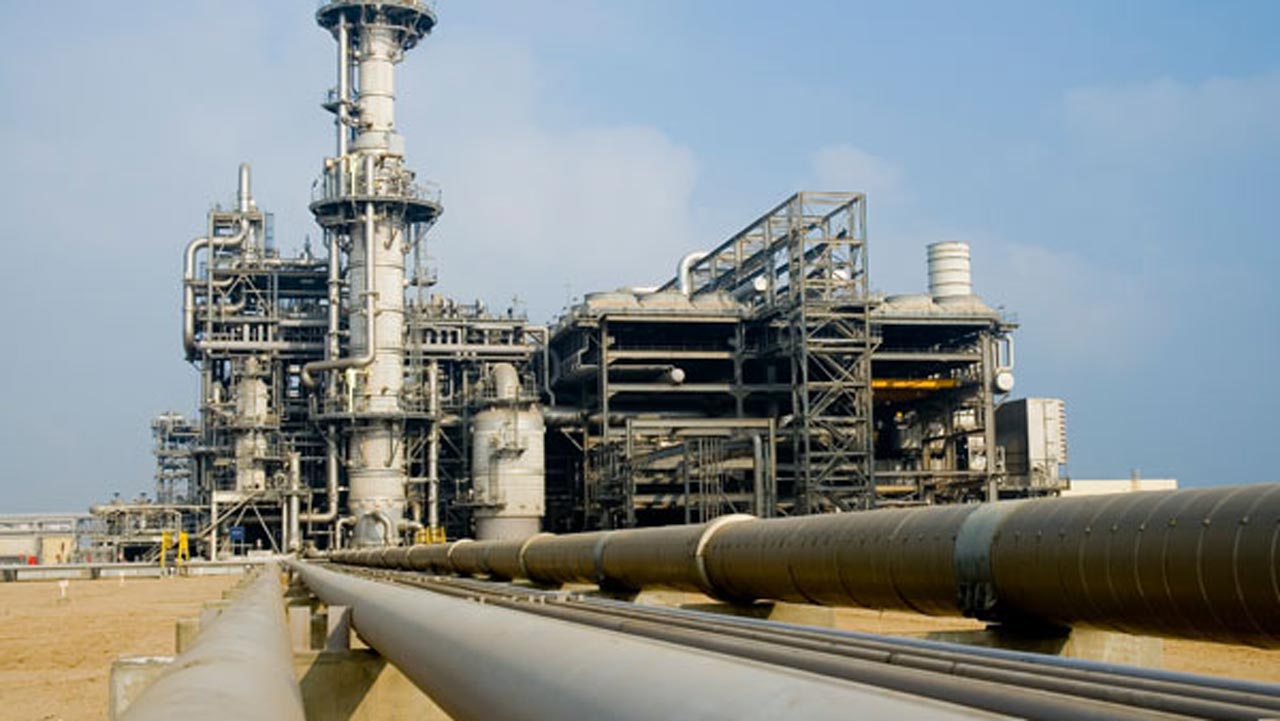
The commissioning of the 300MMscfd capacity Kwale gas gathering and injection facility in the Niger Delta will resume after it was put on hold following the nationwide industrial strike by the Labour Unions on Monday.
According to a statement by the Nigerian Content Development and Monitoring Board (NCDMB), the technical commissioning will now be held on Thursday, June 6, 2024, after its successful completion as organised labour suspended the strike temporarily on Tuesday.
The injection facility located in the Umusam Community, near Kwale in Delta State, Niger Delta, is a joint venture between Nedogas Development Company Limited (NDCL), Xenergi Limited and NCDMB Capacity Development Intervention Company, in collaboration with the NNPC Gas Infrastructure Company (NGIC), a subsidiary of the Nigerian National Petroleum Company (NNPC) Limited.
The formal commissioning ceremony will be performed by the Minister of State for Petroleum Resources (Gas), Mr Ekperikpe Ekpo, and will be supported by the Governor of Delta State, Mr Sheriff Francis Orohwedor Oborevwori, and the Executive Secretary of NCDMB, Mr Felix Ogbe.
The KGG facility was designed to handle stranded gas resources in Nigeria’s OML 56 oil province, by providing the opportunity for independent operators in the area, to monetise natural gas from their fields through the gas gathering, compression, injection and metering infrastructure of the KGG for quick market access.
The KGG hub, which has been tied into the NGIC-owned and operated 48-inch OB-3 gas trunk line, is now fully commissioned with gas injection capacity totalling approximately 50 MMscfd comprising 20MMscfd from the Nedogas Plant, located 3km away in Energia’s Ebendo field, and another 30 MMscfd coming from the Matsogo field operated by Chorus Energy Limited. Injected gas volumes are gradually and steadily being ramped up.
“This project represents a significant milestone in Nigeria’s decade of gas initiative, as well as a major achievement in the quest to provide gas into the OB3 trunk line and monetise natural gas resources from the OML 56 producer cluster,” according to the statement.
With the successful injection of gas from the Energia/Oando JV and the Chorus-operated Ebendo and Matsogo fields respectively into the OB3, NCDMB said the KGG Facility is now poised to receive additional gas from nearby fields, including those operated by First Hydrocarbon Nigeria (FHN), Pillar Oil, and Midwestern Oil & Gas, all aimed at positioning KGG as a fully-fledged gas-gathering facility and hub, with single point injection of up to 300 MMscfd of gas into the OB3 via the KGG tie-in.
The plan is to expand the capacity of the KGG facility to 600 MMscfd in the second phase.
In addition to the gas delivery obligations of the facility, the KGG will also be supplying the Delta State Economic Zone (DSEZ) from an integrated supply node within the manifold at the hub.
NCDMB’s equity investment in NDCL is one of the strategic projects geared towards actualising FG’s aspirations in key areas of the oil and gas industry. Most of NCDMB’s third-party investments are targeted at actualising the Federal Government Decade of Gas programme.
“The investments are in line with the Board’s mandate to build capacity and catalyze local projects in the Nigerian oil and gas industry as enshrined under the Nigeran Oil and Gas Industry Content Development (NOGICD) Act,” the statement added.
With an estimated 180 billion cubic feet of proven Natural gas reserves, Nigeria has the ninth largest concentration in the world, however, sadly enough, the country continues to flare significant quantities of associated gas which have relegated the health and environmental well-being of Nigerians to the background for over 60 years.
The government has continuously said that natural gas remains a relatively clean fossil fuel, and represents a viable transition to renewable energy which plays a pivotal role in powering the growth of developing economies like Nigeria.
“The KGG facility is set to create hundreds of direct and indirect jobs for indigenes of the host and nearby communities,” the statement added.
General
Nigeria Customs Destroys N181m PMS Smuggling Network in Adamawa
By Adedapo Adesanya
The Nigeria Customs Service has uncovered a major petroleum smuggling network in Adamawa State, cutting off fuel supply lines that have been draining national revenue and strengthening criminal economies along Nigeria’s northern borders.
National Coordinator of Operation Whirlwind, ACG Kolapo Oladeji, disclosed that officers recorded 55 seizures in eight weeks, blocking the illegal movement of more than 184,000 litres of PMS, a development he described as a significant economic breakthrough for the country.
“This operation is about protecting Nigeria’s strategic resources,” Mr Oladeji told journalists on Thursday at the Customs House in Yola. “Our mandate is clear: to shut down all illegal supply chains that empower criminal elements.”
The seizures, valued at N181.6 million in duty-paid terms, were intercepted across notorious smuggling corridors including Mubi–Sahuda, Farang–Belel, Gurin–Fufore, Maiha, Wuro-Bokki, Ribado waterways, Muninga and Bakin Kogi.
According to Mr Oladeji, items recovered include 2,642 jerrycans of 25-litre PMS, several 220-litre drums, and two large wooden boats used to ferry petroleum products across the border.
He stressed that the illegal PMS diversion is not just an economic crime but a direct threat to national stability.
“The smuggling network is a grave threat to Nigeria’s economy and internal security,” he said. “The illegal diversion of PMS weakens our revenue base and directly fuels non-state actors and cross-border criminal syndicates.”
Mr Oladeji added that intensified surveillance under Operation Whirlwind has “made it extremely difficult for saboteurs to move PMS out of the country,” in line with the directives of Comptroller-General Adewale Adeniyi.
Commending residents of border communities for supporting the operation with credible intelligence, the Customs chief urged them to remain vigilant.
“Your timely information has been invaluable,” he said. “Security is a collective responsibility, when you see something, say something.”
He also acknowledged the media’s role in raising awareness about the economic and security implications of petroleum smuggling, describing public enlightenment as crucial in sustaining recent gains.
General
Ekpo Laments Slow Progress in Decade of Gas Initiative
By Adedapo Adesanya
The Minister of State for Petroleum Resources, Mr Ekperikpe Ekpo, has expressed his frustration towards the partial progress in Nigeria’s flagship Decade of Gas Initiative, advocating that it must now be aggressively accelerated.
Launched by the late former President Muhammadu Buhari in 2021, the scheme is a national policy drive declaring 2021–2030 as the country’s “Decade of Gas.” with the goal of transforming Nigeria from an oil-dependent economy into a gas-powered industrial nation, using its vast natural gas reserves (one of the largest in Africa) for economic growth.
However, speaking recently at the 14th Practical Nigerian Content (PNC) Forum in Yenagoa, Mr Ekpo said the policy has delivered some gains in LPG penetration, CNG rollout, and gas commercialisation, but “not at the scale Nigeria urgently requires.”
“We have made progress, but not enough,” the minister admitted. “The pace has been slower than expected, and we must move with far greater urgency.”
He cited persistent infrastructure gaps, gas supply volatility, funding constraints, and delayed policy execution as major setbacks.
“Critical pipelines are behind schedule. Feedstock shortages still hamper power and industries,” he said. “These challenges have limited the full realisation of the Decade of Gas vision.”
The minister, however, outlined a renewed push to accelerate delivery through tighter regulatory coordination and investment incentives.
“We are strengthening inter-agency alignment to remove approval bottlenecks,” Ekpo said. “The PIA gives us the fiscal tools to unlock more capital into midstream and domestic gas programmes.”
He noted measurable progress in domestic LPG consumption, clean cooking expansion, and flare gas commercialisation, calling them “strong foundations that must now be scaled up.”
“Our goal remains clear: affordable gas for power, households, industries and transport,” he said. “We are not abandoning the Decade of Gas; we are intensifying it.”
Mr Ekpo said the government will prioritise early delivery of key projects such as OB3, AKK, NLNG Train 7, Brass Fertiliser, and several gas-based industrial hubs.
“These projects will determine whether the Decade of Gas becomes a transformative legacy or a missed opportunity,” he warned.
The minister urged industry players, financiers and host communities to recommit to the national gas agenda.
“We need every stakeholder on board,” he said. “Nigeria cannot afford to slow down at a time when global markets are shifting and opportunities are emerging.”
General
Power Supply Returns as Ikeja Electric Fixes Powerline Jumper Cut Issue
By Adedapo Adesanya
Electricity supply was restored to residents of some parts of Lagos on Wednesday morning following a blackout spurred by a jumper cut that occurred in the Powerline area of Mosan-Okunola Local Council Development Area (LCDA) late on Monday.
The Ikeja Electricity Distribution Company (IKEDC) had announced a power outage in parts of its franchise, affecting the Ogba, Ikeja, and Alausa axis of Lagos on Tuesday.
In a message to customers, the DisCo said the power outage was due to a jumper cut at the Transmission Company of Nigeria’s (TCN) injection substation (ISS).
A jumper cut is an electrical fault that occurs when a jumper cable is damaged, disconnected, or intentionally severed.
The DisCo said the TCN’s technical team was already working to resolve the issue.
“Dear Customer, the current power outage is due to a 132kV jumper cut at the TCN Injection Substation (ISS),” the message read.
“The TCN technical team is already working to clear the fault to ensure supply is restored as soon as possible.”
Mr Kingsley Okotie, spokesperson of Ikeja DisCo, had also clarified that the power outage did not affect the entire franchise area of the company.
“It doesn’t totally affect the whole of our franchise. The message was sent to only customers in areas affected,” he said.
“We are still working to resolve the issues; that’s where we are at the moment.”
Our correspondent, who witnessed the development, reported that the jumper cut occurred around 11 pm on Monday, December 8, when a large spark occurred at the structure, leading to an immediate seizure of power supply. There was yet another minimal spark, but power was restored afterwards, likely from a back up source.
-
Feature/OPED6 years agoDavos was Different this year
-
Travel/Tourism9 years ago
Lagos Seals Western Lodge Hotel In Ikorodu
-
Showbiz3 years agoEstranged Lover Releases Videos of Empress Njamah Bathing
-
Banking7 years agoSort Codes of GTBank Branches in Nigeria
-
Economy3 years agoSubsidy Removal: CNG at N130 Per Litre Cheaper Than Petrol—IPMAN
-
Banking3 years agoFirst Bank Announces Planned Downtime
-
Banking3 years agoSort Codes of UBA Branches in Nigeria
-
Sports3 years agoHighest Paid Nigerian Footballer – How Much Do Nigerian Footballers Earn