

Feature/OPED
Nature has been Sending us Signals. Our Farmers Read Them First

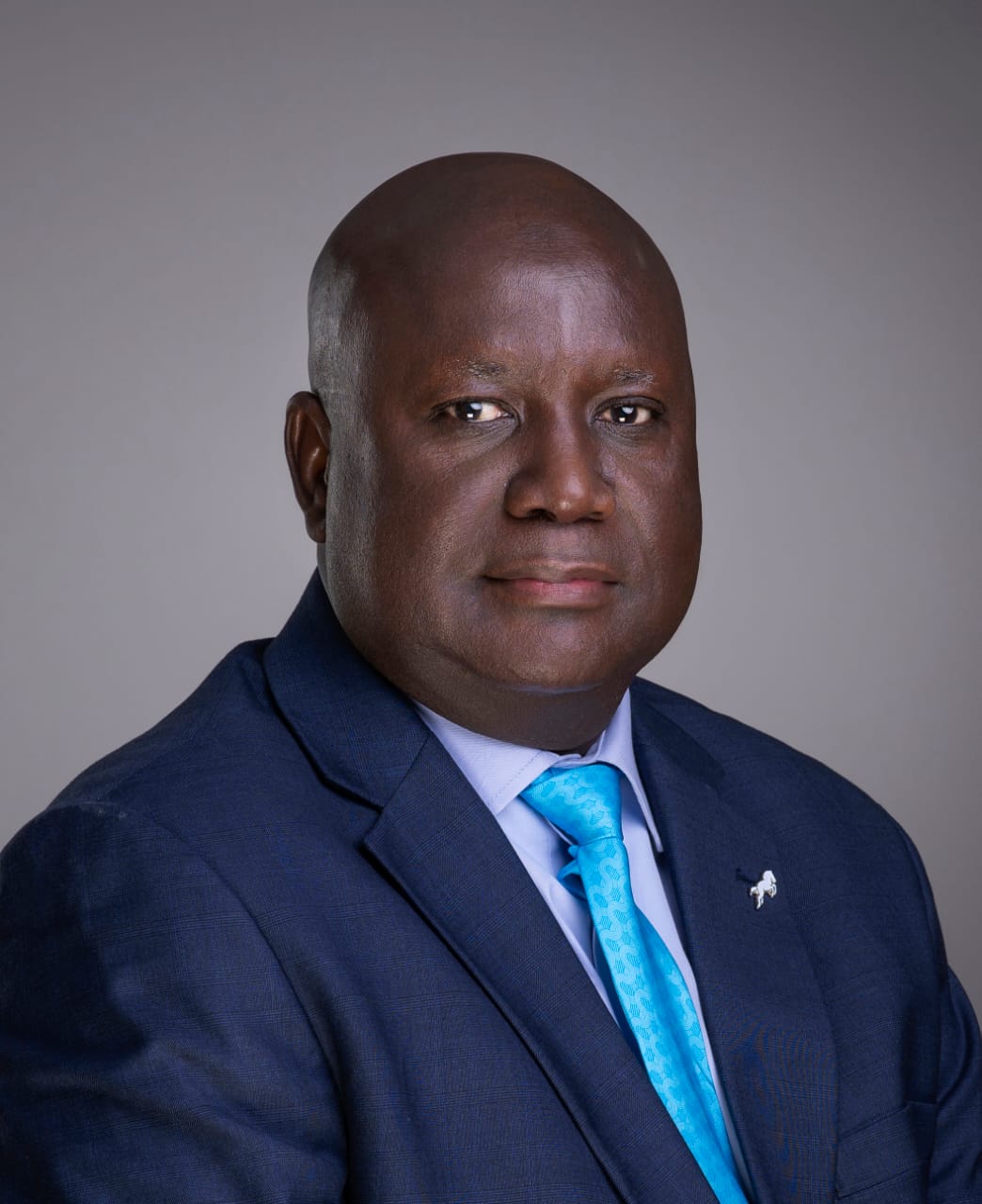
By Mannir U. Ringim (PhD)
Long before the satellite forecasts and the seasonal advisories, the African farmer learned to read the sky. He watched the colour of the clouds, the behaviour of the birds, the first scent of rain on hot ground, and he planted accordingly. For generations, that knowledge was reliable enough to feed nations. Today, it is faltering not because the farmer has forgotten how to read the signs, but because the signs themselves have changed. The rains that once came in April now arrive in May, or not at all. The harmattan lingers. The river that once flooded every decade now floods twice in five years. Nature is still sending its signals; they have become harder and crueller to read.
Today, the world marks World Environment Day. This year’s theme, “Inspired by Nature. For Climate. For Our Future,” will be examined in Baku and echoed in boardrooms and headlines across the world. It is a worthy conversation, but the people who live that theme most literally will not be in any of those rooms. They are the smallholder farmers of northern Nigeria and the wider Sahel, the rice growers of the Niger basin, the cassava, cocoa, and oil palm households from Cross River to the forests of the coast. It is a Nigerian story, but not only a Nigerian one: the same signals are being read across West Africa, and in the last decade, the reading has grown harder.
I want to make a single argument on this day of World Environment Day, and although it begins in the field, it ends in the boardroom: in our part of the world, agricultural finance is climate finance. The most direct, most local and most consequential form of climate action available to the region’s financial sector is not a distant carbon market or an offset scheme negotiated abroad. It is the decision to put serious, patient and intelligent capital into the hands of the people working the most climate-exposed asset we possess — our land. Get that decision right, and we address food security, rural livelihoods and climate resilience in a single motion. Get it wrong, and we will keep treating three faces of one crisis as though they were unrelated problems.
The signals from the land
To understand why this matters, it helps to travel the land as those of us in business banking do. Across the Sahel, the desert is not a metaphor; it advances year upon year over farmland that fed families in living memory. Lake Chad — once one of Africa’s great freshwater bodies, shared by Nigeria, Niger, Chad and Cameroon — has retreated to a fraction of its former size, carrying fishing and farming livelihoods with it. In the middle belts, the rains have turned violent and unpredictable, and a single night of flooding can erase a season’s labour and a year’s income. Along the coast and the eroding river valleys, gully after gully swallows farms, homes and roads. These are not isolated misfortunes; they are the local expressions of a global phenomenon, and the people absorbing them first are the people who feed everyone else.
This is the part of the climate story we too often misfile. We log the late rains under “agriculture,” the flood under “disaster relief,” the rising cost of a meal under “the economy,” and we reserve the word “environment” for tree-planting campaigns. But these are not separate ledgers. The farmer who cannot plant because the rains failed, the trader who charges more because the harvest shrank, the young person who leaves the village because the farm no longer pays — all are responding to the same signal. In our region, climate change announces itself first as an agricultural event. We will not manage it as an environmental one until we are willing to finance it as an economic one.
A paradox of capital
Here lies a contradiction we have tolerated for far too long. Agriculture employs more people than any other sector in Nigeria and across much of West Africa, and contributes a substantial share of national output. By any honest measure, it is the foundation of the real economy, and yet, for decades, it has drawn only a single-digit share of total bank lending, which is a fraction of its weight in jobs, in food, and in stability. We have built financial systems that are, in effect, under-invested in the very sector that sustains them.
The reasons are familiar to every banker. Agriculture has long been judged too risky, too seasonal, too informal and too hard to collateralise. A farmer’s income arrives once or twice a year, not monthly; his balance sheet consists of a few hectares, some livestock, and a great deal of practical knowledge. No conventional credit model was built to value it. So, capital did the rational short-term thing: it stayed away, or lent briefly and expensively, on terms that suited the lender’s calendar rather than the crop’s. That caution made sense in a stable climate. In a changing one, it is self-defeating because the farmer who cannot borrow cannot adapt. He cannot buy the drought-tolerant seed, install the modest irrigation that frees him from relying on a single rainy season, or afford the storage that keeps a good harvest from spoiling before the market. We have been asking our most climate-exposed citizens to face the hardest conditions in memory with the least capital available to them. That is not prudence; it is a slow failure of both economics and adaptation, and the bill arrives at every table as more expensive food.
Risk is also a design problem
If there is good news here, it is that much of what we call “agricultural risk” is not a law of nature. It is a design problem, and design problems can be solved. The past few years have produced a genuinely more sophisticated toolkit, and the institutions willing to use it are finding the sector far more bankable than the old assumptions allowed. It begins with lending that fits the farmer rather than forcing the farmer to fit the facility: cash-flow facilities structured around the crop cycle, disbursing at planting and falling due after harvest. Value-chain and anchor-borrower models, in which a credible off-taker sits between the bank and thousands of smallholders, solve the scale, collateral, and market access problems at a single stroke. Warehouse-receipt systems let stored grain serve as collateral, so a farmer need not sell everything at harvest, when prices are lowest, merely to raise cash.
Around that core sits an expanding set of instruments: input and mechanisation finance to lift yields; irrigation finance to break the dependence on the rains; cold-chain and storage finance to attack the staggering share of what we grow that is still lost after harvest, losses that are, in their own quiet way, as much an environmental cost as an economic one, since every wasted tonne is water, land, fuel and labour spent for nothing. Weather-index insurance can pay out automatically when rainfall falls below a threshold, turning an uninsurable risk into a priced one, and the spread of mobile technology and farm-level data — satellite imagery, mapping, digital payment histories — is finally giving lenders an evidence-based way to assess the smallholder they once treated as invisible. None of this is theoretical; each instrument is already in use somewhere in the region today. The task is not to invent new tools but to deploy the existing ones at scale, and with discipline.
Here, agricultural finance and the climate agenda converge, because the instruments that make farming bankable are, almost without exception, the ones that make it resilient. Irrigation is an adaptation. Drought-tolerant seed is an adaptation. Healthier soils, smarter water use, agroforestry that holds back the desert, storage that wastes less — these are not optional “green” extras; they are the difference between a farm that survives a harsher climate and one that does not. The point lands with particular force in West Africa, among the most climate-vulnerable yet least climate-financed regions on earth. The global conversation has turned decisively to climate finance — Azerbaijan, this year’s World Environment Day host, carried that agenda as president of COP29 — but climate finance is not only something that happens at altitude. Its most grounded form, for us, is the facility that enables a cooperative to drill a borehole or build a warehouse. The local reality is how the global ambition gets delivered.
Shared risk, shared frontier
None of this can rest on the banks alone, and it should not. The risks are real, and the most durable way to manage them is to share them among the actors who each hold a piece of the solution. Governments set the frameworks, build rural infrastructure, and provide the guarantees that make long-tenor lending viable. Development finance institutions, the African Development Bank chief among them, with their long-standing ambition to feed the continent, bring the patient, blended capital that crowds in commercial lenders rather than out. Insurers price the weather risk that banks should not carry alone. Agritech firms and aggregators supply data and market linkages. Banks bring structure, reach, governance and capital. Nigeria has tried versions of this before — the Agricultural Credit Guarantee Scheme and the Anchor Borrowers’ Programme among them, and the experience taught us both the promise of public-private agricultural finance and the discipline it demands: such partnerships work only when they are designed with rigour, governed transparently, and judged by outcomes rather than by money disbursed.
For those of us whose responsibilities include the public sector, the most valuable role a bank can play is often not as lender of last resort but as honest broker, aligning the ambitions of government, the capital of development partners, and the needs of the farmer into structures that actually move money to the field, and the prize is larger than risk management. It is tempting, faced with advancing desert and shrinking water, to speak of the Sahel and the rural North only in the language of crisis. However, that language is incomplete and self-fulfilling. The same regions hold vast arable land, established value chains in grains, livestock and horticulture, and one of the youngest workforces on earth. When a young person can finance an irrigated dry-season crop, or a women’s cooperative can secure inputs and a guaranteed buyer, agriculture stops being a fallback and becomes a future. That shift — from relief to investment, from managing decline to financing growth — is the single most powerful contribution finance can make to the regions on the climate front line. It is also good business: the young and the underserved are not a market to be pitied, but the largest growth opportunity in African banking.
Where we choose to stand
At Union Bank, this is not a new conviction. An institution that has banked Nigerian communities for more than a century has watched the relationship between people and land change in real time and has come to regard agricultural finance not as a niche or an act of charity, but as national infrastructure — and, increasingly, as climate infrastructure. The question we put to ourselves is not whether agriculture is worth financing, but how to finance it in a way that builds resilience rather than extends credit, and how to do so at the scale the moment now demands.
The campaign behind this year’s World Environment Day speaks of the signals the Earth is sending us, and the signals we choose to send back. It is an apt frame for a banker. For too long, the signal our financial system sent the farmer was a quiet, discouraging one: you are too risky, too small, too far away to be worth our capital. The farmer heard it clearly, and many of his children left the land. We can now send a different signal.
“For Climate” and “For Our Future” are not phrases to be admired from a distance. For Nigeria and its neighbours, there are decisions to be made at home in how we price risk, where we direct capital, and whether we are finally willing to stand behind the people who have been reading nature’s signals all along. The most meaningful climate commitment our financial sector can make this World Environment Day is not a statement; it is a willingness to finance the land that feeds us, intelligently and at scale. The moment, as the campaign rightly insists, is now. Now for climate — and, just as urgently, now for the farmer.
Mannir U. Ringim is Executive Director, Business Banking at Union Bank of Nigeria, with responsibility for the Public Sector and the Bank’s Northern, South-South and South-East businesses.
He is versatile in spearheading new business development, cultivating partnerships,
and fostering healthy stakeholder relationships, with a focus on driving business growth and achieving revenue milestones.
Mannir’s educational qualifications include a PhD in Economics (focus on Financial Inclusion) from Bayero University, Kano, and Bachelor of Science and Master of Science degrees in Economics from the same institution. He also holds executive certifications from INSEAD Business School in Singapore, Kellogg School of Management in Chicago, and Euromoney in London, reflecting his dedication to continuous growth and excellence. Mannir has been an Honorary Senior Member of the Chartered Institute of Bankers of Nigeria (HCIB) since 2015.


