General
DisCos Collect N196bn in March, Miss N50bn of Billed Revenue
By Adedapo Adesanya
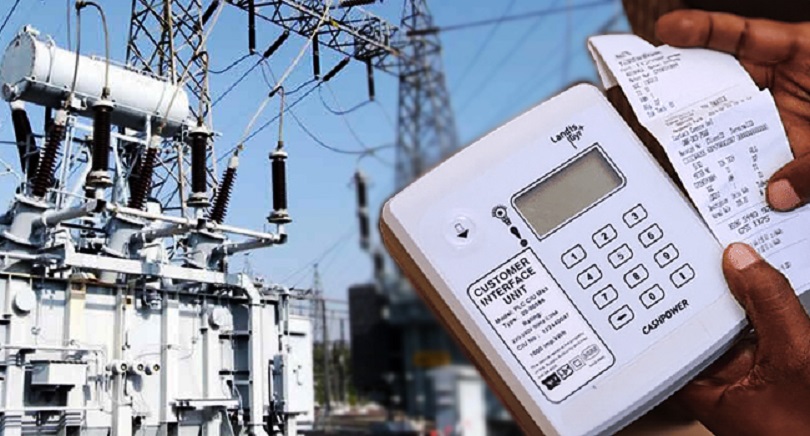
Nigeria’s electricity distribution companies (DisCos) generated N196.13 billion in revenue in March 2026, despite billing customers a total of N246.43 billion during the month, according to the latest commercial performance report released by the Nigerian Electricity Regulatory Commission (NERC).
The figure represents a slight decline from the N196.68 billion collected in February, highlighting persistent challenges in revenue recovery across the power distribution segment, even as energy supplied to the grid continued to improve.
NERC’s March 2026 fact sheet showed that electricity billing rose by 1.71 per cent from N242.29 billion recorded in February, reflecting increased energy deliveries and customer charges. However, collection efficiency declined to 79.59 per cent from 81.17 per cent in the previous month, indicating that a significant portion of billed revenue remained uncollected.
The regulator disclosed that DisCos received 293.76 million kilowatt-hours of electricity during the review period, representing a 6.02 per cent increase compared to February. The development suggests a modest improvement in power availability across the distribution network.
Despite the increase in energy supplied, revenue recovery remains uneven across the industry. NERC reported that the average approved tariff for March stood at N124.30 per kilowatt-hour, while actual collections averaged ₦100.75 per kilowatt-hour, resulting in an overall revenue recovery efficiency of 81.05 per cent.
Among the eleven DisCos, Ikeja Electric emerged as the strongest performer, posting a revenue recovery efficiency of 99.30 per cent. Eko Electricity Distribution Company followed with 95.73 per cent, while Benin DisCo recorded 85.18 per cent.
At the lower end of the performance table, Kaduna Electric recorded the weakest recovery rate at 35.65 per cent. Jos DisCo and Yola DisCo also struggled, achieving recovery efficiencies of 53.53 per cent and 58.58 per cent, respectively.
Ikeja Electric also led in collection efficiency with 96.38 per cent, ahead of Benin DisCo at 90.97 per cent and Eko DisCo at 87.68 per cent. Kaduna, Jos and Yola remained the poorest performers in this category, underlining the persistent commercial and operational challenges facing power distributors in parts of northern Nigeria.
In terms of billing efficiency, Eko DisCo ranked first with 92.30 per cent, followed by Port Harcourt DisCo at 90.36 per cent and Ikeja Electric at 87.76 per cent. Yola DisCo recorded the lowest billing efficiency at 58.68 per cent.
The latest figures underscore the mixed realities within Nigeria’s power sector. While electricity supply and customer billing continue to improve, revenue collection remains a major obstacle to the financial sustainability of the industry.
Analysts note that stronger metering penetration, improved customer confidence, reduction in energy theft and more efficient collection systems will be critical if DisCos are to close the widening gap between electricity supplied, billed revenue and actual collections.
The March performance report comes as regulators and industry stakeholders intensify efforts to strengthen the commercial viability of the electricity market, attract fresh investment and improve service delivery across the country.
General
Digital Switchover: NBS, NigComsat Train Installers in Ibadan
By Modupe Gbadeyanka
Over 50 skilled technicians drawn from various states across the South-West region of Nigeria converged on Ibadan, Oyo State, on Friday for a comprehensive technical and sensitisation training programme for set-top box installers and associated reception equipment technicians.
This training was organised by the National Broadcasting Commission (NBC) in partnership with the Nigerian Communications Satellite Limited (NIGCOMSAT) to guarantee a smooth, efficient, and error-free rollout of Nigeria’s digital broadcasting migration.
Nigeria’s journey toward digital terrestrial television has spanned nearly two decades. The country formally adopted the digital switchover policy in 2008 in line with the International Telecommunication Union’s (ITU) 2006 global mandate, which set a June 2015 deadline for member states.
Successive missed targets in 2017 and beyond stemmed from funding constraints, policy inconsistencies, infrastructure gaps, and logistical challenges. While pilot projects were implemented in Plateau, Lagos, Kano, Enugu, Kwara, Osun, Kaduna, and the Federal Capital Territory, nationwide coverage remained a distant goal.
After substantial public investment exceeding N60 billion with limited results, the federal government unveiled a bold, renewed strategy in 2025 titled The Big Picture on June 17, 2026, with a firm analogue switch-off date set for December 31, 2028.
The new framework introduces a hybrid broadcasting model that intelligently combines Digital Terrestrial Television (DTT), Direct-to-Home (DTH) satellite delivery via NIGCOMSAT-1R, and Internet Protocol (IP)-based distribution.
By prioritising satellite technology, Nigeria leverages its sovereign satellite assets to significantly reduce dependence on expensive terrestrial transmission infrastructure. This approach is projected to accelerate digital television rollout by over 65 per cent while delivering near-instantaneous national coverage.
The Head of the Digital Switchover (DSO) unit and Deputy Director of Public Affairs at the NBC, Mrs Clementine Usman-Wamba, noted that the Ibadan session is the first of many planned across Nigeria’s geopolitical zones.
The Ibadan training directly addresses the technical demands of this hybrid ecosystem. Installers will be equipped with skills in satellite dish alignment for DTH, terrestrial antenna optimisation for DTT signals, and the configuration of hybrid reception devices.
Given the significant departure from analogue systems and earlier pilots, this sensitisation is essential to minimise installation errors, reduce service disruptions, and ensure that even households in rural and underserved communities can enjoy seamless access to superior digital broadcasts.
The FreeTV platform, built on open-standard DVB-S2 technology, will offer up to 100 free-to-air high-definition channels to an estimated 40 million television households across the country.
For terrestrial reception, Nigeria has adopted the advanced DVB-T2 standard with MPEG-4 AVC compression, which supports up to 20 channels per frequency—far more efficient than previous systems.
Consumers can access the service using affordable DVB-S2-compatible set-top boxes (priced between N15,000 and N25,000) or smart TVs with built-in DVB-T2 digital tuners.
Beyond technical excellence, the DSO represents a major national economic transformation project. The reallocation of broadcast spectrum (the “digital dividend”) will unlock new opportunities in telecommunications and broadband services. The advertising market is projected to expand by up to N605.2 billion, while local manufacturing and assembly of reception equipment is expected to generate over 20,000 jobs.
General
NIMASA Launches Blue Economy Accelerator for Maritime Startups
By Adedapo Adesanya
The Nigerian Maritime Administration and Safety Agency (NIMASA) has introduced the Blue Economy Accelerator Programme, a strategic initiative to identify, nurture, and accelerate innovative startups that will contribute to the sustainable growth of Nigeria’s marine and blue economy.
The Blue Economy Accelerator Programme is aimed at attracting young, vibrant minds with innovative ideas capable of transforming Nigeria’s maritime ecosystem.
The Director-General of NIMASA, Mr Dayo Mobereola, said that through the initiative, participants will receive structured business development support, industry mentorship, and technical guidance to convert promising concepts into viable ventures that address critical challenges and opportunities within the blue economy.
“The programme reflects NIMASA’s commitment to supporting the implementation of the vision of the Federal Ministry of Marine and Blue Economy in unlocking the immense potential of the blue economy by empowering young innovators, entrepreneurs, and technology-driven enterprises. We at NIMASA want to provide a platform for investors to identify young talents and invest in them,” he said.
The NIMASA DG commended the Minister of Marine and Blue Economy, Mr Adegboyega Oyetola, for codifying the Marine and Blue Economy Policy as a clear roadmap for the sector’s development and also urged young Nigerians to embrace the programme, which has the potential to transform raw talents into big investments in the maritime sector.
Applications are open to startups and innovators developing solutions across several strategic sectors, including marine waste management and the blue circular economy; aquaculture And sustainable fisheries; maritime technology and logistics innovation; ocean energy including wave, tidal, and offshore renewable energy; marine tourism and coastal recreation; marine biotechnology such as, ocean data and analytics; green Shipping, including vessel decarbonization; smart port solutions; autonomous marine vehicles; biofouling prevention technologies; and coastal resilience through nature-based coastal defence solutions.
The first phase of the programme is expected to attract a minimum of 150 high-quality applications from within and outside the country, provided they are Nigerian citizens.
General
Sanwo-Olu, Info Minister, Others for 53rd AAAN AGM/Congress in Lagos
By Modupe Gbadeyanka
Governor Babajide Sanwo-Olu of Lagos State will declare open the 53rd Annual General Meeting (AGM) and Congress of the Association of Advertising Agencies of Nigeria (AAAN) taking place from July 23–24, 2026, at the Providence Hotel, Ikeja GRA, Lagos.
The event is expected to bring together leaders from advertising, marketing, media, government and the wider creative economy to examine the forces reshaping the industry.
A statement from the group stated that the programme, themed AdVolution: The End of Advertising as We Know It and How to Win What Comes Next, will have the Minister of Information and National Orientation, Mr Mohammed Idris Malagi; the Director-General of the Advertising Regulatory Council of Nigeria (ARCON), Mr Lekan Fadolapo, and others in attendance.
The conference will feature keynote presentations by the CMO of Fidelity Bank, Mr Meksley Nwagboh, and the chief executive of Big Cabal Media, Tomiwa Aladekomo. They will share insights on the evolving advertising landscape and the opportunities shaping its future.
This year’s congress comes at a time when artificial intelligence, digital platforms, changing consumer behaviour and the creator economy are transforming how brands connect with audiences and deliver value.
The conference will examine some of the industry’s most pressing issues, including the shift from interruption-based advertising to participation-led engagement, the evolution of agencies into technology-driven ecosystems, the rise of the creator economy and the growing need to move beyond traditional commission models towards measurable business impact.
The president of AAAN, Mr Lanre Adisa, described this year’s theme as both timely and necessary.
“This year’s AGM comes at a defining moment for our industry. AdVolution captures the reality we are all facing: a period of big change that is reshaping how we work, create and deliver value. This gathering is an opportunity for industry players to come together, exchange ideas and shape the next chapter of advertising in Nigeria,” he stated.
Activities will commence on July 23 with a members-only Business Session featuring the President’s stewardship address, committee reports and deliberations on the Association’s progress and strategic direction.
The main conference takes place the next day and will conclude with the AAAN Gala and Awards Night, celebrating outstanding contributions to Nigeria’s advertising industry.