Connect with us

Economy

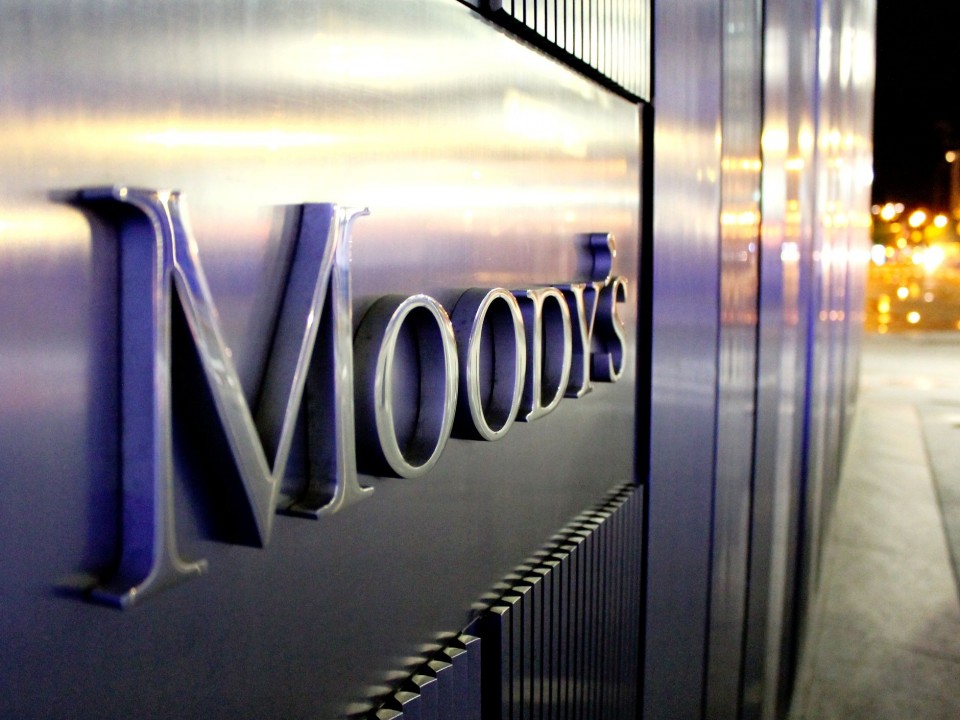
Moody’s Acquires 100% Stake in GCR Ratings

Published

on

GCR Moody's

By Aduragbemi Omiyale

A leading rating organisation, Moody’s Corporation, has taken full control of a fellow player in the industry, Global Credit Rating Company (GCR) Limited.

This happened after Moody’s increased its stake in GCR to 100 per cent from 51 per cent in 2022 in a bid to solidify its presence in the African region.

GCR is a leading credit rating agency in Africa with a broad geographic footprint that includes South Africa, Nigeria, Senegal, Kenya, and Mauritius.

Following the acquisition, GCR will continue to use its rating methodologies, issue its credit ratings and maintain a separate management team.

“The full acquisition of GCR by Moody’s is an important milestone that will enable us to build on our deep local market insights and over a quarter century of growth across the African continent.

“It will also provide the opportunity to develop further solutions that meet a range of customer needs, including credit ratings, credit risk solutions, and ESG (environmental, social and governance factors) capabilities,” the chief executive of GCR, Mr Marc Joffe, stated.

GCR’s 28-year proven track record and successful domestic operations across the African continent, together with Moody’s international expertise represents a unique opportunity to contribute to the development of capital markets and the wider economies across Africa.

The firm expects its acquisition by Moody’s to solidify further its position as a leading provider of quality, objective and independent credit opinions in African markets.


Click to comment

Leave a Reply

Your email address will not be published. Required fields are marked *

Economy

Sell-offs Compress Nigerian Exchange Key Performance Indices by 0.05%

Published

on

Nigerian Exchange

By Dipo Olowookere

The key performance indices of the Nigerian Exchange (NGX) Limited moderated by 0.05 per cent on Thursday as a result of selling pressure by investors.

The sell-offs were mainly from the consumer goods and banking sectors, which contracted by 0.23 per cent and 0.17 per cent, respectively.

It was observed that the insurance counter closed higher by 0.73 per cent, the energy index appreciated by 0.10 per cent, and the industrial goods space was up by 0.09 per cent.

However, they could not prevent the bourse from crumbling at the close of business.

As a result, the All-Share Index (ASI) shrank by 113.47 points to 244,738.74 points from 244,852.21 points, and the market capitalisation slipped by N73 billion to N156.970 trillion from N157.043 trillion.

International Energy Insurance crashed by 10.00 per cent to N7.11, May and Baker stumbled by 8.51 per cent to N43.00, Tripple Gee contracted by 8.47 per cent to N4.00, Abbey Mortgage Bank slumped by 7.69 per cent to N11.40, and AXA Mansard dipped by 6.67 per cent to N12.60.

Conversely, Consolidated Hallmark improved by 10.00 per cent to N8.25, Learn Africa surged by 10.00 per cent to N11.00, Nigerian Enamelware was elevated by 10.00 per cent to N40.70, University Press chalked up 10.00 per cent to finish at N5.50, and ABC Transport gained 8.25 per cent to end at N7.80.

A total of 31 stocks were on the gainers’ chart, and 33 stocks were on the losers’ table, indicating a negative market breadth index and bearish investor sentiment.

On the activity chart, market participants bought and sold 1.7 billion equities valued at N52.8 billion in 49,807 deals, in contrast to the 1.2 billion equities worth N38.8 billion traded in 54,193 deals at midweek. This showed that the trading volume was up by 41.67 per cent, the trading value was up by 36.08 per cent, and the number of deals was down by 8/09 per cent.

The most active stock yesterday was FCMB with a turnover of 584.7 million units worth N5.9 billion, Access Holdings sold 579.8 million units for N14.0 billion, UBA exchanged 107.0 million units valued at N4.6 billion, NGX Group transacted 49.1 million units worth N6.7 billion, and AIICO Insurance traded 30.1 million units for N134.2 million.

Continue Reading

Economy

Naira Value Further Tumbles to N1,363/$1 at NAFEX

Published

on

naira street value

By Adedapo Adesanya

The value of the Naira further tumbled against the United States Dollar by N1.78 or 0.13 per cent in the Nigerian Autonomous Foreign Exchange Market (NAFEX) to N1,363.83/$1 on Thursday, June 11, from N1,362.05/$1 on Wednesday.

However, it gained N6.08 on the Pound Sterling in the official market to trade at N1,821.25/£1 versus midweek’s rate of N1,827.33/£1, and appreciated against the Euro by N2.46 to sell at N1,572.89/€1 compared with the preceding session’s N1,575.35/€1.

At the GTBank forex counter, the Nigerian Naira lost N1 against the Dollar during the session to quote at N1,371/$1, in contrast to Wednesday’s value of N1,370/$1, and at the parallel market, it remained unchanged at N1,380/$1.

The Nigerian currency is expected to be steady, underpinned by Dollar ​sales by the Central Bank of Nigeria (CBN), especially with gross external reserves rising to $50.439 billion, reflecting sustained inflows from oil revenue and other FX sources.

Traders expect the local currency ⁠to remain ​stable as the central bank continues to ​sell dollars and keep up its aggressive OMO (Open Market Operations) programme to mop up Naira

Confidence in the Naira remains firm with recent nods from S&P, World Bank, and the International Monetary Fund (IMF).

A look at the cryptocurrency market showed that it was bullish on Thursday, as President Donald Trump said the US was close to a deal with Iran and that he had “ended the war with Iran today.” Markets read it as the end of a conflict that has whipsawed prices for more than 100 days.

Market analysts noted that a calmer Middle East takes pressure off oil, which eases the inflation that has fed bets on higher interest rates – the same rate fear that helped drag crypto down this week.

Cardano (ADA) rose 2.5 per cent to $0.1683, Solana (SOL) appreciated by 1.5 per cent to $66.05, Ripple (XRP) grew by 1.3 per cent to $1.12, Dogecoin (DOGE) expanded by 0.6 per cent to $0.0853, Bitcoin (BTC) jumped 0.4 per cent to $62,909.08, Binance Coin (BNB) soared by 0.3 per cent to $596.41, Ethereum (ETH) increased by 0.2 per cent to $1,655.02, US Dollar Tether (USDT) advanced by 0.11 per cent to $1.00, and US Dollar Coin (USDC) improved by 0.03 per cent to $1.00, while TRON (TRX) slumped by 2.8 per cent to $0.3126.

Continue Reading

Economy

Brent, WTI Slide 3% as Trump Halts Planned Strike on Iran

Published

on

Brent Price

By Adedapo Adesanya

The prices of crude oil grades settled lower on Thursday after US President Donald Trump cancelled plans to strike Iran ‌within hours, a move that raised expectations for a deal to end more than three months of war.

Brent futures fell by $2.72 or 2.9 per cent to quote at $90.38 a barrel, while the US West Texas Intermediate (WTI) crude futures decreased by $2.32 or 2.6 per cent to $87.71 a barrel.

President Trump, ​in a social media post, said he called off planned strikes on Iran because discussions have ​advanced to the highest levels of Iran’s leadership and a broad coalition of regional ⁠powers. However, he did not share details of the final points he said were approved by the coalition.

He had earlier threatened to seize Iran’s main oil export hub, Kharg Island, and assume total control of the country’s oil and gas markets, drawing a direct line to the US operation in Venezuela as a template for what could come next in Iran.

That came after a fresh round of US strikes on Wednesday rattled an already fragile ceasefire, with Iran responding by declaring the Strait of Hormuz closed and claiming hits on the US Fifth Fleet headquarters in Bahrain.

The American President has claimed multiple ​times that a deal with Iran is imminent, only to issue threats again when the oil-producing country does not agree to his demands.

On Wednesday, Iran announced the closure of ​the Strait of Hormuz, including for oil tankers and commercial ships, saying any vessel attempting to pass through would come under ‌fire. The Strait of Hormuz, through which roughly 20 per cent of global energy flows, has been effectively closed since the war began, but in recent weeks, some friendly ships have passed through.

Data showed that three more LNG tankers have slipped out of the strait with their transponders off, heading to Asia, though the ​timing is unclear.

The Organisation of the Petroleum Exporting Countries (OPEC) is sticking to its view that the oil market will remain relatively tight through next year, with demand growth expected to continue outpacing non-OPEC+ supply additions despite months of war-related disruption and elevated prices.

According to OPEC’s June Monthly Oil Market Report released on Thursday, crude production averaged 33.13 million barrels per day in May, down 190,000 barrels per day from April based on secondary-source estimates.

The group left its global demand outlook largely unchanged, forecasting oil demand growth of 1.0 million barrels per day in 2026.

Continue Reading

Trending