Connect with us

Banking

GCR Upgrades Wema Bank Rating After Improvement in Capitalisation Metrics

Published

on

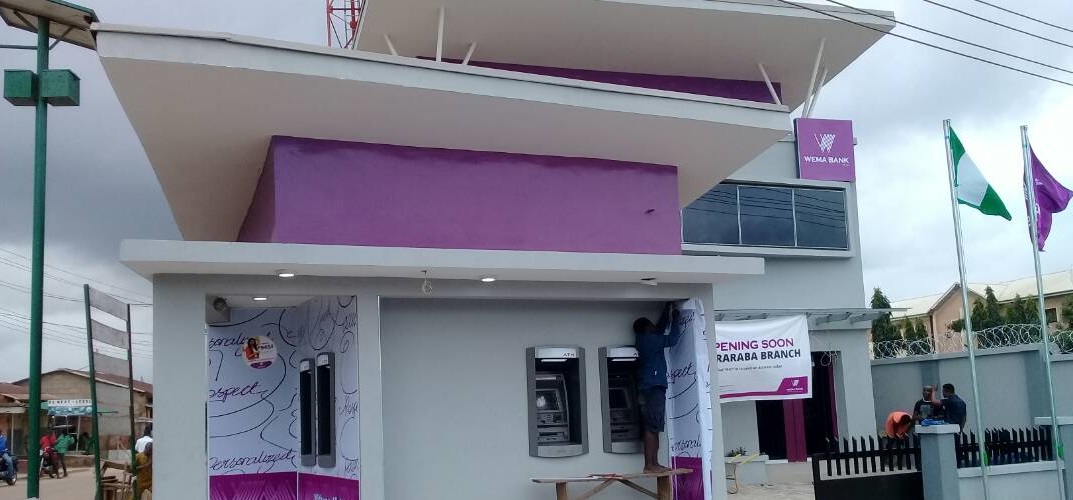
wema bank Maraba branch

By Aduragbemi Omiyale

An improvement in the capitalisation metrics of Wema Bank Plc after a capital injection of about N21 billion in 2023 has spurred GCR ratings to upgrade the lender’s national scale long-term issuer ratings to BBB(NG) from BBB-(NG).

In a statement seen by Business Post, the rating agency noted that it has also affirmed the company’s short-term issuer rating of A3(NG), with the Outlook revised to Stable from Rating Watch Positive.

GCR noted that it expects the bank’s core capital ratio to register between 17 per cent and 18 per cent by December 31, 2024, from 14.1 per cent in the first quarter of 2024 after it closed at 15.5 per cent on December 31, 2023.

Recall that this month, the financial institution obtained approval from the Central Bank of Nigeria (CBN) on its N40 billion right issue, with the allotment of the shares finalised by the Securities and Exchange Commission (SEC).

The organisation plans to raise an additional N150 billion over the next 12 to 18 months to meet the new minimum capital requirement for a commercial bank with national authorisation.

When this is done, the GCR core capital ratio of Wema Bank is expected to be further strengthened.

Wema Bank plans to leverage technology and strategic partnerships with fintechs to further drive growth in the near future, specifically in the public sector given the sizeable opportunities with increasing revenue generation and collection by the government.

The bank’s revenue base remains largely stable, dominated by stable earnings from net-interest and non-interest income, though it only accounts for about 2.0 per cent of the Nigerian banking sector’s total assets, customer deposits and gross loans, respectively in 2023.

Its competitive position is supported by its strong digital banking presence, reflected in its increasing customer base and transaction volumes over the years, translating to better earnings. The firm has a customer base of over 5.0 million, served through 149 physical branches and cash centres as well as a strong digital platform.


Banking

Interswitch Champions Dialogue on Alternative Credit Scoring for Underserved

Published

on

Alternative Credit Scoring for Underserved

By Modupe Gbadeyanka

Technology leaders from across Nigeria’s digital finance ecosystem recently converged on Eko Convention Centre in Lagos to explore pathways for expanding credit access to underserved communities.

It platform for this was the 2025 Committee of e-Business Industry Heads (CeBIH) Annual Conference themed Reimagining Financial Inclusion through Cultural Shifts in Consumer Credit. Interswitch was a returning gold sponsor.

At a high-impact panel session titled Alternative Credit Scoring for the Underserved, moderated by Wunmi Ogunbiyi of the CeBIH Advisory Council, the Divisional Head of Product Management and Solution Delivery at Verve International, a subsidiary of Interswitch Group, Mr Ademola Adeniran, examined how alternative data and digital intelligence can unlock credit for millions excluded by conventional financial models.

“For us, this conversation goes beyond technology. It is about designing credit systems that truly reflect African realities.

“Millions transact daily outside traditional banking frameworks, and alternative credit scoring enables us to recognise that economic activity and responsibly convert it into access to finance.

“At Verve and Interswitch, we are committed to building the digital infrastructure that makes this inclusion scalable and sustainable,” Mr Adeniran stated.

Also, the Vice President for Sales and Account Management, Digital Infrastructure and Managed Services at Interswitch Systegra, Ms Robinta Aluyi, stressed the importance of African-led solutions in addressing the continent’s financial challenges, noting that sustainable progress must be rooted in local realities.

Interswitch’s strength, she said, lies in the fact that it was built on the continent, for the continent, with solutions designed to serve individuals, small businesses, enterprises, and government institutions across every layer of the payment value chain.

She also emphasized the company’s purpose-driven approach to building the infrastructure that powers Africa’s digital economy and enabling secure money movement on a scale.

“Interswitch helps people navigate their daily lives with greater ease. We make transactions flow safely and reliably. We do this by connecting banks, supporting secure and reliable payments, and strengthening the entire value chain of digital finance.

“Today, we hold a significant portion of the market, and that achievement reflects the deep trust our banking and fintech partners place in our platforms. We continue to deliver because the ecosystem has worked with us every step of the way,” Ms Aliyu said.

There were also contributions from Munachimso Duru, Head, Products, Partnership and Innovation, Afrigopay Financial Services Limited; Damola Giwa, Country Manager, Visa West Africa; Nike Kolawole, representing Aisha Abdullahi, Executive Director, Credit and Portfolio Management, CREDICORP; and Ifeanyi Chukuwekem, Head, Corporate Strategy Department, eTranzact, offering a broad industry perspective on the future of responsible credit delivery.

Continue Reading

Banking

CBN Streamlines BDC Operators to 82 to Sanitise FX Market

Published

on

BDC Operators

By Adedapo Adesanya

The Central Bank of Nigeria (CBN) has issued final operating licences to 82 Bureaux De Change (BDC) operators under its revised regulatory framework.

In a statement released on Monday, signed by its acting Director of Corporate Communications, Mrs Hakama Sidi-Ali, the apex bank said the licences took effect from November 27, 2025, under the 2024 Regulatory and Supervisory Guidelines for BDC Operations in Nigeria.

BDCs are instrumental to the foreign exchange market, as their activity could help regulate demand and cover supply deficits.

The apex lender also cautioned the public against dealing with unlicensed foreign exchange operators.

“The Central Bank of Nigeria, in exercise of its powers under the Banks and Other Financial Institutions Act (BOFIA) 2020 and the 2024 Guidelines, has granted final licences to 82 Bureaux De Change to operate with effect from November 27, 2025,” a part of the statement read.

The central bank stressed that only BDCs listed on its official website are recognised as licensed operators and urged the public to verify the status of any BDC before transacting.

“While the CBN will continue to update the list of Bureaux De Change with valid operating licences for public verification on our website, the Bank advises the general public to avoid dealing with unlicensed Foreign Exchange Operators,” the statement warned.

The bank also noted that operating a BDC without a valid licence is punishable under Section 57(1) of the BOFIA 2020 and promised legal action against illegal operators.

This licensing exercise is part of CBN’s broader efforts to sanitise the foreign exchange market as well as enhance transparency, and ensure that only credible players operate in the sector.

A 2024 guideline, which became effective in June 2024, requires all BDCs to reapply for Tier 1 or Tier 2 licences and meet minimum capital requirements, N2 billion for Tier 1 and N500 million for Tier 2, alongside non-refundable license fees of N5 million and N2 million, respectively.

Continue Reading

Banking

Stanbic IBTC Bank, AfDB Drive Sustainable Economic Growth

Published

on

stanbic ibtc bank

By Modupe Gbadeyanka

Stanbic IBTC Bank and the African Development Bank (AfDB) have sealed a strategic partnership to deepen sustainable economic growth.

The deal allows the subsidiary of Stanbic IBTC Holdings Plc to provide greater resilience and expand access to finance for businesses that drive job creation and national development.

A statement noted that the Nigerian lender has been given access to funding support to channel long‑term funding into critical areas of the Nigerian economy, including trade, infrastructure, and small and medium‑sized enterprises (MSMEs).

This collaboration also The underscores Stanbic IBTC’s dedication to environmental and social responsibility, ensuring that all funding is deployed in line with international best practice and the bank’s robust sustainability framework as evidenced by the Independent Project Monitoring Company’s (IPMC) ranking of Stanbic IBTC as one of the leading institutions in its latest sustainability rankings.

This recognition underscores the bank’s continuing commitment to advancing sustainable practices that benefit the environment and society.

“This agreement reflects our forward‑looking strategy to support the sectors that matter most to Nigeria’s future.

“Our focus is on empowering businesses, enabling sustainable growth, and ensuring that our financial system remains strong enough to meet the evolving needs of the economy,” the chief executive of Stanbic IBTC Bank, Mr Wole Adeniyi, stated.

Also speaking, the Director General of AFDB Nigeria, Mr Abdul Kamara, said, “Working with Stanbic IBTC aligns with our mission to accelerate Africa’s economic transformation. This collaboration ensures the bank can continue to play a pivotal role in financing infrastructure and sustainable development projects in Nigeria.”

Stanbic IBTC Bank has consistently demonstrated leadership through innovation in structured finance, digital transformation, and the integration of sustainability principles into its operations.

This latest step reaffirms its role as a thought leader in shaping Nigeria’s financial landscape and highlights its commitment to building a more resilient and prosperous future for the country.

Continue Reading

Trending