Connect with us

General

Interpol Raises Alarm Over Illicit Dollars Laundered in Nigeria Hourly

Published

on

Demand for Dollars

By Adedapo Adesanya

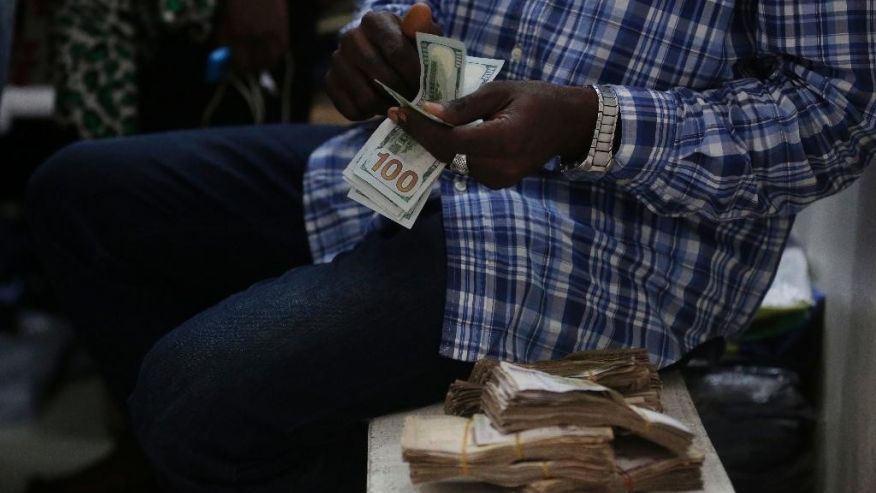
The International Police Organisation (Interpol) says hundreds of thousands of Dollars are laundered out of Nigeria every hour, raising worries about the effect of the development.

This disclosure was made in Abuja on Monday by the Interpol Vice President for Africa, Mr Garba Umar, while declaring open a four-day training workshop for Nigerian law enforcement agencies at the Economic and Financial Crimes Commission (EFCC) Academy, Abuja.

According to Mr Umar, money laundering across Africa and the entire world has assumed a monstrous dimension and Interpol has designed Silver Notices to combat the menace.

“Evidence has shown that every hour, hundreds of thousands of dollars are flowing out of Nigeria to the region and across the world, laundered before it reaches the pockets of criminals to enjoy the profits of their crimes, while the hardworking and honest Nigerians pay the price of crime”

“With every successful laundering of criminal money, our country becomes more prone to crime. More drugs, more fraud, more corruption and more violence. Every time criminal money is successfully laundered, our financial institutions take an additional blow,” he said.

He stressed that hard times awaited money launderers as the Silver Notices would make illicit funds more difficult to launder in any part of the world.

Mr Umar pointed out that financial crimes had become transnational and law enforcement agencies needed regular training for their workforce to be ahead of fraudsters

He urged participants at the workshop to make it a duty to discuss and learn about transnational crimes affecting their regions, identify possible solutions through a review of policing capabilities to support the country, and facilitate direct and in-person interaction amongst law enforcement networks across the country.

“In essence, this Workshop will allow us to re-examine the challenges of fighting transnational crimes in the country, reassess our strategies, and reaffirm our determination and unity as a country to provide security to our citizens and by extension the global community,” he said.

On her part, the Director General and Chief Executive Officer of the Nigerian Financial Intelligence Unit (NFIU), Mrs Hafsat Bakare, said it was imperative to strengthen capacity and coordination against financial crimes.

“The NFIU, she said, was sensitive to the interconnected nature of the criminal justice system, the threat of organised crime and cybercrimes being fought by law enforcement agencies.

She expressed optimism that the training law enforcement officers would receive at the workshop would  sustain efforts being made to ensure that Nigeria exits the Grey List of the Financial Action Task Force possibly by mid-2025.”

The Director of Interpol Financial Crime and Anti-Corruption Centre (IFCACC), Mr Isaac Oginni, said the only way to disrupt organised crimes was by denying fraudsters the financial profit behind their criminal enterprise.

He added that financial intelligence could also be utilised well when investigators recognise its value and use it to build a financial profile around suspects.


Adedapo Adesanya is a journalist, polymath, and connoisseur of everything art. When he is not writing, he has his nose buried in one of the many books or articles he has bookmarked or simply listening to good music with a bottle of beer or wine. He supports the greatest club in the world, Manchester United F.C.

Advertisement
Click to comment

Leave a Reply

Your email address will not be published. Required fields are marked *

General

FG Eyes Higher Allocation as Senate Moves to Amend Revenue Sharing Formula

Published

on

Senate rowdy Naira redesign policy

By Adedapo Adesanya

The Senate has proposed a review of the current revenue-sharing formula among the three tiers of government, seeking to allocate more funds to the federal government.

The proposal is contained in a constitutional amendment bill titled Constitution of the Federal Republic of Nigeria, 1999 (Alteration) Bill, 2026, sponsored by Mr Karimi Sunday representing Kogi-West, which passed first reading during plenary on Tuesday.

Coming amid ongoing calls for a new revenue formula to favour states and local governments, the bill argues for an increased federal share from the existing formula.

Under the current revenue sharing formula designed during the President Olusegun Obasanjo administration, the federal government takes about 52.68 percent of the total revenue generation by the nation in a month, the 36 state governments including the Federal Capital Territory, Abuja get 26.72 per cent and the 774 local governments share 20.60 per cent. The oil producing states of the Niger Delta region receive 13 per cent revenue as derivation to compensate for ecological damage of oil production in the region.

Defending the bill, the senator in a media conference on Tuesday stated that the federal government is overburdened by responsibilities such as the rehabilitation of dilapidated Trunk A roads and rising security costs, adding that available funds are no longer sufficient.

Ahead of its second reading, the lawmaker alleged that some states have little to show for funds received from the federation account.

The battle to change the sharing formula has been ongoing for more than 12 years. In 2013, the Revenue Mobilisation Allocation and Fiscal Commission (RMAFC) resolved to undertake a review to achieve a balanced development of the country.

To achieve that objective, the commission embarked on a nationwide consultation to the 36 states and also met with notable persons, including traditional rulers on the issue.

In December 2014, the commission came out with a proposed new revenue formula, which was submitted to the government. However, the report was not implemented.

Proponents have argued that the review of the revenue allocation among the federal, states and local governments of the federation has become necessary due to the current economic realities the country is facing.

Continue Reading

General

African Energy Bank Plans to Raise $15bn in Three Years

Published

on

african energy bank hq

By Adedapo Adesanya

The African Energy Bank (AEB) plans to raise $15 billion in its first three years of operations to fund strategic energy projects.

The Secretary General of the African Petroleum Producers’ Organisation (APPO), Mr Farid Ghezali, made this known at the opening session of the Nigeria International Energy Summit (NIES 2026) on Tuesday.

The bank which is set to launch in Abuja in the first half of 2026 has set a target of mobilising $200 billion for midstream and downstream energy projects across the continent.

“The African Energy Bank is designed to unlock the 200 billion needed for our midstream-downstream project by 2030.

“Our goal is to raise $15 billion in just three years with this increased liquidity,” Mr Ghezali stated.

The APPO secretary general decried that Africa’s energy still faces huge export of its oil and gas despite having a huge market for its utilisation within the continent.

“We are still exporting about 70 per cent of our crude oil and 45 per cent of our natural gas, losing $15 billion per year. This is an added value that we could generate locally, especially in the midstream and downstream segments.”

He pinpointed that financing hurdles remained the main bottleneck for the continent, as the cost of financing in Africa was 15 to 20 per cent, compared to only 4 to 6 per cent in Asia.

He said the disparity was unacceptable and had stalled over 150 projects, including refineries and the Ajaokuta–Kaduna–Kano (AKK) Natural Gas Pipeline.

Mr Ghezali also said that APPO’s 18 national oil companies face isolation, “Our 18 national oil companies’ NOCs in APPO often operate in isolation, without a common stock exchange, which severely limits regional synergies.

He noted that the AEB was set to offer “competitive regional pricing” through unified intra-African gas and oil pricing for “savings of up to 30 per cent on their energy imports, a potential gain of $1.4 billion for Africa,” plus “direct access to investors.

He highlighted the three-phase road map for the AEB to include: “Phase one, which, as I said in the first half of 2026, launches the African Energy Bank platform with 10-pillar projects involving countries such as Nigeria, Angola, and Libya. APPO certification and integration of IOCs such as Shell or ENI.”

“Phase two, in 2027, we plan to start a regional gas-oil trade, integrating the principles of the Bassari Declaration for 15 per cent local content.”

Phase three, reaching 2030, the African Energy Bank will be a true African financial hub, with $200 billion mobilised.”

He said expected results included, “Project financing for billions of dollars, regional savings of around 30 per cent of import costs, 500,000 direct jobs created in the local midstream.”

Continue Reading

General

DSS Accuses Malami, Son of Terrorism Financing in Court

Published

on

remand abubakar malami

By Adedapo Adesanya

The Department of State Services (DSS) has arraigned the former Attorney General of the Federation (AGF) and Minister of Justice, Mr Abubakar Malami, and his son, Mr Abudlazizz Malami, on a five-count charge of abetting terrorism financing and illegal possession of firearms.

They were arraigned before Justice Joyce Abdulmalik of the Federal High Court in Abuja, where they pleaded not guilty to the charges.

In the charge, the former AGF was accused of knowingly abetting terrorism financing by refusing to prosecute terrorism financiers whose case files were brought to his office as the AGF in the last administration for prosecution.

Recall that the secret police had arrested Mr Malami, shortly after his release from Kuje prison in Abuja more than two weeks ago after Justice Emeka Nwite of the Federal High Court in Abuja granted him and two others bail in the sum of N500 million in another case involving the Economic and Financial Crimes Commission (EFCC).

Mr Malami and his son are also accused by the DSS of engaging in conduct in preparation to commit act of terrorism by having in their possession and without licence, a Sturm Magnum 17-0101 firearm, 16 Redstar AAA 5’20 live rounds of Cartridges and 27 expended Redstar AAA 5’20 Cartridges.

His arrest in January followed weeks of reports of surveillance by the secret police in front of the prison facility since the time Mr Malami, his wife and son were remanded there over the money laundering charges.

As per reports, Mr Malami had gathered that he would be picked up upon regaining his temporary freedom and so decided to wait out the DSS. However, after his eventual emergence, the operatives took the ex-AGF into detention again.

Continue Reading

Trending