

Media OutReach
Chiang Mai Design Week’s 10th Anniversary: A Decade of Transforming a Creative City
Far from being a static event, Chiang Mai Design Week (CMDW) has continuously evolved, fostering diverse dynamics that have propelled Chiang Mai toward becoming a global City Branding icon as a hub of creativity. Recognized as a UNESCO Creative City of Crafts and Folk Art under the UNESCO Creative Cities Network (UCCN), Chiang Mai has also emerged as a center for design in Southeast Asia. The festival reflects the transformative power of design in driving societal, cultural, and economic development while promoting environmental sustainability. It has also inspired a significant homecoming movement, encouraging local talents to return and contribute to their hometown’s development. Over the past decade, Chiang Mai Design Week has undergone remarkable changes, creating a lasting impact across various dimensions:
1. From Local Festival to International Stage
Launched in 2014 through collaboration between the Thailand Creative and Design Center, or TCDC and local organizations, Chiang Mai Design Week began as a showcase for the city’s unique blend of traditional art and modern creativity. By 2015-2016, it introduced the creative market, workshops, and seminars, creating tangible networks and market opportunities.
From 2017 to 2019, the festival gained national and international recognition, featuring exhibitions by renowned designers and innovative integrations of technology with traditional craftsmanship. These efforts catered to global markets while preserving local cultural identity.
During the COVID-19 pandemic (2020–2021), the festival adapted its format to emphasize sustainability and environmentally conscious design. Initiatives like the HomeComing Creator project encouraged local talents to return and contribute to their communities. Exhibits such as “En.Light.En” brought together artists with connections to Chiang Mai and northern Thailand, fostering collaborations that revitalized local areas like Chang Moi and the Lanna Folklife Museum.
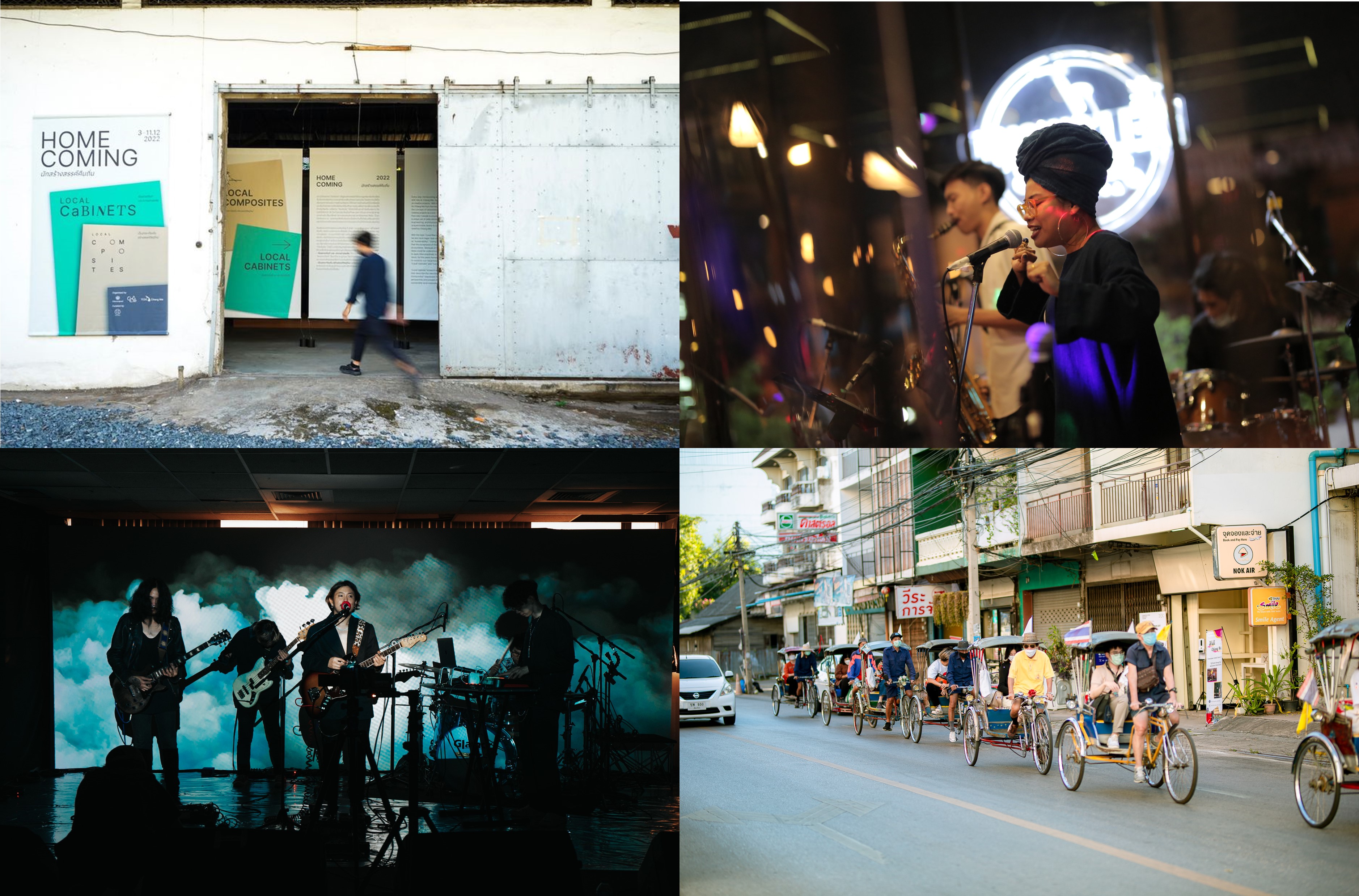
The festival also embraced music and performing arts, as seen in the International Street Music and Performing Arts Festival, which transformed local spaces into vibrant cultural hubs. Other initiatives included the Thai Local Coffee Festival, promoting sustainability in the coffee industry, and LABBfest, a live music event blending art and international cultural exchange.
Since 2022, the festival has aligned its activities with Chiang Mai’s status as a UNESCO Creative City of Crafts and Folk Art, forging partnerships with global creators and organizations. Notable initiatives include projects like “SANDBOX” from Moscow, which used film and animation as a developmental tool for children. The festival also featured lectures and workshops, alongside innovative events such as “MOSCOW EXPERTISE: VR/AR,” festivals and concerts in the Metaverse during and post-pandemic, presented by Russian VR artists, directors, producers, and festival curators. These initiatives underscore the festival’s role as a platform for cross-cultural exchange and innovation.
2. A Catalyst for Social, Economic, and Environmental Impact
Ms. Imhathai Kunjina, Director of the Creative Economy Agency (Chiang Mai Office), highlighted the significant positive impacts that Chiang Mai Design Week has generated across social, economic, and environmental dimensions.
“Over the past decade, Chiang Mai Design Week has driven meaningful change, raising awareness within local communities about the value of creativity and design in enhancing cultural assets. The festival has also established Chiang Mai as a destination for global travelers, showcasing vibrant creative spaces that go beyond traditional attractions. Today, Chiang Mai Design Week serves as the ‘mothership’ for annual creative events, inspiring other festivals to align their schedules, ensuring that the city becomes a hub of creative energy and diverse events during the same period. This synergy not only amplifies the city’s creative atmosphere but also offers tourists a truly unique and immersive experience.”
Economic Contributions: The festival’s economic impact has been profound, attracting increasing numbers of visitors from countries such as Taiwan, Japan, China, Singapore, Europe, and America. Over nine years, Chiang Mai Design Week has welcomed more than 1,022,869 attendees and generated over 5.36 billion THB in economic value for Northern Thailand (2018–2023). Additionally, it has revitalized historic buildings by drawing investors to renovate and repurpose them, transforming these spaces into thriving creative hubs and contributing to sustainable urban development.
Interdisciplinary Art Integration: The festival has fostered collaboration across disciplines, such as matching craft designers with emerging chefs to create unique and value-added products. Initiatives like the 2020 Homecoming Creator project have brought talented individuals back to their hometowns, reconnecting them with local communities. Moreover, events like the Chiang Mai Street Jazz Festival, featuring world-class jazz artist Igor Butman, have elevated the city’s reputation as a vibrant jazz hub. These achievements reflect the festival’s holistic approach to creative growth.
Environmental Sustainability: Chiang Mai Design Week has consistently prioritized sustainability, setting an example for eco-conscious practices. As Ms. Imhathai noted:
“The festival emphasizes ‘leading by example’ over ‘mandating actions.’ From the beginning, we encouraged creatives and architects to design reusable exhibition pavilions. In our 10th year, all pavilions are repurposed from the first festival. Informational signs are reused annually, and this year, over 95% of sign materials were replaced with recyclable options like corrugated cardboard instead of foam board, ensuring post-festival recyclability.”
Efforts to minimize environmental impact extend to reducing printed materials, utilizing solar-powered LED screens, and promoting green transportation. Since 2020, printed materials have been reduced by 30%—from 30,000 brochures and 150 booklets to 20,000 brochures in 2024—using eco-friendly paper. The festival also features electric tram shuttles and walkable event spaces, with bicycle services provided by Anywheel Co., encouraging sustainable mobility.
For vendors, we’ve organized training sessions on eco-friendly materials and sustainable practices, encouraging responsibility and adaptability for future sustainable business operations.”
Chiang Mai Design Week 2024, “SCALING LOCAL – Transforming Local to Global through Creativity, Technology, and Sustainability”
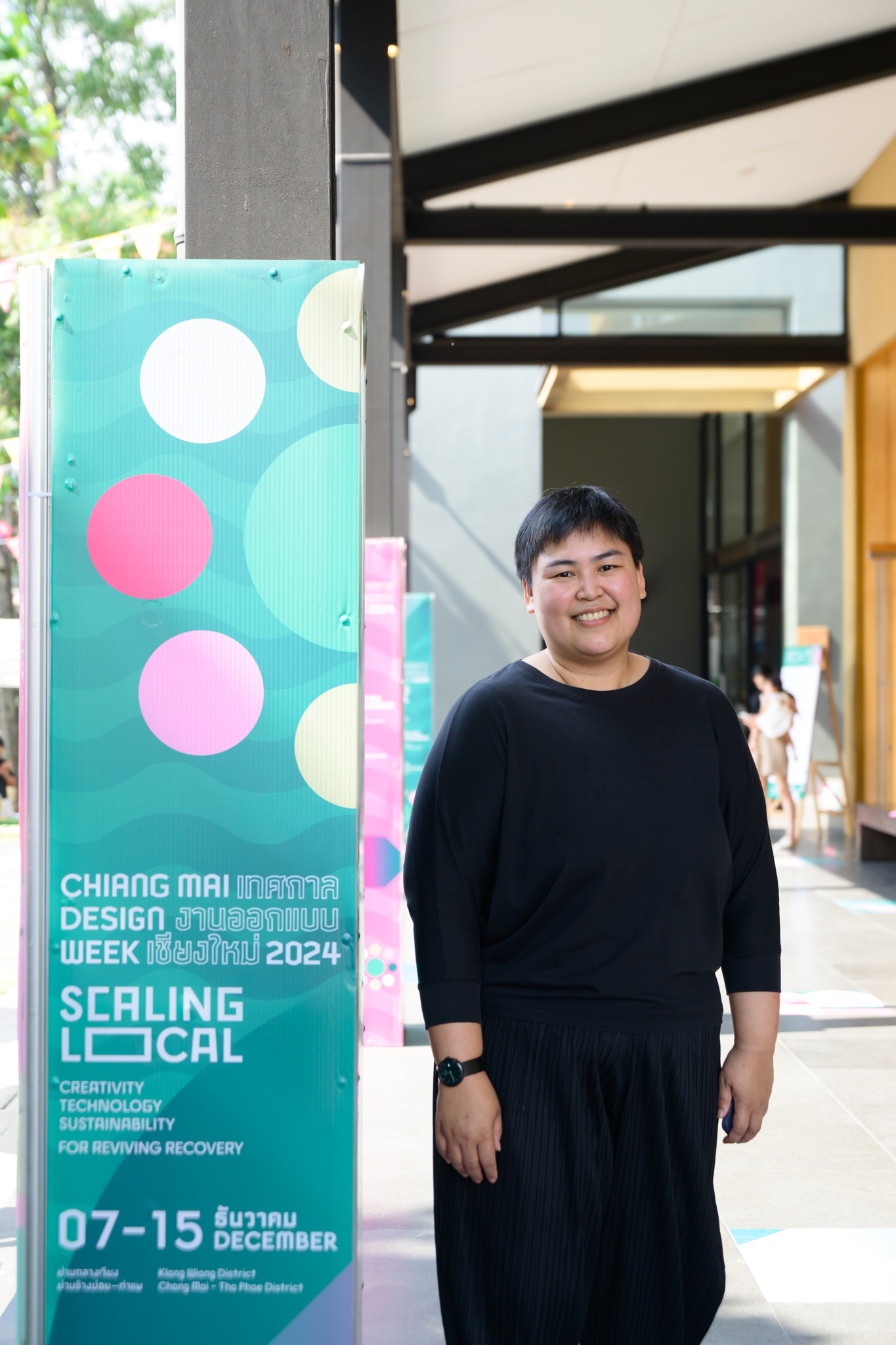
This year, Chiang Mai Design Week 2024 is set to take place under the theme “SCALING LOCAL: Creativity, Technology, and Sustainability – For Reviving Recovery.” The festival aims to elevate cultural assets and community resources to achieve global recognition while maintaining a focus on resilient community spaces that have thrived despite the challenges of COVID-19.
“Chiang Mai’s creative industries have grown significantly, showcasing the potential of local assets and talents nurtured over the years. To scale local creativity to the international stage, it is essential to integrate Creativity, Technology, And Sustainability—the three pillars that set the standard for festivals locally and globally. This year, we’re excited to welcome creators from neighboring northern provinces like Phrae, Nan, Lampang, and Sukhothai, demonstrating the festival’s decade-long influence in attracting regional creative talent,” explained Ms. Imhathai.
Chiang Mai Design Week 2024 will feature 6 activity categories with over 150 programs. Key highlights include:
- Lanna Gastronomy Tourism Economy Exhibition: A sustainable culinary tourism showcase exploring Lanna cuisine while creating income opportunities for local communities.
- Ready Set Old Exhibition: Reimagining Chiang Mai becoming the world’s 7th “Blue Zone” city for healthy aging, following in the footsteps of Okinawa (Japan), Sardinia (Italy), Nicoya (Costa Rica), Ikaria (Greece), Loma Linda (USA), and Singapore.
- Super Slow Exhibition: Immerse yourself in the beauty of slowness through innovative art that promotes sustainable and mindful living in a fast-paced world.
- Floral Wonders Exhibition: Showcase the potential of the local floral industry by merging creativity with technology, driving economic growth and job creation.
- LABB.Fest 2024: Enjoy live music performances blending Thai and international artists. This platform facilitates creative exchanges between artists, music entrepreneurs, and promoters from Thailand, Malaysia, Myanmar, Hong Kong, Taiwan, Japan, and South Korea.
The Next Chapter for “Chiang Mai Design Week”: Towards Sustainable Global Recognition
The future vision for Chiang Mai Design Week is to elevate its global prominence by fostering collaboration among designers, artists, entrepreneurs, and local and international networks. The festival aims to maintain high standards while adapting to urban trends and contexts to craft remarkable experiences for attendees and tourists. At the same time, it seeks to sustain interest among investors and sponsors for continued support.
“Chiang Mai Design Week is evolving towards a new standard that prioritizes not just aesthetics but the integration of creativity and environmental responsibility. This approach sets a benchmark for other creative festivals in Thailand, as seen in Chiang Rai and Phitsanulok, which have leveraged knowledge gained from the festival with support from CEA Chiang Mai. Looking ahead, the festival will shift its focus from audience quantity to quality, targeting visitors who actively engage and carry forward ideas inspired by the event,” explained Ms. Imhathai.
The ultimate goal is to establish Chiang Mai Design Week as a globally renowned festival that grows alongside the city’s holistic development. As a member of the World Design Week network, the festival reflects a decade of progress and potential. To secure a lasting global presence, the festival must uphold international standards, strengthen networks, and expand global outreach. Achieving this vision would position Chiang Mai Design Week as a cultural hallmark, akin to Milan Design Week, capable of attracting 100% investor interest.
Experience the transformative power of design at Chiang Mai Design Week 2024 (CMDW2024) under the theme “SCALING LOCAL” from December 7-15, 2024, across Chiang Mai’s old city areas, including the Three Kings Monument, Chang Moi, TCDC Chiang Mai, Thapae, and nearby districts like Hang Dong and San Kamphaeng.
Stay updated with the latest news and activities at: Website: www.chiangmaidesignweek.com Facebook: Chiang Mai Design Week, Instagram: ChiangMaiDesignWeek
Hashtag: #chiangmaidesignweek #CMDW2024 #scalinglocal
The issuer is solely responsible for the content of this announcement.
About Chiang Mai Design Week
Chiang Mai Design Week is an annual design festival hosted in Chiang Mai by the Creative Economy Agency (CEA), celebrating its 10th year (2015–2024). The festival serves as a dynamic platform for exchanging perspectives, experiences, and knowledge in design and creativity. It also fosters engagement through design, offering meaningful experiences to children, youth, communities, tourists, and enthusiasts alike. The festival features diverse activities, including exhibitions, talks, workshops, arts programs, and live performances, aimed at enhancing quality of life while infusing Chiang Mai with a vibrant, creative atmosphere. Events span iconic areas like Klang Wiang, rich in culture and local traditions, and Chang Moi–Tha Phae, home to TCDC Chiang Mai, a modern hub of design knowledge. In addition to these key districts, Chiang Mai Design Week also hosts programs in other significant areas throughout the city, offering visitors a fresh perspective on Chiang Mai and the chance to experience its unique creative spirit up close.
About Creative Economy Agency (Public Organization)
The Creative Economy Agency (Public Organization) or CEA was established on August 14, 2018, as an organization under the supervision of the Prime Minister’s Office to promote and develop the potential of the creative economy as a driving force towards a balanced and sustainable economy in the long term. One of CEA’s key missions is to establish creative economy districts by promoting and developing areas that foster a creative environment and encourage the growth of new businesses as well as aims to strengthen connections with surrounding communities. Additionally, CEA is responsible for promoting the growth of the creative industries by developing capabilities and linking networks, utilizing creativity as a tool to enhance businesses and improve the quality of life for the Thai people.
Media OutReach
Can Gio Awakens as Ho Chi Minh City’s Next Growth Frontier
After decades of quiet, Can Gio is awakening on Vietnam’s southern coast, as fresh investment and grand designs breathe new life into the once-remote district of Saigon.
HO CHI MINH CITY, VIETNAM – Media OutReach Newswire – 27 December 2024 – Six months after the groundbreaking of a 2,870-hectare coastal urban project backed by Vingroup, Vietnam’s largest private conglomerate, Can Gio, once seen as a forgotten corner of Ho Chi Minh City, is now emerging as a new growth engine for Vietnam’s southern metropolis.
Breaking Isolation
For years, Can Gio was often left out of the city’s rapid development. Surrounded by dense forests and accessible mainly by ferry, it remained a world apart. Now, that is beginning to change.
Six months ago, the large-scale land reclamation project officially started construction. Locals call it a “game changer” that awakened a land long left behind. Along the coast that once lay quiet, a vast construction site has emerged, with heavy machinery working day and night. “I was very surprised by the speed,” said Prof. Pham Van Song, president of the Mien Dong University of Technology, noting that hundreds of hectares have already been filled and stabilized within months.
The project, developed by Vingroup through its real estate arm Vinhomes, represents one of the group’s most ambitious coastal developments, part of a long-term vision to extend Ho Chi Minh City’s urban footprint toward the sea. With billions of U.S. dollars in investment, it combines housing, tourism, and modern infrastructure within a single master plan that anchors Can Gio’s transformation.
Complementing this project, a series of major infrastructure works are also reshaping the district. By the end of 2025, the Phu My Hung–Can Gio high-speed railway, designed to reach 350 kilometers per hour, is expected to begin construction, linking the area to the city’s southern urban core. In 2026, the long-awaited Can Gio Bridge will break ground, cutting the journey to the city center to around 45 to 60 minutes.
At the same time, the Rung Sac interchange, with an investment of 3,000 billion VND (about 120 million U.S. dollars), will connect Can Gio directly with the Ben Luc–Long Thanh Expressway. Expected to be completed in 2028, it will link Can Gio with both the Southwest and Southeast regions, including Long Thanh International Airport.
In addition, a sea-crossing expressway between Can Gio and Vung Tau, 50 meters wide and proposed by Vingroup, would stretch across the sea for more than 10 kilometers. The plan envisions a wide eight-lane road that could reduce travel between Can Gio and Vung Tau to under 15 minutes, creating a strategic connection between the two coastal economies.
These efforts fit within a broader regional plan that combines road, rail, water, and sea transport. Another key project is the Can Gio International Transshipment Port, covering 571 hectares with an investment of 50,000 billion VND. The port is designed to become a new symbol of Vietnam’s maritime economy, with its first phase scheduled to begin operations in 2027 and full completion before 2045.
“A Single Project Ignites the South”
According to Prof. Pham Van Song, the rise of Can Gio is a natural development, especially with the involvement of Vingroup through its Vinhomes Green Paradise project. He believes that Can Gio is moving from an ecological area on the fringe of development to a new center of growth. “All modes of transportation will be available in Can Gio,” he said. “The district’s GRDP will grow rapidly in line with ongoing construction and investment. Both the number of residents and visitors will surge. Local people will be the first to directly benefit from these projects, and their lives will become increasingly prosperous.”
The changes are already drawing attention from investors. Dinh Minh Tuan, southern regional director of Batdongsan.com.vn, said the number of searches related to Can Gio has tripled since the beginning of the year. After the Vinhomes Green Paradise project broke ground, property interest in the district doubled again. “Just one single project has heated up the entire southern market,” he said.
Experts say this follows a familiar pattern. In the 1990s, Nguyen Van Linh Boulevard helped turn southern Ho Chi Minh City into a thriving area and drew nearly two million residents. In the 2010s, the completion of the Thu Thiem Tunnel and Bridge attracted more than one million people to the city’s east. “Investors who followed the infrastructure development wave then saw huge gains,” Tuan noted. “Can Gio now stands at a similar starting point, but with a stronger push.”
With a population of about 80,000, Can Gio has long faced a single challenge: lack of connectivity. But, “with the series of large-scale investments now under way, Can Gio is expected to grow faster than many of the city’s earlier new urban areas,” said Tuan.
Hashtag: #Vinhomes
The issuer is solely responsible for the content of this announcement.
Media OutReach
Z.ai Open-Sources GLM-4.7, a New Generation Large Language Model Built for Real Development Workflows
The new model is designed around practical engineering workflows, with a focus on long-running task execution, stable tool calling, and multi-step reasoning, capabilities that have become increasingly important as developers deploy large language models in complex, agent-based systems.
Compared with its predecessor, GLM-4.6, GLM-4.7 shows notable gains in code generation, complex reasoning, and agent execution. According to Z.ai, the model delivers more consistent and controllable performance over extended tasks, while producing cleaner and more concise language output, addressing a common weakness in many open-source models.
To evaluate performance in realistic settings, Z.ai tested GLM-4.7 on 100 practical programming tasks in production-like environments such as Claude Code, spanning front-end, back-end, and command-execution scenarios. The company said GLM-4.7 achieved higher task completion rates and greater stability than GLM-4.6, and has since been adopted as the default model for its GLM Coding Plan.
Benchmark results also place GLM-4.7 among the strongest open-source models currently available. It scored 67.5 on BrowseComp and 87.4 on τ²-Bench, the latter marking a new high for open-source systems. In coding-focused evaluations, including SWE-bench Verified and LiveCodeBench v6, its overall performance approaches that of Claude Sonnet 4.5. In Code Arena’s large-scale blind evaluation, which aggregates votes from more than one million comparisons, GLM-4.7 ranked first among open-source models.
The model is available through the BigModel.cn API and has been integrated into Z.ai’s full-stack development platform, according to the company. As open-source models take on a more prominent role in the global technology ecosystem, Z.ai’s progress offers a clear indication of how such systems may continue to evolve, and what they might enable next.
Default Model for Coding Plan: https://z.ai/subscribe
Try it now: https://chat.z.ai/
Weights: https://huggingface.co/zai-org/GLM-4.7
Technical blog: https://z.ai/blog/glm-4.7
Hashtag: #ZAI
The issuer is solely responsible for the content of this announcement.
Media OutReach
NIA Joins Forces with TAT to Reignite ‘Amazing Thailand’ Through Innovation Power, Transforming Thai Tourism and Leveraging Creativity and Culture to Drive a New Tourism Economy
Towards the end of this year, Thailand is preparing to reignite global attention with a renewed wave of ‘Amazing Thailand.’ The government and private sector are rolling out a comprehensive set of tourism-stimulus measures that address both economic impact and national image. One of the most talked-about highlights is the appointment of Lalisa ‘Lisa’ Manobal as the new brand ambassador — not only a global-level artist, but also a powerful representation of Thailand’s contemporary image on the world stage.
Another key highlight to watch closely is the launch of the ‘Amazing Thailand Innovation Gadget’ platform, developed through a collaboration between the National Innovation Agency (Public Organisation), or NIA, and the Tourism Authority of Thailand (TAT). This initiative aims to elevate Thailand’s tourism industry into the era of Smart Tourism in a tangible and comprehensive way.
The platform is designed to function as Thailand’s first-ever tourism innovation repository, bringing together tourism-related technologies and solutions in one centralised space. These range from route-planning technologies, accommodation booking systems, and tourist-data management, to experience-creation tools that personalise journeys and enhance engagement. More than a simple innovation directory, the platform represents a turning point — a mechanism that connects entrepreneurs, developers, and creative talents to co-create new ‘Amazing’ experiences, spanning the entire traveller journey from trip planning to the final moment of travel for visitors worldwide.
Learning from Global Leaders Where Tourism Meets Technology
The world has entered an era where tourism is no longer driven solely by beautiful destinations and cultural heritage. Instead, competitiveness increasingly depends on experiences and technology. As a result, many countries are rapidly upgrading their tourism sectors to become smarter, more emotionally engaging, and better aligned with the expectations of modern travellers.
Japan, for example, stands as a model of cultural-innovation integration, leveraging anime, music, cuisine, and fashion as globally recognisable soft power. Recently, the Japanese government has rebooted efforts to fuse cultural roots with advanced technology through initiatives such as Virtual Remix Japan, which enables global audiences to participate in art exhibitions, festivals, and anime worlds in real time via VR and AR. This exemplifies a seamless blend of past and future.
Meanwhile, South Korea has aggressively combined technology and tourism to enhance attractiveness and vibrancy. The country actively promotes start-ups offering cloud-based hotel-management platforms, real-time translation technologies, blockchain services for international tourists, and platforms linking tourism with overseas education. South Korea has also built a tourism ecosystem that integrates smart cities, digital technology, and contemporary culture, using K-pop artists as a major driving force.
In Barcelona, Spain, one of Europe’s leading smart cities, tourism has been elevated through intelligent urban and visitor-experience management. From smart traffic systems and energy-saving public bike services to big-data-driven analysis of tourist behaviour, visitors can plan accommodation, restaurants, and travel routes through a single integrated application. This approach creates a balanced coexistence between tourism and urban life. Together, these examples demonstrate that technology is no longer merely a supporting tool, but the core differentiator in the modern tourism economy.
Amazing Thailand Innovation Gadget: Elevating Thai Tourism Through a Fully Integrated Innovation Ecosystem
NIA and TAT have officially announced a landmark collaboration with the launch of the ‘Amazing Thailand Innovation Gadget’ platform, which serves as Thailand’s first tourism innovation repository. The initiative aims to propel Thai tourism fully into the Smart Tourism era.
The platform aggregates tourism-related technologies and innovative solutions from start-ups and entrepreneurs nationwide, enabling real-world deployment across the entire Thai tourism value chain. Its objective is to build a strong tourism-innovation ecosystem through integrated collaboration across all sectors, while enhancing entrepreneurs’ capacity to apply innovation and technology suited to the specific contexts of different destinations.
This approach is designed to create premium tourism experiences for both domestic and international travellers, delivering sustainable economic and social benefits for Thailand. Importantly, the country will gain a continuously expandable tourism-innovation repository, strengthening long-term competitiveness in the global tourism market.
From Creative Power and Culture to Driving Thailand’s Tourism Economy
Dr. Krithpaka Boonfueng, Executive Director of the National Innovation Agency, stated that the innovations featured on the platform will primarily be Travel Tech-related technologies. The platform is open to start-ups, entrepreneurs, developers, and business partners with the interest and capability to co-create elevated tourism experiences while advancing Thailand’s Smart Tourism ecosystem.
Currently, NIA supports and has incubated more than 80 high-potential tourism-technology start-ups and entrepreneurs, spanning areas such as community-based tourism (Local Alike), hospitality solutions (Ascend Travel), urban mobility (MuvMi), social impact marketplaces (SocialGiver), and backend customer-journey management systems (Appointment Anywhere). These solutions enable entrepreneurs and developers to access tools tailored to their specific contexts.
NIA believes that all stakeholders play a vital role in elevating Thailand’s tourism industry by integrating technology with creativity, culture, and local identity. This integration goes beyond artists, cuisine, or traditional culture, extending into tangible, scalable innovations that create new economic value for local communities.
Thai – Tech – Tourism: A Major Integrated Leap Forward
Dr Krithpaka further noted that tourism is one of the core engines of the global economy, particularly following recovery from the COVID-19 pandemic. According to data from the World Travel & Tourism Council (WTTC), in 2024 the global travel and tourism sector contributed USD 10.9 trillion, or 10% of global GDP, and supported 357 million jobs worldwide.
The United Nations World Tourism Organization (UN Tourism) has emphasised that innovation is a critical driver of economic growth, enabling new business models, attracting investment, and differentiating destinations through unique tourism formats.
Another crucial factor not to be overlooked is the global TravelTech investment ecosystem, which remains robust. In the post-pandemic era, major tourism companies have increased technology investment by an average of 14% in 2024, reflecting strong confidence in technology as a competitive advantage.
Key areas of investment focus include Smarter Retailing and Personalisation, which deliver highly tailored customer experiences; GenAI and Autonomous Agents, next-generation AI capable of analysing, planning, and executing tasks independently — such as automated travel recommendations, trip planning, and booking management; and Sustainability, with growing investment in start-ups that reduce carbon emissions through diverse solutions.
These global trends align closely with the capabilities and diversity of Thai start-ups, positioning Thailand to connect seamlessly with international movements and deliver truly tangible ‘Amazing’ experiences.
NIA stands ready to connect knowledge, technology, and innovation capital across public agencies, private enterprises, and Thai start-ups to drive concrete outcomes in the tourism-innovation ecosystem. This effort extends beyond enhancing tourism businesses; it represents the creation of a future-oriented industry that fuses creativity and culture with technological power.
Through this integrated approach, Thailand aims to elevate economic value, cultural richness, and sustainability — and to advance decisively towards becoming a Global Innovation Tourism Hub in a meaningful and lasting way.
Hashtag: #NIA #NationalInnovationAgency
The issuer is solely responsible for the content of this announcement.
-
Feature/OPED6 years agoDavos was Different this year
-
Travel/Tourism9 years ago
Lagos Seals Western Lodge Hotel In Ikorodu
-
Showbiz3 years agoEstranged Lover Releases Videos of Empress Njamah Bathing
-
Banking8 years agoSort Codes of GTBank Branches in Nigeria
-
Economy3 years agoSubsidy Removal: CNG at N130 Per Litre Cheaper Than Petrol—IPMAN
-
Banking3 years agoFirst Bank Announces Planned Downtime
-
Banking3 years agoSort Codes of UBA Branches in Nigeria
-
Sports3 years agoHighest Paid Nigerian Footballer – How Much Do Nigerian Footballers Earn




