Connect with us

Economy

NCDMB Wants New Oil Industry Projects to Surpass In-Country Integration

Published

on

NCDMB simbi wabote

By Dipo Olowookere

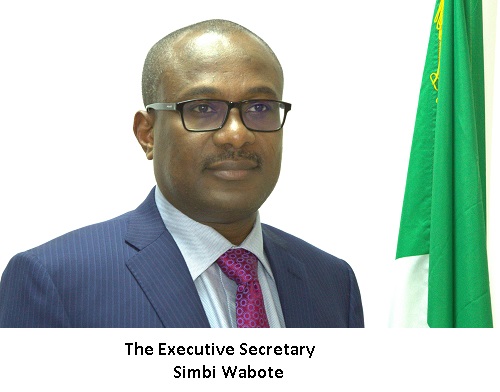
International oil companies and promoters of new deepwater projects in Nigeria must deliver Nigerian Content milestones that would exceed in-country integration of Floating, Production, Storage and Offloading (FPSO) platforms, the Executive Secretary, Nigerian Content Development and Monitoring Board (NCDMB), Engr Simbi Wabote has said this is because Total Nigeria’s Egina Deepwater project which will be integrated at the LADOL Free Trade Zone has become the benchmark for Nigerian Content on deepwater projects, hence forthcoming projects have to break new records.

The Executive Secretary spoke last week in Lagos after inspecting facilities of Samsung Heavy Industries (SHI), the main contractor for the Engineering, Procurement, Construction and Installation (EPCI) of the FPSO scope on the Egina project.

He confirmed that in-country integration of the FPSO and fabrication of six modules of the vessel created 5000 direct jobs and 5000 indirect jobs. Increased domiciliation of future FPSO projects through the fabrication of more modules would create additional jobs, estimated to reach 30,000, he added.

According to Mr Wabote, the Board would not rest on its oars with regards to the implementation of the Nigerian Content Act, adding that “new projects must look at doing FPSO integration and more; we must add something to our achievements.”

Six modules of the Egina FPSO were fabricated in-country across some yards whereas twelves modules were welded at Samsung’s base, Geoje, South Korea. He affirmed that, “for next FPSO, more modules must be fabricated locally.”

Mr Wabote, who expressed delight with level of investment and the utilization of local workforce, described the project as an example of possibilities, assuring that the Board will continue to work with industry stakeholders to develop new projects and domicile more work in-country.

In his presentation, the Chief Operating Officer, SHI Nigeria, Mr Frank Ejizu explained that the Quay side was ready to receive the FPSO, noting that the tracks have been certified.

Dwelling on the workforce, Mr Ejizu stated that 364 Nigerian welders have been qualified and awarded international certifications, with which they can work anywhere in the world.

Earlier in the week, the Executive Secretary visited the facilities of Dover Engineering, JC International and Thompson and Grace Limited, all located at Port Harcourt, Rivers State.

He explained that his visits to oil and gas facilities across the country were aimed at assessing capacities and confirming that Nigerian companies have firm footing in their  areas of operations. Information gathered from the visits, he explained, will be used during tenders and in planning for capacity development. He also promised to enlighten international oil companies and project promoters on existing in-country capacities and ensure their utilization during projects.

Speaking at Dover Engineering, Mr Wabote noted that experts in offshore designs, FSPO designs and detailed engineering were in high demand and engineering companies must develop strategies to retain them so their competences will not be lost.

He commended the company for forming a consortium with other engineering firms to deliver major projects, charging other service companies to emulate the model.


Dipo Olowookere is a journalist based in Nigeria that has passion for reporting business news stories. At his leisure time, he watches football and supports 3SC of Ibadan. Mr Olowookere can be reached via [email protected]

Click to comment

Leave a Reply

Your email address will not be published. Required fields are marked *

Economy

Recapitalisation: NIA Says Seven New Insurers Have Met Threshold

Published

on

insurance recapitalisation in nigeria

By Adedapo Adesanya

The Nigerian Insurers Association (NIA) has disclosed that seven additional insurance companies have secured full recapitalisation approval from the National Insurance Commission (NAICOM), bringing the industry-wide recapitalisation exercise to a successful conclusion.

In a statement on Friday, NIA Chairman, Mrs Ebelechukwu Nwachukwu, said the milestone represented significant progress towards building a stronger, more competitive and trusted insurance market in Nigeria.

She said the seven companies, alongside the 41 insurance companies and two reinsurance companies earlier approved, had demonstrated resilience, financial discipline and corporate strength by successfully completing the final verification process.

“Having successfully navigated the rigorous final verification process, these companies, alongside the earlier approved 41 insurance companies and two reinsurance companies, have demonstrated exceptional resilience, corporate fortitude, and financial discipline,” Mrs Nwachukwu said.

She added that the successful recapitalisation had positioned the companies to deliver greater value to policyholders and contribute to deeper insurance penetration nationwide.

Mrs Nwachukwu commended NAICOM for its regulatory oversight during the exercise, describing the commission’s approach as fair, structured and focused on strengthening market integrity.

“NAICOM’s strategic foresight and structured execution have elevated the Nigerian insurance industry, reinforcing its position within the broader financial sector as a substantially stronger, highly resilient, and globally competitive market,” she said.

The NIA chairman reaffirmed the association’s commitment to supporting insurance companies as they adapt to new regulatory requirements under the Nigerian Insurance Industry Reform Act (NIIRA) 2025.

She said the association would continue to work with NAICOM to promote a sustainable and future-ready insurance sector.

Mrs Nwachukwu also assured policyholders, investors and other economic stakeholders that the recapitalised industry was better positioned to support economic growth.

“With this recapitalization complete, the Nigerian insurance sector enters a transformative era. The industry is fully equipped to settle genuine claims promptly, absorb higher local and international risks, and serve as a cornerstone of financial stability, directly supporting President Bola Ahmed Tinubu’s vision of achieving a $1 trillion economy by 2030,” she said.

Continue Reading

Economy

SEC Orders Freezing of Assets, Funds of Nine Terrorism Financiers

Published

on

terrorism financing

By Aduragbemi Omiyale

Capital market operators have been directed to immediately freeze the assets, funds, and other economic resources belonging to six individuals and three entities designated as terrorist financiers by the Nigeria Sanctions Committee (NSC).

This directive was given by the Securities and Exchange Commission (SEC) via a circular to all Capital Market Regulated Entities (CMREs), warning that failure to comply would constitute a violation of the Investments and Securities Act, 2025, and the SEC Anti-Money Laundering/Combating the Financing of Terrorism (AML/CFT) Rules and Regulations.

It said violations could attract regulatory sanctions, including fines, suspension of operations or revocation of registration, reminding capital market operators that all unusual or suspicious transactions must be promptly reported to the NFIU.

The regulator, which stated that the designations were made in line with the Terrorism Prevention and Prohibition Act (TPPA) 2022, listed the six individuals as Babangida Muhammed Adamu Hammajam, Abdullahi Umar Usman, Ibrahim Abubakar, Adamu Chiroma, Muktar Muhammad Adamu and Yakubu Ogirima Ibrahim. The three designated entities are Nine to Nine BDC Ltd, Generation Currency BDC Ltd and Abbal Bako & Sons Bureau de Change.

According to the SEC, Hammajama was listed on June 18, 2026, for involvement in terrorism financing and support for the Islamic State West Africa Province (ISWAP), while Usman was designated for providing material support to a designated terrorist organisation through repeated financial transactions.

The commission said Abubakar was listed for involvement in terrorism financing and membership of ISWAP, while Chiroma was designated for allegedly using Bureau De Change (BDC) operations and related corporate entities to facilitate the movement of funds linked to terrorist activities.

Muktar Muhammad Adamu was listed on June 15, 2026, for providing financial support and facilitating transactions linked to the financing network of the ISWAP Okene cell, while Ibrahim was designated for providing material and financial support to the ISWAP Kogi cell.

The SEC said the three entities were listed for their alleged involvement in facilitating and channelling funds connected to the ISWAP Okene financing network.

The commission directed CMREs to immediately identify and freeze, without prior notice, all funds, assets and other economic resources in their possession belonging to the designated persons and entities.

They are also required to report frozen assets and other compliance actions, including attempted transactions, to the Secretariat of the Nigeria Sanctions Committee.

In addition, the SEC directed regulated entities to immediately file suspicious transaction reports with the Nigerian Financial Intelligence Unit (NFIU) for further analysis of the financial activities.

It further instructed operators to report as suspicious transactions all cases of name matches in financial transactions, whether occurring before or after receipt of the sanctions list.

The regulated entities are also required to prohibit dealings with the designated persons and entities and continue monitoring for transactions involving them.

The SEC said any findings should be reported to the Nigeria Sanctions Committee through its designated reporting channel.

Continue Reading

Economy

Dangote Sugar Raises N486bn Rights Issue to Reduce Debt, Strengthen Capital Base

Published

on

Dangote Sugar stocks

By Adedapo Adesanya

Dangote Sugar Refinery Plc, Nigeria’s biggest sugar producer, has raised N486 billion ($356 million) through an oversubscribed rights issue as the company moves to reduce its debt burden and strengthen its capital base after three consecutive years of losses.

The company, founded by Mr Aliko Dangote, raised the funds through the issuance of 8.1 billion ordinary shares at N60 per share, according to a filing with the Nigerian Exchange (NGX) Limited on Friday.

The development follows shareholders’ approval of the capital-raising plan at the company’s 20th Annual General Meeting held in April.

In a statement signed by the Company Secretary, Mr Temitope Hassan, the sugar firm said the rights issue is part of efforts to improve its financial position and provide funding to support its long-term growth plans.

The company’s directors are authorised to raise up to N500 billion through a rights issue, on terms and at a time to be determined by the Board.

Dangote Sugar increased its share capital to accommodate the new shares issued under the rights issue. The sugar producer’s board also authorised to allot the shares and the management of any fractional holdings in accordance with regulatory requirements.

The organisation said any shares remaining unallotted after the offer would be cancelled as permitted by law, describing the capital raise as one of the largest rights issues in Nigeria’s corporate history.

The capital raise comes against the backdrop of improved revenue performance but continued losses at the company.

In its 2025 audited results, Dangote Sugar recorded a 24.56 per cent increase in revenue to N829.2 billion, compared with the previous year. The growth was driven largely by strong demand for 50kg sugar, which generated N807 billion in revenue.

Retail sugar sales contributed N17.7 billion, while molasses and freight income generated N4.02 billion and N66.4 million, respectively.

Cost of sales increased by 11.35 per cent to N706.5 billion, largely due to raw material costs of N573.3 billion. This resulted in a gross profit of N122.6 billion.

Despite the improvement in revenue and gross profit, the company recorded a pre-tax loss of N72.2 billion in 2025, although this represented a significant improvement from the N270.8 billion loss reported in 2024.

Lagos remained the company’s largest market, accounting for 55.82 per cent of regional sales, followed by the North with 35.35 per cent, the West with 6.45 per cent and the East with 2.38 per cent.

The fresh capital is expected to provide Dangote Sugar with additional financial capacity as it works to reduce its debt obligations, strengthen its balance sheet and advance its long-term expansion plans.

Continue Reading