Connect with us

Banking

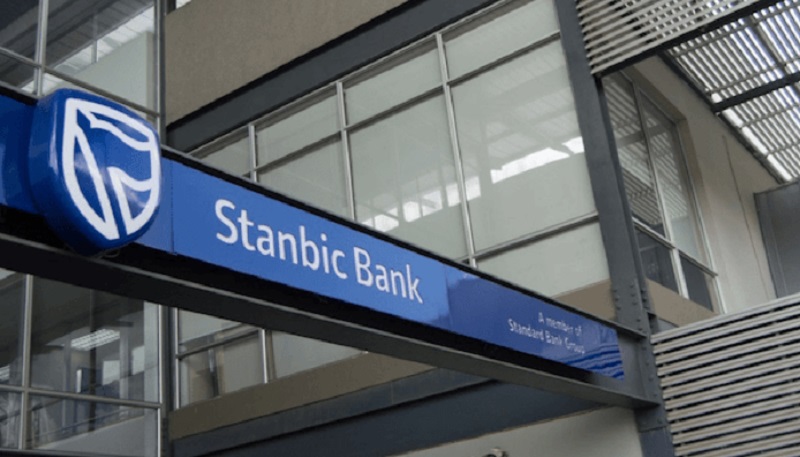
Stanbic IBTC Bank Tops KPMG Rankings in Retail, SME Banking

Published

on

Stanbic IBTC Bank seamless transactions

By Aduragbemi Omiyale

Stanbic IBTC Bank has once again solidified its status as the leading financial institution by topping the Retail Banking and SME Banking categories in the recently concluded 2024 KPMG West Africa Banking Industry Customer Experience Survey.

In the report, the subsidiary of Stanbic IBTC Holdings scored 75.5 per cent in the Retail Banking category to lead the sector for the fourth consecutive year and topped the SME Banking segment for the second consecutive year after polling 77.3 per cent.

“We are honoured to be recognised as Nigeria’s top Retail and SME bank for four and two consecutive years respectively. This achievement reflects our commitment to innovation, customer-centricity, and excellence.

“We will continue to raise the bar in providing financial services that empower individuals and businesses across Nigeria,” the chief executive of Stanbic IBTC Bank, Mr Wole Adeniyi, said.

Stanbic IBTC Bank’s retail banking excellence reflects its unwavering focus on customer satisfaction, seamless account management, and innovative digital solutions.

Customers have praised the bank for its robust mobile banking features, high transaction success rates, and swift issue resolution.

Key updates to its mobile app, such as enhanced security features and personalised budgeting tools, have reinforced the bank’s leadership position.

“Stanbic IBTC’s responsiveness and quick resolution of unusual account activity reaffirmed my confidence in their services,” one retail customer shared.

In the SME Banking segment, Stanbic IBTC Bank continues to shine with its dedication to addressing the unique needs of small and medium enterprises.

Customers have highlighted the bank’s efficient payment processing, proactive issue resolution, and personalised relationship management.

“Stanbic IBTC’s SME services have been a game changer for my business, offering unmatched support and solutions that are both timely and effective,” a survey respondent stated.

The survey highlighted that Stanbic IBTC’s leadership is rooted in its commitment to core principles of customer experience excellence—integrity, resolution, expectations, time, effort, personalisation, and empathy. These values drive the bank’s ability to deliver exceptional service and foster lasting customer trust.


Banking

Customs to Penalise Banks for Delayed Revenue Remittance

Published

on

edo Revenue Collection

By Adedapo Adesanya

The Nigeria Customs Service (NCS) says it will enforce penalties against designated banks that delay the remittance of customs revenue, in a move aimed at strengthening transparency and safeguarding government earnings.

This was disclosed in a statement on the NCS official account on X, formerly known as Twitter and signed by its spokesman, Mr Abdullahi Maiwada, who said the delays undermine the efficiency, transparency, and integrity of government revenue administration.

“The Nigeria Customs Service has noted instances of delayed remittance of customs revenue by some designated banks following reconciliation of collections processed through the B’odogwu platform,” the statement read.

“Such delays constitute a breach of remittance obligations and negatively impact the efficiency, transparency, and integrity of government revenue administration.

“In line with the provisions of the Service Level Agreement executed between the Nigeria Customs Service and designated banks, the Service hereby notifies stakeholders of the commencement of enforcement actions against banks found to be in default of agreed remittance timelines.”

Mr Maiwada disclosed that any bank that fails to remit collected Customs revenue within the prescribed timeline will be liable to penalty interest calculated at three per cent above the prevailing Nigerian Interbank Offered Rate for the period of the delay.

He added that affected banks would be formally notified of the delayed amounts, the applicable penalty, and the deadline for settlement.

“Accordingly, any designated bank that fails to remit collected Customs revenue within the prescribed period shall be liable to penalty interest calculated at three per cent above the prevailing Nigerian Interbank Offered Rate for the duration of the delay.

“Affected banks will receive formal notifications indicating the delayed amount, applicable penalty, and the timeline for settlement,” the statement read.

Continue Reading

Banking

First Bank Deputy MD Sells Off 11.8m First Holdco Shares Worth N366.9m

Published

on

ini ebong first bank

By Aduragbemi Omiyale

The deputy managing director of First Bank of Nigeria (FBN) Limited, Mr Ini Ebong, has offloaded some shares of FBN Holdings Plc, the parent firm of the banking institution.

A regulatory notice from the Nigerian Exchange (NGX) Limited confirmed the development on Thursday.

It was disclosed that the transaction occurred on Friday, December 12, 2025, on the floor of the stock exchange.

The sale involved about 11.8 million shares, precisely 11,783,333 units traded at N31.14 per share, amounting to about N366.9 million.

Mr Ebong, who studied Architecture from University of Ife and obtained Bachelor and Master of Science degrees, became the DMD of First Bank in June 2024. Prior to this appointment, he was Executive Director, Treasury and International Banking since January 2022.

He was previously the Group Executive, Treasury and International Banking, a position he held since 2016 after serving as the bank’s Treasurer from 2011 to 2016.

Before joining First Bank, he was the Head of African Fixed Income and Local Markets Trading, Renaissance Securities Nigeria Limited, the Nigerian registered subsidiary of Renaissance Capital. He also worked with Citigroup for 14 years as Country Treasurer and Sales and Trading Business Head.

He has a passion for market development and has worked actively to drive change and internationalisation of the Nigerian financial markets: foreign exchange, fixed income and securities.

He has worked closely with regulatory bodies such as the Central Bank of Nigeria (CBN) and the Debt Management Office (DMO) in assisting with the development of fresh monetary and foreign exchange policies, to broaden and deepen markets and open them up to international practices.

At various times he has facilitated and delivered courses and seminars on a wide variety of subjects covering Money Markets, Securities and Foreign exchange trading and market risk management subjects to regulators, corporate customers, banks and market participants.

Continue Reading

Banking

How FairMoney Is Powering Financial Inclusion for Nigerian Hustlers

Published

on

Financial Inclusion for Nigerian Hustlers

By Margaret Banasko

Urbanization is reshaping Nigeria’s economic landscape, creating new possibilities for millions of young people who relocate each year in search of opportunity. Cities like Lagos, Kano, and Abuja continue to expand as ambitious Nigerians leave their hometowns with the hope of building stable, sustainable livelihoods.

Recent figures highlight the pace of this shift. As of 2024, more than half of Nigeria’s population – around 128 million people – live in urban areas. Many of these individuals are young entrepreneurs and self-employed workers determined to turn their skills, ideas, and hustle into meaningful income. However, navigating the financial requirements needed to sustain and grow a small business is often challenging for those operating in informal or early-stage sectors.

This is where digital financial platforms have become transformational. With only a mobile phone, an internet connection, and a Bank Verification Number (BVN), Nigerians are increasingly able to access a wider range of financial tools designed to support their daily needs and long-term goals. FairMoney is among the institutions driving this progress by offering services that meet people where they are and support their ambition to grow.

Aigbe Osasere’s experience reflects this evolution. He moved from Benin City to Lagos with the goal of establishing a fish farming business in Ijegun, Alimosho. His vision was clear: create a small, efficient operation that could supply fresh fish to local buyers. Like many small business owners, he needed reliable access to funds to purchase fingerlings, buy feed, replace equipment, and maintain steady production. Managing these cycles required financial tools that matched the fast pace of his operations.

Through the FairMoney app, Aigbe gained access to digital banking services immediately after completing BVN verification. The availability of instant loans provided the flexibility he needed to restock quickly and maintain continuous production. For a business model where timing is central to profitability, this support allowed him to keep his operations consistent and responsive to customer demand.

Opening a FairMoney bank account and receiving a physical debit card further strengthened his business structure. Bulk buyers began paying him directly into his account, giving him clearer financial records and better visibility into his daily revenue. With his debit card, he could purchase supplies, withdraw cash conveniently, and manage his finances in a more organized way.

Aigbe also adopted FairMoney’s savings features to help him preserve and grow his earnings. By setting aside a portion of his daily sales, he is gradually building the capital needed to increase his fish tanks, expand his capacity, and move toward a more scalable operation.

Beyond supporting his business, FairMoney has become part of his everyday life. From the app, he sends money to family members, pays bills, buys airtime and data, and settles electricity tokens quickly and efficiently. This convenience allows him to focus more fully on running and growing his business.

Aigbe’s story is one example of how digital banking is broadening access to financial services across Nigeria. Entrepreneurs, freelancers, traders, and young workers are increasingly leveraging digital platforms to manage money, plan for growth, and participate more actively in the financial system.

As more Nigerians pursue self-employment and urban entrepreneurship, tools that offer accessibility, speed, and flexibility are playing an important role in supporting their progress. With FairMoney, many are finding a dependable partner that aligns with their goals, their pace, and their vision for the future.

Margaret Banasko is the Head of Marketing at FairMoney MFB

Continue Reading

Trending