Connect with us

General

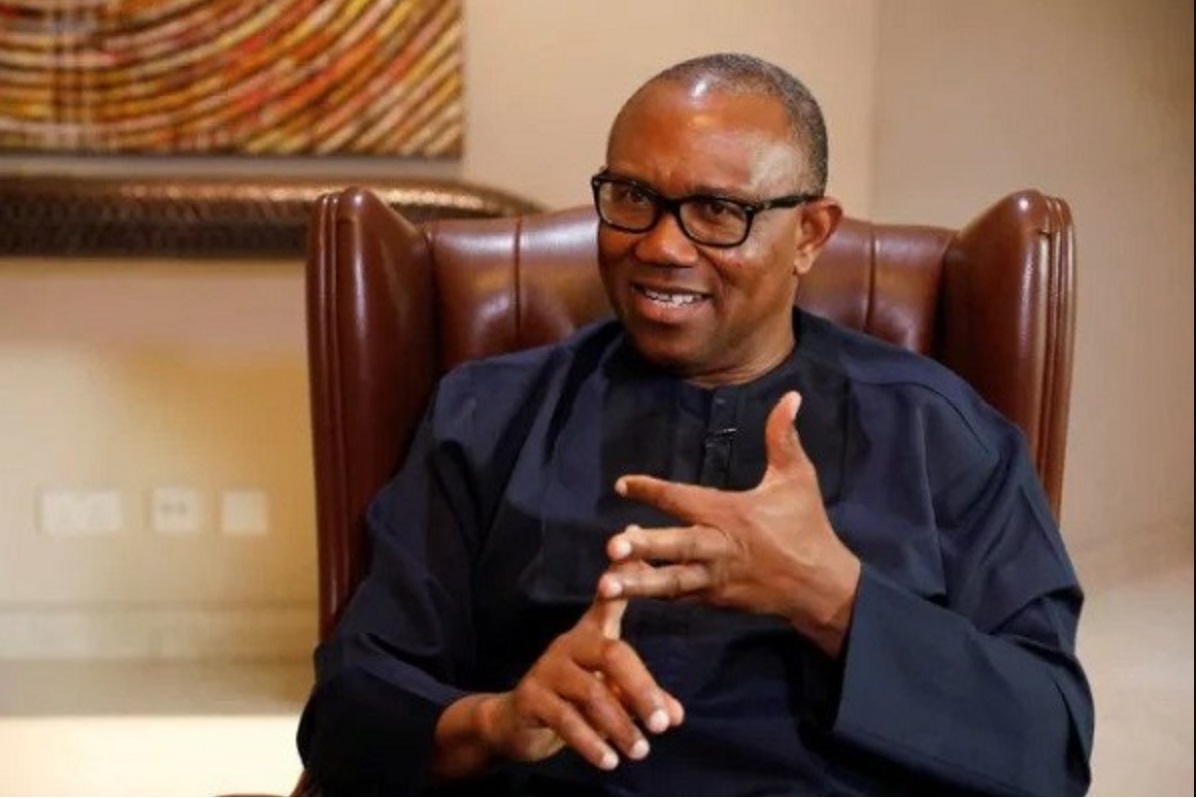
Obi Urges Transparency, Accountability as 2025 Budget Swells 9%

Published

on

Peter Obi Prioritize Economic Recovery

By Adedapo Adesanya

The presidential candidate of the Labour Party in the 2023 general elections, Mr Peter Obi, has called for transparency and accountability as a result of the recent increase in the 2025 budget by 9.1 per cent to N54.2 trillion.

Mr Obi, in a message on X, the social media platform formerly known as Twitter, said while the sources of revenue were detailed, there was no corresponding breakdown of expenditures to justify the budget increase.

President Bola Tinubu on Wednesday raised the proposed budget by 9 per cent from N49.7 trillion to N54.2 trillion, citing additional revenues generated by key government agencies such as the Federal Inland Revenue Service (FIRS), the Nigeria Customs Service (NCS), and other government-owned agencies.

Mr Obi, in his message, stressed the need for Nigerians to be informed on how public funds are allocated and spent.

“For transparency and accountability sake, Nigerians need to know how the resources generated from them are being allocated to ensure that they are judiciously spent on the country’s development and the well-being of the people,” Mr Obi said.

He added that budgetary expenditures should be directed toward critical areas of development, including education, healthcare, security, and poverty alleviation, to ensure meaningful impact on citizens’ lives.

“Yesterday, I read about the increase in the Budget of Restoration to ₦54 trillion due to increased revenue.

“While the sources of this revenue were detailed, there is no corresponding breakdown of expenditures to justify the increase. For transparency and accountability sake,” part of the statement read.

He said Nigerians are still waiting for a detailed account of the execution and expenditures of the Renewed Hope budget, which was passed in December 2023, calling on the National Assembly to seize this opportunity to obtain and make public the full details of the 2024 budget of Renewed Hope budget.

He also called on lawmakers and government officials to prioritise openness and accountability to safeguard public trust as preparations begin for the 2025 Budget of Restoration.

“Transparency in this regard is crucial for ensuring accountability, learning from past budgets, and making informed decisions for the nation’s progress.

“As we work towards passing the Budget of Restoration for 2025, let us uphold openness, accountability, and the welfare of the Nigerian people. We owe it to ourselves, our children, and the future of our great nation,” he stated.


Adedapo Adesanya is a journalist, polymath, and connoisseur of everything art. When he is not writing, he has his nose buried in one of the many books or articles he has bookmarked or simply listening to good music with a bottle of beer or wine. He supports the greatest club in the world, Manchester United F.C.

General

QNET’s Global Reach in 100+ Countries: What International Access Means for Local Distributors

Published

on

QNET

Global scale means market access and international supply chains. For individual distributors in direct selling, it can shape everything from product availability to income stability and long-term opportunity.

QNET, the multinational wellness and lifestyle direct selling company, positions its business model around that idea: connecting locally based independent distributors to an international operating platform. With activity spanning more than 100 countries, the company sits within a direct selling industry that, according to the World Federation of Direct Selling Associations (WFDSA), has stabilized after several relatively volatile post-pandemic years.

Global Reach Within a Stabilizing Industry

The WFDSA’s latest global report estimates worldwide direct selling retail sales at roughly $163.9 billion in 2024, essentially flat year over year. That flat performance, however, masks gradual improvement beneath the surface. Nearly half of reporting markets showed growth in 2024, and average market growth rates rebounded to positive territory.

The report estimates more than 104 million independent sales representatives globally in 2024, a figure that has remained largely stable year over year.

This stabilization sets a backdrop for companies like QNET. A global footprint is no longer about rapid expansion alone; it is increasingly tied to resilience: operating across regions with different economic cycles, consumer behaviors, and growth trajectories.

For distributors, this matters because opportunities extend beyond individual effort. They are often shaped by the health of the company’s broader channel and product reach.

A Platform Designed for Distributed Entrepreneurship

QNET’s model centers on local execution supported by centralized infrastructure. Products—ranging from nutritional supplements and wellness devices to home and lifestyle solutions—are sold through the company’s proprietary e-commerce platform. Independent distributors do not manage warehouses, shipment logistics, or customer service systems.

As Ramya Chandrasekaran, who heads communications at QNET, explained in a recent interview, the company views direct selling as a form of accessible “micro-entrepreneurship.” The idea is to reduce the operational burden typically associated with starting a business, allowing distributors to focus on product education, customer relationships, and market development.

Why Global Scale Changes the Distributor Equation

One practical benefit of international reach is product continuity. WFDSA data shows that wellness products account for roughly 29% of global direct selling sales, making it the largest category worldwide. In the Asia-Pacific region, the largest direct selling region by sales, wellness represents more than 40% of total category share.

QNET’s emphasis on wellness and lifestyle products places distributors in line with the strongest demand segments globally. Instead of relying on narrow local trends, distributors operate within product categories that have shown consistent global interest.

International scale also supports consistency in training, compensation structures, and digital tools. Distributors in different countries access identical back-end systems, tracking referrals, commissions, and orders through the same platform. This standardization reduces friction and uncertainty, particularly for individuals operating in markets where informal commerce is common.

Workforce Shifts

The WFDSA’s report highlights notable shifts in the global direct selling workforce. Women continue to make up more than 70% of participants worldwide, and representation among individuals aged 35 to 54 remains the largest cohort.

Independent Distributors increasingly value flexibility, long-term viability, and support systems that allow them to operate sustainably rather than aggressively scale. QNET’s emphasis on digital access, centralized operations, and gradual business building reflects those priorities.

For many participants, especially those balancing work with caregiving or other responsibilities, direct selling infrastructure offers a way to stay engaged at their own pace.

Training, Exposure, and Cross-Market Learning

QNET’s international conventions and training programs connect distributors across regions, creating informal networks for peer learning. Events that draw participants from dozens of countries expose distributors to varied approaches to sales, customer engagement, and market adaptation.

This mirrors one of WFDSA’s broader conclusions: direct selling increasingly functions as a global learning ecosystem, with companies providing tools and education that help individuals navigate uncertain economic conditions.

For distributors, exposure to cross-border experiences can recalibrate expectations, reinforcing that success often comes from steady engagement rather than rapid recruitment or short-term activity.

International Access, Interpreted Locally

Despite its global scale, QNET’s business ultimately plays out in local communities. Distributors adapt messaging around wellness, home quality, and lifestyle enhancement to cultural norms and household priorities. The international platform provides reach and structure, but relevance is built locally.

That balance, global systems supporting local relationships, defines much of modern direct selling. The WFDSA describes the industry not as a single growth story, but as a framework that can scale proportionally with economic conditions across regions.

For QNET distributors, international presence does not guarantee income or uniform outcomes. What it offers is access: to resilient product categories, standardized systems, training resources, and a global marketplace that extends beyond any single region. For local distributors navigating today’s uncertain global economic environment, that is an important foundation to maintain.

Continue Reading

General

FCCPC Unseals Ikeja Electric Headquarters

Published

on

Ikeja Electric

By Adedapo Adesanya

The Federal Competition and Consumer Protection Commission (FCCPC) has unsealed the headquarters of Ikeja Electric Plc in the Lagos State capital after a week under lock and key.

According to a statement on Friday, the electricity distribution company committed to a binding undertaking to comply with the remedial process following consumer rights violations.

The statement signed by Mr Ondaje Ijagwu, Director of Corporate Affairs at the commission, Ikeja Electric undertook to resolve all consumer complaints referred to it by the FCCPC within agreed timelines

The headquarters was earlier sealed on December 11, 2025, because Ikeja Electric allegedly failed to comply with a directive by the Nigerian Electricity Regulatory Commission (NERC) to unbundle a Maximum Demand account into 20 individual accounts for a customer who had been without power for over two and half years.

The FCCPC noted that following the resolution, any breach of the undertaking would expose it to renewed and escalated enforcement action under the Federal Competition and Consumer Protection Act.

Reacting, the Executive Vice Chairman and Chief Executive Officer of the FCCPC, Mr Tunji Bello, said the Commission’s intervention was necessary to enforce the provisions of the FCCPA (2018).

“Our responsibility is to ensure that consumers are treated fairly and that service providers comply with lawful decisions and directives. Enforcement is not an end in itself. Where compliance is achieved and credible commitments are made, the Commission will respond appropriately,” he said.

Clarifying further, Mr Bello said the outcome reflects the commission’s balanced approach to regulation.

“We intervene decisively where consumer harm persists, and we de-escalate where enforceable compliance is secured. What remains constant is our duty to protect consumers and uphold regulatory accountability,” he said.

Continue Reading

General

All On’s Clean Energy Access Transforms Over One Million Lives

Published

on

All On

By Modupe Gbadeyanka

The decision by a leading impact investment company focused on expanding clean energy access, All On, to support over 50 clean energy businesses and provide grants and technical assistance to more than 80 enterprises in Nigeria is already yielding positive results.

This is because the organisation’s Impact Evaluation Report indicated that more than one million lives have been transformed through clean energy access.

The report covered from 2018 t0 2024 and it was discovered that the interventions of All On enabled the connection of over 230,000 households, businesses, and public facilities to reliable energy solutions, while strengthening the operational capacity of energy providers and improving affordability and service reliability for end users.

Prior to the commencement of All On’s operations in 2016, nearly half of Nigeria’s population lacked access to electricity, and the sector faced an estimated 92 per cent annual funding gap.

In response, the group adopted a bold, risk-tolerant strategy—deploying catalytic capital, innovative financing instruments, and ecosystem-building initiatives to unlock private sector participation and drive progress toward universal energy access.

Central to these achievements is All On’s holistic support model, which combines rigorous, tailored due diligence, deep sector expertise, and active ecosystem engagement.

This approach has positioned All On as a trusted partner capable of delivering both commercial viability and systemic impact.

Flagship initiatives such as the Demand Aggregation for Renewable Technology (DART) programme have further amplified results by reducing procurement costs for supported businesses by up to 50 per cent, enabling developers to scale faster and pass cost savings on to consumers due to access to reliable, affordable, and sustainable energy solutions.

In the report, it was revealed that half of supported households reported improved air quality, enhanced safety, and reduced noise pollution, contributing to better health outcomes and improved quality of life, alongside measurable environmental benefits.

“This report confirms that our approach is delivering real results. By combining patient capital, technical assistance, and ecosystem support, we are enabling scalable and sustainable energy solutions for Nigeria’s unserved and underserved communities,” the chief executive of All On, Ms Caroline Eboumbou.

The company plans plans to scale proven models, strengthen local capacity, and expand its reach—particularly in underserved regions such as the Niger Delta.

“While the progress to date is encouraging, our work is far from done. As we look toward 2030, we remain committed to deepening our impact and creating even more meaningful connections across Nigeria,” Ms Eboumbou added.

Continue Reading

Trending