Connect with us

World

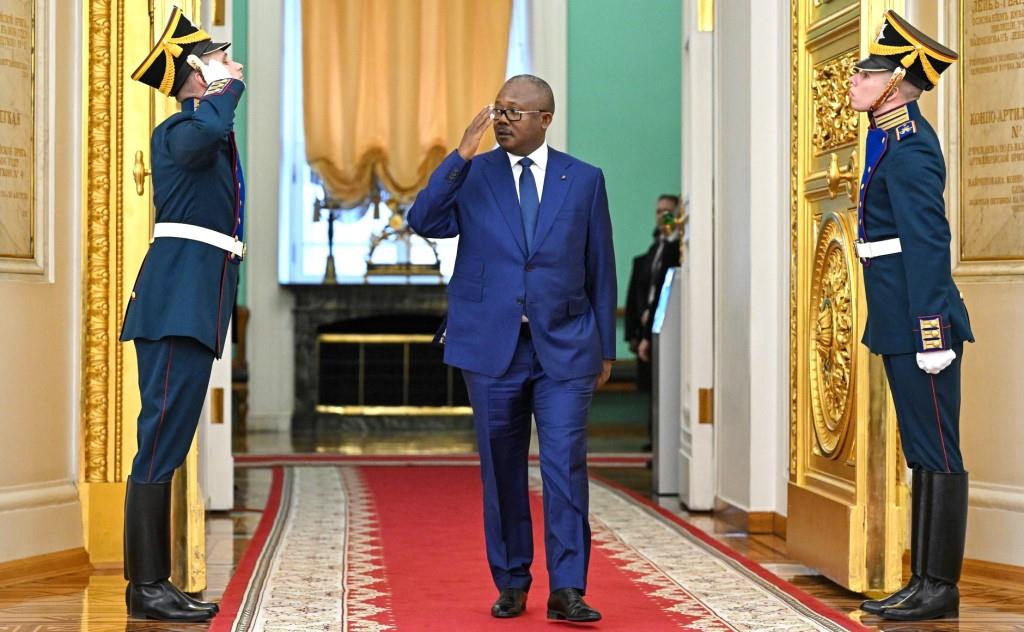
Russia, Guinea-Bissau Raising Strategic Partnership

Published

on

Russia Guinea-Bissau partnership

By Kestér Kenn Klomegâh

With high anticipation for increased partnership between Russia and Guinea-Bissau that has never been stronger since the collapse of the Soviet Union, but the anticipated change, to be facilitated by implementing bilateral agreements, provides a brimming hope and possibility.

Russian President Vladimir Putin definitively re-asserted and underscored a comprehensive bilateral collaboration, in a speech, at a highly-guarded Kremlin meeting held on February 26, with President of the Republic of Guinea-Bissau, Umaro Sissoco Embalo, who was in Russia on an official state working visit, and that was the fourth time to Moscow.

On 9th May 2024, Guinea-Bissau leader Embalo was one of the special guests to the May Day celebrations at the Red Square and later as part of the team to discuss peace initiatives with the Kremlin.

That May Day celebrations, Putin stressed that “Africa is now building up capacity and aspires to emerging as an effective powerhouse in a multipolar world with its unique identity by making confident strides in nurturing a genuine sense of political and economic sovereignty.”

During the first Quarter of 2025, Central African Republic (CAR), Faustin-Archange Touadéra, in mid-January, which analysts, however, speculated that a permanent Russian military base was planned for CAR.

An agreement on military-technical cooperation with the Russian Federation includes supply of specified military weapons and equipment, training of personnel in Russia’s military institutions as well as building a military base in the country in exchange for having complete access to natural resources.

There are estimated 2,500 Russian instructors working there, according to local Russian media reports. That Central African Republic (CAR), Faustin-Archange Touadéra was followed by Guinea-Bissau leader Umaro Sissoco Embalo.

Within a few minutes of arrival at the guest reception hall, an artfully security guards escorted, reminiscent of Soviet times, the consultations began with a restricted format meeting between the two leaders, with Deputy Prime Minister Alexander Novak, Presidential Aide Yury Ushakov and Deputy Foreign Minister Alexander Pankin attending the meeting on the Russian side.

Putin reminded first that Russian-Guinea-Bissauan diplomatic relations have marked more than 50 years of their establishment, and further underscored significant successes and achievements during the past few years, concretely after the first Russia-Africa Summit in 2019. Putin emphasised that last year, trade between Russia and Africa continued to grow, increasing by 10 per cent. However, trade and economic ties between two countries undoubtedly require careful attention from both sides, so that these ties could gain additional momentum.

Russia and Guinea-Bissau have previously signed various agreements to bolster trade, economic cooperation and military-technical sphere, and beyond that created working groups on developing and subsequent implementation of programmes and projects, particularly in Guinea-Bissau. “There is strong potential and promising opportunities in these areas, as many Russian companies are showing increasing interest in working in the Guinea-Bissauan market,” according to Putin.

Reports indicate that over 70 per cent of Guinea-Bissau’s servicemen and civilian officials were trained in the Soviet Union. This explains the necessity for the level of close interaction and cooperation with Russia. Educational and cultural ties are expanding. Putin primarily referred to the growing interest among young people in getting an education in Russia. This applies to military education and training as much as civilian programmes. Traditionally, the military of Guinea-Bissau gets their degrees from Russian military academies. Moreover, Russia has increased the quota for Guinea-Bissauan friends for the current year, 2025/26.

President of the Republic of Guinea-Bissau, Umaro Sissoco Embalo, began negotiation talks with the Russians, and of course, that was the realpolitik logic to review relations, by expressing high gratitude for contributions to the establishment of their nationhood made back in the Soviet Union era, and since gaining political independence, during post-Soviet times when Russia has continued to make significant admirable contributions to the current economic development.

This pointed to the unerasable fact that the Guinea-Bissauan and Russian peoples are reliable partners and endearingly ready to promote the bilateral ties of friendship and to strengthen further economic cooperation.

Meanwhile, the most cogent truth about the previous official visits undertaken by Umaro Sissoco Embalo, included the first (2019) and second (2023) Russia-Africa Summits, respectively in the southern city of Sochi and the cultural capital, St. Petersburg. Umaro Sissoco Embalo showed extra-caution in imploring potential Russian investors, with tectonic interest not only in Guinea-Bissau but also generally with African countries, to ‘walk the talk’ referring to several agreements that have not been implemented over the years. From the first Russia-Africa Summit, a total of 92 agreements were signed with African countries, and that was followed by numerous agreements during the St. Petersburg’s summit in July 2023.

In the context of changing geopolitical balance, at least, it is important to understand the real situation on the ground. Russia has to focus concretely, back away from mere rhetoric, on partnership based on local African realities, take into practical account Africa’s sustainable development goals and to prioritise the African Union’s Agenda 2063. It is important that the declarations just remain on paper, but lead to real actions and projects, with visible results.

Back in October 2022, Umaro Sissoco Embalo, as President of Guinea-Bissau and Chairman of the Economic Community of West African States (ECOWAS), during that Kremlin meeting, Putin emphasized Russia’s contribution in promoting security not only in Guinea-Bissau but also throughout West Africa. With a population of approximately 1.8 million people, Guinea-Bissau faces challenges of ensuring security and more than two-thirds of its population lives below the poverty line.

Guinea-Bissau, like many African states, has had political problems. Embalo has held the presidential post in Guinea-Bissau since January 2020, and will soon hold the next elections. Putin unreservedly promised Russia’s assistance and strongly urged the Guinea-Bissauans, during the forthcoming elections, to support Umaru Sissoco Embalo and to continue the admirable work started as President. Acknowledged the good relations that have developed between Russia and Guinea-Bissau, in these recent years, largely associated with the name of Umaru Sissoco Embalo.

Some local Russian media pulled discussions and analysis, tied up with the attempts to support Guinea-Bissau leader Umaro Sissoco Embalo to win the elections, (i) first to sustain large-scale partnership in security issues in West Africa, and second for continuity of Russia-Guinea Bissauan relationship, and (ii) second to capital on political stability in exploring of natural resources, construction of infrastructure facilities, as well as development of agriculture and fisheries.

Notwithstanding Russia’s several promises and pledges, African countries are bound to wake up to a common understanding of the true meaning of their colonial past for the present, and determine their own future existence. And in fact, the leaders and the elites have to engage in development decision-making processes, and at the same time have to play their roles as autonomous actors instead of being pawns in the context of global geopolitics.

Sharing borders with Guinea (to the southeast), Gambia and Senegal (to the north), Guinea-Bissau attained its independence in September 1973. Guinea-Bissau follows a non-aligned foreign policy and seeks friendly and cooperative relations with a wide variety of states and organizations. Besides, Eсonomic Community of West African States (ECOWAS), Guinea-Bissau is a member of the African Union (AU) and the United Nations.


World

Today’s Generation of Entrepreneurs Value Flexibility, Autonomy—McNeal-Weary

Published

on

Tonya McNeal-Weary Today's Generation of Entrepreneurs

By Kestér Kenn Klomegâh

The Young African Leaders Initiative (YALI) is the United States’ signature step to invest in the next generation of African leaders. Since its establishment in 2010 by Obama administration, YALI has offered diverse opportunities, including academic training in leadership, governance skills, organizational development and entrepreneurship, and has connected with thousands of young leaders across Africa. This United States’ policy collaboration benefits both America and Africa by creating stronger partnerships, enhancing mutual prosperity, and ensuring a more stable environment.

In our conversation, Tonya McNeal-Weary, Managing Director at IBS Global Consulting, Inc., Global Headquarters in Detroit, Michigan, has endeavored to discuss, thoroughly, today’s generation of entrepreneurs and also building partnerships as a foundation for driving positive change and innovation in the global marketplace. Here are the excerpts of her conversation:

How would you describe today’s generation of entrepreneurs?

I would describe today’s generation of entrepreneurs as having a digital-first mindset and a fundamental belief that business success and social impact can coexist. Unlike the entrepreneurs before them, they’ve grown up with the internet as a given, enabling them to build global businesses from their laptops and think beyond geographic constraints from day one. They value flexibility and autonomy, often rejecting traditional corporate ladders in favor of building something meaningful on their own terms, even if it means embracing uncertainty and financial risk that previous generations might have avoided.

And those representing the Young African Leaders Initiative, who attended your webinar presentation late January 2026?

The entrepreneurs representing the Young African Leaders Initiative are redefining entrepreneurship on the continent by leveraging their unique perspectives, cultural heritage, and experiences. Their ability to innovate within local contexts while connecting to global opportunities exemplifies how the new wave of entrepreneurs is not confined by geography or conventional expectations.

What were the main issues that formed your ‘lecture’ with them, Young African Leaders Initiative?

The main issues that formed my lecture for the Young African Leaders Initiative were driven by understanding the importance of building successful partnerships when expanding into the United States or any foreign market. During my lecture, I emphasized that forming strategic alliances can help entrepreneurs navigate unfamiliar business environments, access new resources, and foster long-term growth. By understanding how to establish strong and effective partnerships, emerging leaders can position their businesses for sustainable success in global markets. I also discussed the critical factors that contribute to successful partnerships, such as establishing clear communication channels, aligning on shared goals, and cultivating trust between all parties involved. Entrepreneurs must be proactive in seeking out partners who complement their strengths and fill gaps in expertise or resources. It is equally important to conduct thorough due diligence to ensure that potential collaborators share similar values and ethical standards. Ultimately, the seminar aimed to empower YALI entrepreneurs with practical insights and actionable strategies for forging meaningful connections across borders. Building successful partnerships is not only a pathway to business growth but also a foundation for driving positive change and innovation in the global marketplace.

What makes a ‘leader’ today, particularly, in the context of the emerging global business architecture?

In my opinion, a leader in today’s emerging global business architecture must navigate complexity and ambiguity with a fundamentally different skill set than what was previously required. Where traditional leadership emphasized command-and-control and singular vision, contemporary leaders succeed through adaptive thinking and collaborative influence across decentralized networks. Furthermore, emotional intelligence has evolved from a soft skill to a strategic imperative. Today, the effective modern leader must possess deep cross-cultural intelligence, understanding that global business is no longer about exporting one model worldwide but about genuinely integrating diverse perspectives and adapting to local contexts while maintaining coherent values.

Does multinational culture play in its (leadership) formation?

I believe multinational culture plays a profound and arguably essential role in forming the kind of leadership required in today’s global business environment. Leaders who have lived, worked, or deeply engaged across multiple cultural contexts develop a cognitive flexibility that’s difficult to replicate through reading or training alone. More importantly, multinational exposure tends to dismantle the unconscious certainty that one’s own way of doing things is inherently “normal” or “best.” Leaders shaped in multicultural environments often develop a productive discomfort with absolutes; they become more adept at asking questions, seeking input, and recognizing blind spots. This humility and curiosity become strategic assets when building global teams, entering new markets, or navigating geopolitical complexity. However, it’s worth noting that multinational experience alone doesn’t automatically create great leaders. What matters is the depth and quality of cross-cultural engagement, not just the passport stamps. The formation of global leadership is less about where someone has been and more about whether they’ve developed the capacity to see beyond their own cultural lens and genuinely value differences as a source of insight rather than merely tolerating them as an obstacle to overcome.

In the context of heightening geopolitical situation, and with Africa, what would you say, in terms of, people-to-people interaction?

People-to-people interaction is critically important in the African business context, particularly as geopolitical competition intensifies on the continent. In this crowded and often transactional landscape, the depth and authenticity of human relationships can determine whether a business venture succeeds or fails. I spoke on this during my presentation. When business leaders take the time for face-to-face meetings, invest in understanding local priorities rather than imposing external agendas, and build relationships beyond the immediate transaction, they signal a different kind of partnership. The heightened geopolitical situation actually makes this human dimension more vital, not less. As competition increases and narratives clash about whose model of development is best, the businesses and nations that succeed in Africa will likely be those that invest in relationships characterized by reciprocity, respect, and long-term commitment rather than those pursuing quick wins.

How important is it for creating public perception and approach to today’s business?

Interaction between individuals is crucial for shaping public perception, as it influences views in ways that formal communications cannot. We live in a society where word-of-mouth, community networks, and social trust areincredibly important. As a result, a business leader’s behavior in personal interactions, their respect for local customs, their willingness to listen, and their follow-through on commitments have a far-reaching impact that extends well beyond the immediate meeting. The geopolitical dimension amplifies this importance because African nations now have choices. They’re no longer dependent on any single partner and can compare approaches to business.

From the above discussions, how would you describe global business in relation to Africa? Is it directed at creating diverse import dependency?

While it would be too simplistic to say global business is uniformly directed at creating import dependency, the structural patterns that have emerged often produce exactly that outcome, whether by design or as a consequence of how global capital seeks returns. Global financial institutions and trade agreements have historically encouraged African nations to focus on their “comparative advantages” in primary commodities rather than industrial development. The critical question is whether global business can engage with Africa in ways that build productive capacity, transfer technology, develop local talent, and enable countries to manufacture for themselves and for export—or whether the economic incentives and power irregularities make this structurally unlikely without deliberate policy intervention.

Continue Reading

World

Russia Expands Military-Technical Cooperation With African Partners

Published

on

Military-Technical Cooperation

By Kestér Kenn Klomegâh

Despite geopolitical complexities, tensions and pressure, Russia’s military arms and weaponry sales earned approximately $15 billion at the closure of 2025, according to Kremlin report. At the regular session, chaired by Russian President Vladimir Putin on Jan. 30, the Commission on Military and Technical Cooperation with Foreign Countries analyzed the results of its work for 2025, and defined plans for the future.

It was noted that the system of military-technical cooperation continued to operate in difficult conditions, and with increased pressure from the Western countries to block business relations with Russia. The meeting, however, admitted that export contracts have generally performed sustainably. Russian military products were exported to more than 30 countries last year, and the amount of foreign exchange exceeded $15 billion.

Such results provide an additional opportunity to direct funds to the modernization of OPC enterprises, to the expansion of their production capacities, and to advanced research. It is also important that at these enterprises a significant volume of products is civilian products.

The Russian system of military-technical cooperation has not only demonstrated effectiveness and high resilience, but has created fundamental structures, which allow to significantly expand the “geography” of supplies of products of military purpose and, thus strengthen the position of Russia’s leader and employer advanced weapons systems – proven, tested in real combat conditions.

Thanks to the employees of the Federal Service for Military Technical Cooperation and Rosoboronexport, the staff of OPC enterprises for their good faith. Within the framework of the new federal project “Development of military-technical cooperation of Russia with foreign countries” for the period 2026-2028, additional measures of support are introduced. Further effective use of existing financial and other support mechanisms and instruments is extremely important because the volumes of military exports in accordance with the 2026 plan.

Special attention would be paid to the expansion of military-technological cooperation and partnerships, with 14 states already implementing or in development more than 340 such projects.

Future plans will allow to improve the characteristics of existing weapons and equipment and to develop new promising models, including those in demand on global markets, among other issues – the development of strategic areas of military-technical cooperation, and above all, with partners on the CIS and the CSTO. This is one of the priority tasks to strengthen both bilateral and multilateral relations, ensuring stability and security in Eurasia.

From January 2026, Russia chairs the CSTO, and this requires working systematically with partners, including comprehensive approaches to expanding military-technical relations. New prospects open up for deepening military-technical cooperation and with countries in other regions, including with states on the African continent. Russia has been historically strong and trusting relationships with African countries. In different years even the USSR, and then Russia supplied African countries with a significant amount of weapons and military equipment, trained specialists on their production, operation, repair, as well as military personnel.

Today, despite pressure from the West, African partners express readiness to expand relations with Russia in the military and military-technical fields. It is not only about increasing supplies of Russian military exports, but also about the purchase of other weapons, other materials and products. Russia has undertaken comprehensive maintenance of previously delivered equipment, organization of licensed production of Russian military products and some other important issues. In general, African countries are sufficient for consideration today.

Continue Reading

World

Trump Picks Kevin Warsh to Succeed Jerome Powell as Federal Reserve Chair

Published

on

Kevin Warsh

By Adedapo Adesanya

President Donald Trump has named Mr Kevin Warsh as the successor to Mr Jerome Powell as the Federal Reserve chair, ending a prolonged odyssey that has seen unprecedented turmoil around the central bank.

The decision culminates a process that officially began last summer but started much earlier than that, with President Trump launching a criticism against the Powell-led US central bank almost since he took the job in 2018.

“I have known Kevin for a long period of time, and have no doubt that he will go down as one of the GREAT Fed Chairmen, maybe the best,” Mr Trump said in a Truth Social post announcing the selection.

US analysts noted that the 55-year old appear not to ripple market because of his previous experience at the apex bank as Governor, with others saying he wouldn’t always do the bidding of the American president.

If approved by the US Senate, Mr Warsh will take over the position in May, when Mr Powell’s term expires.

Despite having argued for reductions recently, “Warsh has a long hawkish history that markets have not forgotten,” one analyst told Bloomberg.

President Trump has castigated Mr Powell for not lowering interest rates more quickly. His administration also launched a criminal investigation of Powell and the Federal Reserve earlier this month, which led Mr Powell to issue an extraordinary rebuke of President Trump’s efforts to politicize the independent central bank.

Continue Reading

Trending