World
Russia, Tanzania Navigating the Crossroads
By Kestér Kenn Klomegâh
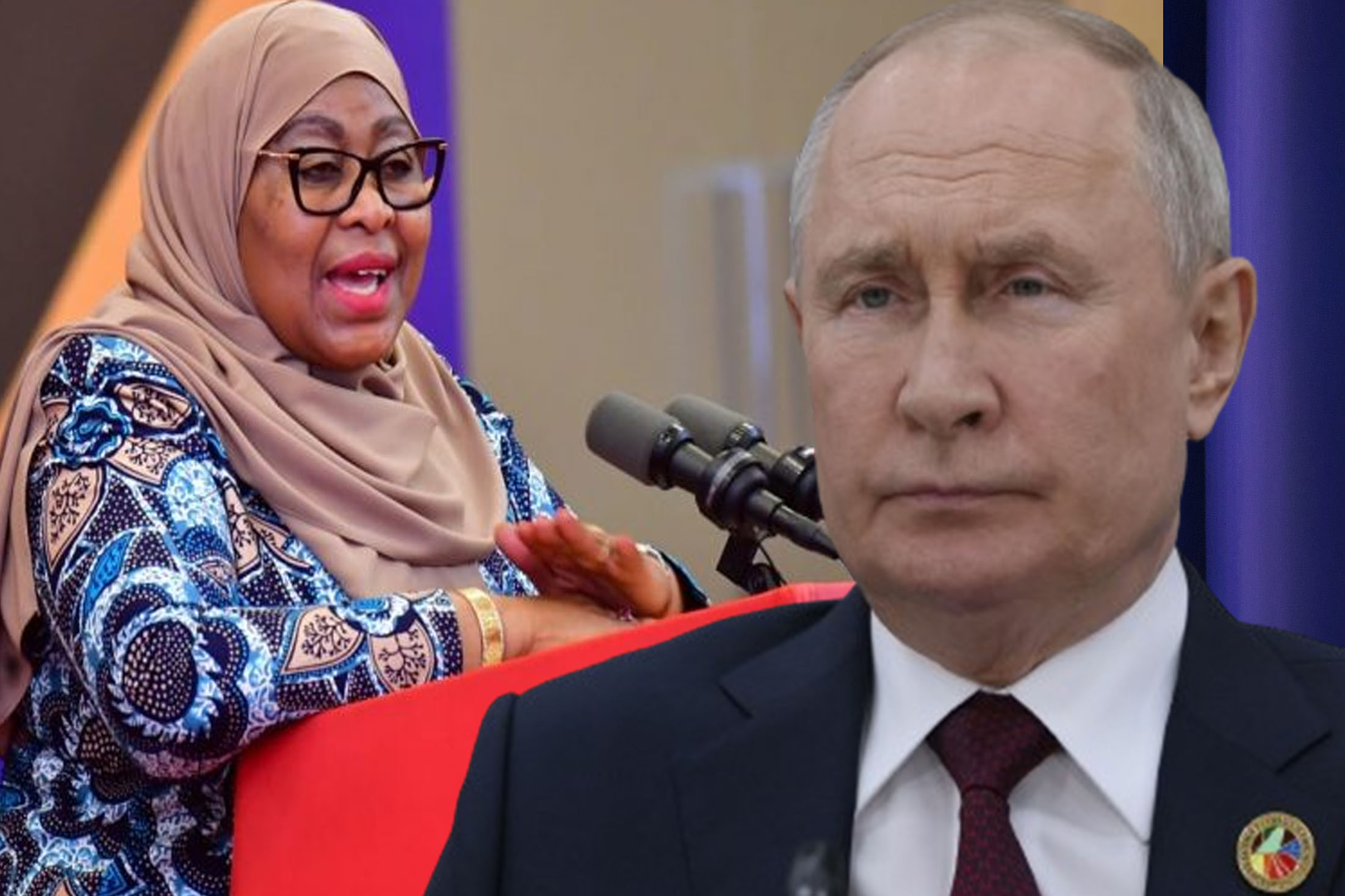
Given the rapidly changing geopolitics, Africa is increasingly becoming one of the strategic pillars in Russia’s policy. The Intergovernmental Russia-Tanzania Commission on Trade and Economic Cooperation held its meetings in St. Petersburg, Russia’s second largest city, the venue for comprehensive discussions and for a critical review of the current Russian-Tanzanian relations. The focus was re-examining the main economic areas of cooperation, achievements, obstacles and future perspectives.
Russia and Tanzania have had good relations. The often-praised bilateral relations have deep historical roots dating back to the Soviet period. But much noticeably fell after Soviet’s collapse in 1991. Notwithstanding that, Russia and Tanzania have, in past decade, taken steps to raise the bilateral relations. In spite of multitude obstacles, both have maintained political dialogue as a basis for developing economic, trade, technological partnerships, educational and cultural cooperation.
Increasing Agricultural Products
On May 13, the Intergovernmental Commission for Trade and Economic Cooperation, meeting in St. Petersburg, reviewed emerging opportunities for large-scale investments, particularly in the employment generating economic sectors. Economic Development Minister Maxim Reshetnikov, who co-chaired the meeting with Planning and Investment Minister Kitila Mkumbo, noted Tanzania’s geographical location as a single window for Russian products entering the East African market. More than 40 Russian companies are currently interested in exporting animal products and a few others to Tanzania and to East Africa region.
According to 2024 demographic report, Tanzania has a population of around 62 million, making it the most populous country located entirely south of the equator. What is important here is the fact that Tanzanian economy is heavily based on agriculture. It has a vast arable land for farming. Reports further indicate that irrigation farming is the commonest across the country. Local agriculture employs half of the workforce. Therefore, the emphasis should rather be on investing in the local agriculture in order to ensure food security.
In a further assessment of the situation, there are very few resources for Tanzania in terms of credit services, infrastructure or availability to improved agricultural technologies, which further exacerbates hunger and poverty in the country, according to the United Nations Development Programme (UNDP). As a result, Tanzania ranks 159 out of 187 countries in poverty, according to the United Nation’s Human Development Index (2024).
Based on these weaknesses, as many as 40 Russian companies have expressed readiness and already doubling efforts with the hope to diversify exports of agricultural produce including meat, fat-and-oil products, dairy and fish products to Tanzania. The participants emphasized the country could be a conduit and entry-gate through which to reach East African region. In fact, previous agreements that were signed provided the legitimate framework and a driving force for developing this partnership. In assessing the trade dynamics, Russia targets an estimated US$15 billion from agricultural exports, while last year it earned over US$7 billion, according to Agroexport Center of the Ministry of Agriculture. In short, Russia is absolutely certain to earn huge income from increasing its various agricultural products to Tanzania, and using the country as a gateway to East Africa.
Pharmaceutical Business
More than ever, Tanzania, like other African countries, has been actively advancing its diplomacy incorporating the health sector. In pursuit of taking advantage of incentives provided by the government, India and a number of foreign investors have achieved marked successes in the health sphere. These foreign investors, while embracing the reconfiguration of world politics sometimes get to the crossroads on one hand. But on the other hand, the corporate investments consistently remain their economic priorities and strive to get full-scale admirable results. Most often, do practical negotiations and renegotiations, determine financial sources and outline business policies which usually form the core points in forging relations with Tanzania.
Today, China and India, for instance, have set up manufacturing hubs in Tanzania and other African countries, fostering employment and skills development for the youth. Generally Tanzania, like many other African countries, is seemingly taking the existential chance to analyze feasibility and forms of engagement in their bilateral cooperation with key external powers. The two Asian countries, China and India have considerably done a lot in this sector. With health infrastructure, China built the Africa CDC headquarters in Addis Ababa, and further engage in manufacturing and distributing medical products as well as offering a wide range of medical services.
In a similar vein, Indian engagement in East Africa’s health sector is multifaceted. After China, India is the third largest investor in this health sector in Africa. In a simple comparison, Russia has a staggering position, still forward-looking to play a model-role in health-care development in the continent. Russia is yet to assert its position despite its official declarations to support Africa in the health sectors during the first and second Russia-Africa Summits.
Recreation and Tourism
The Intergovernmental Commission for Trade and Economic Cooperation delegations, in St. Petersburg meeting. also discussed cooperation on tourism, including the prospects of resuming direct flights between Moscow and Dar es Salaam. The two parties signed an intergovernmental agreement on air services in 2024. The negotiating officials, however, underscored restoring air connection as an essential step toward boosting the expected economic potentials and promoting people-to-people interaction, as well as consolidating travel and tourism business. For example, Tanzania has its national carrier managed by the Air Tanzania Company Limited (ATCL). It operates passenger and cargo flights to destinations in the Middle East and Asia. Until today, Egypt Air and Ethiopian Airlines are flying between Africa and Russia. There is still a huge gap in the aviation sector, particularly Russia to establish the connectivity with Western, Central and Southern Africa. Absence of regular flights, keeps Africa so remote (segregated) from Russia, especially in this expected resonating ‘multipolar’ world.
Economic Development Minister Maxim Reshetnikov, who co-chaired the meeting, reiterated Russia was prepared to send a delegation with business representatives to Tanzania in June-July to determine formats for cooperation in this aviation business. “Our companies are prepared, as they say, to go in and work seriously and for the long term. In tourism, the top priority is to resume direct air connections,” Reshetnikov noted.
In June of last year, an agreement on air transport was signed between the Russian Government and the Government of Tanzania. “It is essential to finalize all procedures as quickly as possible to bring the agreement into effect,” the Minister of Economic Development added.
In fact, Tanzania is not alone requesting for establishing air routes to Moscow. Ugandan Vice President Jessica Alupo said, in Sept. 2024, that Uganda was interested in developing air service with Russia and in the launch of direct flights that will facilitate the movement of people, goods and investment. At a meeting with Russia’s Federation Council Speaker Valentina Matviyenko on the sidelines of the Eurasian Women’s Forum held September 18th-20th in St. Petersburg, Jessica Alupo noted the potentials of Uganda’s tourism sector and fixing hotels in Moscow.
Over the past decades, the absence of reliable airlines has constrained the ability to fully capitalize on growing regional and continental air hub. African destinations are inaccessible, while recreation and tourism business are seriously hampered due to Russia’s hyperbolic rhetoric and lack of the desire to open up to Africa. Many African cities are simply not gateways for tourism, and this hampers economic cooperation.
Can Tanzania Join BRICS?
Closer ties between Tanzania and BRICS are inevitable, Russian Ambassador to the African country Andrey Avetisyan said in an interview with TASS in June 2024. “Some of the BRICS members are Tanzania’s strategic partners, significantly contributing to its economic development based on President Samia Hassan’s policy of economic diplomacy. The topic of Tanzania’s BRICS accession has not come up yet but the country’s closer ties with the group are inevitable, especially now that membership has been granted to Ethiopia, a country Tanzania cooperates with within the African Union and the East African Community,” Avetisyan pointed out.
Learning From Policy Mistakes
By learning from past mistakes and analyzing geopolitical changes, Russia is only now gradually opening its borders to Africa. Most often decorative rhetoric dominates official circles, and implementing policy initiatives reached at the meetings and conferences and summits are inconsistently dealt with at snail-pace in the partnership. This Russia’s business model impacts negatively on economic growth in the continent, leaves space (vacuum) for Western, European, Asian and Arab competitors. Tanzanian delegation made these points explicitly understandable, and further made a passionate appeal for actionable steps as they renewed investment possibility in various economic sectors. Notwithstanding the lapses and weaknesses, both parties noted there must be a practical turning point to stimulate the continent’s economy. That is partly what foreign relations aim at achieving with African countries.
In official statements, the Russian leadership endorses economic partnership with Tanzania, but there much lies on practical implementation. The early May (month) meetings in St. Petersburg indicated how frequent voices have been raised on opportunities, challenges and historical relations dating back from Soviet times. But the present trends are quite different, not just rhetoric but concretely using such platforms to stimulate investment and for showing appreciative achievements.
For Tanzania and the rest of Africa, the 21st century should be seen as a turning period to promote trade with the industrialised world in order to develop our region, improve living standards and bridge the development gap across Africa, a few policy analysts told this article author. Analysts also say Africa should consider trade as an important tool to transform and diversify its economy using its decades-old relationships with Russia.
Strategic Tasks for Future
State-to-State corporate deals feature prominently in the relations, but it is also necessary to encourage possibly an entrepreneurial culture and private-sectoral approach to the economy. It is enough for Russia’s meteoric criticisms and algorithmic propaganda against western hegemony in Tanzania and across Africa. The stark reality is that African countries, including Tanzania in East Africa, need genuine investment and not anti-western slogans and rhetoric. The relationship and economic ties are full of declarations and unfulfilled expectations. There are noticeable gaps between bilateral agreements signed years ago and what have positively been achieved on the ground to measure the legitimacy of cooperation.
The Russian-Tanzanian relations, and others in Africa, have been littered with so many bilateral meetings and diplomatic talks these several years. In this context, Russia and Tanzania have to frankly acknowledge the simple fact that time for polarized rhetoric is long over. For this analytical review, enough is enough for now! It is rather a critical time to step up practical efforts and think of innovative ways to implement policy decisions, in spite of the existing challenges.
World
Essent Slashes Contact Centre Technology Costs by 50%
By Modupe Gbadeyanka
The Netherlands’ largest energy provider, Essent, has cut the technology costs of its contact centre infrastructure by half.
The organisation, which serves 2.5 million customers, recorded zero critical incidents post-migration and improved agent workplace satisfaction by 36 per cent.
The migration was delivered in partnership with AI-first customer experience transformation specialists, Sabio Group, and was completed in under 12 weeks for an operation spanning over 1,000 agents across two locations.
Agents were forced to juggle multiple disconnected screens simultaneously — a workflow that was as inefficient as it was stressful.
“Our agents were constantly working with different screens — multiple chat instances open at once, multiple agent desktop instances. It was messy, and in some cases, quite stressful,” SAFe Product Manager for Customer Interaction, Omnichannel and Digital Transformation at Essent, Michiel Kouijzer, stated.
“A lot of colleagues were saying I was mad for even suggesting this approach. It kind of feels like a victory on a personal level that it did work out. You just have to be a little ambitious — and have the right expert partner who can make it work,” Kouijzer added.
With stable cloud infrastructure now firmly in place, Essent is turning its attention to the capabilities that were impossible in its legacy environment: AI-powered call summarisation, agentic customer self-service, and next-generation workforce optimisation.
Rather than a reckless ‘big bang’ cutover that could have affected service to millions of households, Sabio engineered a phased migration strategy — beginning with Essent’s SME segment to validate technical readiness before scaling to the full enterprise operation.
“This project showcases Sabio’s unique position in the contact centre technology landscape. We’re not just moving Essent to the cloud — we’re establishing a foundation for continuous improvement in their customer experience delivery,” the Country Manager for Sabio Group Benelux, Wouter Bakker, commented.
World
Africa: A New Market for Russian Business
By Kestér Kenn Klomegâh
On April 11, the presentation of the book “Africa: a new market for Russian business” took place, which aroused lively diverse interests among business representatives, entrepreneurs and employees of federal structures of Russia. The event was dedicated to discussing the prospects of Russian companies entering the African market and became a platform for the exchange of views and experiences.
Participating guests, packed in the small hall, included:
– representatives of business circles,
– entrepreneurs interested in new directions of development,
– employees of federal agencies curating foreign economic activity.
The presentation was held in a constructive and friendly atmosphere. The author of the book, Serge Fokas Odunlami, detailed the key ideas and conclusions presented in the publication. Particular attention was paid to the practical aspects of operating in the African market, as well as the analysis of opportunities and risks for Russian companies.
During the lively discussion, participants asked questions, shared their experiences and made suggestions for developing cooperation with African countries. This format allowed not only to get acquainted with the content of the book, but also to discuss topical issues of expanding business relations.
Meaning of the book: The publication, “Africa: a new market for Russian business” offers readers not only analytical, but also practical recommendations on investment and market trends, and how to enter the African market. The book will be a useful tool for those considering Africa as a promising destination for investment and business development.
The presentation of the book became a significant event for the Russian business community interested in expanding cooperation with Africa. Serge Fokas Odunlami introduced the participants to the new edition, which is a comprehensive business guide that gives an impetus for dialogue and implementation of joint entrepreneurial projects and corporate initiatives across Africa.
World
Ryan Collyer Reveals Reasons Behind Africa’s Significant Energy Deficit
By Kestér Kenn Klomegâh
Perhaps Russia’s state nuclear corporation, Rosatom, is at the frontline, shaping Africa’s energy security. And African countries are also accelerating coordinated efforts to build nuclear power plants primarily to supply their energy, which will drive industrialisation and boost power capacity for domestic utilisation.
Energy experts say adopting nuclear can further support a diverse energy mix, reduce reliance on fossil fuels, and help across the continent. Over the past two decades, Russia has been collaborating with African countries, adopting energy initiatives to provide power to approximately half the continent’s population, and making it an important component of Africa’s future energy strategy and solutions. At this point, however, it is necessary to underline the irreversible fact that Russia’s ultimate goal is to ensure long-term African energy security.
In this interview, Rosatom’s Chief Executive Director for Central and Southern Africa, Ryan Collyer, reiterates the strategic importance of Russia-Africa’s energy cooperation through strengthening bilateral agreements on collaboration on the peaceful use of nuclear energy. Collyer explains that the Russian approach is its ability to offer an integrated solution, from technology and financing to training and localisation. According to him, partnerships must be built on mutual benefit and on the principle of transparency. Here follows the interview excerpts:
What are the expectations, specifically in the nuclear energy sphere, for Africa during the forthcoming Russia–Africa Summit scheduled for 2026?
The expectation is a clear shift from dialogue to delivery. Over the past few years, we have built a strong foundation through agreements, feasibility discussions and partnerships. The 2026 Russia–Africa Summit is an opportunity to demonstrate tangible progress.
In practical terms, I would expect greater focus on implementation readiness. That includes regulatory development, human capital, financing models and localisation strategies. We also expect to see more structured cooperation in areas like small modular reactors, which are particularly relevant for many African grids, as well as stronger emphasis on education and training partnerships. Ultimately, the success of the Summit will be measured by how many initiatives move from concept to execution.
Why, despite many bilateral agreements, is Africa still experiencing a significant energy deficit?
Africa’s energy deficit is not a result of a lack of ambition or agreements. It is primarily a question of scale, financing and infrastructure readiness. Energy projects, especially large-scale ones, require long-term investment, stable policy frameworks and strong institutional capacity. Many countries are working under fiscal constraints, and at the same time, demand is growing rapidly due to population growth and urbanisation. So, even when progress is made, it can be outpaced by rising demand.
It is also important to understand that many agreements are not meant to deliver immediate infrastructure. They are part of a longer preparation cycle, including feasibility studies, regulatory development and workforce training. Nuclear projects in particular are long-term by nature, and while this can be perceived as slow progress, it is actually a reflection of the level of diligence required.
How do you assess the contribution of nuclear energy to climate change mitigation and technological development in Africa?
Nuclear energy plays a dual role in Africa’s development, both as a clean energy source and as a driver of technological advancement. From a climate perspective, nuclear provides reliable, low-carbon electricity at scale. Africa needs a significant expansion of its energy capacity to support economic growth, and this growth must be both stable and sustainable.
Nuclear allows countries to increase power generation without increasing emissions, while ensuring a consistent baseload supply. At the same time, its impact goes beyond electricity. Nuclear technologies support medicine, agriculture, water management and industrial processes. Across Africa, they are already used in areas such as cancer treatment, food preservation and environmental monitoring, making nuclear a broader platform for sustainable development.
In this context, Rosatom offers integrated solutions across the full nuclear value chain. This includes large-scale and small modular reactors, as well as advanced non-power applications such as nuclear medicine and irradiation technologies. Our focus is on delivering practical, tailored solutions that support long-term development and local capacity building.
Is Africa unprepared to deal with nuclear waste, as some critics suggest?
I would say that preparedness varies across countries, but it would be inaccurate to suggest that the issue is being ignored. Responsible nuclear programmes require a comprehensive approach to waste management from the very beginning. This includes legal frameworks, regulatory oversight, storage solutions and long-term planning. These elements are part of international best practice and are supported by organisations such as the IAEA. What is true is that this topic is often undercommunicated in the public space. It should be discussed more openly, because transparency builds trust.
Countries that are serious about nuclear energy understand that waste management is not optional. It is a core component of the programme, and it is addressed in parallel with all other aspects of development. Rosatom offers comprehensive solutions for spent fuel and radioactive waste management. These include technologies for safe storage, transportation, reprocessing and recycling of nuclear materials. In fact, advanced reprocessing solutions allow for the reuse of valuable components of spent fuel, significantly reducing the volume of waste and improving the overall sustainability of the nuclear cycle.
Nuclear power remains controversial. Why do you believe it is important for Africa, and what role does it play in the energy mix?
Africa needs a balanced and pragmatic energy strategy. The conversation should not be about choosing one technology over another, but about building an energy mix that is reliable, affordable and sustainable. Renewables will play a critical role and are already expanding rapidly. However, they are variable by nature. For industrialisation, countries also need stable, continuous power that is baseload. This is where nuclear can make a meaningful contribution. A diversified energy mix that includes renewables, nuclear, hydropower and other sources allows countries to reduce risk, improve energy security and support long-term economic growth.
Nuclear is not the only solution, but it is an important part of a resilient system, especially for countries with growing industrial ambitions. In this context, Rosatom is able to support countries with integrated energy solutions that combine reliability, sustainability and long-term partnership models, tailored to national development priorities.
How can we shift public perception, given the legacy of Chornobyl and Fukushima?
We cannot rewrite history, and we should not try to. Events like Chornobyl and Fukushima shaped public perception for a reason. The starting point is respect for those concerns, not dismissal. At the same time, what is often missing in the conversation is what happened after those events. Chornobyl, in particular, fundamentally reshaped the entire philosophy of nuclear safety. It led to a complete rethinking of reactor design, emergency response, and regulatory oversight. Independent regulators were strengthened, safety responsibilities were clearly separated from operators, and safety culture became not just a principle but a legal requirement supported by continuous drills and probabilistic risk assessments.
Technologically, the industry also changed dramatically. Modern reactors are designed to withstand even worst-case scenarios, with multi-layered “defence-in-depth” systems, core melt traps, and passive safety mechanisms that rely on natural physical processes rather than human intervention. These are not incremental improvements. They are the direct result of lessons learned at a very high cost. But facts alone do not change perception. People do not build trust through reports. They build it through experience and transparency. That is why our approach in Africa is deliberately open.
We create opportunities for students, young professionals and journalists to visit nuclear facilities, research centres and training programmes. When people can see how systems operate, how safety is managed, and how seriously it is taken, the conversation becomes more grounded and less abstract. There is also an important human dimension that is often overlooked.
The history of Chornobyl is not only a story of tragedy. It is also a story of professionalism, responsibility and the people who managed the crisis and generated the knowledge that made today’s safety standards possible. Acknowledging that the full picture helps move the discussion away from fear alone toward understanding. At the same time, we need to broaden the narrative. Nuclear is not only about power generation. It is about cancer treatment, food security, water management and high-skilled employment. When communities begin to connect nuclear technology with real benefits in their own lives, it stops being an abstract risk and starts becoming a practical solution. Ultimately, perception does not change through persuasion. It changes through consistency. Through transparency, long-term engagement, and real-world impact.
What are your final thoughts on Russia’s preparedness to support Africa’s nuclear ambitions?
Russia has demonstrated that it is committed to long-term partnerships in Africa, particularly in the nuclear sector. We are already seeing concrete examples of cooperation in areas such as project development, education and skills transfer. The key strength of the Russian approach is its ability to offer an integrated solution, from technology and financing to training and localisation. Partnerships must be built on mutual benefit and transparency. Africa’s priorities are clear: energy security, economic development and local capacity building. Any partner that is ready to contribute to these goals consistently and practically will have a meaningful role to play. If we look country by country, the picture becomes even more interesting.
Take Ethiopia. This is a country thinking long-term about energy security and industrialisation. It has strong hydropower, but also understands the need to diversify. Ethiopia is prepared to take a big step towards nuclear energy. In Rwanda, the approach is different. It is focused on innovation and speed. There is a strong interest in small and flexible nuclear technologies, alongside active use of nuclear science in healthcare and agriculture. What stands out is the clarity of vision and pace of implementation.
Then, there is Namibia. As a major uranium producer, the question is how to move up the value chain. Partnerships can help connect resources to technology, skills and future energy applications. So, Russia’s role is not one-size-fits-all.
The real strength lies in adapting to each country’s strategy. If that continues, nuclear cooperation becomes not just about energy, but about shaping long-term technological development. Rosatom is one of the few global players capable of delivering the entire nuclear value chain. This includes reactor technologies, fuel supply, waste management solutions, including reprocessing, as well as long-term operational support and human capital development. This comprehensive capability is what allows us to move projects from concept to reality in a structured and sustainable way.
-
Feature/OPED6 years agoDavos was Different this year
-
Travel/Tourism10 years ago
Lagos Seals Western Lodge Hotel In Ikorodu
-
Showbiz3 years agoEstranged Lover Releases Videos of Empress Njamah Bathing
-
Banking8 years agoSort Codes of GTBank Branches in Nigeria
-
Economy3 years agoSubsidy Removal: CNG at N130 Per Litre Cheaper Than Petrol—IPMAN
-
Banking3 years agoSort Codes of UBA Branches in Nigeria
-
Banking3 years agoFirst Bank Announces Planned Downtime
-
Sports3 years agoHighest Paid Nigerian Footballer – How Much Do Nigerian Footballers Earn