Connect with us

World

AfDB President Sees More African Nations Regaining Investment-Grade Ratings

Published

on

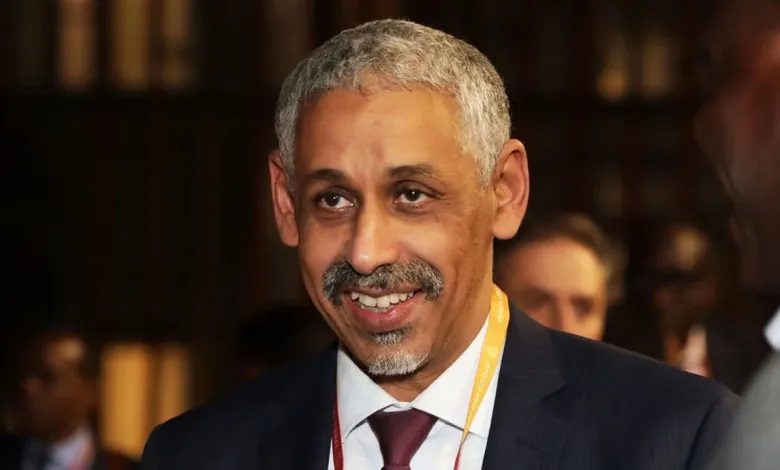
Sidi Ould Tah

By Adedapo Adesanya

The President of the African Development Bank (AfDB), Mr Sidi Ould Tah, says more African countries are likely to regain or achieve investment-grade credit ratings by next year as reforms begin to deliver results and economic growth accelerates.

Several African sovereigns have already been upgraded in recent months, including Nigeria. However, Nigeria is not yet near investment-grade status.

In May, S&P Global Ratings upgraded Nigeria’s sovereign credit ratings to ‘B’ with a stable outlook, citing structural reforms under President Bola Tinubu and key drivers like higher oil production and improved fiscal revenue.

The country is still five notches from investment-grade. Under S&P’s rating scale, the progression follows— B → B+ → BB- → BB → BB+ → BBB- (investment grade).

S&P raised Morocco to investment grade last year and increased South Africa by one level to BB in November. Ghana, Zambia, the Ivory Coast and Kenya have also benefited from positive rating action linked to fiscal, debt and economic reforms.

“We’re quite confident that the continent will continue to grow very strongly and that African countries will be better rated in the coming years,” Mr Ould Tah said in an interview with Bloomberg.

“We’ve seen Morocco receive investment grade during the last few months, and we expect other countries by next year to get toward that,” he added.

The outlook reflects improving fiscal positions and reforms implemented across countries on the continent, even as the conflict in the Middle East threatens to slow economic growth and raise costs for energy-importing nations. Better credit ratings can help countries borrow at lower rates and fund development projects.

The AfDB projects the continent’s gross domestic product expansion will accelerate to 4.4 per cent next year, if the conflict in the Middle East does not extend for a longer period. It expects the continent to slow to 4.2 per cent this year.

The war in Iran has benefited oil producers such as Nigeria, Angola and Gabon, while exerting pressure on the fiscal positions of net energy importers such as South Africa, Kenya, Ghana and Senegal.

Mr Ould Tah said the bank is ready to support countries facing budget constraints and high debt burdens due to the impact of the Iran crisis, including increasing credit lines to them.

“The board of directors of the bank will examine in the coming days how the bank can increase the volume of resources it will provide to its member countries in this specific situation,” he said.


Adedapo Adesanya is a journalist, polymath, and connoisseur of everything art. When he is not writing, he has his nose buried in one of the many books or articles he has bookmarked or simply listening to good music with a bottle of beer or wine. He supports the greatest club in the world, Manchester United F.C.

Click to comment

Leave a Reply

Your email address will not be published. Required fields are marked *

World

AXIAN Energy Secures $60m for Expansion Across Africa

Published

on

axian energy

By Aduragbemi Omiyale

A financing facility of up to $60 million has been secured by AXIAN Energy, the energy division of the AXIAN Group.

The funding package was provided by MCB, one of the leading financial institutions in the Indian Ocean region.

It comprises a $40 million revolving credit facility with a three-year tenor and extension option, and $20 million in unfunded instruments, providing AXIAN Energy with enhanced financial flexibility, enabling the company to rapidly mobilise resources and seize development opportunities across its target markets.

The energy firm is expected to use the capital to deliver large-scale energy infrastructure projects across Africa.

Over the past two years, AXIAN Energy has significantly accelerated its growth by expanding its renewable energy project pipeline, with solar projects currently under development in Senegal, Benin, Zambia, Côte d’Ivoire, Madagascar, and Burkina Faso.

Building on this momentum, AXIAN Energy now operates a portfolio comprising 350 MW of installed renewable energy capacity, supported by 77 MWh of energy storage capacity, positioning the AXIAN Group as a major contributor to Africa’s energy transition.

The chief executive of AXIAN Energy, Mr Benjamin Memmi, said, “This transaction marks a key milestone in AXIAN Energy’s growth trajectory. It provides us with the financial capacity to sustain the momentum we have built over the past two years, further strengthening our renewable energy portfolio and expanding our presence across new African markets.”

Also commenting, the Global Head of Structured Finance at MCB, Mr Mathieu Delteil, said, “We are proud to support AXIAN Energy in structuring this facility, reaffirming our commitment to enabling transformative projects across Africa.

“By leveraging our sector expertise and deep understanding of regional markets, we have delivered a tailored financing solution that aligns with AXIAN’s long-term renewable energy ambitions.

“This partnership highlights our role as a strategic financial partner, mobilising capital towards investments that drive sustainable growth and accelerate the energy transition across the continent.”

The financing agreement between the two organisations strengthens their long-standing relationship because it is driven by a shared commitment to supporting infrastructure development and economic growth across Africa.

Continue Reading

World

S&P Restores Afreximbank to Investment-Grade Status After 12 Years

Published

on

Afreximbank

By Adedapo Adesanya

Credit ratings agency, S&P Global Ratings, has restored the African Export-Import Bank (Afreximbank) ​to investment grade, nearly 12 years after its last assessment, citing the entity’s countercyclical lending record and ‌strong shareholder support.

The BBB+ rating with a stable outlook is one notch above Moody’s Baa2 and comes months after Afreximbank severed ties with Fitch Ratings.

The lender accused the agency of misjudging its mission, following a downgrade to junk status amid disagreements over the bank’s role in debt ​restructurings for Ghana and Zambia. Fitch subsequently withdrew its ratings entirely and flagged governance concerns.

S&P said in ​a statement on Thursday that Afreximbank’s record as a countercyclical lender and its substantial shareholder ⁠support served as rationale for its rating. Credit ratings often guide the costs of capital for a borrower.

The lender’s total assets, S&P noted, had expanded to $42.3 billion by the end of 2025, up ​from $7.1 billion in 2015.

S&P said it did not incorporate preferred creditor status into its assessment because Afreximbank ​provides almost 80 per cent of its loans to private-sector entities.

However, it acknowledged that Afreximbank, alongside other institutions, had experienced prolonged payment arrears in ‌recent ⁠years, notably following the defaults and debt restructurings in Ghana and Zambia.

S&P noted that Afreximbank said in December that it had come to an agreement with Ghana on its $750 million loan, but that the lender had not announced a resolution with Zambia.

The agency warned that further sovereign restructurings could weigh on Afreximbank’s asset quality.

S&P’s assessment described Afreximbank’s governance and management as “adequate”, saying the ⁠inclusion of ​two independent directors and the African Development Bank (AfDB) as a permanent board ​member provided institutional oversight.

It noted that while increasing participation of private-sector investors through Class D shares could influence the bank’s risk appetite, Class A ​shareholders retained veto rights over big institutional changes, balancing potential risk.

Continue Reading

World

Elon Musk Becomes World’s First Trillionaire as SpaceX Soars in Nasdaq Debut

Published

on

elon musk spacex

By Adedapo Adesanya

Mr Elon Musk, the world’s richest man, is now a trillionaire as his SpaceX rose 11 per cent in its Nasdaq debut on Friday, lifting its valuation to about $1.96 trillion as investors piled into the world’s largest initial public offering (IPO).

The stock opened for trading at $150 compared with the IPO price of $135 per share.

The landmark listing cemented Mr Musk’s status as the first trillionaire ever and propelled SpaceX into the ranks of the ⁠world’s most valuable companies

The listing is being used as a benchmark of what is to come for the market ahead of forthcoming IPOs for AI heavyweights Anthropic and OpenAI.

The record IPO is a culmination of Mr Musk’s long-held ambitions in space and technology.

Most of Musk’s wealth now rests with SpaceX, where ⁠he holds a stake worth roughly $866 billion. Along with Tesla and the rest of his properties, his net worth will exceed $1.1 trillion when the stock begins trading on Friday.

At a quoted $75 billion, the deal’s proceeds were more than double those of Saudi Aramco’s record-setting 2019 IPO.

The valuation could rise further should underwriters exercise their right to sell additional shares, a decision typically made within 30 days after the offering.

Although SpaceX may have to wait for entry into the S&P 500, its expected fast-track inclusion in the Nasdaq 100 will soon make it a major holding for passive funds and ETFs that track the index, creating a fresh source of demand for its shares.

It will take about a month before it gets added to that index under Nasdaq’s new fast-entry rules, as opposed to a typical wait of as much as a year.

SpaceX said its market opportunity spans $28.5 trillion, a figure it called the largest in human history.

Mr Musk, 54, was born in Pretoria, South Africa, to a Canadian mother and South African father. He attended the University of Pennsylvania, graduating in 1997.

He took over as Tesla’s CEO in 2008. Beyond Tesla and SpaceX, Mr Musk ‌has co-founded ⁠five other companies, including tunnelling startup The Boring Company and brain implant maker Neuralink.

Continue Reading

Trending