

Connect with us

Media OutReach

Dusit International expands its presence in India, leading luxury hospitality growth in emerging Tier 2 and 3 cities – with a new focus on metro destinations to follow

Published

on

Building on the successful opening of dusitD2 Fagu, Shimla, Dusit is set to bring its Thai-inspired gracious hospitality to high potential markets across India – including Bhiwadi, Raipur, Lonavala, Kasol, Kolkata, Manali, and Karnataka – while also preparing to target Tier 1 destinations in its next phase of development.

NEW DELHI, INDIA Media OutReach Newswire – 4 April 2025 – Deeping its commitment to India, Dusit International, one of Thailand’s leading hotel and property development companies, has announced plans to expand its presence in the country by launching its luxury and upper midscale brands in key emerging markets.

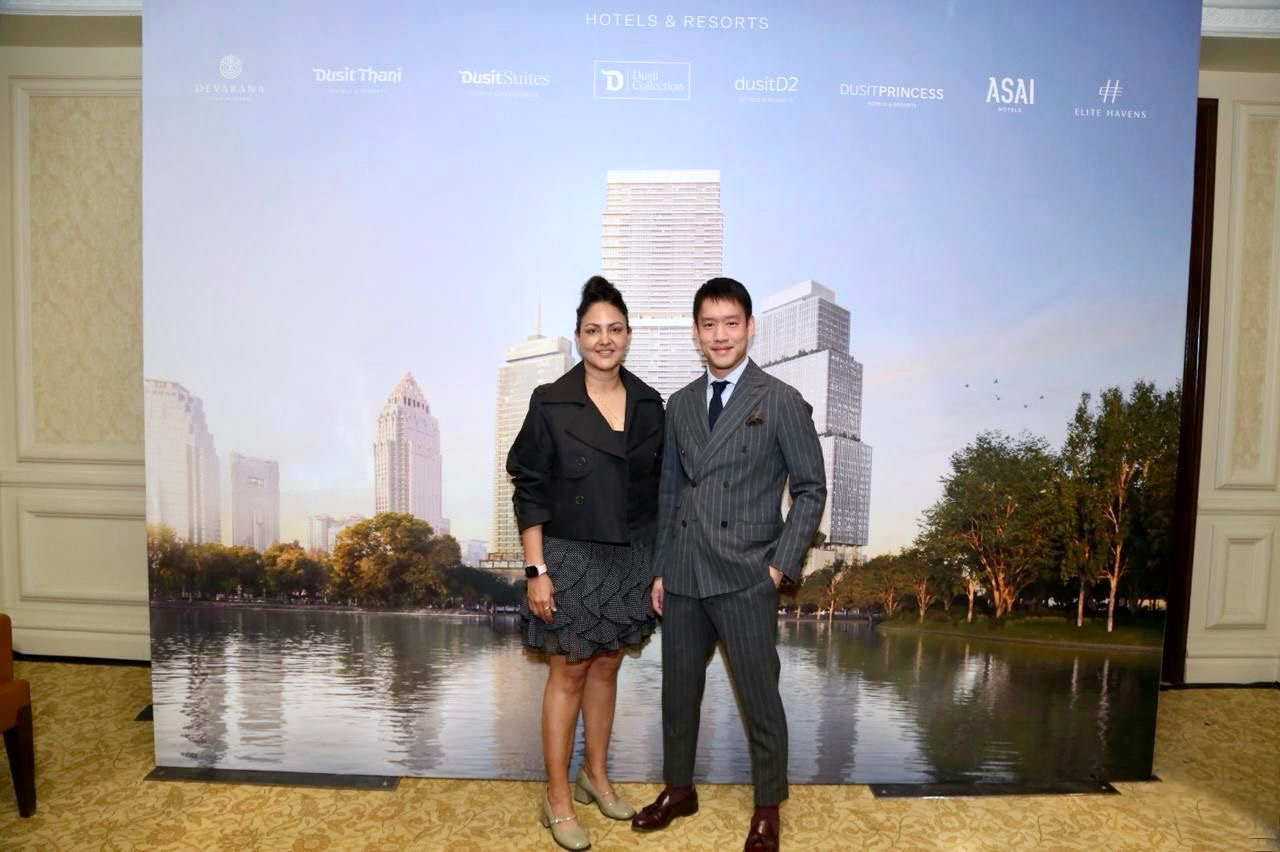
Dusit International unveiled its expansion plans for India during a media briefing held at The Leela Palace, New Delhi, on 3 April 2025. Pictured: Ms Deepika Arora, Consultant/Advisor – South Asia, Dusit International, and Mr Siradej Donavanik, Vice President – Development (Global), Dusit International.

With rising disposable incomes, increasing demand for premium stays, and enhanced connectivity reshaping India’s hospitality landscape, Dusit is focused on underserved yet high-potential markets nationwide.

In addition to exploring opportunities in India’s Tier 1 cities, Dusit also aims to target Tier 2 and Tier 3 destinations where luxury and upscale hospitality options are currently limited – creating opportunities to deliver curated, high-end experiences tailored to local demand. This strategic expansion builds on the momentum of Dusit’s recent foray into the Indian market with the opening of the contemporary, upscale dusitD2 Fagu, Shimla in December 2024, and the signings of three key properties in Karnataka: the wellness-focused Devarana Sakleshpur, Karnataka – A Dusit Retreat (set to open in 2028), and two upcoming Dusit Princess Hotels & Resorts.

With a diverse brand portfolio spanning the ultra-luxury Devarana – Dusit Retreats to upper midscale and midscale brands such as Dusit Princess and ASAI Hotels, Dusit plans to tap underserved locations where it can leverage its expertise in delivering Thai-inspired gracious hospitality to meet the needs of today’s business and leisure travellers.

Prioritising quality over quantity, the company is thoughtfully selecting locations that align with its ethos of premium, experience-driven hospitality – offering a distinctive blend of holistic wellness, contemporary design, and exceptional service.

As part of this vision, Dusit is preparing to launch six additional hotels across the country. The upper-midscale Dusit Princess brand will debut in Raipur (200 keys), Bhiwadi (165 keys), Kolkata (220 keys), and Lonavala (120 keys). Meanwhile, two boutique luxury properties under the recently introduced Dusit Collection brand – in Kasol and Manali (each with 40 rooms) – will offer refined escapes in the Himalayan foothills.

“India represents an exceptional growth opportunity for Dusit – across major metros and particularly in Tier 2 and Tier 3 cities, where premium hospitality options remain limited despite strong demand,” said Mr Siradej Donavanik, Vice President – Development (Global), Dusit International. “The country’s tourism industry is evolving rapidly, with increasing demand for high-quality, experience-driven stays. By blending our unique brand of Thai-inspired gracious hospitality with wellness-led experiences and destination-driven properties, we aim to create exceptional stays that resonate deeply with Indian travellers. Through strategic partnerships with visionary local developers, we are committed to shaping India’s premium hospitality landscape for the long term.”

Beyond immediate expansion, Dusit is focused on building an integrated hospitality ecosystem in India, where luxury stays, holistic wellness, refined gastronomy, and hospitality education converge to deliver lasting value. At the heart of this vision is a deep commitment to sustainability driven by Dusit’s group-wide Tree of Life programme. Aligned with selected United Nations Sustainable Development Goals, the programme features 31 measurable criteria designed to ensure a lasting and positive impact in every community Dusit serves.

Through Dusit Hospitality Education, the company will also focus on local talent development, ensuring that Indian hospitality professionals are trained to uphold world-class service standards. Together, these initiatives underscore Dusit’s commitment to responsible hospitality and its vision for sustainable growth in the global hospitality industry.

Dusit’s entry into the Indian market forms part of its broader expansion strategy targeting vibrant, high-growth markets such as Vietnam, Indonesia, Japan, China, and India. With a bold plan to sign more than 100 hotels globally over the next five years, Dusit is poised to captivate travellers worldwide with its unique fusion of Thai-inspired gracious hospitality and thoughtfully integrated local traditions.

Hashtag: #dusitinternational

The issuer is solely responsible for the content of this announcement.

About Dusit International

Established in 1948, or Dusit Thani Public Company Limited (DUSIT) is a leading hospitality group listed on the Stock Exchange of Thailand. Its operations comprise five distinct yet complementary business units: Dusit Hotels and Resorts, Dusit Hospitality Education, Dusit Foods, Dusit Estate, and Hospitality-Related Services.

Dusit Internationals diversified investments in real estate development, hospitality-related services, and the food sector are part of its long-term strategy for sustainable growth, which focuses on three key areas: balance, expansion and diversification.

For more information, please visit

About Dusit Hotels and Resorts

is the hotel arm of Dusit International, one of Thailand’s leading hotel and property development companies. With a heartfelt belief and commitment to introducing Thai-inspired gracious hospitality to the world, Dusit Hotels and Resorts offers guests a uniquely special stay in high-style surroundings and a personalised approach to service. The group’s portfolio of hotels, resorts and luxury villas includes close to 300 properties operating under a total of eight brands (Devarana – Dusit Retreats, Dusit Thani, Dusit Suites, Dusit Collection, dusitD2, Dusit Princess, ASAI Hotels, and Elite Havens) across 18 countries worldwide.

For more information, please visit

Advertisement

Media OutReach

SIM and the True Worth of Education: Beyond Tuition Fees

Published

on

SINGAPORE – Media OutReach Newswire – 7 December 2025 – As Singaporean families plan for higher education, tuition costs often dominate the conversation. However, the more critical consideration lies in understanding the relationship between cost and value. This article provides an in-depth understanding of the financial implications of pursuing studies at local public universities, private institutions such as SIM, and overseas universities, while highlighting SIM’s distinctive proposition that extends beyond competitive pricing.

Local Public Universities: Affordable and Prestigious

Singapore’s autonomous universities remain among the most cost-effective options for Singapore citizens, thanks to the Ministry of Education’s Tuition Grant. For example, undergraduate programs at NUS and NTU cost around S$8,250 per year for Singaporeans, while SMU averages S$11,500 annually. Other institutions such as SUTD, SUSS and SIT fall within similar ranges, typically between S$8,000 and S$13,500 per year. Over a three- to four-year degree, this translates to roughly S$25,000 to $54,000 in tuition fees.

The autonomous universities offer strong reputations and excellent graduate outcomes, but entry to some programme is highly competitive, and program flexibility may be limited compared to private or overseas options.

Overseas Universities: Prestige Comes at a Price

For families considering an overseas education, costs escalate dramatically. Tuition at U.S. private universities averages US$50,000 to US$60,000 per year (about S$70,000 to S$84,000), with living expenses adding another US$10,000 to US$15,000 annually. In the UK, fees range from £10,000 to £38,000 per year (approximately S$17,000 to $65,000), while Canada and Australia typically charge S$14,000 to $28,000 for tuition alone. Factoring in accommodation, travel, and insurance, a four-year overseas degree can easily exceed S$150,000.

While these programs offer prestige and cultural immersion, they also involve significant financial, visa, and lifestyle considerations.

SIM Global Education: International Degrees at Local Cost

SIM offers a compelling alternative for students seeking global credentials without the high cost of studying abroad. Through partnerships with leading universities from the UK, Australia, the U.S., Canada, and Europe, SIM delivers more than 140 programs in Singapore, allowing students to earn internationally recognized degrees, essentially the same degree if you studied overseas, but locally at SIM. Tuition fees vary by program, for example, a University of London BSc ranges from S$26,685 to S$42,835, a University of Birmingham top-up degree costs S$42,000 to S$57,100, and a degree from the University at Buffalo falls between S$41,700 and S$74,600 for Singaporeans.

Beyond competitive pricing, SIM emphasizes value. Degrees are awarded by partner universities and aligned with global academic standards. The institution holds EduTrust Star certification and ISO accreditation, ensuring the best quality assurance. Students benefit from bond-free scholarships and bursaries, as well as Career Connect services that provide internships, mentoring, and employer networking. Graduate outcomes are strong, with nearly 80% of SIM graduates securing employment within six months of graduation.

Why Value Matters as Much as Cost

Choosing a degree isn’t just about tuition fees, it’s about the total investment, which includes living costs, global recognition, and career outcomes. Local autonomous universities such as NUS, NTU, and SMU remain highly attractive for their subsidized fees and strong reputations, making them one of the most cost-effective options for Singaporeans. However, entry is competitive, and program flexibility may be limited.

On the other end of the spectrum, overseas universities offer prestige and cultural immersion but often come with six-figure costs and additional living expenses. This is where SIM provides a strategic middle ground, delivering internationally recognized degrees from leading global universities at local cost. Students gain access to global curricula, industry-ready skills, and career networks without the financial burden of relocating overseas. For families seeking international exposure at sustainable costs, SIM combines affordability with the value of global education

References:

  1. NUS Fees for Undergraduate Programmes – https://www.nus.edu.sg/registrar/docs/info/administrative-policies-procedures/ugtuitioncurrent.pdf
  2. NTU Fees for Undergraduate Programmes – https://www.ntu.edu.sg/docs/default-source/onestop@sac/2025/tuition-fees-ft-ay2025_12mar25.pdf?sfvrsn=b8c5474_1
  3. SMU Fees for Undergraduate Programmes – https://admissions.smu.edu.sg/financial-matters/tuition-fees-grant
  4. SUTD Fees for Undergraduate Programmes – https://www.sutd.edu.sg/admissions/undergraduate/education-expenses/fees/tuition-fees/
  5. SUSS Fees for Undergraduate Programmes – https://www.suss.edu.sg/admissions/financial-matters/tuition-fee-subsidy/full-time-undergraduate
  6. SIT Fees from Undergraduate Programmes – https://www.suss.edu.sg/admissions/financial-matters/tuition-fee-subsidy/full-time-undergraduate
  7. Comparison of Tuition Fees in US, UK, Canada and Australia – https://uninist.com/blog/financial-planning/comparison-of-tuition-fees-guide
  8. How much does college cost in 2025 – https://research.com/universities-colleges/how-much-does-college-cost
  9. Price of attending undergraduate institutions – https://nces.ed.gov/programs/coe/indicator/cua
  10. University of London Bachelor Degree – https://www.sim.edu.sg/degrees-diplomas/programmes/programme-listing?academic=2%7C&programmetype=1%7C3&university=1%7C
  11. University of Brimingham Bachelor Degree – https://www.sim.edu.sg/degrees-diplomas/programmes/programme-listing?academic=2%7C&programmetype=1%7C3&university=10%7C

Hashtag: #SIMGlobalEducation #SIMGE #GlobalEducation #InternationalDegree #CareerReady #FutureSkills

The issuer is solely responsible for the content of this announcement.

About SIM Global Education

SIM Global Education (SIM GE) is a leading private education institution in Singapore and the region. We offer more than 140 academic programmes ranging from diplomas and graduate diploma programmes to bachelor’s and master’s degree programmes with some of the world’s most reputable universities from Australia, Canada, Europe, United Kingdom, and the United States. SIM GE’s cohort is made up of 16,000 full- and part-time students and adult learners, of which approximately 36% are international students hailing from over 50 countries.

SIM GE’s holistic learning approach and culturally diverse learning environment aim to equip students with knowledge, industry skills and employability competencies, as well as a global perspective to succeed as future leaders in a fast-changing, technologically driven world.

For more information on SIM Global Education, visit sim.edu.sg

Continue Reading

Media OutReach

A-Level vs Polytechnic: Understanding different pathways offer competitive edge at SIM

Published

on

SINGAPORE – Media OutReach Newswire – 6 December 2025 – Singapore’s education system offers two popular tertiary pathways after post-secondary, A-Levels through Junior Colleges and Polytechnic diplomas. Both leading to higher education but differ in focus. A-Levels are academically rigorous and theory-driven, preparing students for university through subject-based learning over two years at junior colleges or three years at Millennia Institute.

Conversely, Polytechnic programmes emphasize applied learning, incorporating projects and industry attachments, and culminate in a diploma after three years. Understanding how these distinct approaches translate into admission considerations at SIM, one of Singapore’s leading private education institutions, is essential.

For students and parents, evaluating these options is critical to determining which pathway offers the greatest advantage in today’s competitive education landscape.

Applying with A-Levels

For students who have completed A-Levels, SIM requires applicants to meet the academic and English language criteria specified for each degree programme. According to SIM’s admissions process, candidates must submit their GCE A-Level certificates and transcripts along with other supporting documents. Entry is subject to programme-specific requirements set by SIM and its universities partner from Australia, Canada, Europe, the United Kingdom, and the United States. This pathway allows applicants to begin their degree studies immediately after junior college, provided they meet the specific entry requirements for their chosen programme.

Applying with a Polytechnic Diploma

Polytechnic graduates may be eligible for advanced standing and credit exemptions when applying to SIM’s degree programmes. The amount of exemption depends on the relevance of the diploma and the chosen degree. For example, IT-related diplomas from local polytechnics can receive up to two years of credit exemptions for certain programmes, such as those offered by the University of Wollongong, provided the applicant meets GPA requirements (typically 2.0 or above). Other diplomas may receive partial exemptions on a case-by-case basis. These exemptions reduce both time and cost, making SIM an attractive option for Polytechnic graduates who want to build on their applied learning experience.

Why It Matters

According to the Ministry of Education (MOE) statistics in 2021, roughly one in three Polytechnic graduates progress to local autonomous universities, compared to about four in five A‑Level and International Baccalaureate graduates. This gap underscores the importance of additional pathways such as SIM, which enable Polytechnic graduates to earn globally recognised degrees and expand their career prospects.

Student Stories: Two Potential Paths to Success at SIM

At SIM, students have the flexibility to shape their academic journey based on their background and career goals. For some, it’s about gaining a head start; for others, it’s about leveraging credit exemptions to fast-track progress. Ashley Ong and Violet Weng exemplify these two pathways, each leading to success in its own way.

Ashley Ong, an A-Level graduate, chose to begin her degree journey with the University at Buffalo Bachelor of Science in Business Administration. She embraced every opportunity SIM offered such as internships, hackathons, and networking events, building practical skills and global perspectives that prepared her for a competitive business world.

Meanwhile, Violet Weng, a Singapore Polytechnic graduate, opted for a different approach. While pursuing her RMIT Bachelor of Business (Economics and Finance), Violet leveraged SIM’s credit exemptions to shorten her study duration and reduce costs, all while working full-time. This flexibility allowed her to balance work and study, accelerate graduation, and advance her career without compromise.

Both stories highlight SIM’s commitment to offering customized pathways for students whether you’re starting fresh or building on prior learning.

Conclusion

Whether you come from an academic route like A-Levels or an applied learning path through Polytechnic, the journey to a degree can look very different. A-Level graduates often enjoy a head start with direct entry, while Polytechnic graduates benefit from credit exemptions that recognize their practical skills. Both pathways reflect Singapore’s evolving education landscape where flexibility and global opportunities matter more than ever.

References:

  1. MOE Post-Secondary – https://www.moe.gov.sg/post-secondary/
  2. SIM Application Process – https://www.sim.edu.sg/degrees-diplomas/admissions/application-process
  3. SIM-UOW Credit Exemption Table – https://www.sim.edu.sg/getmedia/9c0ad90d-5910-4d47-b044-f815188a4b16/sim002856.pdf
  4. MOE Education Statistics Digest – https://www.moe.gov.sg/about-us/publications/education-statistics-digest
  5. Polytechnic graduates progression and subsidies for PEIs – https://www.moe.gov.sg/news/parliamentary-replies/20210510-polytechnic-graduates-progression-and-subsidies-for-peis
  6. askST: How many uni places are there for Singaporeans? Is there a quota for poly grads? – https://www.straitstimes.com/singapore/how-many-uni-places-for-locals-any-quota-for-poly-grads
  7. How 6 internships, 4 hackathons, and CCAs paved the way for Ashley – https://www.sim.edu.sg/articles-inspirations/how-6-internships-4-hackathons-and-ccas-paved-the-way-for-ashley
  8. How this graduate pivoted her career by pursuing a degree while working full time – https://www.sim.edu.sg/articles-inspirations/how-this-graduate-pivoted-her-career-by-pursuing-a-degree-while-working-full-time

Hashtag: #SIMGlobalEducation #SIMGE

The issuer is solely responsible for the content of this announcement.

About SIM Global Education

SIM Global Education (SIM GE) is a leading private education institution in Singapore and the region. We offer more than 140 academic programmes ranging from diplomas and graduate diploma programmes to bachelor’s and master’s degree programmes with some of the world’s most reputable universities from Australia, Canada, Europe, United Kingdom, and the United States. SIM GE’s cohort is made up of 16,000 full- and part-time students and adult learners, of which approximately 36% are international students hailing from over 50 countries.

SIM GE’s holistic learning approach and culturally diverse learning environment aim to equip students with knowledge, industry skills and employability competencies, as well as a global perspective to succeed as future leaders in a fast-changing, technologically driven world.

For more information on SIM Global Education, visit sim.edu.sg

Continue Reading

Media OutReach

K. Wah Group Donates Additional HK$12.07 Million for Tai Po Recovery

Published

on

Chairman Mr. Francis Lui Urges Public to Turn Compassion into Action and Vote 7 December

HONG KONG SAR – Wechat: 嘉华集团 K. Wah Group

The issuer is solely responsible for the content of this announcement.

About K. Wah Group

K. Wah Group was founded in 1955 by Dr. Lui Che Woo and has since grown into a diversified multinational corporation. Its core businesses span property development and investment, integrated resort and entertainment, hospitality, and construction materials.

The Group has a strong presence in Mainland China, Hong Kong, Macau, Southeast Asia, and key international markets. Its major subsidiaries include two Hong Kong-listed flagships: K. Wah International Holdings Limited (HKEX: 00173), focused on premium property development and investment; and Galaxy Entertainment Group Limited (HKEX: 00027), a constituent of the Hang Seng Index and a leading gaming and entertainment operator in Macau. Other key members of the Group include Stanford Hotels International and K. Wah Construction Materials Limited. Today, K. Wah Group comprises over 200 subsidiaries worldwide.

Website:

Continue Reading

Trending

