

Connect with us

Media OutReach

Arup honoured with multiple awards at HKIE 50th Anniversary for its achievements in decades of shaping Hong Kong

Published

on

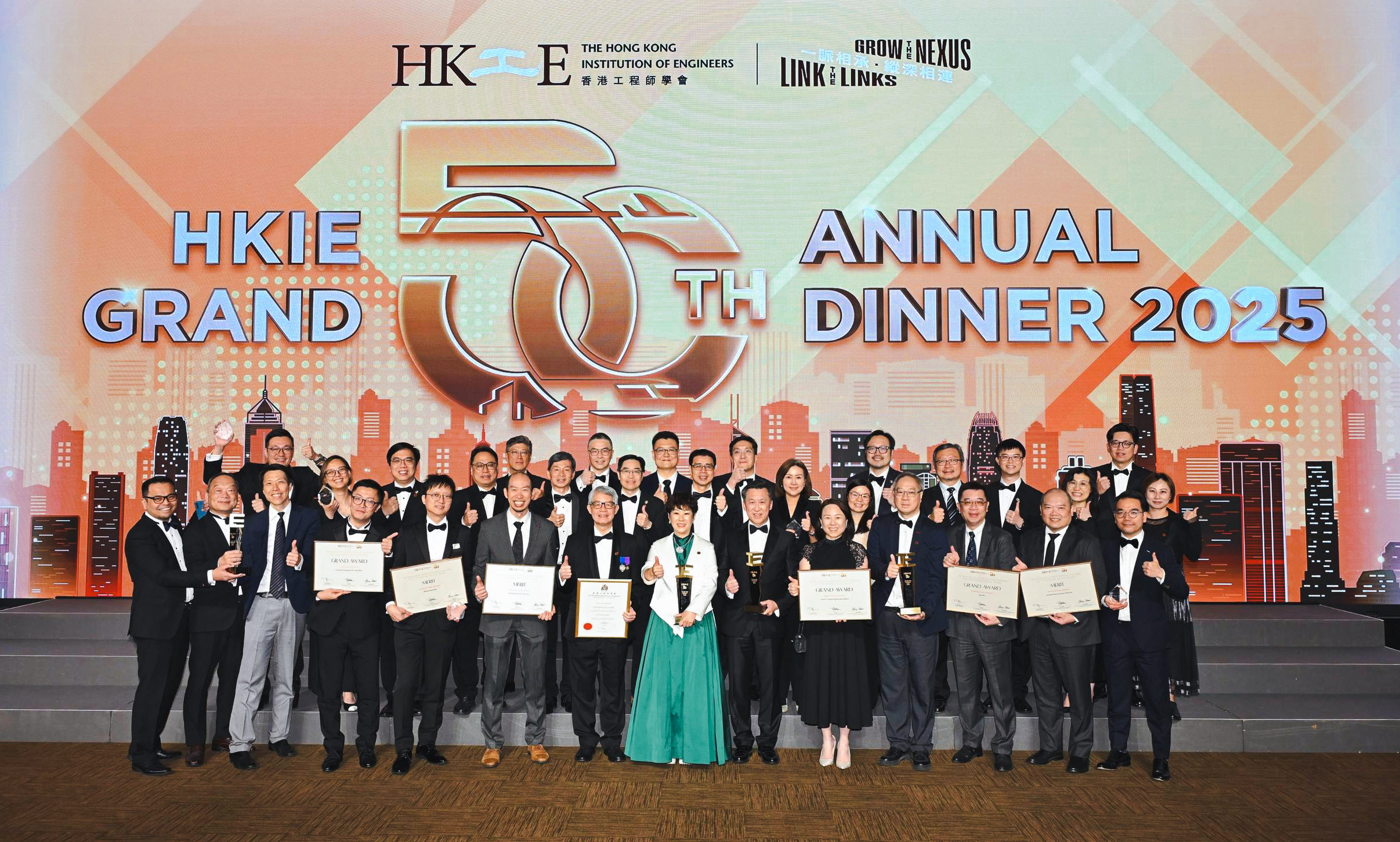
HONG KONG SAR – Media OutReach Newswire – 8 April 2025 – Arup, a global built environment consultant, has been recognised with eight awards at The Hong Kong Institution of Engineers (HKIE) 50th Anniversary Legacy Award, including five Grand Awards and three Merit Awards, honouring its continuous contributions to engineering, industry and society in Hong Kong and beyond.

“Since establishing our Hong Kong office in 1976, Arup has transformed the cityscape through our multidisciplinary expertise, from strategic planning and iconic buildings to critical infrastructure and cultural hubs. These accolades reaffirm our decades of commitment to advancing the city’s progress and contributing to its sustainable development.”

– Theresa Yeung, Managing Principal, East Asia

Fire Engineering Approach for Large Spaces
Grand Award in Innovation category

In the early 2000s, Arup pioneered a revolutionary fire safety solution for large atria by combining long-throw sprinklers with infra-red flame detectors. First implemented at Langham Place and International Commerce Centre, this innovative approach transformed how architects and engineers address fire safety in expansive areas. The system’s success has enabled the creation of iconic spaces in Hong Kong, from shopping malls to airport terminals, while maintaining both aesthetics and functional integrity. It has also set a new standard for fire safety engineering in Hong Kong.

HSBC Data Centre
Grand Award in Industrial category

The HSBC Data Centre in Tseung Kwan O marked a milestone in Hong Kong’s digital infrastructure development. As Asia’s largest data centre when completed in 2008, it pioneered new standards in security, reliability, and sustainability. The facility processes transactions for HSBC operations across 30 countries, strengthening Hong Kong’s position as a global financial hub. Its groundbreaking Tier III+ design, with capability for Tier IV upgrade, set new benchmarks for data centre development. The project’s innovative features, from advanced security systems to sustainable design elements, continue to influence data centre construction worldwide.

Stonecutters Bridge
Grand Award in Infrastructure category

With the world’s tallest freestanding monopole towers and 1,018m cable-stayed span, Stonecutters Bridge stands as an icon of Hong Kong’s engineering excellence. Commissioned in 2009, it features unprecedented innovations including the most extensive use of structural stainless-steel skin globally in the upper portion of the bridge towers. The bridge serves as a vital link in Route 8, connecting the bustling Kwai Chung Container Terminals to Hong Kong’s transport network. Its elegant design and technical innovations have earned numerous international awards, while its dramatic presence has become an exemplar showcase of Hong Kong’s world-class infrastructure.

Terminal 1, Hong Kong International Airport
Grand Award in Infrastructure category

Hong Kong International Airport Terminal 1 has revolutionised airport design with its iconic barrel-vaulted roof structure, creating one of the world’s most efficient and passenger-friendly airports. The innovative design features 129 parallel vaults spanning 36m each, creating vast column-free spaces flooded with natural light. Since its 1998 opening, the terminal has grown from handling 35 million to over 50 million passengers annually, showcasing its remarkable adaptability. The terminal’s enduring success and consistent ranking among the world’s best airports demonstrate how innovative engineering can create sustainable, efficient, and beautiful transportation hubs.

West Rail
Grand Award in Infrastructure category

The West Rail Line has enhanced connectivity in Hong Kong’s New Territories, with the Yuen Long Section standing as its most impressive achievement. This 7.6km section features Hong Kong’s most extensive elevated rail viaduct and three major stations. Its groundbreaking noise control system achieved unprecedented 24dBA reduction, setting new global standards for urban railways. The project’s sophisticated integration of infrastructure with community needs, particularly at the 480m-long Tin Shui Wai Station, demonstrates how innovative engineering can enhance urban development while protecting community well-being.

Two other influential projects where Arup played a key role – Kai Tak Sports Park and the Hong Kong Section of Guangzhou-Shenzhen-Hong Kong Express Rail Link – also received Grand Awards.

Other winning projects include:

  • Admiralty Station extension – Merit Award in Infrastructure category
  • Hong Kong West Drainage Tunnel – Merit Award in Infrastructure category
  • Shenzhen Bay Bridge – Merit Award in Infrastructure category

In addition, Ir Dr Andrew Chan, former Chair of Arup Group’s Trustee Board, was bestowed with the HKIE Honorary Fellow title for his remarkable contribution to the HKIE, engineering industry and society.

The HKIE 50th Anniversary Legacy Award is designed to celebrate outstanding engineering projects, groundbreaking technologies, and transformative initiatives that have made a lasting impact on the engineering landscape, industry and society of Hong Kong and across the globe over the past five decades.
Hashtag: #Arup

The issuer is solely responsible for the content of this announcement.

About Arup

Dedicated to sustainable development, Arup is a collective of 18,000 designers, advisors and experts working across 140 countries. Founded to strive for humanity and excellence in everything that we do, we collaborate with our clients and partners, using imagination, technology, and rigour to shape a better world.

Advertisement

Media OutReach

SIM and the True Worth of Education: Beyond Tuition Fees

Published

on

SINGAPORE – Media OutReach Newswire – 7 December 2025 – As Singaporean families plan for higher education, tuition costs often dominate the conversation. However, the more critical consideration lies in understanding the relationship between cost and value. This article provides an in-depth understanding of the financial implications of pursuing studies at local public universities, private institutions such as SIM, and overseas universities, while highlighting SIM’s distinctive proposition that extends beyond competitive pricing.

Local Public Universities: Affordable and Prestigious

Singapore’s autonomous universities remain among the most cost-effective options for Singapore citizens, thanks to the Ministry of Education’s Tuition Grant. For example, undergraduate programs at NUS and NTU cost around S$8,250 per year for Singaporeans, while SMU averages S$11,500 annually. Other institutions such as SUTD, SUSS and SIT fall within similar ranges, typically between S$8,000 and S$13,500 per year. Over a three- to four-year degree, this translates to roughly S$25,000 to $54,000 in tuition fees.

The autonomous universities offer strong reputations and excellent graduate outcomes, but entry to some programme is highly competitive, and program flexibility may be limited compared to private or overseas options.

Overseas Universities: Prestige Comes at a Price

For families considering an overseas education, costs escalate dramatically. Tuition at U.S. private universities averages US$50,000 to US$60,000 per year (about S$70,000 to S$84,000), with living expenses adding another US$10,000 to US$15,000 annually. In the UK, fees range from £10,000 to £38,000 per year (approximately S$17,000 to $65,000), while Canada and Australia typically charge S$14,000 to $28,000 for tuition alone. Factoring in accommodation, travel, and insurance, a four-year overseas degree can easily exceed S$150,000.

While these programs offer prestige and cultural immersion, they also involve significant financial, visa, and lifestyle considerations.

SIM Global Education: International Degrees at Local Cost

SIM offers a compelling alternative for students seeking global credentials without the high cost of studying abroad. Through partnerships with leading universities from the UK, Australia, the U.S., Canada, and Europe, SIM delivers more than 140 programs in Singapore, allowing students to earn internationally recognized degrees, essentially the same degree if you studied overseas, but locally at SIM. Tuition fees vary by program, for example, a University of London BSc ranges from S$26,685 to S$42,835, a University of Birmingham top-up degree costs S$42,000 to S$57,100, and a degree from the University at Buffalo falls between S$41,700 and S$74,600 for Singaporeans.

Beyond competitive pricing, SIM emphasizes value. Degrees are awarded by partner universities and aligned with global academic standards. The institution holds EduTrust Star certification and ISO accreditation, ensuring the best quality assurance. Students benefit from bond-free scholarships and bursaries, as well as Career Connect services that provide internships, mentoring, and employer networking. Graduate outcomes are strong, with nearly 80% of SIM graduates securing employment within six months of graduation.

Why Value Matters as Much as Cost

Choosing a degree isn’t just about tuition fees, it’s about the total investment, which includes living costs, global recognition, and career outcomes. Local autonomous universities such as NUS, NTU, and SMU remain highly attractive for their subsidized fees and strong reputations, making them one of the most cost-effective options for Singaporeans. However, entry is competitive, and program flexibility may be limited.

On the other end of the spectrum, overseas universities offer prestige and cultural immersion but often come with six-figure costs and additional living expenses. This is where SIM provides a strategic middle ground, delivering internationally recognized degrees from leading global universities at local cost. Students gain access to global curricula, industry-ready skills, and career networks without the financial burden of relocating overseas. For families seeking international exposure at sustainable costs, SIM combines affordability with the value of global education

References:

  1. NUS Fees for Undergraduate Programmes – https://www.nus.edu.sg/registrar/docs/info/administrative-policies-procedures/ugtuitioncurrent.pdf
  2. NTU Fees for Undergraduate Programmes – https://www.ntu.edu.sg/docs/default-source/onestop@sac/2025/tuition-fees-ft-ay2025_12mar25.pdf?sfvrsn=b8c5474_1
  3. SMU Fees for Undergraduate Programmes – https://admissions.smu.edu.sg/financial-matters/tuition-fees-grant
  4. SUTD Fees for Undergraduate Programmes – https://www.sutd.edu.sg/admissions/undergraduate/education-expenses/fees/tuition-fees/
  5. SUSS Fees for Undergraduate Programmes – https://www.suss.edu.sg/admissions/financial-matters/tuition-fee-subsidy/full-time-undergraduate
  6. SIT Fees from Undergraduate Programmes – https://www.suss.edu.sg/admissions/financial-matters/tuition-fee-subsidy/full-time-undergraduate
  7. Comparison of Tuition Fees in US, UK, Canada and Australia – https://uninist.com/blog/financial-planning/comparison-of-tuition-fees-guide
  8. How much does college cost in 2025 – https://research.com/universities-colleges/how-much-does-college-cost
  9. Price of attending undergraduate institutions – https://nces.ed.gov/programs/coe/indicator/cua
  10. University of London Bachelor Degree – https://www.sim.edu.sg/degrees-diplomas/programmes/programme-listing?academic=2%7C&programmetype=1%7C3&university=1%7C
  11. University of Brimingham Bachelor Degree – https://www.sim.edu.sg/degrees-diplomas/programmes/programme-listing?academic=2%7C&programmetype=1%7C3&university=10%7C

Hashtag: #SIMGlobalEducation #SIMGE #GlobalEducation #InternationalDegree #CareerReady #FutureSkills

The issuer is solely responsible for the content of this announcement.

About SIM Global Education

SIM Global Education (SIM GE) is a leading private education institution in Singapore and the region. We offer more than 140 academic programmes ranging from diplomas and graduate diploma programmes to bachelor’s and master’s degree programmes with some of the world’s most reputable universities from Australia, Canada, Europe, United Kingdom, and the United States. SIM GE’s cohort is made up of 16,000 full- and part-time students and adult learners, of which approximately 36% are international students hailing from over 50 countries.

SIM GE’s holistic learning approach and culturally diverse learning environment aim to equip students with knowledge, industry skills and employability competencies, as well as a global perspective to succeed as future leaders in a fast-changing, technologically driven world.

For more information on SIM Global Education, visit sim.edu.sg

Continue Reading

Media OutReach

A-Level vs Polytechnic: Understanding different pathways offer competitive edge at SIM

Published

on

SINGAPORE – Media OutReach Newswire – 6 December 2025 – Singapore’s education system offers two popular tertiary pathways after post-secondary, A-Levels through Junior Colleges and Polytechnic diplomas. Both leading to higher education but differ in focus. A-Levels are academically rigorous and theory-driven, preparing students for university through subject-based learning over two years at junior colleges or three years at Millennia Institute.

Conversely, Polytechnic programmes emphasize applied learning, incorporating projects and industry attachments, and culminate in a diploma after three years. Understanding how these distinct approaches translate into admission considerations at SIM, one of Singapore’s leading private education institutions, is essential.

For students and parents, evaluating these options is critical to determining which pathway offers the greatest advantage in today’s competitive education landscape.

Applying with A-Levels

For students who have completed A-Levels, SIM requires applicants to meet the academic and English language criteria specified for each degree programme. According to SIM’s admissions process, candidates must submit their GCE A-Level certificates and transcripts along with other supporting documents. Entry is subject to programme-specific requirements set by SIM and its universities partner from Australia, Canada, Europe, the United Kingdom, and the United States. This pathway allows applicants to begin their degree studies immediately after junior college, provided they meet the specific entry requirements for their chosen programme.

Applying with a Polytechnic Diploma

Polytechnic graduates may be eligible for advanced standing and credit exemptions when applying to SIM’s degree programmes. The amount of exemption depends on the relevance of the diploma and the chosen degree. For example, IT-related diplomas from local polytechnics can receive up to two years of credit exemptions for certain programmes, such as those offered by the University of Wollongong, provided the applicant meets GPA requirements (typically 2.0 or above). Other diplomas may receive partial exemptions on a case-by-case basis. These exemptions reduce both time and cost, making SIM an attractive option for Polytechnic graduates who want to build on their applied learning experience.

Why It Matters

According to the Ministry of Education (MOE) statistics in 2021, roughly one in three Polytechnic graduates progress to local autonomous universities, compared to about four in five A‑Level and International Baccalaureate graduates. This gap underscores the importance of additional pathways such as SIM, which enable Polytechnic graduates to earn globally recognised degrees and expand their career prospects.

Student Stories: Two Potential Paths to Success at SIM

At SIM, students have the flexibility to shape their academic journey based on their background and career goals. For some, it’s about gaining a head start; for others, it’s about leveraging credit exemptions to fast-track progress. Ashley Ong and Violet Weng exemplify these two pathways, each leading to success in its own way.

Ashley Ong, an A-Level graduate, chose to begin her degree journey with the University at Buffalo Bachelor of Science in Business Administration. She embraced every opportunity SIM offered such as internships, hackathons, and networking events, building practical skills and global perspectives that prepared her for a competitive business world.

Meanwhile, Violet Weng, a Singapore Polytechnic graduate, opted for a different approach. While pursuing her RMIT Bachelor of Business (Economics and Finance), Violet leveraged SIM’s credit exemptions to shorten her study duration and reduce costs, all while working full-time. This flexibility allowed her to balance work and study, accelerate graduation, and advance her career without compromise.

Both stories highlight SIM’s commitment to offering customized pathways for students whether you’re starting fresh or building on prior learning.

Conclusion

Whether you come from an academic route like A-Levels or an applied learning path through Polytechnic, the journey to a degree can look very different. A-Level graduates often enjoy a head start with direct entry, while Polytechnic graduates benefit from credit exemptions that recognize their practical skills. Both pathways reflect Singapore’s evolving education landscape where flexibility and global opportunities matter more than ever.

References:

  1. MOE Post-Secondary – https://www.moe.gov.sg/post-secondary/
  2. SIM Application Process – https://www.sim.edu.sg/degrees-diplomas/admissions/application-process
  3. SIM-UOW Credit Exemption Table – https://www.sim.edu.sg/getmedia/9c0ad90d-5910-4d47-b044-f815188a4b16/sim002856.pdf
  4. MOE Education Statistics Digest – https://www.moe.gov.sg/about-us/publications/education-statistics-digest
  5. Polytechnic graduates progression and subsidies for PEIs – https://www.moe.gov.sg/news/parliamentary-replies/20210510-polytechnic-graduates-progression-and-subsidies-for-peis
  6. askST: How many uni places are there for Singaporeans? Is there a quota for poly grads? – https://www.straitstimes.com/singapore/how-many-uni-places-for-locals-any-quota-for-poly-grads
  7. How 6 internships, 4 hackathons, and CCAs paved the way for Ashley – https://www.sim.edu.sg/articles-inspirations/how-6-internships-4-hackathons-and-ccas-paved-the-way-for-ashley
  8. How this graduate pivoted her career by pursuing a degree while working full time – https://www.sim.edu.sg/articles-inspirations/how-this-graduate-pivoted-her-career-by-pursuing-a-degree-while-working-full-time

Hashtag: #SIMGlobalEducation #SIMGE

The issuer is solely responsible for the content of this announcement.

About SIM Global Education

SIM Global Education (SIM GE) is a leading private education institution in Singapore and the region. We offer more than 140 academic programmes ranging from diplomas and graduate diploma programmes to bachelor’s and master’s degree programmes with some of the world’s most reputable universities from Australia, Canada, Europe, United Kingdom, and the United States. SIM GE’s cohort is made up of 16,000 full- and part-time students and adult learners, of which approximately 36% are international students hailing from over 50 countries.

SIM GE’s holistic learning approach and culturally diverse learning environment aim to equip students with knowledge, industry skills and employability competencies, as well as a global perspective to succeed as future leaders in a fast-changing, technologically driven world.

For more information on SIM Global Education, visit sim.edu.sg

Continue Reading

Media OutReach

K. Wah Group Donates Additional HK$12.07 Million for Tai Po Recovery

Published

on

Chairman Mr. Francis Lui Urges Public to Turn Compassion into Action and Vote 7 December

HONG KONG SAR – Wechat: 嘉华集团 K. Wah Group

The issuer is solely responsible for the content of this announcement.

About K. Wah Group

K. Wah Group was founded in 1955 by Dr. Lui Che Woo and has since grown into a diversified multinational corporation. Its core businesses span property development and investment, integrated resort and entertainment, hospitality, and construction materials.

The Group has a strong presence in Mainland China, Hong Kong, Macau, Southeast Asia, and key international markets. Its major subsidiaries include two Hong Kong-listed flagships: K. Wah International Holdings Limited (HKEX: 00173), focused on premium property development and investment; and Galaxy Entertainment Group Limited (HKEX: 00027), a constituent of the Hang Seng Index and a leading gaming and entertainment operator in Macau. Other key members of the Group include Stanford Hotels International and K. Wah Construction Materials Limited. Today, K. Wah Group comprises over 200 subsidiaries worldwide.

Website:

Continue Reading

Trending

