Economy
PETROAN Demands Cut in Petrol Prices as Crude Falls Below $80
By Adedapo Adesanya
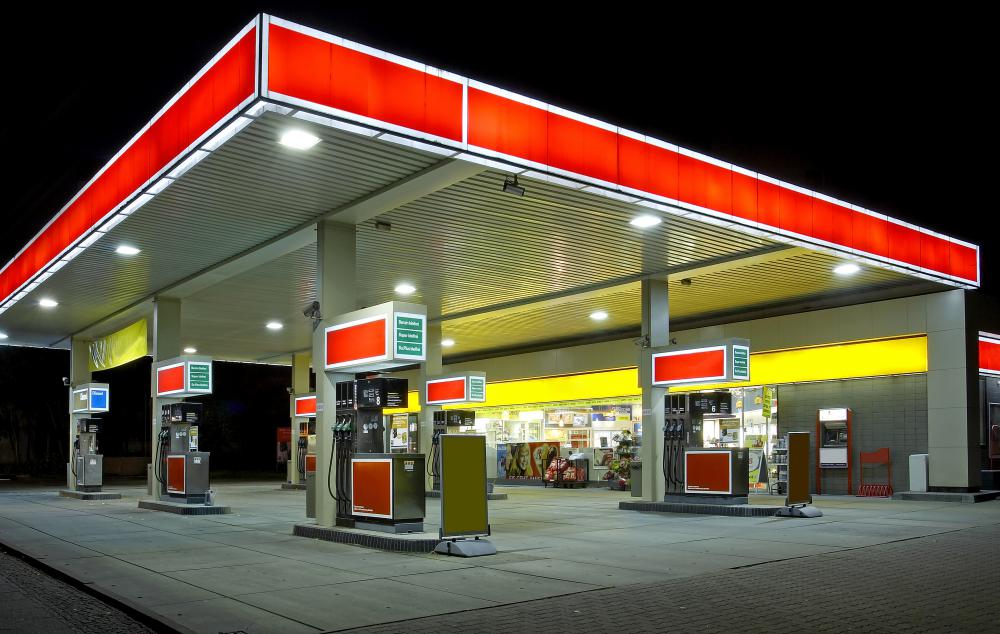
The Petroleum Products Retail Outlets Owners Association of Nigeria (PETROAN) has called for an immediate reduction in ex-depot and retail pump prices of petroleum products, as global oil prices dropped below $80 per barrel.
The association’s National President, Mr Billy Gillis-Harry, made the call in a statement signed by PETROAN’s National Public Relations Officer, Mr Joseph Obele.
According to Mr Gillis-Harry, the downward movement in international crude oil prices presents an opportunity for stakeholders in the downstream petroleum sector to pass on the benefits of lower crude costs to Nigerian consumers.
He stressed that prevailing market conditions should be reflected in both ex-depot and retail pump prices to ensure fairness and provide economic relief to Nigerians.
“The recent drop in global crude oil prices offers an opportunity for stakeholders in the downstream petroleum sector to pass the savings on lower crude costs to Nigerian consumers,” he said.
He added that “market realities should be reflected in both ex-depot and retail pump prices in the interest of fairness and economic relief for the public.”
The PETROAN president noted that Brent crude oil prices have fallen to about $77–$78 per barrel following the ceasefire agreement between the United States and Iran and expectations of a gradual normalisation of oil exports through the Strait of Hormuz.
He said market analysts currently project Brent crude to trade between $75 and $82 per barrel next week, while West Texas Intermediate (WTI) crude is expected to remain within the $72 to $79 per barrel range.
Mr Gillis-Harry attributed the decline in crude oil prices to the continued implementation of the U.S.-Iran peace agreement, increased crude exports from the Middle East and concerns over weaker global oil demand.
While acknowledging that fresh supply disruptions, a breakdown in peace negotiations or unexpected production cuts by the Organisation of Petroleum Exporting Countries (OPEC) and its allies could trigger price increases, he maintained that the current outlook for the oil market remains relatively stable to bearish.
The PETROAN president also expressed concern that the landing cost of imported petroleum products appears, in some cases, to be lower than the prices offered by domestic refiners.
“According to him, this development is surprising and underscores the need for a more competitive downstream petroleum market that guarantees consumers access to the most affordable products available,” the statement said.
To address the situation, Mr Gillis-Harry urged the Nigerian Midstream and Downstream Petroleum Regulatory Authority (NMDPRA) to continue issuing import licences to qualified marketers.
He explained that “increased competition among suppliers would help moderate prices, discourage monopolistic tendencies, and ensure a steady supply of petroleum products across the country.”
The PETROAN president maintained that competition remains critical to achieving efficiency and consumer protection in the sector.
“Competition remains one of the most effective mechanisms for driving efficiency, reducing costs, and protecting consumers,” he said.
He added that a competitive market environment would encourage all market participants to review their prices downward in line with prevailing market realities.
PETROAN further called on the Group Chief Executive Officer of the Nigerian National Petroleum Company (NNPC) Limited, Mr Bayo Ojulari, to facilitate discussions with two Chinese firms that have expressed interest in operating the Port Harcourt and Warri refineries.
Mr Gillis-Harry said the successful revival and operation of the facilities under private-sector management could further drive down petroleum product prices.
“If these refineries are successfully revived and operated as private-sector-driven facilities, petroleum product prices are expected to decline further due to improved efficiency and increased domestic refining capacity,” he said.
He noted that the resumption of operations at the Port Harcourt and Warri refineries under competent private management would enhance supply stability, promote healthy competition and ultimately make petroleum products more affordable for Nigerians.
The PETROAN president added that sustained moderation in crude oil prices, combined with stable exchange rates and refining costs, should support lower petrol prices and provide relief to consumers and businesses grappling with economic challenges.
Economy
Crude Oil Down 2% as Inflation Fears Eclipse Middle East Risks
By Adedapo Adesanya
Crude oil slid about 2 per cent on Thursday amid worries that rising inflation and other economic concerns could weigh on global oil demand despite fresh Middle East tensions.
Brent futures fell by $1.72 or 2.2 per cent to settle at $76.30 a barrel, while the US West Texas Intermediate (WTI) crude went down by $1.44 or 2.0 per cent to $72.08 per barrel.
Iranian armed forces launched attacks on US military infrastructure in Gulf states on Thursday following America’s strikes on its southern coastal and eastern provinces, further straining a three-week-old ceasefire agreement.
This adds to continued supply constraints as the US-Iran conflict has delayed the full reopening of the Strait of Hormuz, where about 20 per cent of global oil supplies passed through the strait before the war.
On Thursday, only one tanker reportedly moved along the waterway, and it was a sanctioned Very Large Crude Carrier (VLCC) that passed along the Iran-controlled route along with an Iranian container ship.
According to Bloomberg, around 14 commodity-carrying vessels had traversed the Strait of Hormuz on Wednesday. In the past three weeks, following the ceasefire deal, the strait saw an average of 34 tanker crossings per day, peaking at 59 on June 24, data from Kpler showed.
Axios reported that the US Administration believes it has more room for escalation as millions of barrels of oil have managed to exit the Strait of Hormuz in recent weeks, easing concerns about oil price spikes.
Qatar, which has often mediated between the US and its adversaries, including Iran, condemned attacks on commercial shipping and called for a return to diplomacy. The foreign ministers of Turkey and Oman also stressed the need to avoid further military escalation in calls with their Iranian counterpart, Mr Abbas Araqchi.
Minutes of the US Federal Reserve’s June 16 to 17 meeting showed policymakers’ concerns about inflation mounted last month. When the US central bank boosts interest rates to keep inflation in check, it can reduce economic growth and cut oil demand.
In China, the world’s second-biggest economy behind the US, producer price inflation surged in June to its highest level in four years, piling pressure on manufacturers’ profit margins as weak domestic demand limited pricing power.
Economy
ExxonMobil Plans $1bn Investment to Boost Nigeria’s Oil Output by 40,000bpd
By Adedapo Adesanya
The Nigerian Upstream Petroleum Regulatory Commission (NUPRC) has disclosed that ExxonMobil and its partners have committed $1 billion to on-block activities for the Usan Infill project in oil mining lease (OML) 138, a development expected to add 40,000 barrels per day of oil production.
According to a statement by NUPRC spokesperson, Mr Eniola Akinkuotu, the managing director of ExxonMobil affiliates in Nigeria, Mr Jagir Baxir, announced the investment commitment at the ongoing 2026 NOG Energy Week Conference on Tuesday.
Mr Akinkuotu said the investment is expected to add 40,000 barrels per day as Nigeria seeks to attract new upstream investment and raise crude oil production through the development of offshore and onshore assets.
“Esso Exploration and Production is the operator of OML 138, which contains the Usan field. The block is operated under a Production Sharing Contract with NNPC Limited,” he said.
“Co-venture partners in OML 138 include Chevron, TotalEnergies, and Nexen, a wholly owned subsidiary of CNOOC.
“As a short-cycle investment, the project is expected to sustain and increase production from the Usan field, with first production within 18 months after the seismic data identified the investment opportunity.”
Also, the chief executive of NUPRC, Mrs Oritsemyiwa Eyesan, said the announcement was particularly important because Esso Exploration and Production Nigeria – ExxonMobil’s affiliate – had not undertaken any drilling operation since 2016.
“With Esso’s last drilling operation dating back to 2016, the resumption of drilling signals renewed potential and value in our deep water acreage,” she said, noting that her organisation remains steadfast in advancing Nigeria’s portfolio of deep water projects.
She noted that the projects are critical to meeting the country’s production targets, boosting oil and gas reserves, sustaining government revenue, and strengthening investor confidence.
According to the statement, the NUPRC presented petroleum prospecting licences (PPLs) from the successful conclusion of the 2022/2023 mini bid round and the Nigeria 2024 licensing round.
“Some of the companies that were presented with their awards at the venue include: Broron Energy Limited (PPL 2009), Petroli Energy Marketing and Supply Limited (PPL 269), Sahara Deepwater Resources Limited (PPL 270 and PPL 271) and Tulcan Energy E&P Co (PPL 2008),” NUPRC said.
The commission said execution ceremonies for companies whose representatives were absent would be held at later dates agreed upon by both parties.
According to the NUPRC, the exercise covers 12 successful awardees across 19 PPLs, spanning a balanced mix of deep offshore, shallow water and continental shelf acreages.
The commission said the portfolio reflects the wide range of investment opportunities offered through the licensing rounds.
NUPRC described the awards as another major milestone in Nigeria’s ongoing drive to attract investment into the upstream petroleum sector.
The commission added that the awards would help accelerate exploration activities, expand the country’s hydrocarbon reserves, and generate long-term value for the Nigerian economy.
Economy
NNPC Signs Six Strategic Gas Deals to Boost Industrial Growth
By Adedapo Adesanya
The Nigerian National Petroleum Company (NNPC) Limited has announced the signing of six strategic agreements with key partners, ranging from Memorandum of Understanding (MoU), Gas Supply Agreement (GSA) and other gas transportation deals, marking a significant milestone in Nigeria’s journey towards industrial revitalisation and enhanced energy security.
The agreements, executed on the sidelines of the ongoing 25th NOG Energy Week in Abuja on Tuesday, include: an MoU with Ajaokuta Steel Company Limited, ASCL; a Gas Sale Aggregation Agreement with Ajaokuta Steel Company Limited; a GSA with UTM FLNG; a Network Entry Agreement with Chevron Nigeria Limited; a Network Entry Agreement with AGPC, and a Network Entry Agreement with NNPC Exploration & Production Limited.
According to the chief executive of the NNPC, Mr Bayo Ojulari, the agreements underscore the state oil company’s commitment to advancing the federal government’s gas-based industrialisation agenda, driving sustainable economic growth and enhancing Nigeria’s energy security.
“What we are witnessing today is not just about signing agreements. It is about igniting the engine of Nigeria’s industrialisation. Gas is the key. It is a source of revenue and profit. It is also the only product that can have that level of industrial impact on Nigeria, more than any other hydrocarbon,” Mr Ojulari stated.
He particularly described the agreements as a testament to NNPC’s shared commitment to transparency, efficiency, and a standardised framework for Nationwide gas utilisation, which will unlock new supply capacity for the domestic market and solidify the role of gas as a catalyst for economic transformation.
Mr Ojulari noted that the agreements signal a new era of strategic partnerships that will drive local content, enhance energy security and accelerate Nigeria’s journey towards becoming a global industrial powerhouse.
He described NNPC as the partner of choice. “We are on a journey, even as we look forward to greater collaboration with industry partners.”
A cornerstone of the signing ceremony was the agreement with Ajaokuta Steel Company Limited. In the MoU, NNPC and ASCL committed to extend collaboration beyond gas supply, aiming to catalyse the production of raw materials for oil and gas pipes, a critical enabler for major infrastructure projects such as the African- Atlantic Gas Pipeline and the Escravos -Lagos Pipeline System (ELPS).
The MoU is anchored on two major pillars: the revitalisation of the Ajaokuta Steel Complex and the expansion of domestic gas utilisation through the Nigerian Gas Transportation Network Code.
This was complemented by the execution of a 20-year Gas Sale and Aggregation Agreement between NNPC E&P Limited, Gas Aggregation Company of Nigeria Ltd/Gte and ASCL.
This agreement will see the supply of 3MMscf/d of Firm Contract Volumes and 47MMscf/d of Interruptible Contract Volumes to be used as feedstock for the power plant servicing the steel complex.
NNPC Ltd/Seplat JV also took a major step towards commercialising Nigeria’s vast natural gas resources by signing a 15-year Wet Gas Sale and Purchase Agreement WGSPA between the NNPC Ltd/Seplat Energy Producing Nigeria Unlimited Joint Venture and UTM FLNG Limited.
Under the agreement, the Joint Venture will supply 200 million standard cubic feet of gas per day (MMscf/d) to the UTM Floating LNG project, providing the long-term feedgas certainty required to support financing and position the project for a Final Investment Decision (FID) in the fourth quarter of 2026.
Further demonstrating its commitment to a regulated and efficient gas market, NNPC announced the successful migration of legacy interconnection agreements to the new Nigerian Gas Transportation Network Code. This involved the signing of Network Entry Agreements with three major gas producers.
These agreements, signed with Chevron Nigeria Limited, CNL, AGPC, and NEPL, will inject up to 800MMscf/d of natural gas into the domestic transportation network. This will serve Nigeria’s power plants, Gas-Based Industries (GBIs), and industrial clusters, significantly enhancing network connectivity and operational flexibility while improving the security of gas supply.