Connect with us

Media OutReach

2023 VinFuture Special Prize Laureate Prof. Daniel Drucker: Ample room remains for innovation in GLP-1 therapies

Published

on

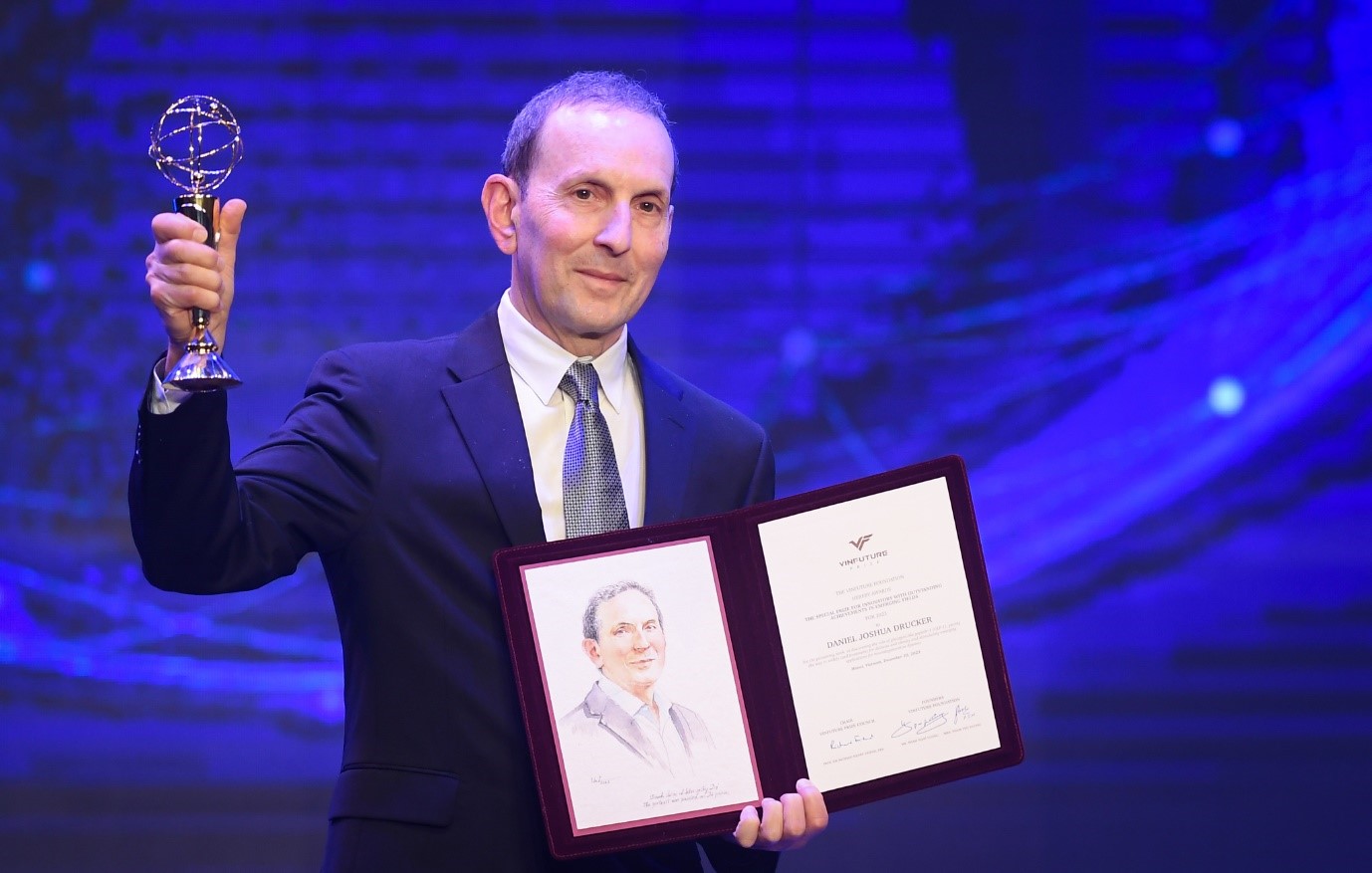
HANOI, VIETNAM – Media OutReach Neswire – 14 April 2025 – Together with world-renowned scientists including Prof. Joel F. Habener, Prof. Jens Juul Holst and Assoc. Prof. Svetlana Mojsov, Prof. Daniel Drucker at the University of Toronto and the Lunenfeld-Tanenbaum Research Institute, has discovered the role of glucagon-like peptide-1 (GLP-1), leading to life-changing therapies for people with diabetes and obesity while stimulating emerging applications for neurodegenerative diseases. This groundbreaking innovation has garnered significant recognition for him and the GLP-1 research group, exemplified by the prestigious 2023 VinFuture Special Prize for Innovators with Outstanding Achievements in Emerging Fields, and the 2025 Breakthrough Prize in Life Sciences, awarded earlier this April.

Prof. Daniel Drucker, 2023 VinFuture Special Prize Laureate for Innovators with Outstanding Achievements in Emerging Fields, continues to receive recognition with the 2025 Breakthrough Prize in Life Sciences

In this interview, he reflects on the impact and influences of the VinFuture Prize on his further research, as well as the challenges and prospects of expanding GLP-1 accessibility. As global scientific recognition continues to evolve, he shares insights into the vital role of initiatives like the VinFuture Prize in inspiring the next generation of scientists.

VinFuture: Recognizing transformative science

The 2023 VinFuture Prize holds the distinction of being the first major international science and technology award to recognize and honor the scientists behind the discovery of the role of GLP-1. Following the VinFuture Prize, the GLP-1 research group has continuously received recognitions with numerous other prestigious accolades, including their listing among the 2024 Time 100 Most Influential People.

Reflecting on this, Prof. Drucker expressed deep appreciation, noting that these awards provide invaluable support in pushing the boundaries of scientific discovery.

As the VinFuture Prize gains prominence, having GLP-1 science acknowledged as a recipient also helps elevate the global understanding of how it can transform healthcare,” he emphasized.

Continuing its commitment to recognizing impactful advancements, the 2024 VinFuture Prize honored innovators in the biomedical field for their development of CAR T-cell therapy for cancer and other diseases. According to Prof. Drucker, this innovation stands as “a remarkable example of how immunological science can revolutionize the treatment of many cancer types.”

With the honoring of AI and CAR T cell therapy, the trends I observe are consistent with other international awards, where similar innovative themes are celebrated around the same time or within a few years. This alignment reinforces the importance of these breakthroughs.” Prof. Drucker commented.

Among the youngest international science-technology awards, now in its fifth year, the VinFuture Prize is steadily establishing its significance and reputation, evidenced by the increasing number of laureates continuing to receive recognition from prestigious international awards, most notably the Nobel Prize. Prominent examples include Dr. Katalin Karikó and Prof. Drew Weissman (Laureates of the 2021 VinFuture Grand Prize and 2023 Nobel Prize in Physiology or Medicine), Dr. Demis Hassabis and Dr. John Jumper (Laureates of the 2022 VinFuture Special Prize and 2024 Nobel Prize in Chemistry), and Prof. Geoffrey Hinton (Laureate of the 2024 VinFuture Grand Prize and 2024 Nobel Prize in Physics).

Despite being a relatively new award, the VinFuture Prize has done an exceptional job of highlighting high-quality science. The recognition of AI, coinciding with its recent recognition by the Nobel Prize, highlights its transformative impact on numerous aspects of society,” Prof. Drucker said. “So I think the VinFuture Prize council really has its finger on the leading edge of science in many areas.”

Beyond diabetes

2024 was a landmark year for GLP-1 research, with several exciting clinical trials demonstrating benefits extending far beyond obesity to include the treatment of patients with heart disease, obstructive sleep apnea, and knee osteoarthritis. Additionally, Prof. Drucker hinted at early promising results for patients with metabolic liver disease and noted ongoing studies exploring GLP-1’s effects on Alzheimer’s disease, with results expected soon.

The continuous wave of new findings will provide deeper insights into the full potential of GLP-1-based therapies.” Prof. Drucker commented, stating that each study will contribute to refining our understanding of this science.

Furthermore, Prof. Drucker highlighted GLP-1’s neurological effects and its potential clinical application in addressing mental health conditions, including anxiety, depression, and compulsive behaviors. He noted that preliminary, early-stage trials with small patient groups investigating GLP-1’s potential in reducing cravings and treating addiction-related disorders have yielded promising initial results.

Several academic research centers are actively studying GLP-1’s effects on substance use disorders, and major pharmaceutical companies such as Eli Lilly and Novo Nordisk have begun clinical trials to explore these applications further.” Prof. Drucker shared, “It will likely take 12 to 18 months before we gain a clearer picture of whether these medicines can be clinically effective in helping individuals reduce or quit substance use.”

Prof. Drucker also highlighted compelling research indicating GLP-1’s interaction with the brain, extends beyond appetite regulation, suggesting a range of potential therapeutic applications.

Ongoing trials are underway in people with substance use disorders, including alcohol, nicotine, cannabinoids, and opioids, conditions for which existing medicines are not always very effective.” He elaborated, “We have trials underway for Alzheimer’s disease with oral semaglutide, which are expected to conclude by the end of 2025. These investigations will significantly enhance our understanding of GLP-1’s neurological impact and potential clinical applications.

Overcome barriers to maximize impact

Despite the global excitement for the “Ozempic era”, there are many challenges hindering the widespread impact for GLP-1 medicines. These include the current high cost and limited accessibility of the treatments, the reliance on primarily two main drug options (semaglutide and tirzepatide), and the practical limitations of refrigeration and pen-based delivery for most formulations, as Prof. Drucker pointed out.

A key priority is the democratization of these treatments so that everyone who could benefit from them has access. To achieve this, we are working on small-molecule pills that are easier to manufacture and should be more affordable.” He explained.

Prof. Drucker anticipated that increased competition in the GLP-1 market will lead to lower prices, development of newer versions that are easier to use, including once-monthly injections, thereby improving accessibility and convenience for millions worldwide.

Most initial launches have occurred in countries with well-established healthcare and reimbursement systems. Only now are we seeing manufacturing capacity expand enough to increase availability, but costs remain a significant barrier.” He stated, emphasizing the critical need to advance these medicines not only to enhance their efficacy in areas like weight loss and cardiovascular health but also to make them more convenient to take, more affordable, and more broadly accessible to patients globally.

Another major challenge that Prof. Drucker identified is determining the appropriate dosage for extending the therapeutic applications of GLP-1 to conditions beyond diabetes and obesity. While the dosage effective for weight loss may not be suitable for other disorders like Parkinson’s, Alzheimer’s, alcohol use disorder, anxiety, or depression, understanding the dose-response relationship for these conditions requires time and further investigation.

Additionally, research is underway to reduce adverse effects, making GLP-1 treatments safer and more comfortable for patients. Prof. Drucker elaborated, “One key strategy is starting patients on very low doses and gradually increasing them to minimize side effects. Additionally, some companies are researching ways to reduce further adverse effects, such as developing co-formulated anti-nausea compounds to improve tolerability.”

Future research for GLP-1 therapies presents numerous possibilities; however, the translation from research to clinical application for neurodegenerative and substance use disorder treatments still presents unmet needs with a lack of evidence for progress. According to Prof. Drucker, with clinical trials underway, they may yield valuable insights within the next 12 to 24 months regarding the potential extension of GLP-1 therapy benefits from glucose control to complex disorders of the central nervous system.

He identified, “The key lies in understanding how to effectively engage the brain, identifying which regions can respond to GLP-1 signaling, and how to optimize that communication.”

In conclusion, Prof. Drucker highlighted the promising contemporary landscape of scientific research, emphasizing the crucial need to inspire the next generation to embrace science and pursue research careers. In this context, the 2023 VinFuture Special Prize Laureate commended the VinFuture Prize for its valuable contribution in motivating individuals within the scientific community and engaging younger generations in science.

When we visited Vietnam, we met with many young scientists, and I was impressed by VinFuture’s strong efforts to inspire and connect with them. I encourage VinFuture to continue and expand these efforts because investing in young talent is the key to a future filled with groundbreaking innovations.” He stated.

Hashtag: #VinFuture

The issuer is solely responsible for the content of this announcement.

VinFuture

The VinFuture Foundation, established on International Human Solidarity Day on December 20th, 2020, is a non-profit organization co-founded by billionaire Mr. Pham Nhat Vuong and his wife, Mrs. Pham Thu Huong. The Foundation’s core activity is awarding the annual VinFuture Prize, which recognizes transformative scientific and technological innovations capable of making significant positive changes in the lives of millions of people worldwide.

The nomination period for the 2025 VinFuture Prize will close at 2:00 PM on April 17, 2025 (Vietnam time, GMT+7). Submit your nominations here: . Outstanding nominators will be honored through the VinFuture Nominator Recognition Program.The VinFuture Prize consists of four prestigious awards presented each year. The most esteemed is the VinFuture Grand Prize, valued at US$3 million, making it one of the largest annual prizes globally. Additionally, there are three Special Prizes, each valued at US$500,000, specifically dedicated to honoring Women Innovators, Innovators from Developing Countries, and Innovators with Outstanding Achievements in Emerging Fields.


Advertisement

Media OutReach

Can Gio Awakens as Ho Chi Minh City’s Next Growth Frontier

Published

on

After decades of quiet, Can Gio is awakening on Vietnam’s southern coast, as fresh investment and grand designs breathe new life into the once-remote district of Saigon.

HO CHI MINH CITY, VIETNAM – Media OutReach Newswire – 27 December 2024 – Six months after the groundbreaking of a 2,870-hectare coastal urban project backed by Vingroup, Vietnam’s largest private conglomerate, Can Gio, once seen as a forgotten corner of Ho Chi Minh City, is now emerging as a new growth engine for Vietnam’s southern metropolis.

Vinhomes Green Paradise: A Hidden Gem Poised to Shine in Vietnam’s Real Estate Market.

Breaking Isolation

For years, Can Gio was often left out of the city’s rapid development. Surrounded by dense forests and accessible mainly by ferry, it remained a world apart. Now, that is beginning to change.

Six months ago, the large-scale land reclamation project officially started construction. Locals call it a “game changer” that awakened a land long left behind. Along the coast that once lay quiet, a vast construction site has emerged, with heavy machinery working day and night. “I was very surprised by the speed,” said Prof. Pham Van Song, president of the Mien Dong University of Technology, noting that hundreds of hectares have already been filled and stabilized within months.

The project, developed by Vingroup through its real estate arm Vinhomes, represents one of the group’s most ambitious coastal developments, part of a long-term vision to extend Ho Chi Minh City’s urban footprint toward the sea. With billions of U.S. dollars in investment, it combines housing, tourism, and modern infrastructure within a single master plan that anchors Can Gio’s transformation.

Complementing this project, a series of major infrastructure works are also reshaping the district. By the end of 2025, the Phu My Hung–Can Gio high-speed railway, designed to reach 350 kilometers per hour, is expected to begin construction, linking the area to the city’s southern urban core. In 2026, the long-awaited Can Gio Bridge will break ground, cutting the journey to the city center to around 45 to 60 minutes.

At the same time, the Rung Sac interchange, with an investment of 3,000 billion VND (about 120 million U.S. dollars), will connect Can Gio directly with the Ben Luc–Long Thanh Expressway. Expected to be completed in 2028, it will link Can Gio with both the Southwest and Southeast regions, including Long Thanh International Airport.

In addition, a sea-crossing expressway between Can Gio and Vung Tau, 50 meters wide and proposed by Vingroup, would stretch across the sea for more than 10 kilometers. The plan envisions a wide eight-lane road that could reduce travel between Can Gio and Vung Tau to under 15 minutes, creating a strategic connection between the two coastal economies.

These efforts fit within a broader regional plan that combines road, rail, water, and sea transport. Another key project is the Can Gio International Transshipment Port, covering 571 hectares with an investment of 50,000 billion VND. The port is designed to become a new symbol of Vietnam’s maritime economy, with its first phase scheduled to begin operations in 2027 and full completion before 2045.

“A Single Project Ignites the South”

According to Prof. Pham Van Song, the rise of Can Gio is a natural development, especially with the involvement of Vingroup through its Vinhomes Green Paradise project. He believes that Can Gio is moving from an ecological area on the fringe of development to a new center of growth. “All modes of transportation will be available in Can Gio,” he said. “The district’s GRDP will grow rapidly in line with ongoing construction and investment. Both the number of residents and visitors will surge. Local people will be the first to directly benefit from these projects, and their lives will become increasingly prosperous.”

The changes are already drawing attention from investors. Dinh Minh Tuan, southern regional director of Batdongsan.com.vn, said the number of searches related to Can Gio has tripled since the beginning of the year. After the Vinhomes Green Paradise project broke ground, property interest in the district doubled again. “Just one single project has heated up the entire southern market,” he said.

Experts say this follows a familiar pattern. In the 1990s, Nguyen Van Linh Boulevard helped turn southern Ho Chi Minh City into a thriving area and drew nearly two million residents. In the 2010s, the completion of the Thu Thiem Tunnel and Bridge attracted more than one million people to the city’s east. “Investors who followed the infrastructure development wave then saw huge gains,” Tuan noted. “Can Gio now stands at a similar starting point, but with a stronger push.”

With a population of about 80,000, Can Gio has long faced a single challenge: lack of connectivity. But, “with the series of large-scale investments now under way, Can Gio is expected to grow faster than many of the city’s earlier new urban areas,” said Tuan.
Hashtag: #Vinhomes

The issuer is solely responsible for the content of this announcement.

Continue Reading

Media OutReach

Z.ai Open-Sources GLM-4.7, a New Generation Large Language Model Built for Real Development Workflows

Published

on

SINGAPORE – Media OutReach Newswire – 26 December 2025 – Z.ai has released GLM-4.7, the latest version of its open-source large language model, ahead of Christmas, as the company steps up efforts to position its models for real-world software development and production use.

The new model is designed around practical engineering workflows, with a focus on long-running task execution, stable tool calling, and multi-step reasoning, capabilities that have become increasingly important as developers deploy large language models in complex, agent-based systems.

Compared with its predecessor, GLM-4.6, GLM-4.7 shows notable gains in code generation, complex reasoning, and agent execution. According to Z.ai, the model delivers more consistent and controllable performance over extended tasks, while producing cleaner and more concise language output, addressing a common weakness in many open-source models.

To evaluate performance in realistic settings, Z.ai tested GLM-4.7 on 100 practical programming tasks in production-like environments such as Claude Code, spanning front-end, back-end, and command-execution scenarios. The company said GLM-4.7 achieved higher task completion rates and greater stability than GLM-4.6, and has since been adopted as the default model for its GLM Coding Plan.

Benchmark results also place GLM-4.7 among the strongest open-source models currently available. It scored 67.5 on BrowseComp and 87.4 on τ²-Bench, the latter marking a new high for open-source systems. In coding-focused evaluations, including SWE-bench Verified and LiveCodeBench v6, its overall performance approaches that of Claude Sonnet 4.5. In Code Arena’s large-scale blind evaluation, which aggregates votes from more than one million comparisons, GLM-4.7 ranked first among open-source models.

The model is available through the BigModel.cn API and has been integrated into Z.ai’s full-stack development platform, according to the company. As open-source models take on a more prominent role in the global technology ecosystem, Z.ai’s progress offers a clear indication of how such systems may continue to evolve, and what they might enable next.

Default Model for Coding Plan: https://z.ai/subscribe
Try it now: https://chat.z.ai/
Weights: https://huggingface.co/zai-org/GLM-4.7
Technical blog: https://z.ai/blog/glm-4.7

Hashtag: #ZAI

The issuer is solely responsible for the content of this announcement.

Continue Reading

Media OutReach

NIA Joins Forces with TAT to Reignite ‘Amazing Thailand’ Through Innovation Power, Transforming Thai Tourism and Leveraging Creativity and Culture to Drive a New Tourism Economy

Published

on

BANGKOK, THAILAND – Media OutReach Newswire – 26 December 2025 – Tourism remains one of the most important engines driving Thailand’s economy. Beyond generating revenue, it plays a vital role in job creation, nation branding, and even influencing investment decisions. However, fostering sustainable growth in the tourism sector is far from straightforward. The industry continues to face multiple challenges, including convenience and accessibility, intensifying competition among destinations worldwide, and changing traveller behaviours — all of which directly affect tourists’ travel decisions.

NIA Joins Forces with TAT to Reignite ‘Amazing Thailand’

Towards the end of this year, Thailand is preparing to reignite global attention with a renewed wave of ‘Amazing Thailand.’ The government and private sector are rolling out a comprehensive set of tourism-stimulus measures that address both economic impact and national image. One of the most talked-about highlights is the appointment of Lalisa ‘Lisa’ Manobal as the new brand ambassador — not only a global-level artist, but also a powerful representation of Thailand’s contemporary image on the world stage.

Another key highlight to watch closely is the launch of the ‘Amazing Thailand Innovation Gadget’ platform, developed through a collaboration between the National Innovation Agency (Public Organisation), or NIA, and the Tourism Authority of Thailand (TAT). This initiative aims to elevate Thailand’s tourism industry into the era of Smart Tourism in a tangible and comprehensive way.

The platform is designed to function as Thailand’s first-ever tourism innovation repository, bringing together tourism-related technologies and solutions in one centralised space. These range from route-planning technologies, accommodation booking systems, and tourist-data management, to experience-creation tools that personalise journeys and enhance engagement. More than a simple innovation directory, the platform represents a turning point — a mechanism that connects entrepreneurs, developers, and creative talents to co-create new ‘Amazing’ experiences, spanning the entire traveller journey from trip planning to the final moment of travel for visitors worldwide.

Learning from Global Leaders Where Tourism Meets Technology

The world has entered an era where tourism is no longer driven solely by beautiful destinations and cultural heritage. Instead, competitiveness increasingly depends on experiences and technology. As a result, many countries are rapidly upgrading their tourism sectors to become smarter, more emotionally engaging, and better aligned with the expectations of modern travellers.

Japan, for example, stands as a model of cultural-innovation integration, leveraging anime, music, cuisine, and fashion as globally recognisable soft power. Recently, the Japanese government has rebooted efforts to fuse cultural roots with advanced technology through initiatives such as Virtual Remix Japan, which enables global audiences to participate in art exhibitions, festivals, and anime worlds in real time via VR and AR. This exemplifies a seamless blend of past and future.

Meanwhile, South Korea has aggressively combined technology and tourism to enhance attractiveness and vibrancy. The country actively promotes start-ups offering cloud-based hotel-management platforms, real-time translation technologies, blockchain services for international tourists, and platforms linking tourism with overseas education. South Korea has also built a tourism ecosystem that integrates smart cities, digital technology, and contemporary culture, using K-pop artists as a major driving force.

In Barcelona, Spain, one of Europe’s leading smart cities, tourism has been elevated through intelligent urban and visitor-experience management. From smart traffic systems and energy-saving public bike services to big-data-driven analysis of tourist behaviour, visitors can plan accommodation, restaurants, and travel routes through a single integrated application. This approach creates a balanced coexistence between tourism and urban life. Together, these examples demonstrate that technology is no longer merely a supporting tool, but the core differentiator in the modern tourism economy.

Amazing Thailand Innovation Gadget: Elevating Thai Tourism Through a Fully Integrated Innovation Ecosystem

NIA and TAT have officially announced a landmark collaboration with the launch of the ‘Amazing Thailand Innovation Gadget’ platform, which serves as Thailand’s first tourism innovation repository. The initiative aims to propel Thai tourism fully into the Smart Tourism era.

The platform aggregates tourism-related technologies and innovative solutions from start-ups and entrepreneurs nationwide, enabling real-world deployment across the entire Thai tourism value chain. Its objective is to build a strong tourism-innovation ecosystem through integrated collaboration across all sectors, while enhancing entrepreneurs’ capacity to apply innovation and technology suited to the specific contexts of different destinations.

This approach is designed to create premium tourism experiences for both domestic and international travellers, delivering sustainable economic and social benefits for Thailand. Importantly, the country will gain a continuously expandable tourism-innovation repository, strengthening long-term competitiveness in the global tourism market.

From Creative Power and Culture to Driving Thailand’s Tourism Economy

Dr. Krithpaka Boonfueng, Executive Director of the National Innovation Agency, stated that the innovations featured on the platform will primarily be Travel Tech-related technologies. The platform is open to start-ups, entrepreneurs, developers, and business partners with the interest and capability to co-create elevated tourism experiences while advancing Thailand’s Smart Tourism ecosystem.

Currently, NIA supports and has incubated more than 80 high-potential tourism-technology start-ups and entrepreneurs, spanning areas such as community-based tourism (Local Alike), hospitality solutions (Ascend Travel), urban mobility (MuvMi), social impact marketplaces (SocialGiver), and backend customer-journey management systems (Appointment Anywhere). These solutions enable entrepreneurs and developers to access tools tailored to their specific contexts.

NIA believes that all stakeholders play a vital role in elevating Thailand’s tourism industry by integrating technology with creativity, culture, and local identity. This integration goes beyond artists, cuisine, or traditional culture, extending into tangible, scalable innovations that create new economic value for local communities.

Thai – Tech – Tourism: A Major Integrated Leap Forward

Dr Krithpaka further noted that tourism is one of the core engines of the global economy, particularly following recovery from the COVID-19 pandemic. According to data from the World Travel & Tourism Council (WTTC), in 2024 the global travel and tourism sector contributed USD 10.9 trillion, or 10% of global GDP, and supported 357 million jobs worldwide.

The United Nations World Tourism Organization (UN Tourism) has emphasised that innovation is a critical driver of economic growth, enabling new business models, attracting investment, and differentiating destinations through unique tourism formats.

Another crucial factor not to be overlooked is the global TravelTech investment ecosystem, which remains robust. In the post-pandemic era, major tourism companies have increased technology investment by an average of 14% in 2024, reflecting strong confidence in technology as a competitive advantage.

Key areas of investment focus include Smarter Retailing and Personalisation, which deliver highly tailored customer experiences; GenAI and Autonomous Agents, next-generation AI capable of analysing, planning, and executing tasks independently — such as automated travel recommendations, trip planning, and booking management; and Sustainability, with growing investment in start-ups that reduce carbon emissions through diverse solutions.

These global trends align closely with the capabilities and diversity of Thai start-ups, positioning Thailand to connect seamlessly with international movements and deliver truly tangible ‘Amazing’ experiences.

NIA stands ready to connect knowledge, technology, and innovation capital across public agencies, private enterprises, and Thai start-ups to drive concrete outcomes in the tourism-innovation ecosystem. This effort extends beyond enhancing tourism businesses; it represents the creation of a future-oriented industry that fuses creativity and culture with technological power.

Through this integrated approach, Thailand aims to elevate economic value, cultural richness, and sustainability — and to advance decisively towards becoming a Global Innovation Tourism Hub in a meaningful and lasting way.
Hashtag: #NIA #NationalInnovationAgency

The issuer is solely responsible for the content of this announcement.

Continue Reading

Trending