Connect with us

Economy

NSIA Grows Nigeria’s Sovereign Wealth Fund by 56% in 13 Years

Published

on

wealth fund profits

By Adedapo Adesanya

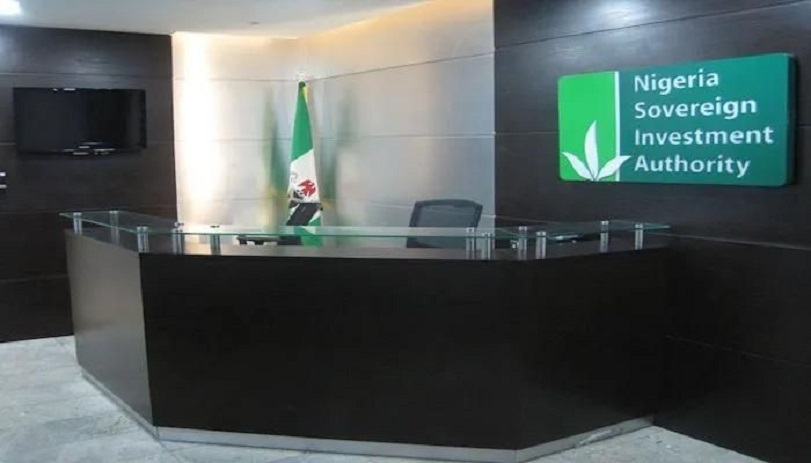
The Nigeria Sovereign Investment Authority (NSIA) has reported that the country’s sovereign wealth fund grew by 56 per cent from an initial $1.82 billion in 2011 to a net asset value of $2.84 billion as of December 2024.

According to a statement, this demonstrated strong financial stewardship and investment strategy over the past decade.

NSIA Managing Director, Mr Aminu Umar-Sadiq, disclosed during a media engagement in Abuja, where he presented the Authority’s 2024 financial earnings stated that the Authority had strategically allocated its assets to safeguard against economic shocks and deliver sustainable returns.

The NSIA documents revealed that total assets increased by 96 per cent from N2.26 trillion in December 2023 to N4.42 trillion in December 2024.

He noted that the growth was driven by higher returns from associates and joint ventures, net gains from collateralized securities, and foreign exchange gains due to Naira depreciation.

“For over a decade, NSIA has successfully executed more than 150 investments across Africa, reinforcing its commitment to regional economic development,” Mr Umar-Sadiq said.

He explained that the NSIA operates three ring-fenced funds: A 20 per cent Stabilisation Fund to support the economy in times of distress, 30 per cent Future Generations Fund, designed for long-term investments, and 50 per cent Nigeria Infrastructure Fund, focused on domestic infrastructure projects.

The Key highlights of NSIA’s 2024 performance include: “Over $500 million committed to domestic Infrastructure, more that $1 billion catalyzed from third-party investors.

“Robust infrastructure portfolio in agriculture, healthcare, and power, Investments in over 50 per cent of locally owned private equity funds, Operating Income: N1.85 trillion, Profit After Tax: N1.89 trillion.

“Total Comprehensive Income: N1.89 trillion, Return on Average Assets: 12.2 per cent and Return on Average Equity: 12.4 per cent.”

The NSIA also announced its phased exit from the fertilizer blending sector, following significant progress since 2017.

From just four operational blending plants at the outset, the number has grown to over 90.

“With the recent removal of the FX ban on imports by the CBN Governor, the sector is now liberalized with vibrant private participation. NSIA’s continued involvement is no longer necessary,” Mr Umar-Sadiq said.

He explained that NSIA’s intervention was always intended as a temporary measure to revitalize the sector. The authority started by fully managing supply chains and operations for blending plants but gradually reduced its involvement as plants became self-sufficient.

“In the next two to three years, we expect a full transition. Our focus was to enable the sector to stand independently—not to remain a permanent player,” he added.

Speaking about the potential impact of US President Donald Trump’s policies on NSIA’s portfolio, Mr Umar-Sadiq emphasized the Authority’s defensive asset allocation strategy.

“Our Stabilisation and Future Generations Funds are designed to protect on the downside. While we may not always maximize gains during market booms, we ensure stability during downturns, which aligns with the savings mandate of our sovereign wealth fund,” he said.


Adedapo Adesanya is a journalist, polymath, and connoisseur of everything art. When he is not writing, he has his nose buried in one of the many books or articles he has bookmarked or simply listening to good music with a bottle of beer or wine. He supports the greatest club in the world, Manchester United F.C.

Advertisement
Click to comment

Leave a Reply

Your email address will not be published. Required fields are marked *

Economy

NBA Demands Suspension of Controversial Tax Laws

Published

on

four tax reform bills

By Modupe Gbadeyanka

The federal government has been asked by the Nigerian Bar Association (NBA) to suspend the implementation of the controversial tax laws.

In a reaction to the tax reform acts, the president of the group, Mr Afam Osigwe (SAN), the suspension of the laws would allow for a proper investigation into allegations of alterations in the gazetted and harmonised copies.

A member of the House of Representatives, Mr Abdussamad Dasuki, alleged that some parts of the laws passed by the parliament were different from the gazetted copy.

To address the issues raised, the NBA said it is “imperative that a comprehensive, open, and transparent investigation be conducted to clarify the circumstances surrounding the enactment of the laws and to restore public confidence in the legislative process.”

“Until these issues are fully examined and resolved, all plans for the implementation of the Tax Reform Acts should be immediately suspended,” the association declared.

It noted that the controversies “raise grave concerns about the integrity, transparency, and credibility of Nigeria’s legislative process.”

“These developments strike at the very heart of constitutional governance and call into question the procedural sanctity that must attend lawmaking in a democratic society,” it noted.

“Legal and policy uncertainty of this magnitude has far-reaching consequences. It unsettles the business environment, erodes investor confidence, and creates unpredictability for individuals, businesses, and institutions required to comply with the law. Such uncertainty is inimical to economic stability and should have no place in a system governed by the rule of law.

“Nigeria’s constitutional democracy demands that laws, especially those with profound economic and social implications, emerge from processes that are transparent, accountable, and beyond reproach. Anything short of this undermines public trust and weakens the foundation upon which lawful governance rests.

“We therefore call on all relevant authorities to act swiftly and responsibly in addressing this controversy, in the overriding interest of constitutional order, economic stability, and the preservation of the rule of law,” the organisation stated.

Continue Reading

Economy

MRS Oil, Two Others Raise NASD Bourse Higher by 0.52%

Published

on

MRS Oil voluntary delisting

By Adedapo Adesanya

Demand for hot stocks, including MRS Oil Plc, buoyed the NASD Over-the-Counter (OTC) Securities Exchange by 0.52 per cent on Tuesday, December 23.

The energy company was one of the three price gainers for the session as it chalked up N19.69 to sell at N216.59 per share versus the previous day’s value of N196.90 per share.

Further, FrieslandCampina Wamco Nigeria Plc gained N2.95 to close at N56.75 per unit versus N53.80 per unit and Golden Capital Plc appreciated by 84 Kobo to N9.29 per share from Monday’s N8.45 per share.

Consequently, the market capitalisation went up by N10.95 billion to N2.125 trillion from N2.125 trillion and the NASD Unlisted Security Index (NSI) rose by 18.31 points to 3,570.37 points from 3,552.06 points.

Yesterday, the NASD bourse recorded a price loser, the Central Securities Clearing System Plc (CSCS), which gave up 17 Kobo to close at N33.70 per unit against the previous trading value of N33.87 per unit.

The volume of securities traded at the session went down by 97.6 per cent to 297,902 units from the previous day’s 12.6 million units, the value of securities decreased by 98.5 per cent to N10.5 million from N713.6 million, and the number of deals remained flat at 32 deals.

By value, Infrastructure Credit Guarantee Company (InfraCredit) Plc ended as the most actively traded stock on a year-to-date basis with 5.8 billion units exchanged for N16.4 billion. This was followed by Okitipupa Plc, which traded 178.9 million units valued at N9.5 billion, and MRS Oil Plc with 36.1 million units worth N4.9 billion.

In terms of volume, also on a year-to-date basis, InfraCredit Plc led the chart with a turnover of 5.8 billion units traded for N16.4 billion. Industrial and General Insurance (IGI) Plc ranked second with 1.2 billion units sold for N420.7 million, while Impresit Bakolori Plc followed with the sale of 536.9 million units valued at N524.9 million.

Continue Reading

Economy

NGX All-Share Index Soars to 153,354.13 points

Published

on

All-Share Index NGX

By Dipo Olowookere

It was another bullish trading session for the Nigerian Exchange (NGX) Limited as it closed higher by 0.59 per cent on Tuesday.

The market further rallied due to continued interest in large and mid-cap stocks on the exchange by investors rebalancing their portfolios for the year-end.

Yesterday, Aluminium Extrusion sustained its upward trajectory after it further appreciated by 9.96 per cent to N14.90, as Austin Laz gained 9.81 per cent to close at N2.91, Custodian Investment improved by 9.69 per cent to N38.50, and First Holdco soared by 9.35 per cent to N50.30.

Conversely, Royal Exchange declined by 7.22 per cent to N1.80, Champion Breweries shrank by 6.57 per cent to N15.65, NASCON lost 5.36 per cent to trade at N105.05, Sovereign Trust Insurance depreciated by 5.28 per cent to N3.77, and Japaul went down by 4.51 per cent to N2.33.

At the close of business, 29 shares ended on the gainers’ table and 27 shares finished on the losers’ log, representing a positive market breadth index and bullish investor sentiment.

This raised the All-Share Index (ASI) by 895.06 points to 153,354.13 points from 152,459.07 points and lifted the market capitalisation by N579 billion to N97.772 trillion from the previous day’s N97.193 trillion.

VFD Group finished the day as the busiest stock after it recorded a turnover of 192.0 million units worth N2.1 billion, GTCO exchanged 63.5 million units valued at N5.6 billion, Access Holdings traded 49.8 million units for N1.0 billion, First Holdco sold 45.8 million units valued at N2.3 billion, and Secure Electronic Technology transacted 38.3 million units worth N28.4 million.

In all, market participants bought and sold 677.4 million units valued at N20.8 billion in 27,589 deals compared with the 451.5 million units worth N13.0 billion traded in 33,327 deals on Monday, showing an improvement in the trading volume and value by 50.03 per cent and 60.00 per cent apiece, and a shortfall in the number of deals by 17.22 per cent.

Continue Reading

Trending