

Brands/Products
Two Wheels, One City: my Life as a Glovo Rider in Abuja

The sun has only just risen when my phone’s alarm pierces the silence of my room in Abuja. It’s 7:00 a.m., the first of six alarms I’ve set: 7:10, 7:30, 8:00, 8:10, 8:30, to ensure I don’t sleep through my morning. I’m the kind of person who could sleep for 24 hours straight, especially when nestling in the quiet of my own space. But the rhythm of my life as a Glovo delivery rider demands otherwise. Time is money in this job, and time waits for no one. So I roll out of bed, shake off the grogginess, and prepare to claim my slot for the day: a 13-hour stretch from 10 a.m. to 11 p.m., during which I’ll drive through Abuja’s streets, delivering food and parcels to customers who place orders on the Glovo app.
My name is Christian Ogbu, and I’m a Lagosian by birth, though Abuja has been my home since late 2020. I spent my first two decades in Lagos. Like any man born to a low-income family, I had to quickly try my hand at informal trade. As an Igbo man, I took up an apprenticeship in a pharmacy. When that didn’t work out after four or five years, I returned to my father’s village in Nsukka, Enugu, where I hoped to recalibrate and find opportunities to settle. But that was short-lived. I’m not a village boy; I’m wired for movement, for the bustle of a city. So, towards the end of 2020, I left for Anambra State, where I chased work that never materialised. I didn’t want to return to Lagos, where I would have to rely on my mum. Instead, I left Anambra for Abuja, where an uncle offered me a place to stay. It was a chance to start over, to find my own “greener pasture”, as I told myself.
Abuja was unkind at first. I took a job as a security guard, arranged by my uncle, but the pay was meagre: hand-to-mouth, barely enough to keep me afloat. Frustration gnawed at me. I wasn’t raised to live in someone else’s shadow, least of all my mother’s, so I refused to return to Lagos. Instead, I struck out on my own, submitting CVs to companies, hoping for something better. My uncle’s refusal to support my job search, denying me his signature and his ID, left me feeling stranded. I was sleeping in someone’s house, but I had no one to lean on. I often took to the streets looking tattered and hungry in search of a job. That’s when I stumbled into dispatch work.
It was a chance encounter with a deliveryman that changed everything. I was hungry, looking rough, but too proud to beg for food. “I just want to work like you,” I told him. He took me to a restaurant called Ants in Mama, which, like many popular restaurants that were adjusting to pandemic restrictions, ran an in-house delivery fleet where they purchased motorcycles and placed drivers on salaries. This was where I got my first taste of food delivery. I didn’t know Abuja then, so I relied on Google Maps to navigate, my phone guiding me through unfamiliar streets. That first job was a trial by fire. The roads were unforgiving, especially where untarred paths and potholes tested my resolve. One day, I spilled a drink in my delivery box, and while rushing to replace it, I crashed into a parked motorcycle. The accident cost me my pay; the company used it to repair the bike. I was sad, but I didn’t give up.
Another courier took pity on me, leading me to somewhere I was hired again. This time, I used the work to learn Abuja’s streets. I’m quick to pick up patterns, a skill honed in Lagos, where I mastered shortcuts that others overlooked. Within months, I knew Abuja like the back of my hand. I started applying to logistics companies and landed a job with a franchise under Speedaf. In my first month, I shattered their delivery record, completing 50 to 60 orders a day when the highest before me was 20. My hard work earned me respect, even if it came with loose ends. There were moments of temptation: demanding extra cash from customers, a practice I later learned was common among delivery riders. When a customer recorded me and reported it, I faced suspension, but my manager, recognising my potential, fought to keep me.
Then I heard about Glovo. It was 2022, and the platform was different: riders worked independently, not under franchises. This means that their earnings were not capped to a monthly salary; instead, one could earn as much as they worked. I scraped together my savings, bought my own motorcycle, and signed up. A mentor told me, “Focus on this work, and you’ll see your earnings.” So I did. I left the other side hustles behind. Glovo requires that drivers book slots to confirm they are available for delivery. If a driver booked a slot, he had to be committed to it. Punctuality became my creed. If I booked a slot, I was there, no excuses. Even when thieves broke into my house, stealing my phone, which was my most important work tool, and money, I didn’t quit. I worked my way back, bought new gear, and kept going.
From scraping by to earning almost a million monthly as a Glovo rider
Glovo’s structure suited me. Unlike franchises, where you’re bound by rigid protocols, Glovo gave me freedom. I could reject deliveries to unsafe areas, like parts of Jahi or Kuje, where rough roads or security risks made riding perilous. Franchises didn’t care about rider safety. If a customer ordered to a dangerous spot, you went or face penalties. I once narrowly escaped a pit while being chased by dogs at night. With Glovo, I could say no, cancel the order, and move on. This autonomy made all the difference. I knew Abuja’s boundaries: where Glovo operated, where it didn’t, and I thrived within them. The app’s clear addresses meant I rarely needed Google Maps; I’d glance at the location, pocket my phone, and ride.
My consistency paid off. Glovo set daily targets: 25 to 30 deliveries to earn a “quest” bonus, and I hit them religiously. Other platforms, like Chowdeck or Mano, cap their targets at 10 to 15 orders a day, I think, but Glovo pushed me. It wasn’t just about the money, though I earn between ₦800,000 and ₦900,000 a month, more than most salaried jobs. After expenses, ₦36,000 for fuel, ₦5,000 for oil changes every seven days, and about ₦7,000 daily for food, I earn enough to live well. But the real reward is the peace of mind, the sense of purpose. Glovo’s challenges became my own; if I fell short of 25 deliveries, it felt like failure. The next day, I’d push harder, determined to meet the mark.
The work is gruelling: 13 hours on the road, six days a week. I take Saturdays off now, a lesson learned after my eyes started twitching from stress and too much caffeine last year. I cut out energy drinks, relying on my own stamina and the occasional biscuit or mineral water to keep me going. Breakfast is a must, but lunch is a luxury; I might not eat until I’m home, late at night, with takeaway in hand. Abuja’s cold nights demand a jumper, something Glovo doesn’t provide, so I layer up to stay warm.
The job has its highs and lows. Customers shape the experience. Some are demanding, insisting I deliver to their doorstep in estates where bikes aren’t allowed, leaving my motorcycle vulnerable to theft or tampering. Others are a joy, especially when they are foreigners, as they are often more polite and appreciative than locals. For example, foreigners who live at high-end hotels, which do not allow couriers to drive in, are often ready to meet me at the gate. “White customers,” as I call them, often stand out for their courtesy, waiting at the gate, thanking me for my effort. Nigerian customers can be hit or miss: some warm, others dismissive, a few outright rude. I once climbed to the fifth floor to deliver to a customer in a wheelchair, moved by their courteous note on the app. The word ‘please’ seems so inconsequential, but it means a lot and can influence how we respond to additional requests of customers. Respect, I’ve learned, is reciprocal. When customers treat me with dignity, I go the extra mile.
Then there are the surveys Glovo sends out, asking about our satisfaction or experiences. They’re alien to many riders, unaccustomed to forms or feedback. But I use them to learn, sometimes Googling terms or asking AI for clarity. These small moments of education, interacting with customers, navigating the app, and engaging with the world, make the job more than just deliveries. It’s exposure, a window into lives I’d never otherwise encounter.
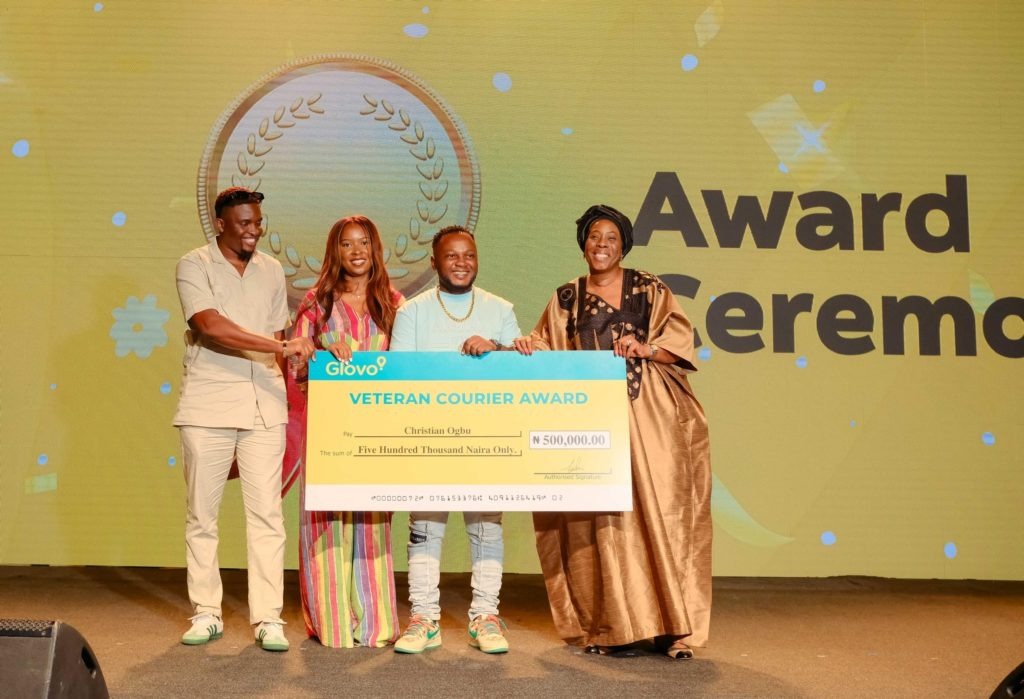
In June 2025, Glovo recognised my efforts. At their summit in Lagos, I was awarded for delivering over 14,000 orders since joining in 2022. They called me a “punctuality champion,” a nod to my unwavering commitment to my slots. It has been a great relationship so far. I do have some crucial improvements, particularly regarding deliveries to estates and hotels where motorcycles are restricted. It would be great if the company implements a clear policy or in-app note for customers in these areas, mandating a mutual understanding with riders for doorstep deliveries. This change would not only address rider safety concerns—reducing the risk of theft from parked bikes or food tampering—but also ensure riders aren’t unfairly blamed for issues outside their control, fostering a more respectful and efficient delivery experience for everyone.
This job has been transformative, but I do believe it is still a means to an end. In five years, I don’t see myself still working as an app-based courier. I want an adventure: maybe a business. I want to settle down, marry, and build something of my own. God has blessed me through this gig work, and I believe He’ll keep opening doors.
For now, though, I’m content. Abuja is in my hands, its streets etched into my memory. And as long as I’m on my bike using Glovo to connect to customers, I’m not just delivering food; I’m delivering myself to a future I’m still building.


