Connect with us

Brands/Products

Sachet Alcohol Ban: NAFDAC Targets Distributors, Retailers in Second Phase of Enforcement

Published

on

Sachet Alcohol Ban

By Adedapo Adesanya

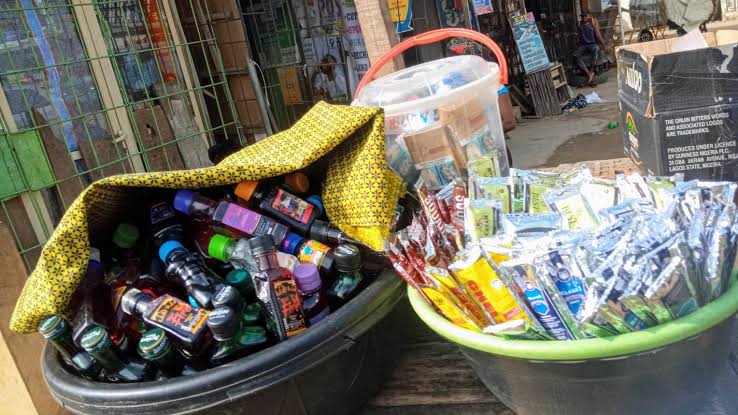
The National Agency for Food and Drug Administration and Control (NAFDAC) has unveiled plans to commence the second phase of enforcement of its ban on sachet alcohol and small-pack alcoholic beverages, targeting distributors and retailers.

The regulator said it had completed the first phase of enforcement targeted at manufacturers, while plans were already in motion to begin the second phase of enforcement.

The agency began enforcement of the ban on sachet and 200ml PET bottle alcoholic drinks in January.

The enforcement, which generated mixed reactions, according to NAFDAC, was necessitated to align the country with global health standards and Sustainable Development Goal 3.5 on reducing harmful alcohol consumption.

The agency also said the decision was taken to ensure that children do not have access to alcohol and to prevent long-term health problems associated with its consumption.

Mr Martins Iluyomade, Director of Investigation and Enforcement at NAFDAC, warned at a news conference in Lagos that distributors and sellers found violating the law would face sanctions once the enforcement begins.

“We have finished removing the products from manufacturers, and we are now moving to the next phase, which is removing them from the market.

“We will investigate how these products are still finding their way into circulation and take appropriate action,” he said.

He emphasised that the nation’s law empowers NAFDAC not only to regulate the manufacture and sale of regulated products but also their use.

“The law gives us authority over manufacture, sale, distribution and use. Consumers should be aware that using products that have been prohibited also places them on the wrong side of the law,” he said.

The director urged market operators who still stock sachet alcohol and other prohibited products to discontinue sales before enforcement begins.

“We have given ample notice. Those who have invested money in these products should take steps now because nobody should accuse NAFDAC of economic sabotage when enforcement starts,” he added.

Mr Iluyomade, also Chairman of the Federal Taskforce, said that the agency would go after advertisers and online vendors promoting unregistered products or making unapproved health claims.

He explained that registered products could be advertised only after obtaining the necessary approvals from the agency.

“Before advertising a regulated product, marketers must obtain NAFDAC approval. This ensures that only approved claims are made about the product.

“Any advertisement that goes beyond what has been approved is a serious offence,” he said.

He further cautioned social media operators, e-commerce platforms and website owners against allowing their platforms to be used for the promotion of unregistered products.

“Whether you are a physical vendor or an online vendor, if your platform is used to advertise unregistered products or products without advertisement permits, we will come after you.

“Many false claims are being made online, and we are determined to stop them,” he said.

The agency reiterated its commitment to protecting public health through strict enforcement of existing regulations and urged Nigerians to comply with the law.


Adedapo Adesanya is a journalist, polymath, and connoisseur of everything art. When he is not writing, he has his nose buried in one of the many books or articles he has bookmarked or simply listening to good music with a bottle of beer or wine. He supports the greatest club in the world, Manchester United F.C.

Click to comment

Leave a Reply

Your email address will not be published. Required fields are marked *

Brands/Products

Resida Targets Nigeria’s Rental Market With New Housing App

Published

on

Resida app

By Adedapo Adesanya

Resida, a property technology startup focused on modernising the rental experience, has officially launched its all-in-one housing platform designed to simplify how Nigerians find homes, pay rent and manage property-related services.

The platform enters the market at a time when renters across major Nigerian cities continue to face challenges such as fake property listings, fragmented rental processes, poor record keeping and difficulty accessing reliable maintenance services.

Resida brings these services together within a single ecosystem, allowing users to search verified and inspected properties, apply for shortlet or long-term rentals, make secure rent payments and access trusted artisans for repairs and maintenance.

According to the company, the platform was built to address long-standing inefficiencies in Nigeria’s rental market by providing a more transparent and structured experience for tenants, landlords and property managers.

“Renting in Lagos has never had the infrastructure it deserves. For too long, the rental experience has been stressful, fragmented and built on trust gaps,” said Mr Ilemobayo Kings Ayejuni, Founder of Resida.

“We built Resida because tenants, agents and landlords deserve a process that is transparent, secure and simple, from the first property search to rent payment and ongoing maintenance,” he said.

Beyond helping renters find homes, the platform offers landlords and property managers tools to streamline operations, including tenant verification, automated rent collection, financial reporting and maintenance request tracking.

The company says it is currently active in more than 15 locations across Lagos, with a growing inventory of verified properties available to renters across the city.

The launch reflects growing innovation within Nigeria’s property technology sector, where startups are increasingly using digital solutions to address challenges in housing access and rental management.

Available on Android, iOS and the web, the Resida app enables users to discover verified properties, apply for rentals, manage rent payments, keep track of tenancy records and connect with trusted artisans for maintenance needs, all from a single platform designed to make renting simpler and more reliable.

Continue Reading

Brands/Products

Truecaller Lite Expands Caller ID, Scam Protection to Nigerian Android Users

Published

on

Truecaller Lite

By Modupe Gbadeyanka

A new app designed specifically for entry-level Android smartphones to verify contacts and block unwanted communication has been made available to millions of Nigerians by Truecaller.

Known as Truecaller Lite, this platform places fraud protection directly on the devices millions of Nigerians already carry, rather than asking them to find space they do not have.

At just 10 MB, Truecaller Lite is a separate, native Android app designed from the ground up for devices with limited resources. It is a new product, not a reduced version of the main Truecaller app.

The app delivers the protections users rely on most, including caller ID, spam and fraud blocking, default dialer, number search, and contacts, while remaining fast, lightweight, and reliable on entry-level smartphones. The protection is the same as the main app, drawing on the same Truecaller database that identified more than 68 billion spam and fraud calls worldwide in 2025.

In Nigeria, where entry-level Android devices are among the most widely owned smartphones, Truecaller Lite is distributed through both the Google Play Store and Partner OEM channels.

Fraud and unwanted communication continue to rise in Nigeria. In 2025, Nigeria was the most spammed country in Africa, with 51 per cent of all unknown calls received by Nigerian users identified as spam or fraud, more than one in every two. Many of the markets most affected by these trends are also those where entry-level Android devices dominate, which makes accessible protection more important than ever. Nigeria remains a priority market for Truecaller.

“Safe communication should not depend on the phone you have. The next billion users live in markets where entry-level devices are often the norm.

“Truecaller Lite is a new product built specifically for them, and it was important for us to provide the same protection from spam and fraud that users expect from Truecaller around the world,” the chief executive of Truecaller, Mr Rishit Jhunjhunwala, stated.

Truecaller Lite is now expanding to Kenya, Ghana, Algeria, Chile, Egypt, Iraq, Indonesia, Bangladesh, Sri Lanka, and Malaysia, with additional launches planned across emerging markets.

Continue Reading

Brands/Products

Subscribers to Enjoy Free Upgrades on Select DStv, GOtv Packages

Published

on

DStv and GOtv

By Modupe Gbadeyanka

MultiChoice Nigeria has commenced a one-month campaign tagged Open Time, offering new and existing subscribers free package upgrades.

A statement from the company disclosed that the promotion runs from June 1 to 30, 2026, and gives eligible DStv and GOtv customers access to higher subscription packages at no additional cost in the month of June.

However, these upgrades are on select DStv or GOtv packages. Subscribers will automatically be upgraded to a higher package at the price of their current subscription for the duration of the offer.

MultiChoice said the upgrade is intended to give subscribers a broader viewing experience for the month, spanning drama, sport, action and children’s programming available on the higher-tier packages.

Customers who pay for DStv Compact Plus or DStv Compact bouquets will be upgraded to DStv Premium, while DStv Confam customers will be upgraded to DStv Compact. DStv Yanga customers will receive access to DStv Confam.

Similarly, GOtv Supa and GOtv Max subscribers will receive access to the GOtv Supa Plus package, while GOtv Jolli subscribers will be upgraded to GOtv Max.

The upgrades will remain active for as long as the customer’s account is fully paid during the campaign period. At the end of the promotion on June 30, subscriptions will revert to their original packages.

Subscribers can renew or activate their accounts via the DStv and GOtv websites, the MyDStv and MyGOtv apps, USSD, banking channels or at payment points nationwide.

Continue Reading

Trending