Media OutReach
Trade smarter: using volatility to maximise potential on OctaTrader
Volatility as a Key Trading Factor
In simple terms, volatility measures how much a financial instrument’s price changes over a certain time period. Volatility is like the market’s heartbeat—a strong, fluctuating pulse indicates high volatility, while a slow, steady rhythm suggests low volatility. In the Forex market, volatility essentially tells a trader how much a currency pair like EUR/USD or GBP/JPY is bouncing around, and it is this movement that traders thrive on. In other words, volatility is not just a statistical measure: it’s the very essence of opportunity and risk. Whether scalping for quick pips, riding longer trends, or holding positions for weeks, volatility has a direct impact on trading strategies.
Every trader should know or at least partly understand the level of volatility of the instrument that they are currently trading. This knowledge will enable a trader to:
- Maximise trading potential. Larger price swings mean more significant potential gains (or losses). High volatility can signal breakout opportunities or strong trends.
- Manage risk more effectively. Knowing volatility helps to set adequate stop-loss and take-profit orders. In a volatile market, a trader might need wider stops to avoid getting whipsawed.
- Improve entry time. Low volatility might mean a market is ‘resting’ before a big move, while high volatility could signal overbought or oversold conditions.
When professional traders talk about volatility, they often refer to ‘implied annual volatility’. This is a forward-looking measure, representing the market’s expectation of how much an asset’s price will fluctuate over a year. It is derived from options prices and is annualised to a percentage. While calculating implied volatility often involves complex pricing models, a simpler way for a retail trader to grasp volatility is to look at historical price movements. For example, if a currency pair has consistently moved an average of 80 pips per day over the past month, its daily volatility for that period could be considered to be 80 pips.
However, volatility isn’t just about raw price changes; it’s relative. A trader cannot just look at today’s price swings in isolation. Instead, comparing price movements against historical data helps determine whether the market is unusually calm or wildly active. For example, if EUR/USD moves 50 pips a day on average but suddenly jumps 150 pips, that’s high volatility compared to its norm. At the same time, a 100-pip move in a currency pair might be considered high volatility on a quiet trading day, but completely normal during a major economic data release. In other words, volatility can only truly be understood in relation to historical price action.
Measure the pulse: volatility indicators on OctaTrader
Calculating volatility manually requires determining the average closing price of a particular asset over a selected period, then measuring deviations by subtracting the average from the latest closing price, squaring the deviations to eliminate negative values, summing them, dividing the total by the number of periods analysed, and finally taking the square root. This method is not only complex but also time-consuming.
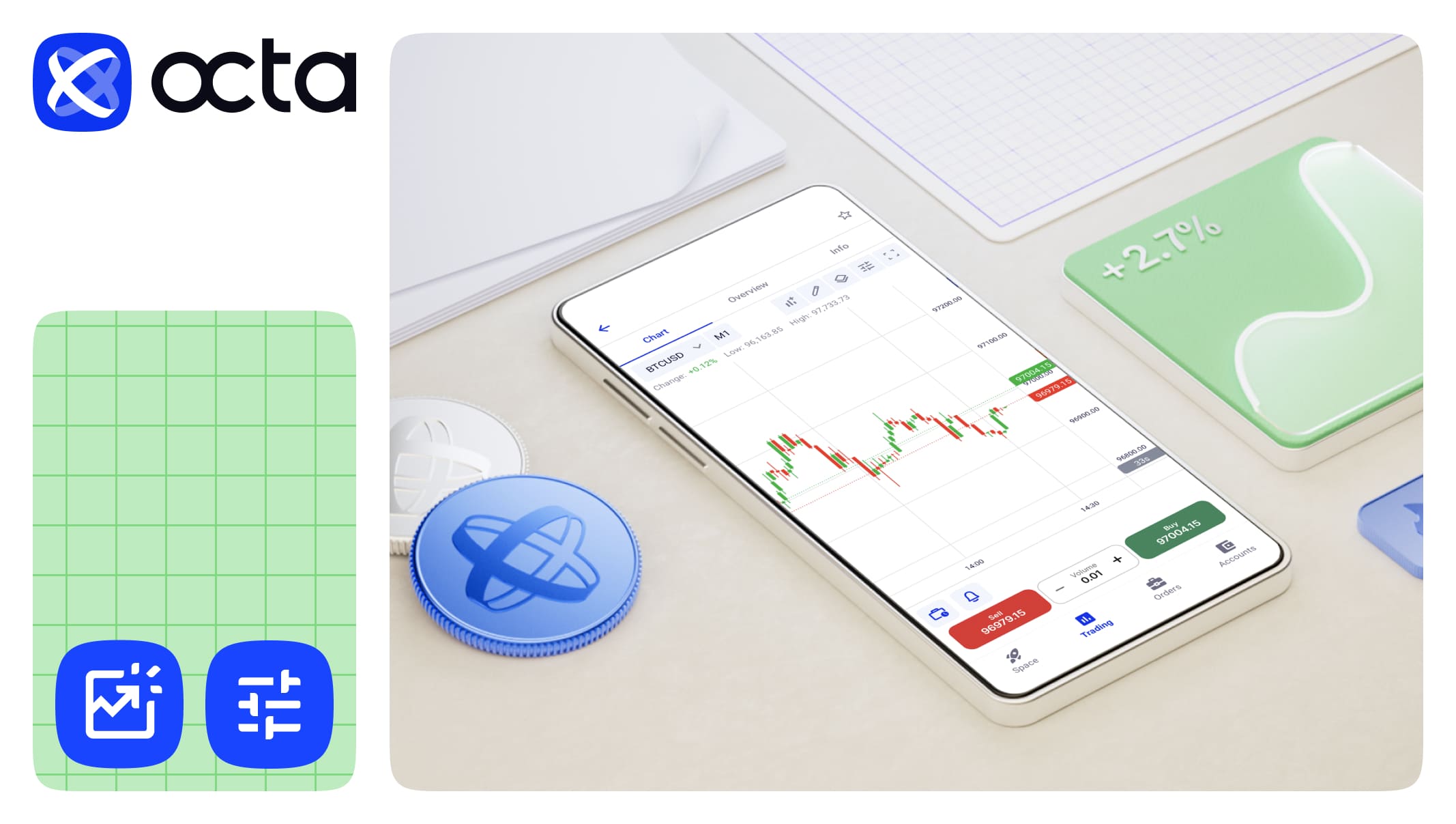
Recognising the crucial role of volatility calculation, Octa, a globally regulated and trusted broker, has equipped its traders with the right tools. Specifically, Octa has developed a proprietary trading platform, OctaTrader, which not only allows traders to place orders in the market, but also provides robust analytical capabilities. For measuring market volatility, OctaTrader has integrated several popular and effective indicators that help a trader gauge the market’s pulse: Average True Range (ATR), Bollinger Bands (BB), and Standard Deviation (SD). Let’s break them down and see how they work in practice.
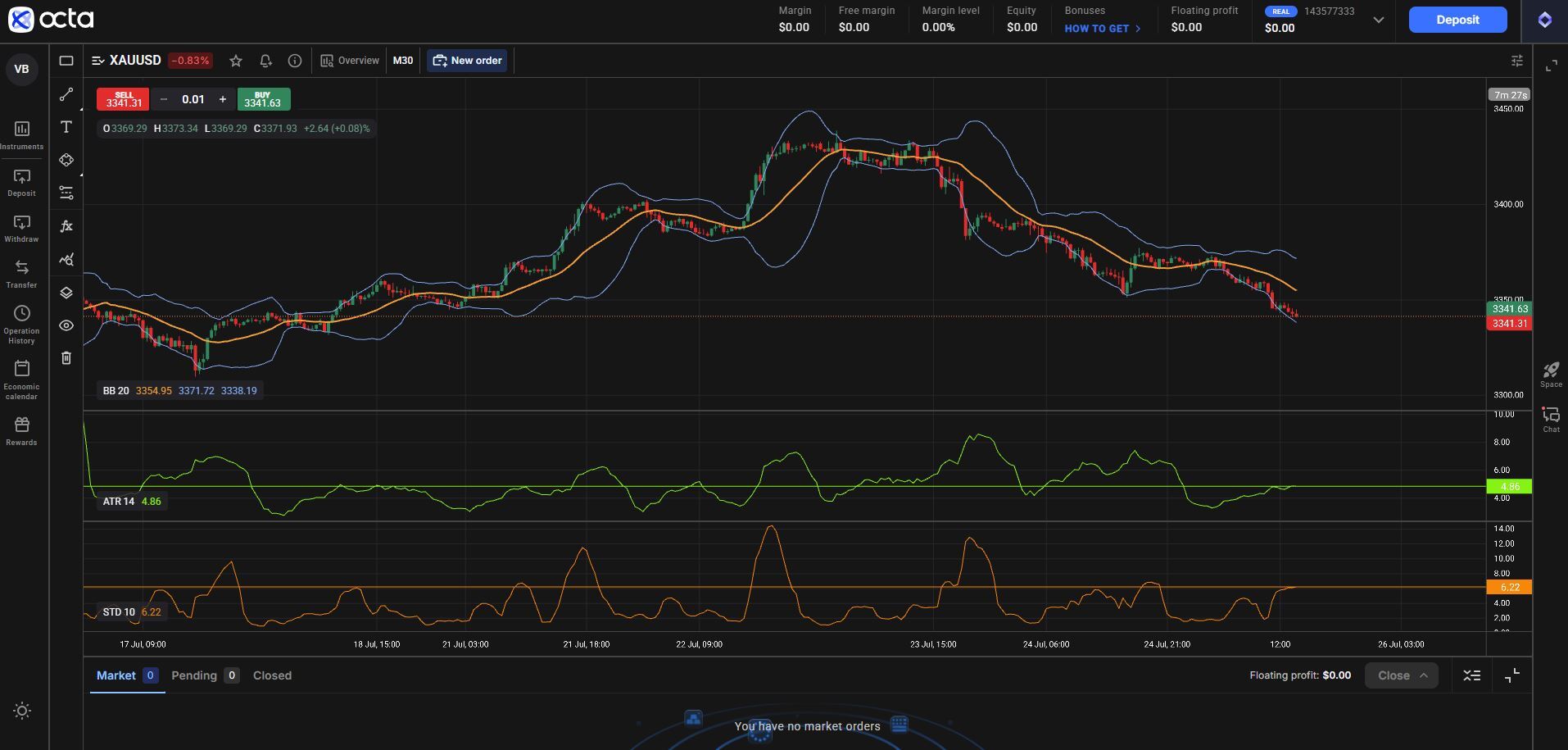
Bollinger Bands (BB): These bands consist of three lines: a simple moving average (the middle band) and two standard deviation lines (upper and lower bands) plotted above and below it.
- How it works: The bands widen when volatility spikes and contract when it drops, giving a trader a visual snapshot of market action. When prices touch or break out of the bands, it can signal overbought or oversold conditions, or the potential for a new trend.
- Practical use: BBs are great for spotting anomalous conditions in the market. If the price touches the upper band, it signals that a trading instrument could be overbought and due for a pullback. If it dips below the lower band, it could be oversold, signalling a potential rebound. In other words, BBs are useful for mean-reversion strategies, where traders expect prices to return to the moving average within the bands.
Average True Range (ART): This indicator measures market volatility by calculating the average range between high, low, and closing prices over a specified period. It is called ‘true range’ because it accounts for gaps and wild price swings.
- How it works: ATR gives a trader a single number to gauge volatility, making it especially practical to set stop-losses.
- Practical use: A higher ATR means higher volatility and bigger price swings, so a trader would need to apply wider exit points to avoid getting stopped out prematurely. A lower ATR suggests lower volatility and narrower price ranges. If the ATR for XAU/USD is 25 pips, a trader might set a stop-loss 1-2 times the ATR (50-100 pips away from the entry point) to give the trade some room to run. ATR is also a great tool for understanding the ‘normal’ daily or hourly movement of a currency pair.
Standard Deviation (SD): This is an advanced statistical indicator that measures how much a financial instrument’s price deviates from its average over a set period.
- How it works: SD indicator provides a direct numerical value of volatility. A higher SD means prices are widely dispersed (higher volatility), while a lower one means they’re tighter and are close to the average (lower volatility).
- Practical use: SD is useful for comparing the volatility of different assets or different time periods for the same asset. Traders can use it to identify statistically significant price movements and assess the likelihood of the price continuing in a particular direction. If EUR/USD’s standard deviation spikes compared to its 20-day average, it might signal a volatile period ahead, prompting a trader to tighten stops or reduce position sizes.
Volatility isn’t just a number: it’s a signal. By understanding and utilising these powerful volatility indicators, available in the OctaTrader platform, traders can gain a deeper insight into market dynamics, decide when to enter or exit trades, adjust position sizes, or brace for big market moves. We understand that in the world of trading, trust is paramount. That is why Octa goes the extra mile to equip traders with the right tools.
Hashtag: #Octa
The issuer is solely responsible for the content of this announcement.
Octa
Octa is an international CFD broker that has been providing online trading services worldwide since 2011. It offers commission-free access to financial markets and various services used by clients from 180 countries who have opened more than 52 million trading accounts. To help its clients reach their investment goals, Octa offers free educational webinars, articles, and analytical tools.
Media OutReach
MIMO: The AI-Native Storage Species Enables Desktop Scale AI Clusters With NVIDIA DGX Spark
- Engineered for the AI era, MIMO delivers breakthrough metrics: 400 GB/s bandwidth, 54 million IOPS, and 40–90 μs latency—all within a form factor comparable to a large suitcase.
- MIMO serves as both a high-performance data hub for large-scale GPU clusters and a flexible edge deployment platform, extending seamlessly to desktop environments where it orchestrates workflows with various DGX Spark units based on NVIDIA’s GB10 Grace Blackwell superchip.
- This architecture enables independent AI clusters supporting up to 16 computing nodes within constrained environments, managing the complete workflow from large-scale pre-training and fine-tuning to production inference—effectively democratizing enterprise-grade AI capabilities for labs, edge sites, and distributed teams.
SINGAPORE –
Professor Zhang Sheng from Tsinghua University Shenzhen International Graduate School expressed a more pragmatic view: “With this solution, we finally no longer have to rely on the university’s data center. Our current annual budget alone is enough to deploy an AI cluster within our lab that better fits our needs—this will significantly boost our research efficiency both technically and operationally. It’s truly fantastic news.”
Asia Debut Marks Industry Inflection Point
Earlier at the 8th China International Import Expo (CIIE), the solution’s core—the world’s first AI-native storage system MIMO—made its strategic Asian debut. Engineered for the AI era, MIMO delivers breakthrough metrics: 400 GB/s bandwidth, 54 million IOPS, and 40–90 μs latency—all within a form factor comparable to a large suitcase.
The platform’s defining Fast-Light-Edge proposition, delivered through its breakthrough architecture, cut through the exhibition noise, generating immediate and widespread attention. MIMO earned exclusive features in top-tier media including Hong Kong Ta Kung Pao and China Securities Journal, while its product demonstration videos gained rapid traction across leading digital channels.
Addressing Foundational Challenges: Technical Dialogues That Matter
During the exhibitions, technical leaders from the United States, Spain, Singapore, Colombia, the UAE (Dubai), India, Pakistan, and Hong Kong SAR engaged in substantive dialogues with Ridger’s Asia team, raising questions that revealed systemic industry gaps:
Architectural Transformation & Strategic Positioning
“Can MIMO fundamentally replace legacy storage architectures—traditional NAS, unified, distributed, and parallel file systems—to deliver accelerated parallel training and high-concurrency inference?”
“With such exceptional performance, would deploying MIMO for traditional enterprise applications represent strategic overinvestment or forward-looking infrastructure?”
Mobile Deployment & Borderless Operations
“MIMO’s suitcase-sized footprint suggests unprecedented mobility. Can it truly accompany research teams globally like standard equipment? How does it maintain operational continuity across jurisdictions? What’s the customs protocol for such ‘technical luggage’?”
Seamless Integration & Global Accessibility
“In scenarios with unnetworked AI servers, can MIMO rapidly establish dedicated training environments with true plug-and-play functionality?”
“Does MIMO integrate transparently with existing AI infrastructure and software stacks without requiring modifications?”
“Beyond Asia-Pacific, what’s the procurement pathway for MIMO? Which currencies and payment methods are accommodated?”
Architectural Breakthrough: Redefining What’s Possible
Addressing these operational realities, Ridger demonstrated MIMO’s system-level value—transcending its role as a storage device to become an architectural cornerstone. MIMO serves as both a high-performance data hub for large-scale GPU clusters and a flexible edge deployment platform, extending seamlessly to desktop environments where it orchestrates workflows with various DGX Spark units based on NVIDIA’s GB10 Grace Blackwell superchip.
Notably, eight global OEM partners—including Dell, HPE, Lenovo, xFusion, H3C, MSI, GIGABYTE, and Acer—have concurrently launched Spark versions based on NVIDIA’s GB10 Grace Blackwell superchip, creating a robust compatibility foundation for MIMO’s ecosystem integration.
This architecture enables independent AI clusters supporting up to 16 computing nodes within constrained environments, managing the complete workflow from large-scale pre-training and fine-tuning to production inference—effectively democratizing enterprise-grade AI capabilities for labs, edge sites, and distributed teams.
As Zhu Ting, an industry observer from Beijing, noted: “This represents the ‘IBM PC moment’ for AI infrastructure—transforming specialized capability into accessible utility.”
Market Validation Through Early Adoption
Market response has been decisive. Following the exhibitions, pioneering organizations across pathological image foundation model development, legal-tech innovation, industrial visual inspection, and naked-eye 3D content production have joined Ridger’s Early Access program, validating the architecture’s transformative potential in real-world operational contexts.
Global Rollout: Accelerating Accessibility
Responding to accelerating global demand, Ridger confirmed the imminent launch of the complete MIMO portfolio and optimized solution bundles for specific DGX Spark configurations through the Ridger Official Global Store. Designed as a frictionless procurement channel, the platform will support diverse payment options including multiple fiat currencies and cryptocurrencies—streamlining access to advanced AI infrastructure.
Organizations seeking deeper understanding of MIMO and its integrated lightweight AI solution with DGX Spark are invited to connect with Ridger team or its strategic partner, NVIDIA Elite Solution Partner SinoInfo.
Hashtag: #Technology #ESG #AI #GPU #Enterprise #Finance #Storage #Flash #Compute #DGX-Spark #NVIDIA #AI-Lab #GDS #NAS #AI-Native
https://ridger.tech/
https://www.linkedin.com/company/ridger/
https://www.youtube.com/@ridgertech
The issuer is solely responsible for the content of this announcement.
Ridger
Ridger is a global technology pioneer building next-generation computing & storage infrastructure for the AI era. Born in the East and operating worldwide, Ridger challenges conventional paths to create new technological paradigms.
The team unites seasoned experts from global storage leaders with visionary AI architects, all driven by a shared mission to democratize cutting-edge technology, rejects incremental improvements and hollow prestige, focusing exclusively on foundational breakthroughs that deliver tangible value and sustainable impact.
From architecture to implementation and from service to empowerment, Ridger provides end-to-end solutions that help clients worldwide ascend to their highest summits.
Media OutReach
Johnson & Johnson and Asia Pacific Patient Advocacy Group Leaders Unite to Strengthen Shared Decision-Making in Lung Cancer Care
J&J deepens its commitment to patient empowerment in Asia Pacific by launching J&J withMe, a new patient portal offering tailored patient resources, and co-driving market-specific initiatives with patient advocacy groups
SINGAPORE – Media OutReach Newswire – 11 December 2025 – Johnson & Johnson announced the next phase of The 3rd Opinion campaign across Asia Pacific, focused on championing shared decision-making between lung cancer patients and healthcare professionals through events and stakeholder engagements at ESMO Asia 2025 in Singapore.
At a Patient Reception on 6th December 2025, 20 leaders from 17 patient advocacy groups from across Asia Pacific, Europe and the United States shared their support for the need to strengthen shared decision-making. On December 7, 2025, the ESMO Asia 2025 Symposium, ‘Advancing EGFRm NSCLC Treatment Through Shared Decision-Making’ highlighted the role of healthcare professionals not only in making sense of the data but also in helping patients and their families navigate complex decision-making.
“High prevalence in Asia of certain NSCLC mutations makes the choice of first-line therapy absolutely critical. Treatment decisions must balance clinical objectives with patient values — weighing disease biology, survival prospects, durable disease control and the tradeoffs of side effects. That’s why shared decision-making is essential: clinicians should present all appropriate treatment options, so the final choice is collaborative and aligned with each patient’s goals,” said Professor Zhu Zhengfei, Director of the Radiation Oncology Department, Fudan University Shanghai Cancer Center.
“When lung cancer patients are empowered to speak up and understand their options, they are more likely to continue the treatment and their dignity is preserved. Initiatives like ‘The 3rd Opinion’ are vital for fostering truly patient-centered partnerships between people living with cancer and their healthcare teams,” noted Ms. Liu Yiting, Marketing & Branding Director, China MeetHealth Mi-Jian Patient Community.
“The shared commitment validates what many people living with lung cancer have long expressed: shared decision making is essential. From our experience supporting patients, meaningful conversations with clinicians help acknowledge patients’ experiences, address their concerns, and preserving their hopes,” added Mr. Jung-Il Cho, Chairman of Korea Lung Cancer Patients Association.
Our commitment comes off the back of a recent patient survey revealing that 90% of Japanese lung cancer patients want to play an active role in their treatment decisions. The survey also found that shared decision-making, where physicians and patients jointly compare treatment options and decide together, is the strongest driver of treatment satisfaction.1
Patient survey finds that those engaged in shared decision-making were 11 times more likely to report higher satisfaction with their treatments, with 90% of lung cancer patients in Japan wanting to play an active role in their treatment decisions. This finding underscores the importance of shared decision-making and patient-centered care.1
To bridge the gap between patients’ desire to engage in shared decision making and their lack of practical support, J&J has launched “J&J withMe”, an online hub that equips lung cancer patients and caregivers with tailored toolkits and conversation guides to prepare for consultations and make informed, personalized treatment decisions.
Anthony Elgamal, Vice President of Oncology, Johnson & Johnson Innovative Medicine Asia Pacific said, “The 3rd Opinion truly puts patients at the center of care. As part of our deep commitment to address patients’ unmet needs, we will continue partnering with patient advocacy groups and healthcare professionals to help patients to find their voice and the moment when medical advice meets what truly matters to patients.”
In recognition of diverse cultural and clinical norms across Asia Pacific, J&J has also rolled out tailored market activations in collaboration with local patient advocacy groups:
- Provision of patient resources such as the “Lung Cancer Book of Answers” in China, ‘Value of Time’ video for patients in Japan, and educational assets in India and Australia/New Zealand;
- Digital and social media engagement featuring patients and creators discussing the importance of shared decision-making across Singapore, Malaysia, Philippines, Thailand, and Vietnam;
- Event engagement via the establishment of a patient advisory board in India;
- Corporate Social Responsibility program with a lung cancer patient group in Korea, bringing employees and patients together to better understand the disease burden of patients and strengthen emotional support for the patient community.
###
About the 3rd Opinion
“The 3rd Opinion”, the patient’s own opinion, is a new term that sparks a social movement in the lung cancer treatment journey – designed to elevate the patient voice and empower individuals to take an active role in shaping their treatment plan. By prioritizing shared decision-making between patients and healthcare professionals, this collaborative approach ensures that treatment choices are aligned to each patient’s goals, preferences and circumstances. This results in more informed decisions, greater patient satisfaction, and the best possible outcomes.
About Non-Small Cell Lung Cancer
Worldwide, lung cancer is one of the most common cancers, with NSCLC making up 80 to 85 percent of all lung cancer cases.[1], [2] The main subtypes of NSCLC are adenocarcinoma, squamous cell carcinoma, and large cell carcinoma.[3] Among the most common driver mutations in NSCLC are alterations in EGFR, which is a receptor tyrosine kinase controlling cell growth and division.[4] EGFR mutations are present in 10 to 15 percent of Western patients with NSCLC with adenocarcinoma histology and occur in 40 to 50 percent of Asian patients.[5], [6],[7],[8],[9],[10] EGFR ex19del or EGFR L858R mutations are the most common EGFR mutations.[11] The five-year survival rate for all people with advanced NSCLC and EGFR mutations treated with EGFR tyrosine kinase inhibitors (TKIs) is less than 20 percent.[12],[13] EGFR exon 20 insertion mutations are the third most prevalent activating EGFR mutation.[14] Patients with EGFR exon 20 insertion mutations have a real-world five-year overall survival (OS) of eight percent in the frontline setting, which is worse than patients with EGFR ex19del or L858R mutations, who have a real-world five-year OS of 19 percent.[15]By comparison, other common cancers, such as breast and prostate cancer have a 5-year real world OS of 90% and 97% respectively[16].
[2] The World Health Organization. Cancer. https://www.who.int/news-room/fact-sheets/detail/cancer. Accessed March 2025.
Hashtag: #Johnson&Johnson
The issuer is solely responsible for the content of this announcement.
About Johnson & Johnson
At Johnson & Johnson, we believe health is everything. Our strength in healthcare innovation empowers us to build a world where complex diseases are prevented, treated, and cured, where treatments are smarter and less invasive, and solutions are personal. Through our expertise in Innovative Medicine and MedTech, we are uniquely positioned to innovate across the full spectrum of healthcare solutions today to deliver the breakthroughs of tomorrow, and profoundly impact health for humanity.
Learn more at
https://www.jnj.com/ or at
www.innovativemedicine.jnj.com. Follow us at
@JNJInnovMed.
Johnson & Johnson Innovative Medicine Asia Pacific, a division of Johnson & Johnson International (Singapore) Pte. Ltd is a Johnson & Johnson company.
© Johnson & Johnson International (Singapore) Pte. Ltd. [2025] All rights reserved.
Media OutReach
Skychakra Global Capital Strategy Upgrade: Advancing Cross-Border Listings and RWA Ecosystem
As a global hub for innovation and capital, Hong Kong serves as a significant gateway for the activation of Skychakra’s global strategy. This inauguration not only symbolizes the completion of the facility but also marks the comprehensive rollout of Skychakra’s international layout.
Official Launch of Cross-Border Listing Incubation Center
During the inauguration, Skychakra announced the establishment of a cross-border listing incubation center, led by a professional team qualified with SEC, PCAOB, and FINRA credentials, boasting over a hundred projects in cross-border listings. The service scope includes U.S. stocks, Hong Kong stocks, and SPACs. Unlike traditional investment banks and financial advisors, Skychakra offers a “full-link” service for enterprise capitalization, encompassing red-chip structure setup, financial and audit compliance, SEC and Hong Kong Stock Exchange filing guidance, dual-path IPO/SPAC design, market value management, enterprise internationalization guidance, and digital upgrades.
Originally planning to sign contracts for four companies at the conference, Skychakra exceeded expectations by signing 12, demonstrating its strong appeal and industry influence in cross-border listings and capital operations.
RWA Technology Ecosystem: Making Enterprise Assets Visible to the Financial System
Real World Assets (RWA) are becoming the core of global financial transformation. From BlackRock’s launch of tokenized funds to Hong Kong and Singapore incorporating RWA into financial infrastructure, RWAs are transitioning from concept to large-scale implementation. Skychakra emphasizes that small and medium-sized enterprises face common challenges such as lack of recognition for their assets within the financial system, difficulties in cross-border financing, and a lack of transparency in asset value.
The Skychakra RWA ecosystem will provide enterprises with: tokenizable asset identification, asset structuring and entitlement, on-chain mapping and minting, cross-border compliance design, global issuance and liquidity channels, and on-chain risk control and transparent tracking. The core value of RWA lies in reducing friction for enterprises in connecting to global capital, enhancing asset liquidity and valuation potential.
A Holistic Growth Model: “From People to Enterprises, From Enterprises to Capital”
Skychakra’s differentiated advantage stems from its foundational logic of “starting with people.” The Skychakra energy courses utilize scientific equipment to measure energy fields, emotional frequencies, and meridian states, assisting individuals in enhancing stability, insight, and decision-making abilities.
Based on this foundation, Skychakra constructs three major systems:
1. Enterprise Growth System: Enhancing organizational capabilities, introducing international business, and providing capital operation guidance.
2. Capitalization System: Building global financing capabilities through listings and RWA structures.
3. Asset Digitalization System: Making enterprise value quantifiable, verifiable, and tradable.
These three systems dynamically interact in a spiral structure, forming Skychakra’s unique full-link growth ecosystem.
Conclusion: Global Layout for Greater International Influence
The inauguration of Skychakra’s Hong Kong International Center signifies the official implementation of the group’s globalization strategy. Looking forward, the focus will be on Hong Kong as the core, with Asia as the main axis, while establishing deep collaborations with the North American and Middle Eastern markets. Through this global layout, Skychakra is creating a new organizational model that transcends regions, industries, and capital, enabling enterprises to achieve value flow in the global market and allowing more Asian companies to gain a stronger voice on the international stage.
Hashtag: #Skychakra
The issuer is solely responsible for the content of this announcement.
-
Feature/OPED6 years agoDavos was Different this year
-
Travel/Tourism9 years ago
Lagos Seals Western Lodge Hotel In Ikorodu
-
Showbiz3 years agoEstranged Lover Releases Videos of Empress Njamah Bathing
-
Banking7 years agoSort Codes of GTBank Branches in Nigeria
-
Economy3 years agoSubsidy Removal: CNG at N130 Per Litre Cheaper Than Petrol—IPMAN
-
Banking3 years agoFirst Bank Announces Planned Downtime
-
Banking3 years agoSort Codes of UBA Branches in Nigeria
-
Sports3 years agoHighest Paid Nigerian Footballer – How Much Do Nigerian Footballers Earn