Connect with us

Education

FEC Approves N68.7bn to Electrify Universities, Teaching Hospitals

Published

on

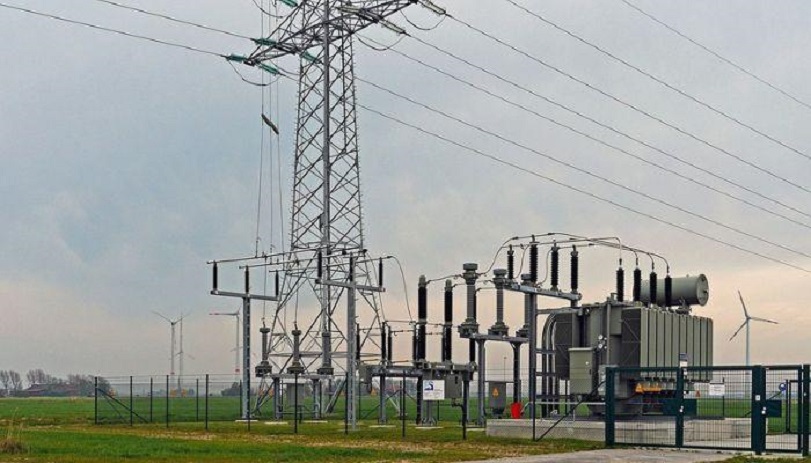
Nigeria Electricity Act 2023

By Adedapo Adesanya

The Federal Executive Council (FEC) on Thursday approved N68.7 billion for key electricity projects in universities and teaching hospitals across Nigeria.

This was disclosed by the Minister of Power, Mr Adebayo Adelabu, after the council’s meeting yesterday chaired by President Bola Tinubu at the State House, Abuja.

He said that the projects reflect the government’s resolve to ensure steady electricity supply in vital sectors like health and education.

The university project involves engineering, procurement, and construction under the Energising Education Programme, led by the Rural Electrification Agency (REA).

“This initiative aims to ease the energy cost burden on universities and hospitals by providing reliable, good-quality electricity,” Mr Adelabu stated, describing the current electricity situation in many institutions as “disturbing” and a threat to effective service delivery.

“The lack of stable power supply has created crisis situations in some schools and hospitals, with institutions unable to afford local electricity,” he explained, adding that blackouts and occasional industrial actions have occurred due to unreliable power.

Mr Adelabu said similar renewable energy projects have already been implemented in some institutions, supported by the World Bank.

He said completed projects include the University of Abuja and University of Niger with both 12 Megawatts (MW) solar while the Usmanu Danfodiyo University, Sokoto has 8MW.

Others are the Nigerian Defence Academy (2.6MW) and the Federal University of Agriculture, Makurdi, which also uses solar power.

The newly approved funding will support electrification in eight additional universities and teaching hospitals nationwide.

These are University of Lagos, Ahmadu Bello University Zaria, Obafemi Awolowo University Ile-Ife, University of Nigeria Nsukka, University of Ibadan and the University College Hospital (UCH), and University of Calabar.

The Federal University, Wukari is also among the new beneficiaries.

Mr Adelabu said these new projects are expected to be completed within seven to nine months.

“This is another step to ensure our universities enjoy uninterrupted electricity. Our institutions will never be the same again,” he noted.

The second project approved targets Agricultural Centres of Excellence in rural areas using solar energy technology.

“This goes beyond lighting homes; it supports productive use of solar-powered equipment in rural areas,” Mr Adelabu said, explaining that the aim is to light up rural homes and power agro-processing businesses using solar systems.

The initiative will deliver solar-powered processing tools to small and micro agricultural enterprises in underserved communities.


Adedapo Adesanya is a journalist, polymath, and connoisseur of everything art. When he is not writing, he has his nose buried in one of the many books or articles he has bookmarked or simply listening to good music with a bottle of beer or wine. He supports the greatest club in the world, Manchester United F.C.

Advertisement
Click to comment

Leave a Reply

Your email address will not be published. Required fields are marked *

Education

Kidnappings: FG Reopens 47 Unity Schools

Published

on

unity schools nigeria

By Adedapo Adesanya

The federal government has announced the reopening of the 47 unity schools earlier shut down due to security concerns on November 21.

This was disclosed in a statement by the Federal Ministry of Education on Thursday.

It said that the decision to reopen the affected colleges across the country reaffirmed its unwavering commitment to safeguarding students and ensuring the continuity of education.

On November 18, 2025, over 20 schoolgirls were kidnapped by unidentified armed men from the Government Girls Comprehensive Secondary School in Maga, Kebbi state.

Just three days later, on November 21, about 303 students and 12 teachers were kidnapped at St. Mary’s Catholic Primary and Secondary School in Papiri, Niger state.

In response, the federal government shut down 47 Federal Unity Colleges, and some states including Katsina, Taraba, and Niger also closed schools or restricted school activities, particularly boarding institutions.

Rights group including Human Rights Watch lamented that while these measures were aimed at protecting students, they disrupted learning for thousands of children, denied them access to education, and the social and psychological support schools provide.

FULL LIST OF AFFECTED UNITY COLLEGES

North-West:
FGGC Minjibir, FTC Ganduje, FGGC Zaria, FTC Kafanchan, FGGC Bakori, FTC Dayi, FGC Daura, FGGC Tambuwal, FSC Sokoto, FTC Wurno, FGC Gusau, FGC Anka, FGGC Gwandu, FGC Birnin Yauri, FTC Zuru, FGGC Kazaure, FGC Kiyawa, FTC Hadejia.

North-East:
FGGC Potiskum, FGC Buni Yadi, FTC Gashua, FTC Michika, FGC Ganye, FGC Azare, FTC Misau, FGGC Bajoga, FGC Billiri, FTC Zambuk.

North-Central:
FGGC Bida, FGC New-Bussa, FTC Kuta-Shiroro, FGA Suleja, FGC Ilorin, FGGC Omu-Aran, FTC Gwanara, FGC Ugwolawo, FGGC Kabba, FGGC Bwari, FGC Rubochi, FGGC Abaji.

South-West:
FTC Ikare Akoko, FTC Ijebu-Imusin, FTC Ushi-Ekiti, FTC Ogugu.

Continue Reading

Education

Coursera, Udemy Announce $2.5bn Merger

Published

on

Coursera and Udemy

By Adedapo Adesanya

Online learning platforms, Coursera and Udemy, have reached an agreement to merge in an all-stock transaction, with the combined company’s implied equity value estimated at approximately $2.5 billion.

The agreement, unanimously approved by both companies’ boards of directors, stipulates that Udemy shareholders will receive 0.8 shares of Coursera common stock for each Udemy share held.

Upon completion of the merger, Coursera shareholders are expected to own about 59 per cent and Udemy shareholders approximately 41 per cent of the new entity on a fully diluted basis.

The combined company will continue under the Coursera name, and maintain its headquarters in Mountain View, California.

Coursera, founded in 2012 by Mr Andrew Ng and Ms Daphne Koller, is an online learning platform with 191 million registered users as of September 30, 2025. It collaborates with over 375 universities and industry partners to offer courses, specialisations, professional certificates, and degrees.

The platform includes features such as generative AI (gen AI) tools (Coach, Role Play, Course Builder) and role-based solutions (Skills Tracks) to support scalable and personalised learning. Coursera is used by institutions for workforce development in fields such as gen AI, data science, technology, and business.

Udemy is a platform that provides on-demand, multi-language courses to help companies and individuals develop technical, business, and soft skills. It uses AI to offer personalised learning experiences and supports workforce development in a changing workplace.

Mr Greg Hart, currently CEO of Coursera, is set to lead the enlarged organisation as CEO after the merger.

The board will consist of nine members. Six from Coursera’s board, including chairman Mr Ng and CEO Mr Hart, and three from Udemy’s board.

“We’re at a pivotal moment in which AI is rapidly redefining the skills required for every job across every industry.

“Organisations and individuals around the world need a platform that is as agile as the new and emerging skills learners must master,” Mr Hart said.

The combination is said to create a complete ecosystem of top instructors supported by AI tools, data-driven insights, and broader distribution, enabling more engaging, personalised, and dynamic learning at scale.

Projected operational efficiencies include anticipated annual run-rate cost synergies of $115m within two years after closing.

Udemy CEO, Mr Hugo Sarrazin said: “For more than 15 years, Udemy has helped millions of people master in-demand skills at the speed of innovation.

“Through this combination with Coursera, we will create meaningful benefits for our learners, enterprise customers, and instructors, while delivering significant value to our shareholders, who will participate in the substantial upside potential of the combined company.”

The merger is anticipated to close in the second half of 2026, pending regulatory clearances, approval by both companies’ shareholders, and other customary closing conditions.

Continue Reading

Education

Luno, AltSchool Launch Crypto Education Programme for Nigerians

Published

on

Luno Safety of Funds

By Adedapo Adesanya

Global cryptocurrency platform, Luno and AltSchool Africa, an accredited online learning platform, have announced a strategic partnership aimed at demystifiing crypto to 15,000 Nigerians.

The initiative at that scale makes it Africa’s largest crypto education programme.

According to a joint statement on Wednesday, this is a significant step in Luno’s continued efforts to strengthen trust in digital assets and support safer participation in the digital economy.

This is hinged on Africa’s fast-growing digital finance landscape where 33 per cent of the country’s population already engage with digital assets, and a rapidly growing youth population are eager to participate in the digital economy.

According to the statement, the partnership aims to bridge the knowledge gap by providing structured, practical, and safe crypto education.

This will be done by combining Luno’s experience in promoting safe crypto participation with AltSchool Africa’s capability in delivering accessible digital skills training.

“The course directly addresses the misinformation and financial risks associated with unregulated digital assets, while demonstrating real-world applications tailored to African contexts,” the joint statement added.

The initiative will be implemented in three cohorts of 5,000 learners each. Applications for Cohort 1 will be open from January to February 2026, with the course commencing in March 2026. Cohort 2 participants will gain access to the course in July 2026, while Cohort 3 participants will begin the programme in November 2026.

The programme will be led by Web3 expert Mr Abdulsamad Tiamiyu, who will provide a practical, Africa-focused introduction to cryptocurrency, showing how it can be used for saving, remittances, global trading, and entrepreneurship.

The curriculum consists of five core modules and is designed to be completed within three to four weeks.

Learners benefit from up to one year of access to all course materials, including online, self-paced video lessons, slides, quizzes, and case studies. The course combines theory with hands-on experience, where learners interact with wallets, exchanges, stablecoins, and research tools like CoinGecko and Etherscan.

According to the organisers, this approach gives learners the tools to confidently use digital currencies in everyday financial activities. Successful learners, upon passing the assessments, earn an AltSchool Africa Certificate of Completion.

Speaking on the partnership, Mr Ayotunde Alabi, CEO of Luno Nigeria, said: “This initiative is a crucial intervention in Africa’s digital ecosystem. As crypto adoption accelerates, formal literacy must grow alongside it, so individuals can benefit safely and meaningfully,”

“Our partnership with AltSchool Africa is a deliberate step toward that goal and a foundational investment in the integrity of the industry. By delivering structured, high-quality education, Luno is helping ensure that Africans can participate confidently, securely, and sustainably – turning what is often seen as risk into real economic opportunity,” he added.

Adding his input, Mr Adewale Yusuf, Co-founder and CEO of AltSchool Africa, said “This partnership between AltSchool and Luno is a major step toward financial education that truly serves Africans and helps people gain the knowledge and tools they need to understand crypto with confidence and use it in practical, life-changing ways.”

The programme is open to Nigerian residents aged 18 and above who are able to commit to completing it within four weeks. Applicants must have a Luno account or create one before enrolling.

Starting January, Interested participants are encouraged to submit application through the AltSchool Africa portal, with scholarship decisions communicated within one week.

Continue Reading

Trending