Economy
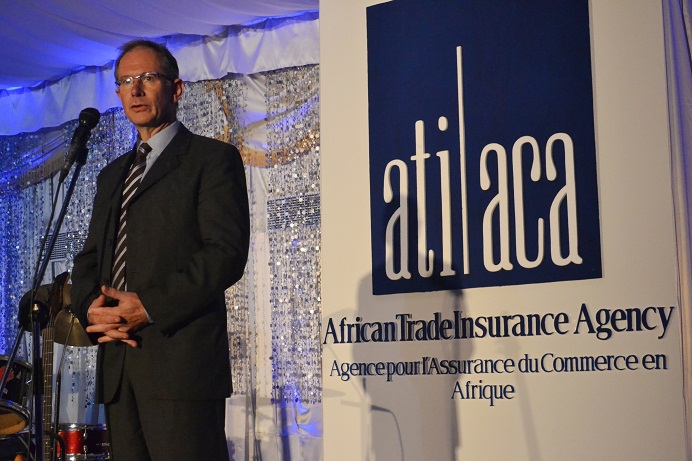
Cote d’Ivoire Joins African Trade Insurance Agency

By Modupe Gbadeyanka
The African Trade Insurance Agency (ATI) announced today that Côte d’Ivoire has joined a growing list of African countries who are members of the institution.
ATI is a multilateral investment insurer whose specialised investment and commercial risk insurance products are expected to help attract up to USD2 billion worth of inward investments and trade into the country, and to potentially help lower its sovereign borrowing costs by up to 1% annually.
The pan-African institution now insures investments equal to approximately 0.6 to 1.4 percent of GDP annually in a majority of its member states and includes support of strategic deals such as cover on African Development Bank’s USD159 million loan to fund Ethiopian Airline’s fleet expansion. Côte d’Ivoire’s membership in ATI is seen as an integral part of the government’s strategy to attract more investments and to diversify the economy through increased trade and investment opportunities.
“Our country membership in ATI will contribute to creating the economic conditions that will enable us to reach emerging country status by 2020,” commented Mr Adama Kone, Minister of Economic and Finance of Côte d’Ivoire.
Côte d’Ivoire becomes the third country to join ATI in the last six months following Ethiopia and Zimbabwe, which became members in late 2016. Rapid membership growth, particularly in significant African economies, is core to ATI’s medium-term plan to broaden its reach and impact and to better distribute risk across more countries in Africa.
ATI’s membership push is supported by the African Development Bank (AfDB), which to date has provided a combined USD30 million in soft loans for the membership subscription of Ethiopia, Côte d’Ivoire and Zimbabwe as well as an increase in the capital subscription of Benin. Reflecting its catalytic role in African economies, ATI expects to leverage Côte d’Ivoire’s initial share capital investment by up to 60 times in terms of supported investments into the country on an annual basis, as ATI does in other member states..
In the next two years, ATI will continue to target other ECOWAS and large African economies for membership.
Increased membership by these countries elevates ATI’s impact in Africa’s economic development, where the company increasingly participates in priority projects targeting sectors such as energy, water, road and rail construction and rehabilitation, building construction, agriculture and telecommunications.
ATI provides medium to long term credit risk mitigation products to support investors, banks, businesses, governments and government agencies in Africa.
For banks for instance, ATI offers protection against non-payment risks that allow lenders to expand their loan portfolios. For governments, ATI’s products can be used as a substitute for guarantees, which helps sovereigns to lower their debt ceiling.
“ATI’s entry into the Ivorian market is a real leverage for us to attract more foreign investments and to boost trade both regionally and internationally,” notes Mr. Guy M’Bengue, CEO of Côte d’Ivoire’s Export Promotion Agency (APEX-CI) and a Board member of the Private Sector Employer’s Association (CGECI).
“Our focus this year and beyond continues to be membership growth, particularly in West Africa. We see this region as an important part of our pan African mandate and Côte d’Ivoire is poised to be an important West African market for ATI’s products.
“In partnership with other international players, ATI is now in a position to support strategic projects in West African member states in order to benefit the region,” notes George Otieno, ATI’s Chief Executive Officer.
Economy
Nigeria’s Gold Holdings Rise to $3.5bn as CBN Diversifies Reserves
By Adedapo Adesanya
The Central Bank of Nigeria (CBN) said it has taken delivery of responsibly sourced gold refined to London Bullion Market Association (LBMA) Good Delivery standards into its foreign reserves, as part of its reserves diversification strategy.
The gold, sourced in Nigeria and aggregated by the Solid Minerals Development Fund (SMDF) through the National Gold Purchase Programme (NGPP), brings the CBN’s total gold holdings to $3.5 billion.
According to the CBN, the programme involves local miners and operates within a responsible sourcing framework aligned with the Organisation for Economic Co-operation and Development (OECD) Due Diligence Guidelines and the World Gold Council’s London Principles.
Speaking at the one-day Workshop on Strategies to Maximise the Economic Benefits of Minerals in Nigeria, the Governor of the apex bank, Mr Yemi Cardoso, disclosed that the lender acquired the monetary-grade gold in Naira at pricing linked to LBMA benchmarks, a structure designed to preserve Nigeria’s foreign exchange holdings while strengthening the nation’s gold reserves.
By purchasing domestically refined gold without deploying foreign currency, he said, the transaction enhances reserve accretion and supports broader macroeconomic stability objectives. Highlighting major shifts in global reserve management strategies, the CBN Governor noted their increasing importance amid rising global economic uncertainties.
He described the event as a reflection of Nigeria’s shared commitment to responsible and strategic management of its mineral resources. He emphasised that the workshop underscores the nation’s readiness to adapt to the realities of an evolving global economy, where resilience, diversification, and prudent governance have become increasingly vital.
He further explained that the session, convened by the CBN’s Corporate Secretariat and Reserve Management Departments, was designed to create a structured platform for engagement with key players in the gold sector and to deepen understanding of the industry’s current landscape, opportunities, and challenges across its value chain.
The governor noted that central banks around the world are prioritising economic resilience amid persistent geopolitical and market uncertainties.
He said gold has regained importance as a hedge against inflation and volatility, while other critical minerals are increasingly shaping global supply chains and advanced industrial development
Mr Cardoso emphasised that Nigeria’s immense natural and human resource potential can only be fully realised through prudence, strategic coordination, and long-term planning. He highlighted the need for strict adherence to internationally recognised standards, stressing that institutional credibility depends on strong governance frameworks.
On her part, the Executive Secretary of the Solid Minerals Development Fund (SMDF), Mrs Fatima Umaru Shinkafi, highlighted that the successful delivery of LBMA standard gold demonstrates the strength of the organisation’s formalisation framework and supply chain due diligence processes.
The World Gold Council’s Director of Central Banks and Public Policy, Ms Kurtulus Taskale Diamondopoulos, commended both the CBN and SMDF for designing the Nigerian Gold Purchase Programme (NGPP) in line with the twelve London Principles for responsible artisanal and small-scale gold sourcing.
She noted that the partnership between the CBN as sole off-taker and the SMDF as fiscal and supply chain manager offers a strong model for other countries seeking to strengthen similar programmes.
The President and CEO of the Africa Finance Corporation (AFC), Ms Samaila Zubairu, reaffirmed AFC’s commitment to financing and formalising Nigeria’s mineral sector, stressing the importance of accurate data and mineral processing infrastructure to attract investment, improve gold recovery, reduce environmental impact and support central bank purchases.
Also speaking, the Executive Vice Chairman of Kian Smith Gold Company, Ms Nere Emiko, underscored the urgent need for Nigeria to build strategic gold reserves and leverage commodity exchanges, noting the country’s low reserve levels relative to peers and calling for greater investment in exploration and transparency.
The Domestic Gold Purchase Programme forms part of the central bank’s broader strategy to enhance reserve quality, reduce external vulnerabilities, and position Nigeria’s mineral wealth as a pillar of long-term economic stability.
Economy
Nigeria Generate N2.96trn from CIT, N2.28trn from VAT In Q3 2025
By Adedapo Adesanya
Nigeria generated N2.96 trillion from company income tax (CIT) in the third quarter of 2025, according to the latest data released by the National Bureau of Statistics (NBS).
The Q3 figure shows an increase of 6.55 per cent on a quarter-on-quarter basis from N2.78 trillion in Q2 2025.
The NBS data revealed that domestic CIT received was N1.21 trillion, while foreign CIT payment was N1.75 trillion in Q3 2025.
The rise came ahead of the January implementation of the tax reform, which analysts said could significantly increase tax revenue. The government hopes to leverage the reform to significantly increase the tax revenue.
On a quarter-on-quarter basis, arts, entertainment and recreation activities recorded the highest growth rate with 41.98 per cent; followed by accommodation and food service activities, and mining and quarrying with 37.11 per cent and 15.36 per cent, respectively.
On a year-on-year basis, CIT collections in Q3 2025 increased by 67.19 per cent from Q3 2024.
On the other hand, activities of households as employers, undifferentiated goods- and services-producing activities of households for own use recorded the least with –83.88 per cent, followed by Financial and insurance activities (–79.72 per cent) and construction (–66.52 per cent).
In terms of Value Added Tax (VAT), collections also rose sharply, reaching N2.28 trillion in Q3 2025 from N1.77 trillion in the same quarter of the previous year, the NBS report showed.
VAT grew by 10.66 per cent quarterly from N2.06 trillion recorded in Q2 2025, driven largely by manufacturing, information and communication and mining/quarrying.
A breakdown of the N2.28 trillion generated in Q3 showed that local payments accounted for N1.12 trillion. Foreign VAT payments stood at N680.23 billion, while import VAT contributed N479.79 billion.
Sectoral analysis revealed that manufacturing recorded the largest share of VAT at 25.89 per cent in Q3 2025. Information and communication followed at 18.77 per cent, while mining and quarrying accounted for 14.85 per cent.
Together, the three sectors contributed more than half of the total VAT generated in the quarter.
In terms of growth performance, administrative and support service activities recorded the highest quarter-on-quarter increase at 89.28 per cent.
Arts, entertainment and recreation followed with 82.49 per cent growth, while human health and social work activities rose by 32.4 per cent.
However, not all sectors recorded gains. Real estate activities posted the sharpest decline, contracting by 51.33 per cent quarter on quarter.
Activities of households as employers and undifferentiated goods and services producing activities of households for own use fell by 36.22 per cent, while other service activities dropped by 20.3 per cent.
The report noted that activities of households as employers and undifferentiated goods and services producing activities of households for own use recorded the lowest VAT share at 0.003 per cent.
This was followed by activities of extraterritorial organisations and bodies, and water supply, sewerage and waste management, which accounted for 0.03 per cent each.
Overall, the year-on-year comparison shows a striking rebound in both corporate and consumption-based tax revenues, signalling stronger taxable activities and improving compliance across key sectors of the Nigerian economy.
Economy
NASD Unlisted Security Index Climbs 0.88%
By Adedapo Adesanya
The NASD Over-the-Counter (OTC) Securities Exchange maintained its upward trajectory with a further 0.88 per cent rise on Wednesday, March 3.
The expansion increased the NASD Unlisted Security Index (NSI) by 36.94 points to 4,256.41 points from 4,219.47 points, and lifted the market capitalisation by N22.10 billion to N2.546 trillion from Tuesday’s N2.524 trillion.
The six price gainers were responsible for the growth achieved by the unlisted securities market yesterday, with MRS Oil Plc adding N20.00 to trade at N230.00 per unit versus the previous day’s N210.00 per share.
Further, FrieslandCampina Wamco Nigeria Plc surged by N11.07 to N128.83 per share from N117.76 per share, Lagos Building Investment Company (LBIC) Plc grew by 37 Kobo to N4.12 per unit from N3.75 per unit, First Trust Mortgage Bank Plc advanced by 19 Kobo to N2.11 per share from N1.92 per share, Acorn Petroleum Plc rose by 1 Kobo to sell at N18.75 per unit versus the preceding day’s N18.74 per unit, and Acorn Petroleum Plc also gained 1 Kobo rise to sell at N1.35 per share versus N1.34 per share.
It was observed that two securities were in red at midweek, with Central Securities Clearing System (CSCS) Plc down by N1.56 to N82.59 per unit from N84.05 per unit, and Industrial and General Insurance (IGI) Plc down by 2 Kobo to 47 Kobo per share from 49 Kobo per share.
Yesterday, the volume of trades went up by 86.2 per cent to 2.6 million units from 1.4 million units, but the value of transactions deflated by 31.4 per cent to N64.1 million from N93.4 million, and the number of deals declined by 22.0 per cent to 46 deals from 59 deals.
CSCS Plc remained the most traded stock by value (year-to-date) with 36.4 million units valued at N2.2 billion, trailed by Okitipupa Plc with 6.3 million units traded for N1.1 billion, and Geo-Fluids Plc with 122.8 million units transacted for N480.4 million.
Resourcery Plc ended the day as the most traded stock by volume (year-to-date) with 1.05 billion units sold for N408.7 million, followed by Geo-Fluids Plc with 122.8 million units traded for N480.4 million, and CSCS Plc with 36.4 million units worth N2.2 billion.
-
Feature/OPED6 years agoDavos was Different this year
-
Travel/Tourism10 years ago
Lagos Seals Western Lodge Hotel In Ikorodu
-
Showbiz3 years agoEstranged Lover Releases Videos of Empress Njamah Bathing
-
Banking8 years agoSort Codes of GTBank Branches in Nigeria
-
Economy3 years agoSubsidy Removal: CNG at N130 Per Litre Cheaper Than Petrol—IPMAN
-
Banking3 years agoSort Codes of UBA Branches in Nigeria
-
Banking3 years agoFirst Bank Announces Planned Downtime
-
Sports3 years agoHighest Paid Nigerian Footballer – How Much Do Nigerian Footballers Earn