

World
G20-Africa Challenging Geopolitics, Innovating Agenda for Global South’s Development

By Kestér Kenn Klomegâh
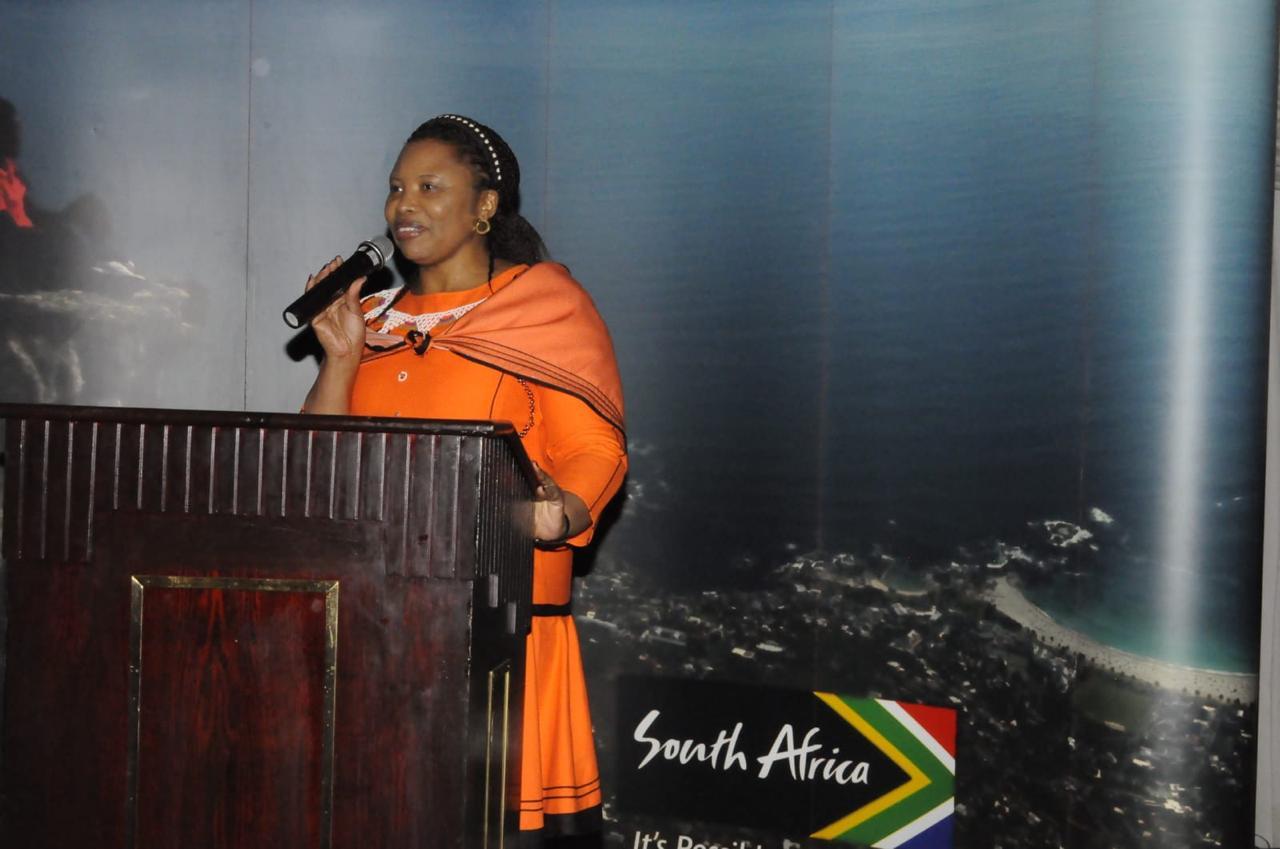
In an interview (Q&A) in mid-August 2025, Ms Tandiwe Thelma Mgxwati, Minister Plenipotentiary and Charge d’Affaires a.i. at the South African Embassy, discussed South Africa’s presidency of G20 and its influence on Africa, in the context of geopolitical changes. Tandiwe Mgxwati further underlined the African Union’s full membership in the G20 as an important organisational instrument through which to seriously seek G20’s support for infrastructure development, digital transformation, industrialisation, and innovation ecosystems—key elements of both Agenda 2063 and national development plans. Here are the interview excerpts:
What is the significance of South Africa’s presidency of the G20 in 2025?
South Africa’s presidency of the G20 in 2025 is of profound historical and geopolitical significance. It marks the first time an African country leads the G20 at Summit level since its inception in 1999, and it coincides with the African Union’s recent inclusion as a permanent G20 member in 2023. The South African presidency symbolises a growing recognition of Africa’s role in the global economy and affirms the need for more inclusive and representative international governance frameworks. For South Africa, the presidency is a platform to assert the voice of the Global South and demonstrate leadership in shaping multilateral responses to shared challenges including inequality, climate change, debt, and technology governance.
In institutional terms, South Africa’s presidency strengthens Africa’s ability to influence G20 policy outcomes and reform debates, particularly regarding the international financial architecture. It also consolidates South Africa’s profile as a credible bridge-builder between developed and developing economies. With the G20 Johannesburg Summit scheduled for 22-23 November 2025, this presidency presents an opportunity for Africa to shape global discussions on sustainable development and resilience in a time of polycrisis, while promoting solidarity between emerging economies and major powers. For the very same reasons, we are taking our G20 presidency to the African continent in three separate events planned for Egypt (on Food Security), Ethiopia (on the Compact with Africa) and Nigeria (on Industrialisation and Agriculture) later this year.
How does South Africa plan to push its own and that of Africa’s development ambitions within the context of the G20?
South Africa has defined the overarching theme of its presidency as “Solidarity, Equality, Sustainability”, capturing the urgent need to address historical development imbalances, promote inclusive growth, and respond to existential threats such as climate change. The country has identified three core Task Forces in the following fields : (1) Inclusive economic growth, industrialisation, and employment creation; (2) Food security (a critical issue for Africa); and (3) The governance and application of artificial intelligence and innovation for sustainable development. These priorities are fully aligned with the African Union’s Agenda 2063 and the United Nations Sustainable Development Goals.
To ensure alignment with African development objectives, South Africa has established a structured engagement process with the African Union Commission and African institutions such as the African Development Bank. The G20 Africa Advisory Group, revitalised under South African leadership, serves as a platform for advancing African priorities within the G20 Sherpa Track. Furthermore, South Africa is promoting coordination with BRICS partners, G77 members, and regional economic communities of Africa to build a unified voice on key issues including debt restructuring, concessional finance, and technology transfer. The African Continental Free Trade Area (AfCFTA) is also being mainstreamed into G20 trade and investment discussions under South Africa’s chairmanship.
In the Finance track, we have also established a team to work on the Review of the Cost of Capital – a very important issue that needs special attention due to the heavy load carried by so many African countries when it comes to debt and the cost of serving it.
What are your assessment on the questions relating to G20 members boosting economic partnership with Africa?
There is growing recognition within the G20 that Africa must be seen as a partner for mutual prosperity rather than a passive recipient of aid. South Africa strongly supports the evolution of G20–Africa economic relations toward long-term, transformative partnerships that deliver industrial capacity, human capital development, and infrastructure integration. South Africa advocates for increased investment in regional value chains, climate-resilient agriculture, and sustainable energy systems, while pushing for fairer access to capital for African economies through multilateral development banks and reformed global rating systems.
In its role as G20 president, South Africa is actively encouraging G20 members to deepen their engagement with Africa by focusing on co-investment models, risk-sharing mechanisms, and blended finance arrangements that crowd in private capital. Africa’s demographic dividend and natural resource base present long-term opportunities for strategic economic partnerships. The Compact with Africa (CwA) initiative, launched under Germany’s G20 presidency in 2017, is being reviewed and revitalised under South African leadership to ensure it better aligns with African-led priorities and supports AfCFTA implementation. In this regard, we aim to further boost the CwA when we host a G20 event in Addis Ababa during the first week of September to focus exclusively on boosting the CwA work and membership of African countries in the Compact.
Do you think there is the possibility of tackling Africa’s challenges under South Africa’s G20 presidency?
Yes, some of the answers above already address this question. South Africa’s presidency is expressly designed to address structural challenges faced by African countries and other developing nations. These include limited access to affordable long-term finance, vulnerability to climate and disaster shocks, constrained industrial development, and exclusion from global technology governance. Through both the Sherpa and Finance Tracks, South Africa is placing these issues at the centre of G20 deliberations and calling for stronger coordination with the United Nations, World Bank, International Monetary Fund, and regional institutions.
Specifically, the South African presidency is pushing for tangible G20 outcomes in areas such as debt relief for low-income countries, increased concessional climate finance, and support for developing countries in leveraging critical minerals for sustainable growth. The inclusion of digital public infrastructure and AI governance in the G20 agenda is another innovation, allowing for African perspectives on ethical technology development to be reflected. These efforts are being anchored through a G20-Africa Action Plan that sets clear deliverables and timelines.
What are Africa’s expectations from G20 members?
Africa’s expectations are based on principles of fairness, equity, and mutual interest. African countries expect G20 members to support reform of the international financial architecture, particularly around voting rights in Bretton Woods institutions, sovereign debt restructuring, and access to concessional finance. In addition, Africa seeks increased support for infrastructure development, digital transformation, industrialisation, and innovation ecosystems—key elements of both Agenda 2063 and national development plans.
There is also a strong expectation that G20 members will enhance investment in Africa’s energy transition, including natural gas as a transitional fuel, and provide resources for climate adaptation and resilience. The continent expects partnerships that create jobs, enable local value addition, and facilitate integration into global supply chains. Africa’s voice in setting international rules—whether in trade, AI, climate, or finance—must be amplified, and the African Union’s full membership in the G20 must now translate into institutional reforms that deliver concrete results.
Do you think the changing South Africa–United States diplomacy will influence these expectations?
South Africa’s foreign policy remains grounded in constitutional values, respect for sovereignty, multilateralism, and a commitment to global equity. While the current United States administration under President Donald Trump has adopted a more protectionist stance—including the imposition of 30% tariffs on selected South African exports—South Africa continues to engage constructively with all G20 partners, including the United States, through diplomatic, trade, and multilateral channels. The participation of the USA in our G20 calendar of events remain important to us as we believe that the entire G20 family should take ownership of the work and outcomes of our presidency, in addition, the USA will take over the G20 presidency from us and hence we need to have them onboard.
The South African government has taken note of the Trump administration’s critical rhetoric toward South Africa, particularly on domestic policies related to land reform, BRICS cooperation, and its posture on global geopolitical issues. However, these differences do not alter the continent’s structural development needs or the core agenda South Africa is advancing through the G20 and other formations such as BRICS and IBSA. Africa’s expectations—such as fairer trade rules, access to concessional finance, value addition in the supply chain processes, climate adaptation support, and inclusive technology governance—are long-standing and are shaped by collective African positions, not bilateral tensions. As G20 president, South Africa is committed to building consensus across ideological divides and ensuring that global economic governance delivers balanced outcomes, even amidst evolving bilateral dynamics. We believe that in this challenging geo-political climate, South Africa is the best country to lead the G20 group at this stage, our experience in shaping an inclusive democratic society in the early 1990’s is now serving us well.


By Kestér Kenn Klomegâh
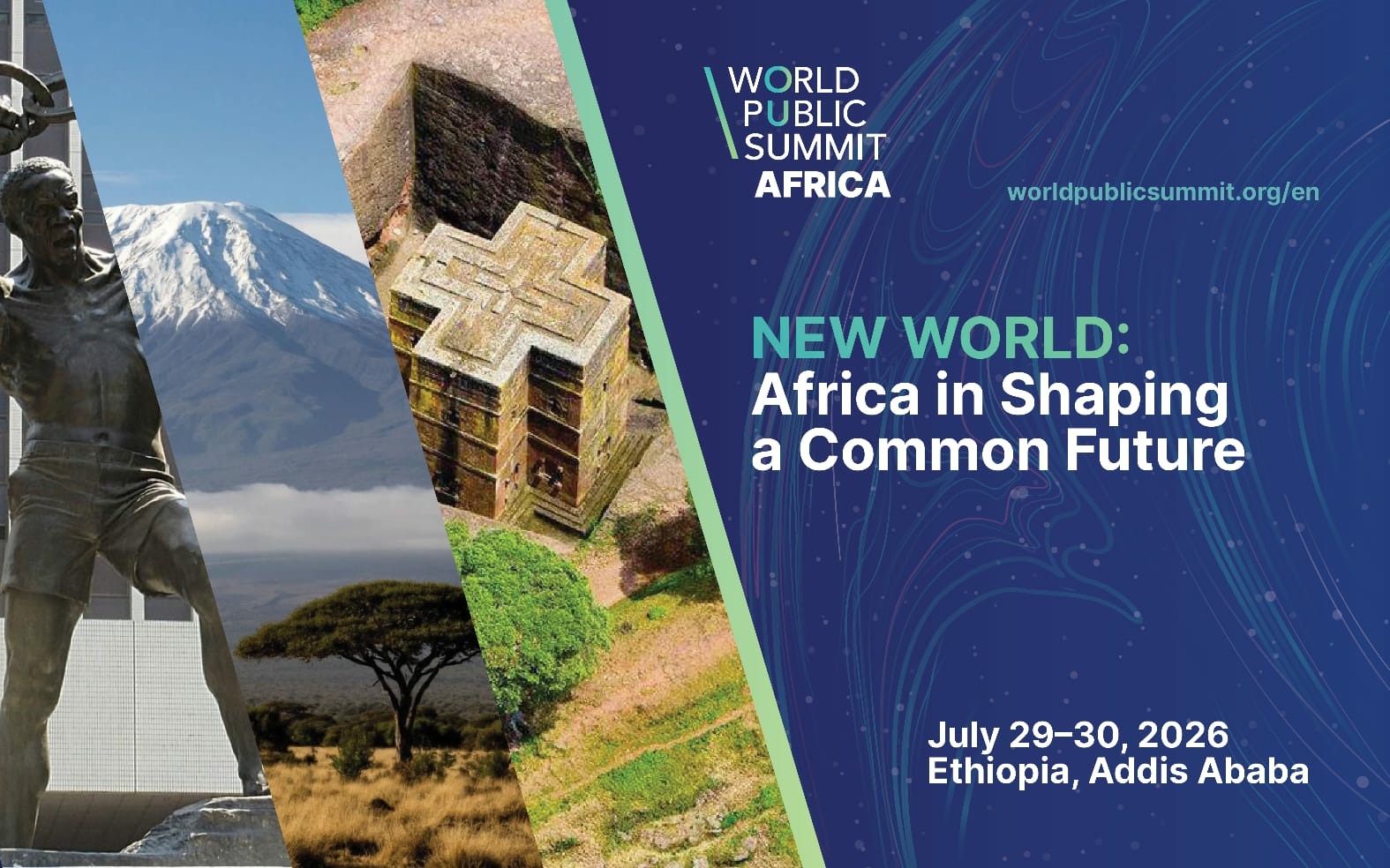
Africa is set to make history as it hosts the World Public Summit for the first time, with Addis Ababa, Ethiopia, welcoming global leaders and changemakers from July 29–30, 2026, for the landmark gathering under the theme “New World: Africa in Shaping a Shared Future.”
The inaugural African edition of the World Public Summit marks a significant milestone in the continent’s growing role in shaping international dialogue on governance, sustainable development, human-centred leadership and global cooperation.
Hosted by the World Peoples Assembly in partnership with African and international organisations, the summit will convene government officials, diplomats, business leaders, academics, journalists, youth representatives, civil society organisations and cultural leaders from across Africa and around the world.
According to Andrey Belyaninov, General Secretary of the World Peoples Assembly, “the Summit is not just a meeting—it is a space for unity. A space where the ‘values that unite us’ come to life: respect for people, openness to the world, responsibility for the future, and a commitment to creation.
“Today, we understand more clearly than ever: the future cannot be built alone. It is born in dialogue, in trust, in the ability to listen to one another and to act together.”
The programme begins on July 29 with a series of high-level roundtables and expert discussions covering Pan-African economic integration, civil society, education, scientific cooperation, cultural diplomacy and humanitarian partnerships.
The opening plenary, “Values, Development and Partnership as the Basis of a Sustainable and Just World,” will explore how African values—including Ubuntu—can help shape a more inclusive and sustainable global future. Discussions will also focus on youth leadership, innovation, civil society, ethical AI, public initiatives and international partnerships.
The summit will also showcase Africa’s creativity and innovation through the “Innovations for the Future” exhibition, the contemporary African art exhibition “Unity,” and the international exhibition “The World Paints Happiness.”
Another featured initiative is “The Zambezi River: Economy, Society, Soul,” an international interdisciplinary project exploring the river’s socioeconomic importance across Angola, Botswana, Mozambique, Namibia, Zambia and Zimbabwe, highlighting the shared heritage and development potential of one of Africa’s most important waterways.
The event will conclude with the adoption of the African Communiqué, reflecting the summit’s shared vision for stronger international cooperation, sustainable development and people-centred leadership.
Tsegaye Chama, General Secretary of the Global Black Centre, promised that, “The Summit will be delivered with exceptional distinction, reflecting the magnitude and spirit of the World Peoples Assembly. It embodies a unity that is not transactional, but purposeful and conscious, a unity that shapes new contours for a world that works for all peoples of the World.”
As delegates prepare to arrive in Addis Ababa, anticipation continues to build for what promises to be one of Africa’s most significant international gatherings of 2026—one that will place the continent firmly at the centre of global conversations about the future.

By Adedapo Adesanya
Nigeria regained its position as Africa’s leading destination for equity startup investment in the first half of 2026, raising $214 million in equity financing and a total of $254 million across equity and debt, according to the latest Africa: The Big Deal report.
The report, titled H1 2026: Mapping the Money, showed that Nigeria ranked second on the continent in total funding, behind Egypt, which attracted $327 million, while Kenya and South Africa followed with $126 million and $83 million, respectively.
However, the report noted that Egypt’s top position was largely driven by a single fundraising by electric mobility company Spiro, which secured $327 million, including $270 million in equity and $57 million in debt. Excluding debt financing, Nigeria emerged as Africa’s largest equity funding market in the first six months of the year.
According to the breakdown by Africa: The Big Deal, Nigeria’s equity funding of $214 million was higher than Egypt’s $183 million, while South Africa and Kenya attracted $66 million and $46 million, respectively.
Beyond funding value, Nigeria also led the continent in the number of startups that raised at least $100,000 during the review period, reclaiming the top spot after what the report described as an “underwhelming” second half of 2025.
The publication observed that Nigeria’s fundraising performance has remained relatively stable over the past few years and exceeded the $250 million mark for the first time since 2022, pointing to renewed investor confidence in the country’s startup ecosystem.
It also found that while the Big Four startup markets—Nigeria, Egypt, Kenya and South Africa—continued to dominate Africa’s investment landscape, their combined share of total funding stood at 58 per cent in the first half of 2026.
“Zooming back on the Big Four (110 out of 190 $100k+ deals, i.e. 58%), Nigeria is head and shoulders above its peers, with Egypt and Kenya almost tying, and South Africa in fourth position again,” the report noted.
The report highlighted contrasting performances among the continent’s largest startup ecosystems. While Nigeria and Egypt maintained strong funding momentum, Kenya recorded its weakest funding performance since early 2021 after a strong second half of 2025, and South Africa failed to attract $100 million in funding during the period despite leading the continent a year earlier.
Africa: The Big Deal also noted a broader shift in investor behaviour, with funding increasingly concentrated in larger transactions while early-stage investments continued to decline. According to the publication, the drop in smaller funding rounds reflects growing concerns about limited capital available for early-stage startups across Africa.

By Aduragbemi Omiyale
Accessing the US Dollar in the East Africa region has now been made easier with the expansion of the stablecoin settlement infrastructure of SCRYPT.
This development enables banks, payment providers and corporate treasury teams to move value into and out of the continent in real time.
Businesses paying international suppliers frequently have to convert local currency into USD before purchasing stablecoins for settlement, incurring FX conversions and spreads before any payment is made.
But SCRYPT is eliminating this intermediate conversion by enabling direct settlement corridors for local African currencies into stablecoins.
This development allows businesses to move from local currency to stablecoin settlement in a single licensed transaction, without first sourcing rationed bank dollars, as stablecoins are increasingly becoming settlement infrastructure rather than an investment product.
The expansion adds settlement support across four African currencies: the Kenyan shilling (KES), Tanzanian shilling (TZS), Rwandan franc (RWF) and Ugandan shilling (UGX). Each corridor is delivered through the same full-stack infrastructure our clients already use for trading, custody and treasury operations.
Speaking on this, the chief executive of SCRYPT, Norman Wooding, said, “Across Africa, stablecoin adoption is driven by economic need, not speculation.
“Businesses here are not chasing yield; they are trying to pay suppliers and manage treasury without losing margin to a banking system that rations dollars. Licensed, fair-rate dollar access is the clearest proof of what this infrastructure is for.”
Also commenting, the Managing Director of Markets & Trading at SCRYPT, Mr Gabriel Titopoulos, said, “Until now, reaching stablecoins from local African currencies meant buying scarce dollars and incurring several layers of conversion costs.
“SCRYPT removes this friction. Firms and payment providers can now settle straight from local currencies through live corridors, with local partners.”
