Connect with us

World

Trump Slams 15% Tariff on Nigeria

Published

on

15% tariff nigerian exports

By Adedapo Adesanya

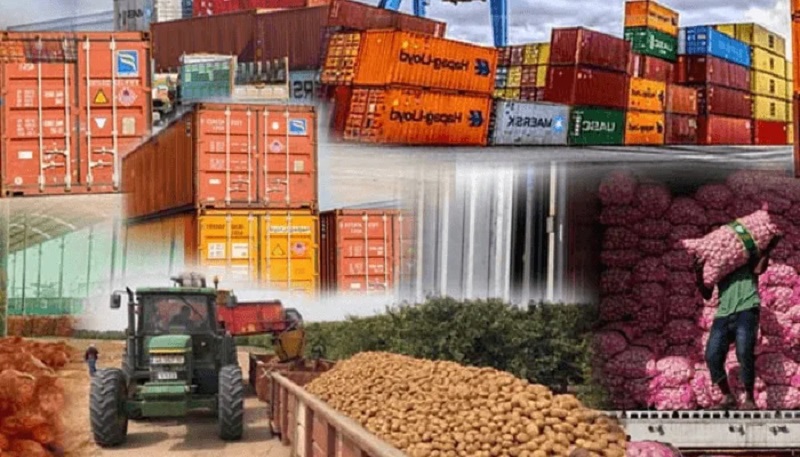
Nigeria will bear a 15 per cent tariff as President Donald Trump looks to enforce tariffs on countries trading with the United States.

President Trump has set a baseline tariff of 10 per cent on all imports to the United States, as well as additional duties on certain products or countries.

The American President says tariffs will encourage US consumers to buy more American-made goods, increase the amount of tax raised and boost investment.

So, Nigerian companies that bring goods into the US have to pay the tax to the government.

However, they may pass some or all of the extra cost on to customers.

Countries and Tariffs

Here is a list of targeted tariffs he has implemented or threatened to put in place.

Afghanistan – 15 per cent

Algeria – 30 per cent

Angola – 15 per cent

Bangladesh – 20 per cent

Bolivia – 15 per cent

Bosnia and Herzegovina – 30 per cent

Botswana – 15 per cent

Brazil – 50 per cent, with lower levels for sectors such as aircraft, energy and orange juice

Brunei – 25 per cent

Cambodia – 19 per cent

Cameroon – 15 per cent

Canada – 10 per cent on energy products, 35 per cent for other products not covered by the US-Canada-Mexico Agreement

Chad – 15 per cent

China – 30 per cent, with additional tariffs on some products. This agreement, which was due to expire on August 12, has been extended for another 90 days through an executive order, according to a White House official.

Costa Rica – 15 per cent

Cote d’Ivoire – 15 per cent

Democratic Republic of the Congo – 15 per cent

Ecuador – 15 per cent

Equatorial Guinea – 15 per cent

European Union – 15 per cent on most goods

Falkland Islands – 10 per cent

Fiji – 15 per cent

Ghana – 15 per cent

Guyana – 15 per cent

Iceland – 15 per cent

India – 25 per cent, additional 25 per cent threatened to take effect August 28

Indonesia – 19 per cent

Iraq – 35 per cent

Israel – 15 per cent

Japan – 15 per cent

Jordan – 15 per cent

Kazakhstan – 25 per cent

Laos – 40 per cent

Lesotho – 15 per cent

Libya – 30 per cent

Liechtenstein – 15 per cent

Madagascar – 15 per cent

Malawi – 15 per cent

Malaysia – 19 per cent

Mauritius – 15 per cent

Mexico – 25 per cent for products not covered by USMCA

Moldova – 25 per cent

Mozambique – 15 per cent

Myanmar – 40 per cent

Namibia – 15 per cent

Nauru – 15 per cent

New Zealand – 15 per cent

Nicaragua – 18 per cent

Nigeria – 15 per cent

North Macedonia – 15 per cent

Norway – 15 per cent

Pakistan – 19 per cent

Papua New Guinea – 15 per cent

Philippines – 19 per cent

Serbia – 35 per cent

South Africa – 30 per cent

South Korea – 15 per cent

Sri Lanka – 20 per cent

Switzerland – 39 per cent

Syria – 41 per cent

Taiwan – 20 per cent

Thailand – 19 per cent

Trinidad and Tobago – 15 per cent

Tunisia – 25 per cent

Turkey – 15 per cent

Uganda – 15 per cent

United Kingdom – 10 per cent, with some auto and metal imports exempt from higher global rates.

Adedapo Adesanya is a journalist, polymath, and connoisseur of everything art. When he is not writing, he has his nose buried in one of the many books or articles he has bookmarked or simply listening to good music with a bottle of beer or wine. He supports the greatest club in the world, Manchester United F.C.

Click to comment

Leave a Reply

Your email address will not be published. Required fields are marked *

World

Global Leaders Head to Addis Ababa for First World Public Summit in Africa

Published

on

Addis Ababa World Public Summit

By Kestér Kenn Klomegâh

Africa is set to make history as it hosts the World Public Summit for the first time, with Addis Ababa, Ethiopia, welcoming global leaders and changemakers from July 29–30, 2026, for the landmark gathering under the theme “New World: Africa in Shaping a Shared Future.”

The inaugural African edition of the World Public Summit marks a significant milestone in the continent’s growing role in shaping international dialogue on governance, sustainable development, human-centred leadership and global cooperation.

Hosted by the World Peoples Assembly in partnership with African and international organisations, the summit will convene government officials, diplomats, business leaders, academics, journalists, youth representatives, civil society organisations and cultural leaders from across Africa and around the world.

According to Andrey Belyaninov, General Secretary of the World Peoples Assembly, “the Summit is not just a meeting—it is a space for unity. A space where the ‘values that unite us’ come to life: respect for people, openness to the world, responsibility for the future, and a commitment to creation.

“Today, we understand more clearly than ever: the future cannot be built alone. It is born in dialogue, in trust, in the ability to listen to one another and to act together.”

The programme begins on July 29 with a series of high-level roundtables and expert discussions covering Pan-African economic integration, civil society, education, scientific cooperation, cultural diplomacy and humanitarian partnerships.

The opening plenary, “Values, Development and Partnership as the Basis of a Sustainable and Just World,” will explore how African values—including Ubuntu—can help shape a more inclusive and sustainable global future. Discussions will also focus on youth leadership, innovation, civil society, ethical AI, public initiatives and international partnerships.

The summit will also showcase Africa’s creativity and innovation through the “Innovations for the Future” exhibition, the contemporary African art exhibition “Unity,” and the international exhibition “The World Paints Happiness.”

Another featured initiative is “The Zambezi River: Economy, Society, Soul,” an international interdisciplinary project exploring the river’s socioeconomic importance across Angola, Botswana, Mozambique, Namibia, Zambia and Zimbabwe, highlighting the shared heritage and development potential of one of Africa’s most important waterways.

The event will conclude with the adoption of the African Communiqué, reflecting the summit’s shared vision for stronger international cooperation, sustainable development and people-centred leadership.

Tsegaye Chama, General Secretary of the Global Black Centre, promised that, “The Summit will be delivered with exceptional distinction, reflecting the magnitude and spirit of the World Peoples Assembly. It embodies a unity that is not transactional, but purposeful and conscious, a unity that shapes new contours for a world that works for all peoples of the World.”

As delegates prepare to arrive in Addis Ababa, anticipation continues to build for what promises to be one of Africa’s most significant international gatherings of 2026—one that will place the continent firmly at the centre of global conversations about the future.

Continue Reading

World

Nigeria Leads Africa in Equity Funding as Startup Investment Hits $254m in H1 2026

Published

on

Investment-Worthy Startups

By Adedapo Adesanya

Nigeria regained its position as Africa’s leading destination for equity startup investment in the first half of 2026, raising $214 million in equity financing and a total of $254 million across equity and debt, according to the latest Africa: The Big Deal report.

The report, titled H1 2026: Mapping the Money, showed that Nigeria ranked second on the continent in total funding, behind Egypt, which attracted $327 million, while Kenya and South Africa followed with $126 million and $83 million, respectively.

However, the report noted that Egypt’s top position was largely driven by a single fundraising by electric mobility company Spiro, which secured $327 million, including $270 million in equity and $57 million in debt. Excluding debt financing, Nigeria emerged as Africa’s largest equity funding market in the first six months of the year.

According to the breakdown by Africa: The Big Deal, Nigeria’s equity funding of $214 million was higher than Egypt’s $183 million, while South Africa and Kenya attracted $66 million and $46 million, respectively.

Beyond funding value, Nigeria also led the continent in the number of startups that raised at least $100,000 during the review period, reclaiming the top spot after what the report described as an “underwhelming” second half of 2025.

The publication observed that Nigeria’s fundraising performance has remained relatively stable over the past few years and exceeded the $250 million mark for the first time since 2022, pointing to renewed investor confidence in the country’s startup ecosystem.

It also found that while the Big Four startup markets—Nigeria, Egypt, Kenya and South Africa—continued to dominate Africa’s investment landscape, their combined share of total funding stood at 58 per cent in the first half of 2026.

“Zooming back on the Big Four (110 out of 190 $100k+ deals, i.e. 58%), Nigeria is head and shoulders above its peers, with Egypt and Kenya almost tying, and South Africa in fourth position again,” the report noted.

The report highlighted contrasting performances among the continent’s largest startup ecosystems. While Nigeria and Egypt maintained strong funding momentum, Kenya recorded its weakest funding performance since early 2021 after a strong second half of 2025, and South Africa failed to attract $100 million in funding during the period despite leading the continent a year earlier.

Africa: The Big Deal also noted a broader shift in investor behaviour, with funding increasingly concentrated in larger transactions while early-stage investments continued to decline. According to the publication, the drop in smaller funding rounds reflects growing concerns about limited capital available for early-stage startups across Africa.

Continue Reading

World

SCRYPT Expands Stablecoin Settlement Infrastructure to East Africa

Published

on

SCRYPT stablecoin

By Aduragbemi Omiyale

Accessing the US Dollar in the East Africa region has now been made easier with the expansion of the stablecoin settlement infrastructure of SCRYPT.

This development enables banks, payment providers and corporate treasury teams to move value into and out of the continent in real time.

Businesses paying international suppliers frequently have to convert local currency into USD before purchasing stablecoins for settlement, incurring FX conversions and spreads before any payment is made.

But SCRYPT is eliminating this intermediate conversion by enabling direct settlement corridors for local African currencies into stablecoins.

This development allows businesses to move from local currency to stablecoin settlement in a single licensed transaction, without first sourcing rationed bank dollars, as stablecoins are increasingly becoming settlement infrastructure rather than an investment product.

The expansion adds settlement support across four African currencies: the Kenyan shilling (KES), Tanzanian shilling (TZS), Rwandan franc (RWF) and Ugandan shilling (UGX). Each corridor is delivered through the same full-stack infrastructure our clients already use for trading, custody and treasury operations.

Speaking on this, the chief executive of SCRYPT, Norman Wooding, said, “Across Africa, stablecoin adoption is driven by economic need, not speculation.

“Businesses here are not chasing yield; they are trying to pay suppliers and manage treasury without losing margin to a banking system that rations dollars. Licensed, fair-rate dollar access is the clearest proof of what this infrastructure is for.”

Also commenting, the Managing Director of Markets & Trading at SCRYPT, Mr Gabriel Titopoulos, said, “Until now, reaching stablecoins from local African currencies meant buying scarce dollars and incurring several layers of conversion costs.

“SCRYPT removes this friction. Firms and payment providers can now settle straight from local currencies through live corridors, with local partners.”

Continue Reading