Connect with us

General

NCDMB Lauds Local Building, Integration of FPSO Parts

Published

on

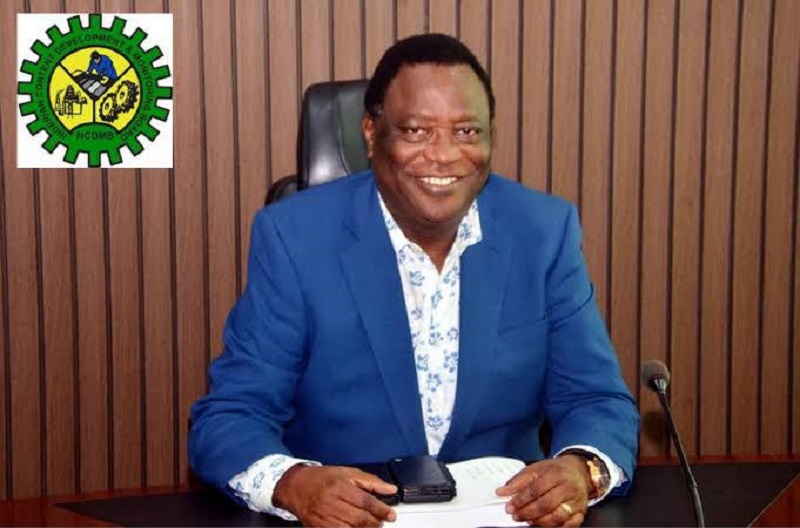
Felix Ogbe NCDMB

By Adedapo Adesanya

The Nigerian Content Development and Monitoring Board (NCDMB) has confirmed that local fabrication yards are now executing critical components for Floating Production Storage and Offloading (FPSO) units, describing this as a milestone for Nigerian Content implementation.

Speaking recently at a strategic engagement with media practitioners and youth stakeholders in Port Harcourt, Rivers State, the NCDMB Executive Secretary, Mr Felix Ogbe, said indigenous yards have proven their capacity to deliver high-value projects previously handled abroad.

“Today, Nigerian fabrication yards are building and integrating FPSO modules in-country. This achievement is a testament to the resilience of our local contractors and the effectiveness of the Nigerian Content policy,” Mr Ogbe declared.

According to him, this progress translates to job creation, skills transfer, and massive cost savings for the Nigerian oil industry.

The Executive Secretary speaking through Mr Omomehin Ajimajiye, Acting General Manager, Midstream Monitoring and Evaluation at NCDMB, noted that such in-country fabrication has raised Nigeria’s profile in the global oil and gas market, where FPSO projects typically attract multi-billion-dollar investments.

“We are proving that Nigerians can deliver world-class engineering and fabrication solutions. This is what local content is about, retaining value within our economy,” he added.

This development marks a transition from dependence on foreign yards to domestic capacity, positioning the country as a regional hub for deepwater projects.


Adedapo Adesanya is a journalist, polymath, and connoisseur of everything art. When he is not writing, he has his nose buried in one of the many books or articles he has bookmarked or simply listening to good music with a bottle of beer or wine. He supports the greatest club in the world, Manchester United F.C.

General

Ekiti Expresses Readiness for Special Agro-Industrial Processing Zones

Published

on

Ekiti State map

By Adedapo Adesanya

The federal government has selected Ekiti State to participate in a Special Agro-Industrial Processing Zones (SAPZ) Phase Two Programme, an initiative supported by the African Development Bank (AfDB).

According to the Commissioner for Information in Ekiti State, Mr Taiwo Olatunbosun, the state’s inclusion in SAPZ Phase Two “is a clear acknowledgement of the government’s sustained efforts to reposition agriculture as a key driver of industrialisation, employment generation, and sustainable economic growth.”

“This programme will significantly enhance value addition, attract private sector investment, and improve livelihoods across Ekiti State,” he said.

He noted that the benefits of the SAPZ Programme would be far-reaching, with thousands of jobs expected to be created for young people, particularly in agro-processing and related industries.

The commissioner added that small and medium enterprises (SMEs) would also gain from strengthened value chains and improved access to new markets, thereby boosting their growth and contribution to the State’s economy.

“This initiative is not just about agriculture; it is about empowering our people especially our youth and SMEs to build sustainable livelihoods, improve food security, and drive Ekiti’s economic future,” he said.

“The state government is fully prepared to ensure the timely and effective implementation of the programme with the execution of Subsidiary Loan Agreements, establishment of a State Implementation Unit, compliance with environmental and social safeguards, such as compensation of Project Affected Persons at the Agro-Industrial Hub in Itapaji, as well as the opening of dedicated project accounts and preparation of procurement plans and annual work programmes.”

Mr Olatunbosun also disclosed that the SAPZ National Coordination Office has indicated plans to organize an onboarding workshop to provide technical guidance and support to participating states ahead of full implementation.

He reaffirmed Ekiti state’s readiness to collaborate closely with the Federal Government, development partners, relevant ministries, departments and agencies and the private sector to ensure the successful delivery of the SAPZ phase two programme.

The commissioner concluded that the programme aligns with Ekiti State’s broader vision of enhancing food security, strengthening agricultural value chains, and creating sustainable economic opportunities for its people, adding that the state remains committed to leveraging the initiative to drive inclusive growth and long-term prosperity.

Continue Reading

General

Alkali Tasks Onne Customs Officers on Professional Ethics

Published

on

Onne Customs Officers Professional Ethics

By Bon Peters

The Customs Area Controller of Port Harcourt 11 Command, Onne Port Harcourt Rivers State, Comptroller Aliyu Mohammed Alkali, has emphasized the importance of maintaining a positive attitude and professional conduct among officers in the discharge of their legitimate duties.

Speaking on Wednesday at a Reputation Management Cascade Training at Area 11 Command, the Onne customs chief stressed the importance of discipline and professionalism in the Nigeria Customs Service (NCS).

He emphasised that every employee of the agency is an ambassador of the NCS and has a role to play in shaping its reputation.

“Reputation management training is designed to equip the officers and men with a right attitude and professional ethical conduct that will portray the Nigeria Customs Service in a good light in the discharge of their duties.

“Our image is shaped daily by our actions, decisions and interactions with the public and the stakeholders,” he stated, reiterating that the knowledge gained from the engagement will enhance professionalism, ethical conduct and public trust amongst the officers and men.

He tasked them to take the training seriously, insisting that the knowledge gained will reinforce the service commitment, integrity, accountability and service excellence.

The training featured presentations from resource persons serving in the command such as Deputy Comptroller of Customs Abbas Oladepo, Chief Superintendent of Customs Dennis Gotar, and Chief Superintendent of Customs Akinwale Fatoki.

The facilitators spoke about modules drawn from the Nigeria Customs Service’s Reputation Management Guide and the Service’s Golden 7 Cs.

There was a question and answer section as participants were engaged actively and provided feedback by stating their key takeaways.

The training received positive reviews, with participants acknowledging its relevance to their roles.

Continue Reading

General

Kudirat Abiola’s Murder: Supreme Court Dismisses Hamza Al-Mustapha’s Trial

Published

on

Hamza Al-Mustapha

By Adedapo Adesanya

The Supreme Court has dismissed the trial of Major Hamza Al-Mustapha (rtd), the former Chief Security Officer (CSO) to the late Military Head of State, General Sani Abacha, in the murder of the late politician, Mrs Kudirat Abiola.

Mrs Abiola was the wife of the late businessman and politician, Mr MKO Abiola, the presumed winner of the June 12, 1993, presidential election that was annulled by former Military President, Mr Ibrahim Babangida.

She was murdered in Lagos on June 4, 1996, by some gunmen, who allegedly acted on the orders of the Sani Abacha’s military junta.

Later, Mr Al-Mustapha was accused and convicted. Investigations into the killing traced the killers’ bullets to his personal armoury.

Now, the trial of Mr Al-Mustapha in the murder charge brought against him by the Lagos State government was put to rest on Thursday by a five-member panel of Justices of the Supreme Court, headed by Justice Uwani Aba-Aji.

At the proceedings, where Lagos State was slated to re-open the trial, no legal representation appeared, and no process had been filed since 2014, when an order to re-open the case was granted in its favour.

Mr Paul Daudu, a Senior Advocate of Nigeria (SAN) representing Mr Al-Mustapha, informed the Justices that Lagos State had not taken any steps to implement the 2014 order to reopen the trial.

He said that not even a notice of appeal had been filed by Lagos as the appellant to demonstrate its seriousness in prosecuting the trial.

Mr Daudu noted that when the order to reopen the trial was granted in 2014, Lagos State was issued a 30-day ultimatum to file its notice of appeal, explaining that more than 11 years later, nothing had been done to comply with the order.

He, therefore, urged the court to hold that the appellant had abandoned the case and should have it dismissed in its entirety.

Justice Uwani Aba-Aji, who presided over the matter, sought to know if Lagos had been served with the hearing notice, a question answered in the affirmative by the Registrar of the Court.

In a brief ruling, the Supreme Court, in a unanimous decision, agreed that Lagos had lost interest in the matter and had consequently abandoned it.

Justice Aba-Aji held that nine years was long enough for the appellant to have filed a notice of appeal and the brief of appeal.

The court also expressed disapproval that no legal representation had been made by the state government, while no information was provided to the Court or the respondent, despite being served with the hearing notice since 2020.

Consequently, the matter marked SC/CR/45/2014 was dismissed. Another matter by the Lagos governor, marked SC/CR/6/2014, on the same trial was also dismissed on the same ground.

The Supreme Court had in 2014, in a ruling on Lagos State’s application for permission to re-open the case out of time, granted the request to challenge the Court of Appeal decision of July 12, 2013, which discharged and acquitted Al-Mustapha in the murder case.

The then Acting Chief Justice of Nigeria (CJN), Justice Walter Samuel Nkanu Onnoghen, in a ruling of a seven-member panel, ordered Lagos State to file its notice of appeal within 30 days.

The decision followed the consent of Mr Al-Mustapha’s lawyer, Mr. Joseph Daudu SAN, not to oppose the application, which was argued by Osunsanya Oluwayemisi, a Senior State Counsel in the Lagos Ministry of Justice.

The Acting CJN had said that by the decision of the apex court, the time for Lagos to appeal against the Court of Appeal’s findings on the high-profile murder case had been extended from July 12, 2013, when the Court of Appeal judgment was delivered, until January 7, 2014.

By the permission granted in 2014, Lagos was cleared to challenge the not-guilty verdict granted in favour of the military officer by the Court of Appeal in 2013.

Continue Reading

Trending