Connect with us

Economy

Equity Market Ready for Recovery

Published

on

By FSDH Research

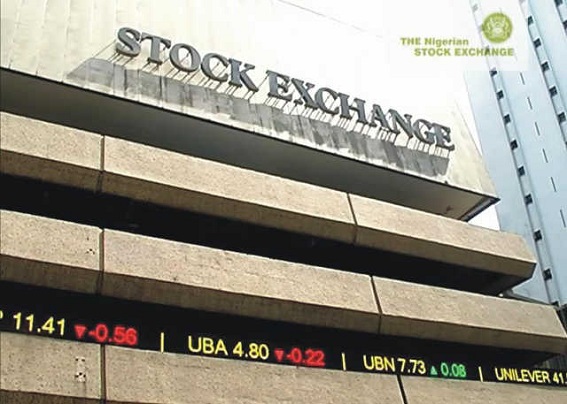
There are indications that the Nigerian equity market is ready for a recovery in the year 2017 after three consecutive years of decline. The equity market, as measured by The Nigerian Stock Exchange All Share Index (NSEASI), depreciated by 16.14%, 17.36% and 6.17% in 2014, 2015 and 2016 respectively.

As at April 28, 2017 the NSEASI had lost 4.15% of its value. The major factors responsible for the poor performance of the equity market in the last three years are: weak macroeconomic performance, inconsistent policies, weak corporate earnings and portfolio realignment from equities to fixed income securities.

However, looking at the strong growth in the unaudited results that quoted companies released for the period January – March 2017 and the improvement in the macroeconomic environment, we believe the equity market is ready for a recovery in 2017.

As at April 27, 2017, 62 quoted companies had released their unaudited quarterly results for the period January – March 2017.

The total turnover of these companies increased by 41% from N1,450billion in 2016 to N2,042bilion in 2017.

The Profit Before Tax (PBT) increased by 45% from N257billion in 2016 to N373billion in 2017 while the Profit After Tax increased by 29% from N240billion in 2016 to N310billion in2017.

The recent increase in the crude oil price and production and subsequent increase in the external reserves have helped to stabilise the foreign exchange market – a major concern of the foreign investors. The increase in the supply of foreign exchange to meet the input requirements of manufacturing companies should increase their production activities and revenue in the current financial year.

The fiscal and the monetary authorities are implementing policies that should inspire investors’ confidence in the Nigerian economy and market.

Our survey shows that most investors did a lot of portfolio realignment -moving from equities to fixed income securities. The main reason for this was the lacklustre performance of equities in the face of attractive yields on fixed income securities.

The data from the National Pension Commission (PenCom) on the allocation of the Pension Fund Assets as at February 2017 shows that the weight of the pension fund assets on domestic equity dropped consistently from 2014 to 2017.

The weight stood at 13.7%, 10.4%, 8.6% and 7.5% in February 2014, 2015, 2016 and 2017 respectively. These figures are lower than PenCom’s approved pension fund assets allocation weight to equities, an indication that there is room for pension fund assets to allocate more funds to equities.

PenCom stipulates the maximum weights of equities in the investment portfolio of pension assets as follows: Fund I: 30%; Fund II: 25%, Fund III: 10% and Fund IV: 5%. Any pension contributor can make a formal request to join Fund I. Fund II is for active contributors who are below the age of 49 years. Fund III is for active contributors who are 50 years and above while Fund IV is strictly for retirees.

The analysis of the equity transactions on the NSE in the last three years shows investors’ apathy for equity investment.

According to the NSE, the value of equity transactions from foreign and domestic investors declined between 2014 and 2016.

Foreign transactions were N1.54trillion, N1.03trillion and N0.52trillion in 2014, 2015 and 2016 respectively while Domestic transactions were N1.14trillion, N0.88trillion and N0.63trillion in 2014, 2015 and 2016 respectively.

Although the relative size of foreign investors’ participation in the equity market declined between 2014 and 2016 (58%, 54% and 45% in 2014, 2015 and 2016 respectively), the share of foreign investors’ participation was higher than domestic investors’ participation between 2014 (Foreign: 58% and Domestic: 42%) and 2015 (Foreign: 54% and Domestic: 46%).

The foreign investors’ participation in 2016 at 46% was lower than domestic investors’ participation at 54%.

The uncertainties surrounding the foreign exchange policies and the difficulties to access foreign exchange to repatriate capital and profit led to the withdrawal of foreign investors from the market. The stability in the macroeconomic environment and the strong earnings of quoted companies should attract the needed liquidity into the market. Consequently, the equity market should record a strong recovery in the year 2017.

Source: FSDH Research

Modupe Gbadeyanka is a fast-rising journalist with Business Post Nigeria. Her passion for journalism is amazing. She is willing to learn more with a view to becoming one of the best pen-pushers in Nigeria. Her role models are the duo of CNN's Richard Quest and Christiane Amanpour.

Click to comment

Leave a Reply

Your email address will not be published. Required fields are marked *

Economy

Unlisted Stock Investors’ Wealth Shrinks N30bn

Published

on

unlisted stock investors

By Adedapo Adesanya

The NASD Over-the-Counter (OTC) Securities Exchange recorded a loss of 1.13 per cent on Thursday, June 4, shrinking the market capitalisation by N30.03 billion to N2.630 trillion from N2.660 trillion on Wednesday.

Similarly, this brought down the NASD Unlisted Security Index (NSI) by 50.19 points to 4,396.08 points from the 4,446.27 points recorded a day earlier.

The loss was influenced by the overpowering of the bulls by the bears, after the bourse closed with two price gainers and three price losers, led by FrieslandCampina Wamco Nigeria Plc, which slumped by N20.03 to sell at N190.38 per unit compared with midweek’s N210.41 per unit. Food Concepts Plc declined by 25 Kobo to trade at N2.50 per share versus the previous day’s N3.00 per share, and Acorn Petroleum Plc crumbled by 2 Kobo to end at N1.32 per unit, in contrast to the preceding session’s N1.34 per unit.

For the gainers, Central Securities Clearing System (CSCS) Plc added N2.93 to close at N78.34 per share compared with the previous price of N75.41 per share, and Afriland Properties Plc gained 80 Kobo to settle at N16.80 per unit versus N16.00 per unit.

There was a slip in the volume of transactions yesterday by 46.8 per cent to 280,714 units from 527,221 units, as the value of trades dropped 66.5 per cent to N21.8 million from the preceding session’s N64.2 million, and the number of deals fell by 8.7 per cent to 42 deals from 46 deals.

Great Nigeria Insurance (GNI) Plc ended the session as the most traded stock by value on a year-to-date basis with 3.4 billion units worth N8.4 billion, followed by Infrastructure Credit Guarantee (Infracredit) Plc with 2.3 billion units sold for N6.5 billion, and CSCS Plc with 64.7 million units traded for N4.4 billion.

GNI Plc also finished the day as the most traded stock by volume on a year-to-date basis with 3.4 billion units valued at N8.4 billion, followed by Infracredit Plc with 2.3 billion units exchanged for N6.5 billion, and Resourcery Plc with 1.1 billion units transacted for N415.7 million.

Continue Reading

Economy

McNichols, Eterna, Aradel Crash Stock Market by 0.37%

Published

on

McNichols

By Dipo Olowookere

The domestic stock market crashed by 0.37 per cent on Thursday as a result of the decline in the price of shares of McNichols, Eterna, Aradel Holdings, and others.

Business Post reports that investor sentiment remained weak after the Nigerian Exchange (NGX) Limited ended the session with 25 price gainers and 31 price losers, indicating a negative market breadth index.

McNichols lost 10.00 per cent to trade at N7.74, ABC Transport slipped by 9.88 per cent to N6.20, Eterna shrank by 9.85 per cent to N29.75, Aradel Holdings depreciated by 9.51 per cent to N1,749.90, and NPF Microfinance Bank contracted by 8.45 per cent to N5.20.

On the flip side, International Energy Insurance gained 10.00 per cent to close at N6.60, Omatek improved by 9.73 per cent to N2.03, Abbey Mortgage Bank surged by 9.68 per cent to N8.50, Cutix expanded by 9.66 per cent to N3.18, and John Holt grew by 7.79 per cent to N14.90.

As for the sectorial performance, the industrial goods and banking indices chalked up 0.54 per cent and 0.31 per cent, respectively. But the energy sector depleted by 4.90 per cent, the insurance counter tumbled by 0.58 per cent, and the consumer goods index slumped by 0.03 per cent.

As a result, the All-Share Index (ASI) dipped by 905.30 points to 242,227.31 points from 243,132.61 points, and the market capitalisation stumbled by N581 billion to N155.359 trillion from N155.940 trillion.

During the session, investors traded 588.5 million equities valued at N27.9 billion in 57,352 deals compared with the 923.0 million equities worth N42.3 billion transacted in 69,332 deals on Wednesday, showing a drop in the trading volume, value, and number of deals by 36.24 per cent, 34.04 per cent, and 17.28 per cent, respectively.

The most active equity yesterday was Access Holdings with 109.7 million units sold for N2.6 billion, FCMB traded 35.6 million units valued at N384.2 million, NGX Group transacted 28.1 million units worth N3.9 billion, Zenith Bank exchanged 26.9 million units for N3.3 billion, and Sterling Holdings recorded a turnover of 22.5 million units worth N176.1 million.

Continue Reading

Economy

Naira Slips 0.1% to N1,358/$1 at Official FX Market

Published

on

Naira-Yuan Currency Swap Deal

By Adedapo Adesanya

A 0.1 per cent or N1,49 loss was recorded by the Nigerian Naira against the United States Dollar in the Nigerian Autonomous Foreign Exchange Market (NAFEX) on Thursday, June 4, closing at N1,358.75/$1 compared with the previous day’s N1,347.26/$1.

In the same vein, the Naira depreciated against the Pound Sterling in the official FX market during the session by N5.39 to trade at N1,828.06/£1 versus Wednesday’s closing rate of N1,822.67/£1, but gained N6.75 against the Euro to sell at N1,574.83/€1 versus the preceding session’s N1,584.39/€1.

At the black market and GTBank FX desk, the local currency traded flat against the Dollar during the session at N1,375/$1 and N1,372/$1, respectively.

Data from the Central Bank of Nigeria (CBN) showed that NFEM interbank FX turnover contracted to $128.117 million in 121 deals on Thursday from $133.731 million the previous day.

On the positive side, Nigeria’s external reserves moved closer to a 2009 high of $50 billion, enhancing analysts’ confidence about the local currency outlook in the second half of 2026.

This improvement has been helped by heightened global uncertainty, which has reduced the incentive for importers and corporates to demand FX, as cautious trade weighs on import needs. Analysts estimate a $40 billion net FX position for the year, a projection anchored in oil windfall gains.

As for the cryptocurrency market, prices extended steep weekly losses as the broader artificial-intelligence trade that has driven global risk assets since 2026 faltered.

The sell-off was led by equity and currency markets, with semiconductor stocks, Asian indexes and several regional currencies sliding in a broad risk-off shift.

Persistent outflows from US spot Bitcoin ETFs and a rare BTC sale by Strategy have removed a key source of support, leaving markets focused on Friday’s US jobs report for clues on Federal Reserve policy and the fate of the AI trade. The most valued coin slipped 3.6 per cent to $61,914.58.

Cardano (ADA) plunged by 17.6 per cent to $0.1630, Solana (SOL) declined by 7.0 per cent to $65.69, Ethereum (ETH) slipped by 6.9 per cent to $1,666.13, Dogecoin (DOGE) went down by 6.5 per cent to $0.8445, and Ripple (XRP) crashed by 6.5 per cent to $1.11.

Further, Binance Coin (BNB) slumped by 4.3 per cent to $581.45, and TRON (TRX) dropped 1.9 per cent to sell at $0.3261, while the US Dollar Tether (USDT) and the US Dollar Coin (USDC) gained 0.01 per cent each to sell at $0.9990 and $0.9998, respectively.

Continue Reading

Trending