Connect with us

Media OutReach

8-Year-Old Girl Feels Invisible Like a “Ghost” Rediscovers Joy of Childhood through Art

Published

on

“Healing Heart & Mind” Helps Children Voice Their Inner Worlds

HONG KONG SAR – Media OutReach Newswire – 22 September 2025 – A happy childhood begins with the space to explore, grow, and develop emotional and social skills. Artistic creation is one of the pathways to a child’s inner world, encouraging them to freely express their thoughts and feelings, while fostering the resilience and positive mindset needed for the future. Save the Children Hong Kong’s Healing Heart and Mind programme not only reaches into primary schools but also actively collaborates with community partners, including setting up in grassroots service points like the Sham Shui Po Community Living Room, to provide children with psychological support and opportunities to thrive through art.
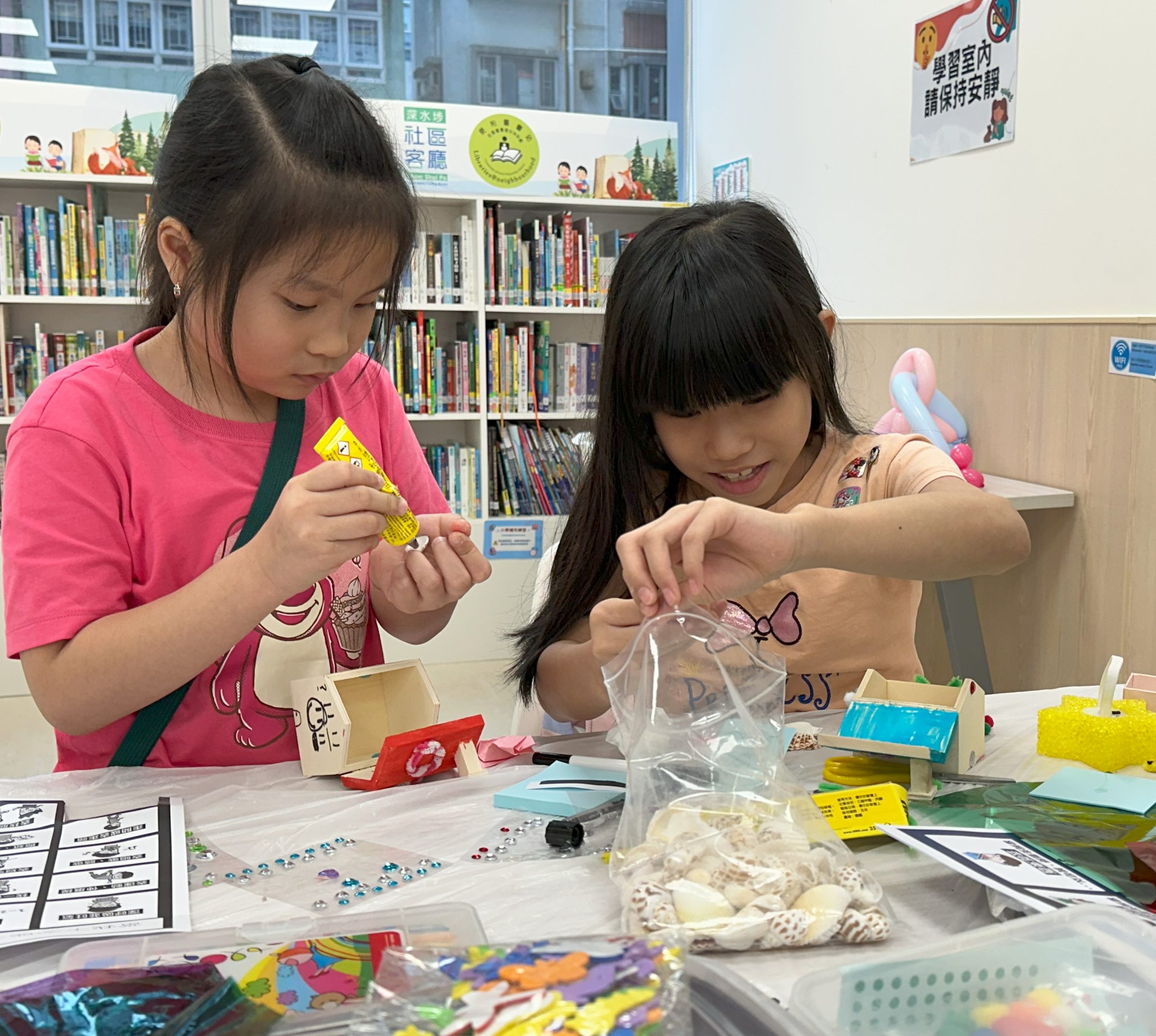
8-year-old Cara* (right) expresses her feelings through artistic creation

A “Little Adult” at Home Finds Her Childhood Again in the Community Living Room
For the local residents of Sham Shui Po, the Community Living Room is a place to meet, connect, and build a social life. But for eight-year-old Cara*, it is practically a second home. Cara and her family live in a cramped home of around 150 square feet. With the living space so tight, her three younger siblings mostly stay indoors, while Cara goes to the Living Room every day after school to do her homework and play with friends, often staying right until it is about to close. She reveals that since her siblings were born, the attention she receives from her parents has drastically decreased. At times, she even has to take on the role of caregiver, a responsibility that has gradually changed the course of her childhood.

Cara’s mother notices how little she talks to her daughter these days. “There’s definitely less time for a chat compared to when she was an only child,” she says. “Now that she has a younger brother and sister, the time I can give her has naturally lessened.” She understands in her heart that her daughter needs attention and companionship, but the immense pressure of childcare leaves her feeling powerless.

Her five-year-old son has ADHD and requires constant care, so his mother even has to accompany him during his lessons. Her three-year-old daughter and two-year-old son are also very young and need looking after around the clock. Their mother runs off her feet, with scarcely a moment to rest. Even while constantly rushing to care for her younger children, Cara’s mum tries her best to bring them to the Community Living Room to see Cara, creating the most precious family moments she can. But she is simply overwhelmed and has no time for herself. The thought that her children need her is what keeps her going; she can only grit her teeth and carry on. Meanwhile, the father works long hours to provide for the family, with hardly any days off to enjoy some family time. This helplessness and struggle are a microcosm of the reality for many families with children who have special needs—parents who long to care for each child equally but, due to limited resources and time, are forced to make difficult compromises between the ideal and the reality.

Feeling a lack of parental attention, Cara calls herself a “ghost”. “I am nothing,” she says, “just blank—no one notices me.” She sometimes resents her siblings for taking her parents’ attention away, but this feeling is not simple blame. It stems from a deep internal conflict and struggle. The social worker at the Community Living Room, who sees Cara often, has observed that as the big sister, she is deeply affectionate towards her younger siblings. When her mum is overwhelmed, she proactively helps to look after them and plays with them. She understands how exhausted her mother is and knows her siblings need care, yet at eight years old, she still longs for her parents’ love and attention. This difficult position—of being both the sensible one and a child who still craves care—causes Cara significant inner turmoil.
Expressive Art as a Key to Unlock Inner Feelings and Relieve Emotions
The social worker recalled that Cara initially struggled to express her emotions. Although she longed for her parents’ attention, she kept her feelings bottled up and would sometimes hide and cry. The only activity that brought her comfort was drawing on her phone, perhaps one reason she enrolled in the Healing Heart and Mind programme of Save the Children Kong Kong.

Through 8 art-based sessions, the programme encourages children to express their emotions through art, while learning to identify and manage different feelings. Cara said the classes allowed her to create and express herself freely, which made her ‘super happy’—and she still remembers them vividly six months later. She learned how to express herself when needed and use tools like a “calming bottle” to ease anxiety. “When I am upset, I can write it down and put it in a box,” she said.

Cara has also learnt to face her unhappy feelings with a more positive mindset. She says, “Once you learn how to manage your feelings, you won’t (verbally) lash out at other people. Now, I try to remember what I’ve learnt, happy moments, what my teacher says, and memories of my dad, mum, and grandad. I try not to dwell on the unhappy things, because that just makes you feel worse.”

Expressing feelings through art also gives parents a chance to see and appreciate their children’s talents. One child in the class shared that they usually aren’t allowed to take their projects home from art class at school, so their family never gets to see what they’ve made. For some of the children, being able to bring their work home is a simple pleasure. “My mum and dad praise me now, which makes me really happy,” says Cara. “My mum isn’t very good at drawing herself, but when she saw my artwork, she realised how well I could draw.” This newfound confidence in expressing herself has carried over into other areas of Cara’s life. She recently wrote her own play and took the initiative to invite the social worker and her friends from the Living Room to rehearse it with her. Together, they put on a brilliant performance, allowing her to express her true self through her creativity.

Kalina Tsang, CEO of Save the Children Hong Kong, grew heartfelt as she reflected on the Healing Heart and Mind programme, “Every child holds a vibrant world within—but sometimes, life’s struggles silence their voices.” The programme, she explained, works like a key for children, unlocking doors to self-expression through art. We are confident that by helping children learn how to be friends with their own emotions, they will be able to face any future challenges with a more positive and resilient attitude, grow up healthy and happy.”
Note:
* Denotes name changed to protect identity

Hashtag: #SavetheChildrenHongKong #MentalWellbeing #ExpressiveArt #HealingHeartAndMind


YouTube:

The issuer is solely responsible for the content of this announcement.

Save the Children Hong Kong

Save the Children believes every child deserves a future. In Hong Kong and around the world, we do whatever it takes – every day and in times of crisis – so children can fulfil their rights to a healthy start in life, the opportunity to learn and protection from harm. With over 100 years of expertise, we are the world’s first and leading independent children’s organisation – transforming lives and the future we share.

Established in 2009, Save the Children Hong Kong is part of the global movement which operates in around 100 countries. We work with children, families, schools, communities and our supporters to deliver lasting change for children in Hong Kong and around the world.


Advertisement

Media OutReach

Cyber and Supply Chain Risks Reshaping Japan’s Business Landscape, Aon Survey

Published

on

  • “Geopolitical Volatility” is a top five current and future risk, highlighting the growing instability across the region
  • 83 Percent of Firms Report Rising Insurable Risk Costs

TOKYO, JAPAN – Media OutReach Newswire – 12 February 2026 – Aon plc (NYSE: AON), a leading global professional services firm, has released the Japan findings of its 2025 Global Risk Management Survey. The survey reveals that Japanese businesses are navigating a complex landscape marked by persistent cyber threats, supply chain disruptions and weather/natural disasters. The survey, which gathered insights from nearly 3,000 risk managers, C-suite leaders and executives across 63 countries, highlights the unique risks Japan businesses are facing amid global disruption.

Japan’s Top Risks:

“Cyber Attacks/Data Breach” remains the top risk for Japanese businesses, consistent with global trends. “Supply chain or distribution failure” ranks second, as extreme weather events and mounting geopolitical volatility including shifting trade policies force companies to reassess their supply chains. In addition, “Product Liability/Recall” and “Exchange Rate Fluctuation” pose significant risks, reflecting the country’s manufacturing strength and exposure to global market volatility. Notably, 63.6 percent of Japanese respondents reported losses due to product liability or recall issues and 47.6 percent cited losses from exchange rate fluctuations.

Tatsuya Yamamoto, CEO of Japan at Aon, said, “Japanese organisations are operating in an environment of unprecedented complexity. Cyber, weather and geopolitical risks continue to be acute challenges for Japan businesses, underscoring the need for robust risk management frameworks and agile strategies. As market trends shift and competition intensifies, vigilance and adaptability will be key. The interconnectedness of risks – where a cyber attack can disrupt supply chains or geopolitical volatility can trigger regulatory changes – demands a holistic, proactive approach to resilience.”

2025 Top 10 Business Risks in Japan

  1. Cyber Attacks/Data Breach
  2. Supply Chain or Distribution Failure
  3. Weather/Natural Disasters
  4. Geopolitical Volatility
  5. Business Interruption
  6. Economic Slowdown/Slow Recovery
  7. Exchange Rate Fluctuation
  8. Commodity Price Risk/Scarcity of Materials
  9. Product Liability/Recall
  10. Failure to Attract or Retain Top Talent

Risk Management: Formalisation and Focus on Insurable Risks

Japanese organisations demonstrate a strong commitment to risk management, with 74.7 percent having a formal risk management and insurance department, compared to 68.4 percent globally. Additionally, 75.3 percent measure the total cost of insurable risk and 83.3 percent report that these costs are increasing. While risk awareness is rising, most organisations have yet to quantify their exposures or leverage advanced analytics.

Japanese Businesses Risk Management Assessments for Top Three Risks

For “Cyber Attacks/Data Breaches”:

  1. 27.2 percent have assessed the risk
  2. 12.6 percent have developed continuity plans
  3. 22.3 Percent have risk management plans

For “Supply Chain or Distribution Failure”:

  1. 25 percent have assessed the risk
  2. 20 percent have developed continuity plans
  3. 26.7 Percent have risk management plans

For “Weather/Natural Disasters”:

  1. 24.1 percent have assessed the risk
  2. 22.4 percent have developed continuity plans
  3. 13.8 percent have risk management plans

Future Risks: Rapidly Changing Market Trends and Geopolitical Volatility

Looking ahead, Japanese organisations expect “Weather/Natural Disasters” and “Geopolitical Volatility” to remain critical risks, alongside “Rapidly Changing Market Trends,” which is more prominent in Japan than globally. This highlights the country’s exposure to climate events and evolving consumer preferences.

Japan’s Top Five Future Business Risks by 2028:

  1. Cyber Attacks/Data Breach
  2. Weather/Natural Disasters
  3. Geopolitical Volatility
  4. Rapidly Changing Market Trends
  5. Increasing Competition

Shinichi Kandatsu, head of Commercial Risk Solutions for Japan at Aon, said, “Cyber and weather-related risks continue to lead the rankings as top concerns for Japanese businesses today and in the future, with geopolitical volatility also ranking among the top five risks across both periods. This trend reflects the growing instability across the region, with implications for supply chains, regulatory environments and financial performance. In today’s fast-moving market, leveraging advanced data analytics is essential for businesses to anticipate emerging risks, optimise risk capital and build resilience. The findings from Aon’s Global Risk Management Survey provide Japanese businesses with actionable information to benchmark their risk strategies and identify areas for improvement.”

To access the full report and explore how Aon is helping clients navigate today’s disruption dynamic, visit Global Risk Management Survey Japan

Hashtag: #Aon

The issuer is solely responsible for the content of this announcement.

About Aon

Aon plc (NYSE: AON) exists to shape decisions for the better — to protect and enrich the lives of people around the world. Through actionable analytic insight, globally integrated Risk Capital and Human Capital expertise, and locally relevant solutions, our colleagues provide clients in over 120 countries with the clarity and confidence to make better risk and people decisions that help protect and grow their businesses.

Follow Aon on LinkedIn, X, Facebook and Instagram. Stay up-to-date by visiting Aon’s newsroom and sign up for news alerts here.

Disclaimer

The information contained in this document is solely for information purposes, for general guidance only and is not intended to address the circumstances of any particular individual or entity. Although Aon endeavours to provide accurate and timely information and uses sources that it considers reliable, the firm does not warrant, represent or guarantee the accuracy, adequacy, completeness or fitness for any purpose of any content of this document and can accept no liability for any loss incurred in any way by any person who may rely on it. There can be no guarantee that the information contained in this document will remain accurate as on the date it is received or that it will continue to be accurate in the future. No individual or entity should make decisions or act based solely on the information contained herein without appropriate professional advice and targeted research.

Continue Reading

Media OutReach

Sustainable seafood matters to eight in ten consumers, leading to calls for retailers to support sustainable choices

Published

on

MSC calls on retailers to increase their offer of sustainable seafood products ahead of the Chinese New Year, in response to insights from consumers

SINGAPORE – Media OutReach Newswire – 12 February 2026 – As families across Singapore and Malaysia prepare to toss yusheng and serve whole steamed fish for Chinese New Year, new research reveals a striking disconnect: more than eight in ten Malaysians (85%) and nearly three-quarters of Singaporeans (74%) say sustainable seafood matters to them.

Despite actively seeking out sustainable sources, a YouGov survey commissioned by the Marine Stewardship Council (MSC) found that more than half of Singapore consumers (58%) have never noticed an eco-label when shopping. Recognition of the MSC blue ecolabel label sits at 21%.

With seafood consumption expected to rise during Chinese New Year as celebrations take centre stage, it’s a critical moment for sustainable shopping choices.

Malaysia consumes more than double the global average per capita (49 kg versus 21 kg globally), while Singapore imports most of its seafood supply. Without clear labelling and retailer commitment, consumers who want to make sustainable choices often cannot.

In Malaysia, where fishing remains central to coastal livelihoods, 75% of Malaysians believe support and resources are essential for local fishermen to fish responsibly and sustainably.

In Singapore, where nearly all seafood is imported, consumers look to retailers and regulators for assurance, with 55% citing government standards and 54% citing origin information as key drivers of confidence.

“When asked what sustainable seafood means to them, consumers demonstrated a sophisticated understanding: 62% of Singaporeans and 56% of Malaysians associate it with well-managed fisheries operating under clear rules.

“It’s clear that consumers are ready and willing to seek out credible certification, so we’re urging retailers and businesses to make MSC eco-label products visible and accessible,” saidAnne Gabriel, Program Director for Oceania and Singapore at the Marine Stewardship Council.

The research also highlights expectations of retailers. More than half of Singaporeans (52%) believe supermarkets should commit to sourcing sustainable seafood. Even amid cost-of-living pressures, 38% say they are willing to pay more for sustainably sourced seafood, while many others say clear labelling would help them make better choices within their budget.

The findings suggest that as festive demand peaks, clearer eco-labelling could help consumers align their values with their shopping – without changing what’s on the dinner table.

Shoppers can find MSC certified sustainable seafood at Cold Storage Singapore, FairPrice Group and Prime Supermarket in Singapore, and at AEON Retail, Jaya Grocer and Village Grocer in Malaysia.

Key findings at a glance

  • 85% of Malaysians and 74% of Singaporeans say sustainable seafood is important
  • 63% (MY) and 58% (SG) have never noticed any eco-label on seafood
  • 75% of Malaysians believe fishermen need support to fish sustainably
  • 52% Singaporeans say retailer commitment to sustainable sourcing would encourage them to choose sustainable seafood
  • Malaysia consumes 49kg of seafood per capita annually vs 21kg global average, sources from Malaysia – Fishery and Aquaculture Country Profiles

About the research
The survey was conducted by YouGov on behalf of the Marine Stewardship Council between 15-19 January 2026. The sample comprised 1,007 adults aged 18+ in Singapore and 1,003 adults aged 18+ in Malaysia. Data was weighted to be representative of the adult population in each country.
Hashtag: #TheMarineStewardshipCouncil #MSC

The issuer is solely responsible for the content of this announcement.

About the Marine Stewardship Council (MSC)

The Marine Stewardship Council (MSC) is an international non-profit organisation. Our vision is of the world’s oceans teeming with life, and seafood supplies safeguarded for this and future generations. Our blue fish ecolabel and fishery certification program recognises and rewards sustainable fishing practices. When you see the blue fish label, you can trust the seafood was caught sustainably. For more information visit

Continue Reading

Media OutReach

ATPI Strengthens Taiwan Presence with Award-Winning Travel Management Solution

Published

on

2025 Global Travel Management Company of the Year recognition affirms ATPI’s leadership in localised, enterprise-ready travel management

TAIPEI, TAIWAN – Media OutReach Newswire – 12 February 2026 – ATPI Taiwan continues to strengthen its position as a trusted global travel management partner for organisations operating in Taiwan, following the recognition of ATPI’s Hong Kong and Singapore operations as Global Travel Management Company of the Year at the Travel Daily Media Travel Trade Excellence Awards 2025.

Photo caption: (Left to Right) Kelly Jones, Managing Director of ATPI Taiwan; Gary Marshall, CEO of Travel Daily Media; and Ali Hussain, Managing Director of ATPI Asia, at the TDM Travel Trade Excellence Awards 2025 – Asia

The Travel Daily Media Travel Trade Excellence Awards – Asia recognises organisations demonstrating excellence in operational delivery, technology integration and service innovation. ATPI was recognised for its ability to deliver globally integrated travel programmes supported by personalised service, secure platforms and disciplined governance across complex, multi-market environments.

Building on these globally recognised capabilities, ATPI Taiwan operates as a professional travel management organisation purpose-built for multinational and technology-driven enterprises. Its local operating model addresses key structural gaps in Taiwan’s corporate travel landscape, where many providers remain leisure-focused and reliant on manual processes that limit transparency, control and scalability.

A defining differentiator is financial transparency. Unlike traditional agencies that issue a single “all-in” receipt, ATPI Taiwan provides two separate documents:

  • a Travel Agency Receipt detailing the net ticket fare; and
  • a Government Uniform Invoice (GUI / 發票) clearly itemising the agreed service fee.

ATPI is currently the only travel management company in Taiwan offering this structure. The model enables procurement and finance teams to perform audit-level cost analysis, eliminates hidden mark-ups and supports compliance requirements for publicly listed, multinational and technology-led organisations.

ATPI Taiwan’s cloud-based global travel management platform integrates directly with ATPI’s worldwide traveller profile and governance framework. This enables organisations to enforce consistent travel policies, approval workflows and duty-of-care standards across Taiwan and international markets. Centralised dashboards provide real-time visibility of both Taiwan and global travel spend, supporting procurement oversight, financial control and data-driven decision-making for high-volume international travel programmes.

Data security is another critical differentiator. While traveller information in Taiwan is often collected via unsecured consumer messaging platforms, ATPI Taiwan operates in line with ATPI Global Standards and international data protection protocols. Traveller data is managed through the ATPI e-Profile platform, supported by PCI-compliant secure links for document submission and mandatory quarterly data-security training. To date, ATPI Taiwan has maintained a zero data-misconduct and zero data-leakage record.

ATPI also provides professional 24/7 global emergency support through its World Support Centres (WSC), ensuring continuity across time zones with full system access and defined escalation protocols — capabilities essential for mission-critical and time-sensitive travel.

“Our focus is on delivering enterprise-grade travel management that combines global consistency with local precision,” said Kelly Jones, Managing Director – Southeast Asia, China, Hong Kong & Taiwan, ATPI. “Clients choose ATPI not only for our global reach, but for the governance, transparency and personalised service that allow their travel programmes to operate with confidence and control.”

“These capabilities translate directly into measurable outcomes for our clients,” added Asa Yang, General Manager, ATPI Taiwan. “In one recent case, our team conducted a strategic fare analysis for a complex five-destination itinerary and identified a more cost-effective routing. Instead of retaining the price differential, we returned 100% of the savings to the client, delivering a direct saving of TWD 160,000. This reflects our commitment to financial transparency, integrity and proactive programme management.”

The dual awards further reinforce ATPI’s long-standing leadership in corporate and specialist travel management. Following ATPI’s acquisition by Direct Travel in September 2025, the combined organisation operates as a global travel management group, bringing together international scale and personalised service across corporate and complex travel sectors, including marine, energy, mining, sports and group travel. Together, Direct Travel and ATPI manage more than USD 6 billion in annual travel volume, with operations spanning over 100 countries across the Americas, Europe, Asia Pacific, Africa and the Middle East.

Hashtag: #atpi #corporatetravelmanagement


The issuer is solely responsible for the content of this announcement.

About ATPI

is a global leader in travel and event management, renowned for delivering innovative and highly tailored solutions across various industries including corporate, marine, mining, energy, sports, and group travel as well as event management services. Founded in 2002 and headquartered in Manchester, UK, ATPI employs approximately 2,500 people and has an operations network that spans across 100+ locations on six continents. Their robust global footprint, combined with deep local expertise, allows them to meet the unique and complex needs of a diverse clientele.

In September 2025, ATPI was acquired by longstanding partner Direct Travel to create a global Travel Management powerhouse.

About Direct Travel, Inc.

Direct Travel is one of the world’s largest travel management companies, focused on delivering exceptional, groundbreaking solutions to every client and traveller. With a long history of proven market expertise, we blend advanced technology, superior service, and expert insights to drive tangible value and meaningful savings—offering solutions across Corporate Travel, Leisure Travel, and Meetings & Events.

Through Avenir, our next-generation platform developed with leading technology partners, we provide the industry’s broadest inventory and a modern, real-time shopping experience that empowers travellers and simplifies programme management. What truly sets us apart is the human care behind the technology: an experienced, passionate team dedicated to anticipating needs and delivering exceptional service at every step.

For more information, visit.

Continue Reading

Trending