Economy
Reps Assure Effective Implementation of Naira-for-Crude Policy
By Adedapo Adesanya
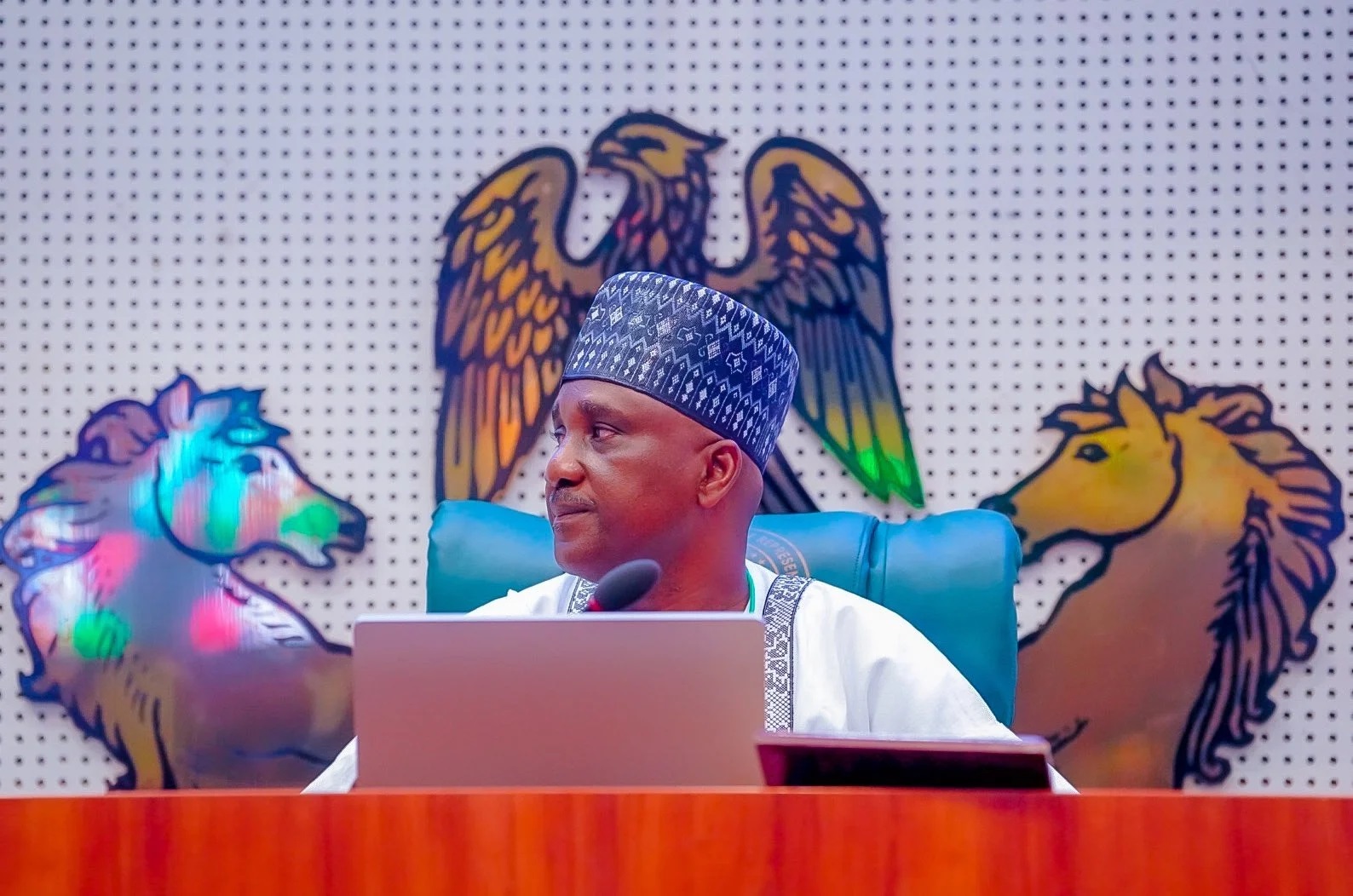
The Speaker of the House of Representatives, Mr Tajudeen Abbas, has assured that the House would ensure transparency, accountability, efficiency, and effective implementation of the Naira-for-Crude policy of the federal government.
Mr Abbas gave this assurance on Wednesday through the Deputy Minority Leader at the inauguration of the ad-hoc committee for the implementation and oversight of the policy.
The Naira-for-Crude initiative was introduced in 2023 to allow local oil companies to purchase crude oil using the local currency rather than the US Dollar, with a longer-term aim of reducing FX dependency and Naira depreciation while boosting local refining capacity. However, there have been issues of transparency in its implementation.
According to the Speaker, the exercise is imperative as it marks a critical step towards ensuring transparency, accountability, and efficiency in one of the most critical policy initiatives in our energy sector.
Mr Abbas added that the committee is entrusted with overseeing the implementation, effectiveness, and inter-agency coordination of the Naira-for-Crude Oil Policy.
“Its work is vital to ensuring that the objectives of the policy are met and that any gaps in execution are identified and corrected.
“The House expects nothing less than a thorough, impartial, and well-documented process that will contribute to the overall stability of our economy.
“Such an assessment will provide the House with clearer guidance in exercising its legislative commitment, and we trust they will deliver results that meet the expectations of this chamber and the hopes of the people we serve.
“Our resolve is to ensure that the legislature serves as a true partner in progress by aligning its priorities with the aspirations of the people and the policy direction of the government.
“We are committed to working collaboratively across party lines and with all relevant stakeholders to strengthen laws and policies that promote sustainable growth, enhance the welfare of citizens, and safeguard the nation’s resources for present and future generations.
“Stakeholder engagement will be central to this assignment, as meaningful results cannot be achieved in isolation.
“The involvement of government agencies, industry operators, civil society, and other key actors will give the committee a broad and balanced perspective.
“Such collaboration will help shape recommendations that are realistic, sustainable, and aligned with the national interest, while also strengthening public confidence in the work of the House.
“The task before this ad-hoc committee requires diligence, courage, and a clear sense of purpose. I urge members of the committee to carry out their work with integrity, objectivity, and dedication, bearing in mind that their deliberations and recommendations will shape the course of this policy and influence the well-being of millions of Nigerians.
“In doing so, they will strengthen our legislative processes and contribute to the progress of the nation.
“The House has full confidence in their competence and in the success of this initiative. Your partnership is crucial in ensuring that the objectives of this exercise are fully realised,” he said.
Economy
Interest Rates May Remain Elevated Despite Inflation Cooling—PwC
By Adedapo Adesanya
According to PricewaterhouseCoopers (PwC), Nigeria’s benchmark interest rate is likely to remain elevated in 2026 even as inflation shows signs of easing.
Speaking at the PwC–BusinessDay Executive Roundtable on Nigeria’s 2026 budget and economic outlook in Lagos on Thursday, the Chief Economist and Head of Strategy at PwC, Mr Olusegun Zaccheaus, said expectations of aggressive interest rate cuts might be premature even with the core factor – inflation – seen cooling.
“Interest rates may remain elevated despite inflation cooling for most of 2025,” Mr Zaccheaus said. “Perhaps not by the 500 basis points some hope for, due to the need to manage liquidity.”
The Central Bank of Nigeria (CBN) had more than doubled its policy rate from 2022 levels in a bid to rein in inflationary pressures, before implementing a 50 basis-point cut in September that brought the monetary policy rate to 27 per cent.
The move followed a sharp moderation in inflation from its late-2024 peak. Inflation slowed to 15.15 per cent in December 2025, while the economy expanded by 3.98 per cent in the third quarter, its strongest quarterly growth in years.
At the last Monetary Policy Committee (MPC) meeting of the CBN in November 2025 voted to keep the interest steady.
The PwC official warned that warned that underlying risks, including exchange-rate volatility, fiscal pressures and global uncertainty, continue to complicate the outlook.
Mr Zaccheaus said that a major challenge for the apex bank will be to control the volume of money circulating in the economy.
He advised that liquidity management remains critical as excess cash can quickly undermine dis-inflation efforts particularly as the 2027 election cycle is around the corner.
He said that Nigeria typically experiences rapid growth in money supply ahead of election cycles, driven by increased government spending and political activity, adding that without careful coordination, such expansions risk fueling inflation and weakening investor confidence.
“The responsibility of the central bank is to ensure liquidity does not grow in a way that has a negative macroeconomic impact,” Mr Zaccheaus said.
He noted that a stable currency environment would support improved capital allocation and investment planning.
“FX stability is crucial,” Mr Zaccheaus said. “It gives investors confidence and allows businesses to plan. But that stability depends on disciplined policy execution.”
Economy
Dangote Refinery Assures Steady Daily Supply of 75 million Litres of PMS, Others
By Aduragbemi Omiyale
If the assurance from the Dangote Petroleum Refinery is anything to take to the bank, then consumers of petroleum products in Nigeria have nothing to worry about in terms of availability.
The refinery has assured that it has the capacity to supply to them on a daily basis about 75 million litres of premium motor spirit (PMS), otherwise known as petrol; 25 litres of automated gas oil (AGO), also known as diesel; and 20 litres of jet fuel.
Nigeria is estimated to consume about 50 million litres of petrol per day, 14 million litres of diesel, and four litres of aviation fuel.
Dangote Refinery in a statement said the availability of volumes above prevailing demand provides critical supply buffers, enhances market stability and reduces reliance on imports, particularly during periods of peak demand or logistical disruption.
“The management of Dangote Petroleum Refinery would like to reiterate our capability to supply the underlisted petroleum products of the highest international quality standard to marketers and stakeholders,” it said in a public notice.
Industry analysts noted that supplying above estimated consumption reduces the need for emergency imports, strengthens inventory cover, enhances the resilience of the domestic supply chain, and boosts the foreign exchange ecosystem, thereby fortifying the value of the Naira in the currency market.
Dangote Refinery has also reaffirmed its commitment to full regulatory compliance and continued cooperation with the Nigerian Midstream and Downstream Petroleum Regulatory Authority (NMDPRA), stating that its supply approach is aligned with ongoing efforts to ensure market stability and orderly downstream operations.
It said it remains fully engaged with regulators and industry stakeholders in support of Nigeria’s national energy security objectives, as the country deepens its transition from fuel import dependence to domestic refining. It added that it continues to work closely with market participants to ensure that the benefits of local refining, including reliable supply, competitive pricing and improved market discipline are delivered consistently to consumers nationwide.
Economy
Sachet Alcohol Ban: NECA Demands Respect for Due Process
By Adedapo Adesanya
The Nigeria Employers’ Consultative Association (NECA) has expressed concern over the renewed enforcement of a ban on the production and sale of alcoholic beverages in sachets and small PET bottles by the National Agency for Food and Drug Administration and Control (NAFDAC).
The group’s director general, Mr Wale-Smatt Oyerinde, warned that the action of the agency could have adverse economic and governance consequences.
NECA is the organisation expressing worry of this issue after the Manufacturers Association of Nigeria (MAN) raised concerns about it earlier this week.
Mr Oyerinde said the enforcement contradicts a directive from the Office of the Secretary to the Government of the Federation dated December 15, 2025, which suspended the ban, as well as a March 14, 2024 resolution of the House of Representatives calling for restraint and broader stakeholder engagement.
The NECA chief said the continued enforcement is already disrupting legitimate businesses, unsettling ongoing investments, and putting thousands of jobs at risk, while weakening confidence in Nigeria’s regulatory environment.
According to Mr Oyerinde, regulation should be based on evidence, proportionality and the rule of law. He noted that the affected products were tested, registered and periodically revalidated under NAFDAC’s regulatory procedures, with alcohol content clearly labelled in line with internationally recognised Alcohol by Volume standards.
He added that underage drinking is primarily an enforcement issue at the retail level rather than a packaging issue, and called for stricter licensing, monitoring, and sanctions for erring retailers rather than a blanket ban on certain product formats.
NECA boss also warned that sachet and small-pack formats reflect affordability realities for many adult consumers, and that eliminating them could push demand into informal, unregulated markets, increasing public health risks and shrinking the formal economy.
He further expressed concern that enforcement efforts are focused on a regulated segment of the beverage industry while more dangerous illicit narcotics and abused pharmaceuticals continue to circulate widely among young people.
On the economic impact, NECA said the wines and spirits value chain supports significant direct and indirect employment across manufacturing, packaging, distribution, transportation, retail and agriculture.
It cautioned that sudden regulatory actions could threaten livelihoods, reduce government revenue and undermine investor confidence.
Addressing environmental concerns, NECA said plastic waste issues should be tackled through improved waste management, recycling systems and extended producer responsibility frameworks, rather than selective product bans.
-
Feature/OPED6 years agoDavos was Different this year
-
Travel/Tourism9 years ago
Lagos Seals Western Lodge Hotel In Ikorodu
-
Showbiz3 years agoEstranged Lover Releases Videos of Empress Njamah Bathing
-
Banking8 years agoSort Codes of GTBank Branches in Nigeria
-
Economy3 years agoSubsidy Removal: CNG at N130 Per Litre Cheaper Than Petrol—IPMAN
-
Banking3 years agoSort Codes of UBA Branches in Nigeria
-
Banking3 years agoFirst Bank Announces Planned Downtime
-
Sports3 years agoHighest Paid Nigerian Footballer – How Much Do Nigerian Footballers Earn