Economy
53 Equities Buoy Nigerian Exchange’s 1.02% Week-on-Week Growth
By Dipo Olowookere
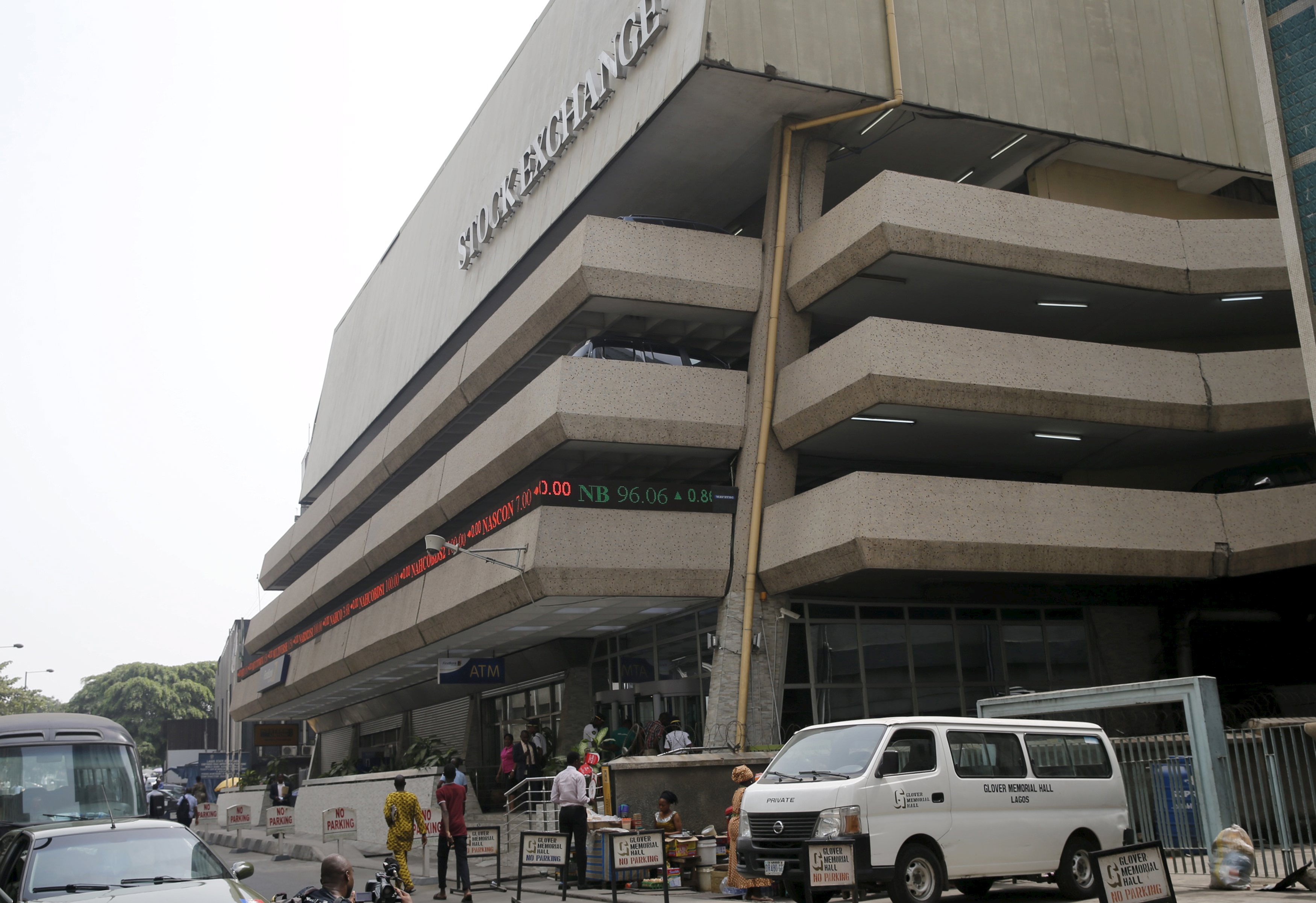
Last week, the Nigerian Exchange (NGX) Limited ended in green amid renewed buying interest in mid and large-cap equities by investors.
According to data from Customs Street, the All-Share Index (ASI) was up by 1.02 per cent to 143,584.04 points and the market capitalisation increased by 1.31 per cent to N91.135 trillion.
In the same vein, all other indices finished higher except the premium, insurance, NGX AFR Div Yield and NGX MERI Value indices, lost 0.05 per cent, 2.02 per cent, 2.78 per cent and 0.81 per cent, respectively while the AseM and sovereign bond indices closed flat.
In the four-day trading week, caused by a public holiday on Wednesday for Nigeria’s 65th Independence Day anniversary, investors traded 8.403 billion shares worth N115.501 billion in 115,801 deals versus the 7.684 billion shares valued at N494.126 billion exchanged in 116,645 deals in the preceding week.
The financial services industry led the activity chart with 7.750 billion stocks valued at N88.153 billion traded in 54,074 deals, contributing 92.24 per cent and 76.32 per cent to the total trading volume and value apiece.
The ICT sector followed with 181.005 million equities worth N4.077 billion in 9,364 deals, and the consumer goods space transacted 126.554 million shares worth N6.274 billion in 14,261 deals.
The trio of Cornerstone Insurance, Fidelity Bank, and UBA accounted for 6.525 billion shares worth N52.699 billion in 8,820 deals, contributing 77.66 per cent and 45.63 per cent to the total trading volume and value, respectively.
Fifty-three equities appreciated during the week versus 32 equities in the previous week, 43 equities depreciated versus 51 equities, and 51 equities closed flat versus 64 equities recorded a week earlier.
Eterna topped the gainers’ chart after it gained 32.80 per cent to trade at N37.05, Nigerian Enamelware grew by 20.94 per cent to N42.45, PZ Cussoms rose by 20.87 per cent to N41.70, LivingTrust Mortgage Bank jumped by 18.25 per cent to N6.09, and Eunisell surged by 17.56 per cent to N39.50.
On the flip side, Julius Berger topped the losers’ table after it shed 17.79 per cent to N122.90, International Energy Insurance slipped by 11.08 per cent to N2.97, Union Dicon went down hy 10.00 per cent to N8.10, AXA Mansard also fell by 10.00 per cent to N14.40, and University Press crashed by 9.85 per cent to N5.40.
Economy
Persistent Grid Collapse Poses Direct Threat to Manufacturers, MSMEs—LCCI
By Adedapo Adesanya
The Lagos Chamber of Commerce and Industry (LCCI) has decried the frequent grid disturbances, saying they pose a grave threat to the economy, particularly to manufacturers and small businesses.
The LCCI concern came after the second national grid collapse within four days on Tuesday, which plunged the country into widespread outage and disrupted economic activity nationwide. It followed up from the 12 of such occurrences which were recorded in 2025.
Speaking about the issue, the director general of LCCI, Mrs Chinyere Almona, said, “This recurrence underscores deep structural and operational weaknesses in the power transmission system and poses a direct threat to manufacturers, MSMEs, and Nigeria’s overall business environment at a critical moment when the economy is expected to move from crisis management and stabilisation (2023–2025) into a consolidation phase in 2026.”
According to her, based on recent patterns and in the absence of urgent structural fixes, the LCCI estimates that Nigeria could experience tens of grid collapses in 2026 under a ‘business-as-usual’ scenario.
She noted that with immediate reforms, system upgrades, and strict operational discipline, this figure can be reduced to zero incidents, moving the country closer to grid reliability benchmarks required for economic consolidation.
Mrs Almona noted that repeated grid failures impose severe costs on businesses through lost production hours, damaged equipment, increased reliance on self-generation, higher operating expenses, and reduced competitiveness, saying that these disruptions weaken investor confidence, worsen inflationary pressures, and undermine the credibility of economic reforms.
She called on the federal government to take a decisive and transparent position by instituting an independent forensic audit of the national grid covering transmission infrastructure integrity, system protection schemes, operational protocols, and governance of grid management, adding that the findings should form a critical part of a grid performance system reform in the short term.
“Without urgent intervention, recurring grid collapses will continue to undermine the government’s objective of entering a consolidation phase in 2026, while constraining productivity, exports, and job creation. A reliable power supply is foundational to industrialisation, competitiveness, and macroeconomic stability.
“The Chamber reiterates that restoring grid stability must be treated as an economic emergency, not merely a technical issue. At this stage, the causes of these collapses should be well understood, better managed, and effectively prevented. What we are witnessing today is therefore unacceptable and calls for decisive, coordinated action to safeguard national economic performance,” the LCCI DG said.
Economy
Court Convicts AAC Consulting Over N30.5m Theft from Chevron Contract Staff
By Adedapo Adesanya
A Lagos Special Offences Court has convicted AAC Consulting Limited for stealing over N30.5 million belonging to contract staff of Chevron Nigeria Limited.
The judge, Justice Rahman Oshodi, found the firm guilty of stealing N30,564,635.81, following its prosecution by the Lagos Zonal Directorate 1 of the Economic and Financial Crimes Commission (EFCC).
The conviction followed the company’s guilty plea to an amended one-count charge of stealing, contrary to Section 285(1) of the Criminal Code, Laws of Lagos State, 2011, sealing a long-running fraud case that exposed how outsourced workers’ salaries were diverted by their own payroll handlers.
The case dates back to June 5, 2023, when AAC Consulting Limited and its Managing Director, Anthony Adeoye, were arraigned on a 50-count charge bordering on stealing and issuance of dud cheques. Both defendants initially pleaded not guilty, forcing the EFCC to open full trial.
During proceedings, prosecuting counsel, Mr I.O. Daramola, called two witnesses, while several documents were tendered and admitted as exhibits by the court to establish how the funds meant for Chevron contract staff were allegedly misappropriated.
However, the trial took a dramatic turn after the full repayment of the stolen sum to the petitioner in December 2023.
Following the refund, the defendants changed their plea to “guilty”, prompting the EFCC to amend the charge, dropping the multiple counts and proceeding against the company alone on a single count of stealing.
The amended charge stated that AAC Consulting Limited, “on or about April 27, 2013, at Lagos, dishonestly converted to its own use the aggregate sum of N30,564,635.81, property of contract staff of Chevron Nigeria Limited.”
After reviewing the plea and evidence before the court, Justice Oshodi convicted the company and imposed a N5 million fine, with a stern warning.
The court ordered that the fine must be paid within 14 days, failing which AAC Consulting Limited will be wound up.
The conviction sends a strong message to outsourcing and payroll management firms, particularly those handling funds for multinational oil companies, that refund of stolen money does not erase criminal liability.
For the affected Chevron contract staff, the judgment closes a 13-year chapter of financial abuse, while reinforcing EFCC’s stance that corporate entities will be held accountable for payroll fraud and breach of trust in Nigeria’s corporate and labour ecosystem.
Economy
Nigerian Startups Account for 8% of Africa’s $3.8bn Raise in 2025
By Adedapo Adesanya
Nigeria recorded its lowest funding share since 2019 but the highest number of deals in 2025, according to Africa Investment Report 2025 published by Briter, a market intelligence platform focused on emerging markets.
According to the report, African companies disclosed a total of $3.8 billion in funding in 2025, representing a 32 per cent increase in deal volume and an 8 per cent rise in the number of announced transactions compared to the previous year ($2.8 billion in 2024).
However, Nigeria accounted for only 8 per cent of total funding, trailing behind South Africa (32 per cent), Kenya (29 per cent), and Egypt (15 per cent).
Despite the drop in funding share, Nigeria’s performance reflects a shift toward smaller, early- and growth-stage transactions, rather than mega-deals. The country recorded the highest number of deals on the continent, indicating strong entrepreneurial activity but limited access to large-ticket funding.
According to Briter, among the ‘Big Four’, Nigeria raised around $315 million alone last year from 205 estimated deals compared to South Africa which raised $1.2 billion from 130 deals, Kenya followed with $1.1 billion from around 16o deals, and Egypt came third with $595 million in 115 deals.
Nigeria which used to occupy the top two among this group has faced steep challenges including the 2023 currency devaluation which made it harder for startups to generate Dollar returns.
As a result, Briter explains that fewer mega-rounds happened in Nigeria, making the totals lower. However, it allowed for newer, upcoming startups to raise in 2025.
The report noted that fintech and digital financial services remained the most funded sector by both value and deal count, reinforcing Nigeria’s position as Africa’s fintech hub. However, climate-focused solutions recorded the fastest growth, raising more than three times their 2024 total, with solar energy emerging as the most funded category.
The surge in solar investment reflects growing investor appetite for infrastructure-like clean energy projects offering predictable returns, particularly in countries like Nigeria where power deficits remain a major economic constraint.
Briter noted that Artificial Intelligence (AI) attracted increased attention from investors in 2025, though funding remained largely concentrated in applied use cases such as financial services, logistics, and health tech rather than deep research and development.
In 2025, 63 acquisitions were announced, though only five disclosed transaction values. Notably, half of those involved startups acquiring other startups, pointing to early signs of consolidation within the ecosystem.
The report added that equity financing remained dominant, but debt funding surpassed $1 billion for the first time in a decade, signaling growing confidence in structured finance across African markets. It also noted a rise in capital from non-Western sources, particularly Japan and Gulf Cooperation Council (GCC) countries, as traditional Western investors scaled back.
Despite increased funding activity, Briter pointed out that the gender gap remains stark as less than 10 per cent of total funding went to companies with at least one female founder, highlighting ongoing challenges in inclusive capital access across Africa.
-
Feature/OPED6 years agoDavos was Different this year
-
Travel/Tourism9 years ago
Lagos Seals Western Lodge Hotel In Ikorodu
-
Showbiz3 years agoEstranged Lover Releases Videos of Empress Njamah Bathing
-
Banking8 years agoSort Codes of GTBank Branches in Nigeria
-
Economy3 years agoSubsidy Removal: CNG at N130 Per Litre Cheaper Than Petrol—IPMAN
-
Banking3 years agoSort Codes of UBA Branches in Nigeria
-
Banking3 years agoFirst Bank Announces Planned Downtime
-
Sports3 years agoHighest Paid Nigerian Footballer – How Much Do Nigerian Footballers Earn