General
Supply Worries Emerge as Dangote Refinery Makes Less Crude Purchases
By Adedapo Adesanya
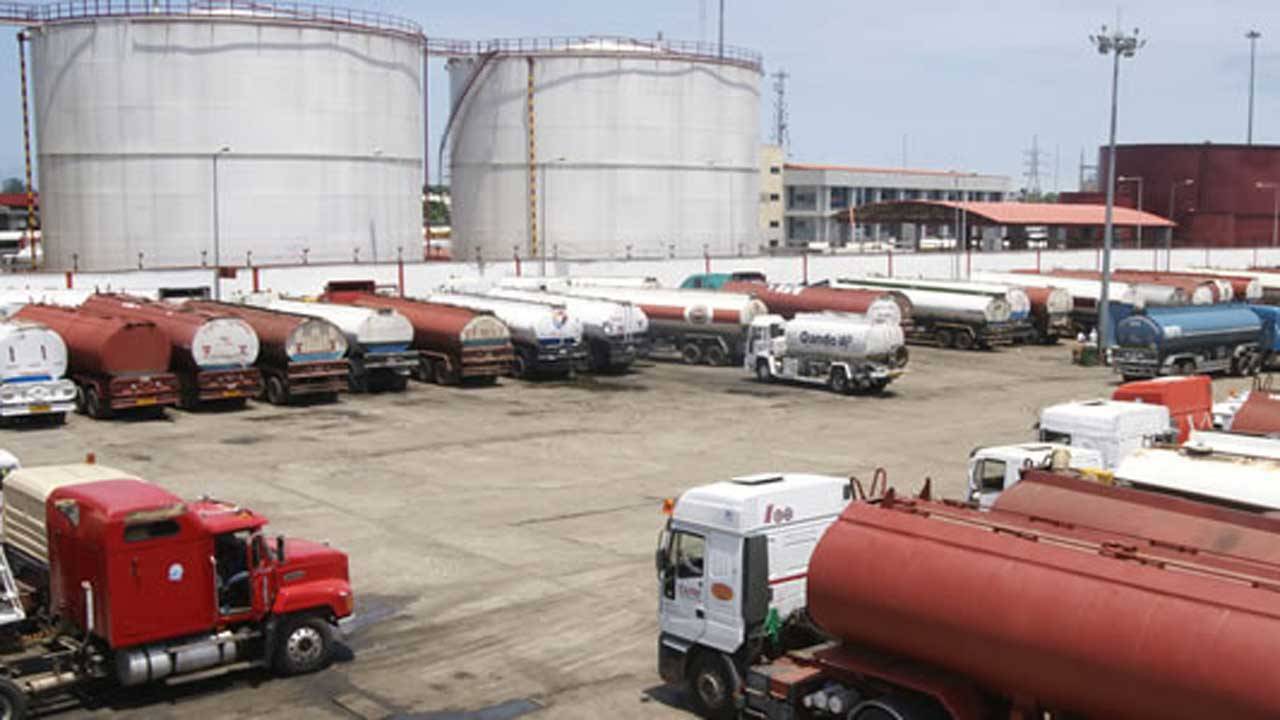
There are indications that the supply of petrol from the Dangote Refinery may drop as the 650,000 barrels per day capacity facility has been buying less crude recently, as per Bloomberg.
The facility is expected to purchase fewer than 300,000 barrels a day of crude this month, according to tanker-tracking data and cargo allocation lists compiled by Bloomberg.
The amount, which includes local supplies and imports, is down more than 50 per cent from a peak in July, and is less than half the plant’s capacity.
About 150,0000 barrels a day of feedstock for this month will come from the Nigerian National Petroleum Company (NNPC) under the Crude for Naira deal, and the state oil company is set to ship a similar amount to Dangote in November.
This comes amid operational setbacks, which analysts say could persist into next year and lead to an increase in petrol prices.
Last year, Dangote Refinery started producing properly and since then has disrupted operations in Europe and Africa, but in the last few months, it has seen challenges including outages as well as a strike by the Petroleum and Natural Gas Senior Staff Association of Nigeria (PENGASSAN).
This year, Dangote’s petrol producing unit recorded several stoppages and this impacted its ability to meet its target and there are indications that it could shut down again early next year to complete major work, according to intelligence firm IIR Energy.
Bloomberg reported that the shutdown in Nigeria as well as other refineries in Europe and the Middle East have led to increase in petrol prices in the past months.
Several analysts told the publication that the refinery may not operate at a high rate going into 2026.
“We think it is likely that Dangote will continue to face issues next year, albeit to a lesser extent than this year,” said Mr Qilin Tam, head of refining at FGE NexantECA. Unscheduled outages “could add a bullish sentiment to the gasoline market moving forward,” especially ahead of next summer’s driving season.
“European gasoline has been extremely strong as a result of Dangote’s issues,” Sparta Commodities analyst Mr Neil Crosby said. “At the moment Dangote’s track record is poor, and if that keeps going it will be supportive for European gasoline, and to a degree distillate, going forward.”
Any further operational issues at the refinery would curb crude runs and lead to a lower-value mix of oil products in place of gasoline, said Mr Alan Gelder, WoodMac’s vice president of refining, chemicals and oil markets.
General
Interswitch Adopts Temenos Platform to Deliver Banking Services to African Lenders
By Adedapo Adesanya
Interswitch has entered into a partnership with Geneva-headquartered banking software provider Temenos to offer managed banking services to financial institutions across the continent, deepening its push into banking technology.
The partnership will see Interswitch adopt Temenos’ banking technology across core banking, digital banking, payments, wealth management, and financial crime management.
This will enable the firm to provide cloud-hosted and on-premises managed services to lenders on the continent. The service will initially target Nigeria, Ghana, Côte d’Ivoire, Kenya, and other African markets.
“This is a pivotal moment for Interswitch as we accelerate our expansion beyond payments and reimagine digital banking for Africa,” Mr Jonah Adams, managing director for Digital Infrastructure and Managed Services at Interswitch, said in a statement.
By combining Temenos’ software with its existing footprint across the continent, Interswitch is positioning itself as a technology partner that can help banks upgrade critical systems without having to manage the complexity of large-scale technology deployments.
“By adopting Temenos’ cloud-native, composable platform, Interswitch gains the flexibility and scalability to accelerate its next phase of growth and deliver banking services that meet the needs of African markets,” Mr Adams added.
For Temenos, the deal strengthens its presence in Africa through a partner with deep relationships across the banking sector. It lost one of its banking customers, Sterling Bank, in 2024 after the tier-2 Nigerian bank switched to SEABaaS, a new custom-built core banking application.
“Interswitch is an important new customer and partner for Temenos in Africa,” said Mr William Moroney, Chief Revenue Officer at Temenos. “Interswitch’s strong presence across the continent also extends our reach and further strengthens our ecosystem and partner network.”
Founded in 2002, Interswitch built its reputation as one of Africa’s largest payments companies through products such as Quickteller and Verve, its domestic card scheme.
General
TGI Group, Wilmar to Form $12bn West Africa Food Giant in Major Merger
By Adedapo Adesanya
Tropical General Investments (TGI) Group and Singapore-based Wilmar International have agreed to combine their Nigeria and Republic of Benin operations into a 50:50 joint venture aimed at building a dominant integrated food and agribusiness platform across West Africa, targeting a market estimated at $12 billion.
The proposed merger will consolidate operations across several value chains, including agriculture, oil palm plantations, edible oils, edible nuts, rice, food manufacturing, and distribution, creating one of the region’s largest end-to-end food production and supply chains.
Under the arrangement, both firms will integrate their complementary strengths, with Wilmar contributing global expertise in palm oil, speciality fats, and large-scale agribusiness operations, while TGI brings established local manufacturing capacity, consumer brands, and an extensive distribution network across Nigeria and neighbouring markets.
Chairman and Chief Executive Officer of Wilmar International, Mr Kuok Hong, said the partnership would enhance both firms’ ability to serve Africa’s expanding consumer base, describing Nigeria and Benin as strategic growth markets.
“For more than four decades, TGI Group has built a leading position in Nigerian food manufacturing and distribution. This partnership will leverage Wilmar’s global scale and expertise as well as TGI’s local knowledge to deliver innovative food solutions across Africa,” added TGI Group founder and chairman, Mr Cornelis Vink.
On his part, Vice Chairman of TGI Group, Mr Farouk Gumel, said the deal reflects confidence in Nigeria’s long-term economic prospects, adding that it would deepen domestic value addition, strengthen food security, support smallholder farmers, and create jobs.
Adding his input, Wilmar’s Africa Head, Mr Santosh Pillai, described the transaction as a strategic fit, noting that the combined entity would have the scale, local insight, and operational depth needed to better serve consumers in the region.
The companies said the transaction is expected to be completed in the 2026 financial year, subject to regulatory approvals and other customary conditions.
General
Nigeria Edges Toward State Policing Amid Rising Security Challenges
By Adedapo Adesanya
The Presidency has said Nigeria is moving closer to establishing state police, with progress made towards the constitutional framework required to decentralise policing.
The development follows months of consultations involving the Presidency, the National Assembly, and security authorities aimed at strengthening the country’s security architecture and comes amid increased security challenges across the country.
The Chief of Staff to the President, Mr Femi Gbajabiamila, disclosed this on Thursday while briefing State House correspondents after a consultative meeting on state police convened by the Presidency at the State House in Abuja.
According to a statement issued by the Special Adviser to the President on Information and Strategy, Mr Bayo Onanuga, deliberations on the proposed state police framework began several months ago following a directive from President Bola Tinubu.
“We started deliberations in the last three or four months on how to go about the establishment of state police as directed by Mr President.
“Establishing state police is not something that you do with the snap of the fingers. There is a lot involved in terms of constitution and legalities, and thank God, we have now gained a lot of traction.
“Hopefully, the amendment will come shortly, and the details of the amendment will come after that,” he was quoted as saying.
The president’s chief of staff explained that the immediate priority is securing constitutional amendments, while enabling legislation would follow.
“Right now, what we are looking at is the constitutional amendment itself, and then the enabling law would follow thereafter. That is what we have been deliberating on in the last couple of hours,” he added.
Mr Gbajabiamila noted that there is now broad national support for the initiative, saying the debate has shifted from whether state police should be established to determining the most effective legal and institutional framework for its operation.
He added that Tinubu, a long-time advocate of state police, would receive a comprehensive report on the outcome of the consultations.
Thursday’s meeting was attended by Deputy Senate President Mr Jibrin Barau, Deputy Speaker of the House of Representatives, Mr Benjamin Kalu, Inspector-General of Police, Mr Tunji Disu and other senior government officials.
The latest meeting forms part of ongoing efforts by the federal government to develop a workable framework for state police, which proponents argue would improve internal security, strengthen intelligence gathering at the grassroots level, and enhance the ability of state governments to respond to emerging security threats.
Nigeria’s policing system is currently controlled by the federal government through the Nigeria Police Force. However, growing security challenges have intensified calls for a decentralised policing structure.
The renewed push for state police also comes amid growing concerns over insecurity and mass kidnappings across parts of the country.
Among recent incidents was the May 15 attack on three schools in Oriire Local Government Area of Oyo State, where 39 pupils and seven teachers were abducted. The incident triggered widespread outrage, protests, and an indefinite strike by teachers in the state.
-
Feature/OPED6 years agoDavos was Different this year
-
Travel/Tourism10 years ago
Lagos Seals Western Lodge Hotel In Ikorodu
-
Showbiz3 years agoEstranged Lover Releases Videos of Empress Njamah Bathing
-
Banking8 years agoSort Codes of GTBank Branches in Nigeria
-
Economy3 years agoSubsidy Removal: CNG at N130 Per Litre Cheaper Than Petrol—IPMAN
-
Banking3 years agoSort Codes of UBA Branches in Nigeria
-
Banking3 years agoFirst Bank Announces Planned Downtime
-
Sports3 years agoHighest Paid Nigerian Footballer – How Much Do Nigerian Footballers Earn