Connect with us

General

Supply Worries Emerge as Dangote Refinery Makes Less Crude Purchases

Published

on

petrol importation

By Adedapo Adesanya

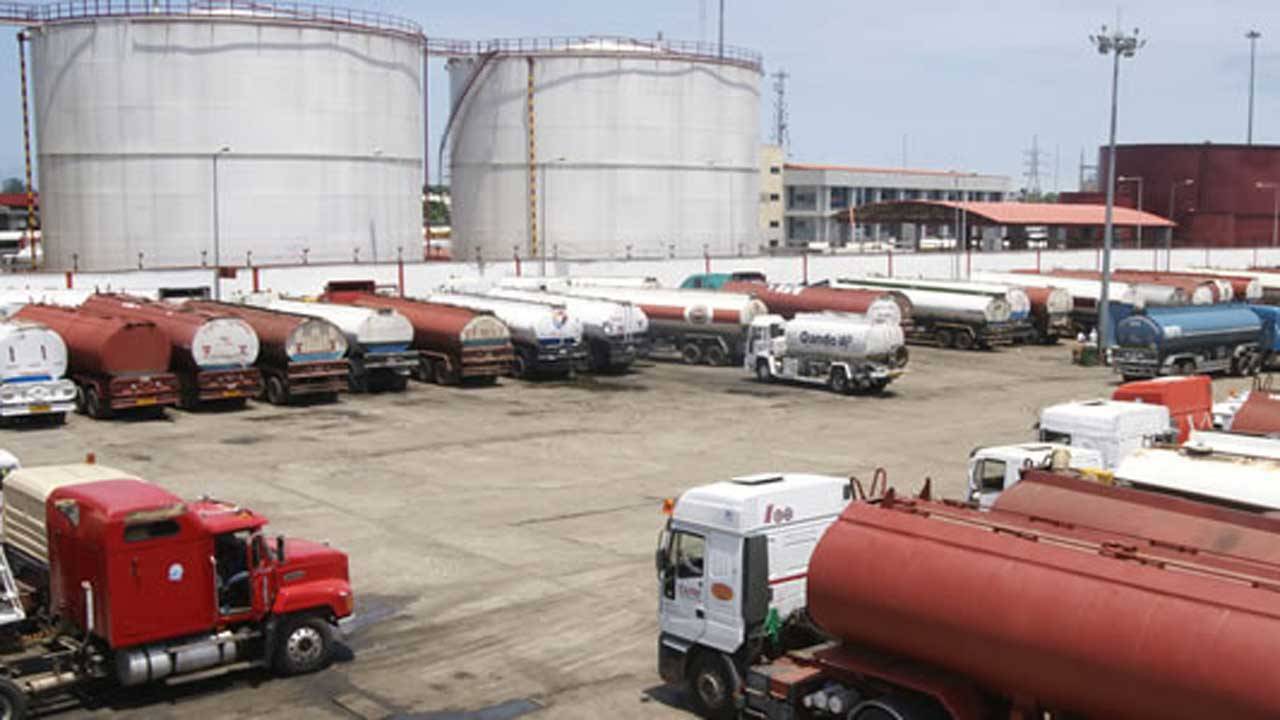
There are indications that the supply of petrol from the Dangote Refinery may drop as the 650,000 barrels per day capacity facility has been buying less crude recently, as per Bloomberg.

The facility is expected to purchase fewer than 300,000 barrels a day of crude this month, according to tanker-tracking data and cargo allocation lists compiled by Bloomberg.

The amount, which includes local supplies and imports, is down more than 50 per cent from a peak in July, and is less than half the plant’s capacity.

About 150,0000 barrels a day of feedstock for this month will come from the Nigerian National Petroleum Company (NNPC) under the Crude for Naira deal, and the state oil company is set to ship a similar amount to Dangote in November.

This comes amid operational setbacks, which analysts say could persist into next year and lead to an increase in petrol prices.

Last year, Dangote Refinery started producing properly and since then has disrupted operations in Europe and Africa, but in the last few months, it has seen challenges including outages as well as a strike by the Petroleum and Natural Gas Senior Staff Association of Nigeria (PENGASSAN).

This year, Dangote’s petrol producing unit recorded several stoppages and this impacted its ability to meet its target and there are indications that it could shut down again early next year to complete major work, according to intelligence firm IIR Energy.

Bloomberg reported that the shutdown in Nigeria as well as other refineries in Europe and the Middle East have led to increase in petrol prices in the past months.

Several analysts told the publication that the refinery may not operate at a high rate going into 2026.

“We think it is likely that Dangote will continue to face issues next year, albeit to a lesser extent than this year,” said Mr Qilin Tam, head of refining at FGE NexantECA. Unscheduled outages “could add a bullish sentiment to the gasoline market moving forward,” especially ahead of next summer’s driving season.

“European gasoline has been extremely strong as a result of Dangote’s issues,” Sparta Commodities analyst Mr Neil Crosby said. “At the moment Dangote’s track record is poor, and if that keeps going it will be supportive for European gasoline, and to a degree distillate, going forward.”

Any further operational issues at the refinery would curb crude runs and lead to a lower-value mix of oil products in place of gasoline, said Mr Alan Gelder, WoodMac’s vice president of refining, chemicals and oil markets.


Adedapo Adesanya is a journalist, polymath, and connoisseur of everything art. When he is not writing, he has his nose buried in one of the many books or articles he has bookmarked or simply listening to good music with a bottle of beer or wine. He supports the greatest club in the world, Manchester United F.C.

General

Nigeria Needs Cheap, Reliable Energy—Seplat

Published

on

Seplat Energy

By Faridat Yusuf

Seplat Energy says Nigeria needs cheap, reliable, and easy-to-get energy for everyone as the population is estimated to reach 237 million by 2025 and 400 million by 2050.

The Chief Operating Officer of the energy firm, Mr Samson Ezugworie, speaking at the 43rd NAPE Conference in Lagos, said, “The imperative before us is clear. We must build a prosperous Nigeria, and we can only do that with affordable and reliable energy that is accessible to all.”

The COO, in a statement issued by company’s Manager for Corporate Communications, Mr Stanley Opara, said over 70 million Nigerians still have no electricity and 170 million people use wood or other biomass for cooking, which is bad for homes and the environment.

“Today, more than 70 million Nigerians still lack access to electricity. More than 170 million people rely on biomass for cooking, and that’s terrible for the environment and for our households. And with Nigeria’s population projected to reach 237 million by 2025 and 400 million by 2050, the urgency to act is undeniable, because today’s problems will become far worse if we don’t take action now to solve them.”

“We will have 160 million more people to feed and house, and we need to create 100 million new jobs. But imagine what Nigeria can achieve if we do?” he queried.

He noted that Seplat Energy was working to produce more oil and gas. They are fixing wells, delivering gas from the ANOH Plant, and sending LPG from Sapele Plant.

“Our progress on gas initiatives like anoh, sapele, and lpg shipments is a testament to our commitment to nigeria’s prosperity. these projects are not just about energy; they are about transforming lives and powering nigeria’s development,” Mr Ezugworie said, adding that Nigerians should manage Nigeria’s resources and work with communities to build a stronger energy industry.

“We must also harness our huge reserves of gas and scale up gas and NGL production to expand domestic energy access, displace polluting imported generators, provide clean cooking for our people, and power our basic industries to support our national growth,” he said.

Continue Reading

General

NDLEA Teams Up With US, UK to Probe $235m Cocaine Shipment in Lagos

Published

on

NDLEA drug syndicate

By Adedapo Adesanya

The National Drug Law Enforcement Agency (NDLEA) is working with its US and British counterparts to investigate the origins of a $235 million cocaine shipment seized at Tincan Port in Lagos, in one of the country’s largest drug seizures.

NDLEA said in a statement signed by its spokesman, Mr Femi Babafemi, on Tuesday that it was working with the US Drug Enforcement Administration (DEA) and the UK’s National Crime Agency (NCA) to investigate after 1,000 kg of cocaine was discovered in an empty container at a terminal in Tin Can over the past weekend.

PTML operators, who noticed the consignment in an empty container, invited port stakeholders, including the NDLEA, Customs, and other security agencies, for a joint examination.

The drugs were formally handed over to the NDLEA on Tuesday after tests confirmed the substance was cocaine.

“After field tests confirmed the shipment to be cocaine, the consignment was formally transferred to NDLEA custody for further investigation on Tuesday, 11 November 2025,” Mr Babafemi said.

The operation followed collaborative engagements between NDLEA Chairman/CEO Mr Mohamed Buba Marwa and the Comptroller General of Customs, Mr Adewale Adeniyi.

“Due to the large quantity of the recovered Class A drug, valued at over $235 million (approximately N338 billion) on the international market, and the global dimension of the cocaine cartel, I directed that our leading international partners be involved in the investigation,” Mr Marwa said.

He revealed that officers from the US-DEA and UK-NCA have already joined the probe, focusing on ensuring all aspects of the operation are covered and that the masterminds behind the consignment are brought to justice worldwide.

“The essence of collaborating with our international partners on this case is to ensure no stone is left unturned, so that every perpetrator of this massive consignment is held accountable, wherever they are located,” Mr Marwa added.

Continue Reading

General

Social Protection Only Gulps 0.14% of Nigeria’s GDP—World Bank

Published

on

social protection nigeria

By Adedapo Adesanya

The World Bank has lamented that Nigeria spends barely 0.14 per cent of its Gross Domestic Product (GDP) on social protection.

This is contained in a new report titled The State of Social Safety Nets in Nigeria, where the bank revealed that the 0.14 per cent estimate is far below the global average of 1.5 per cent and the Sub-Saharan African average of 1.1 per cent.

The report warns that the miniscule allocation has had “almost no impact” on poverty.

The combined effect of all existing social protection programmes in the country has reduced the national poverty headcount by just 0.4 percentage points, it noted.

The November 2025 report examines Nigeria’s spending on social safety nets, assessing their coverage and efficiency, and reveals how poor targeting, weak funding, and fragmented implementation have left millions of vulnerable citizens without meaningful relief despite the government’s lofty poverty-reduction promises.

Business Post reports that the federal government has spent billions over the years to cushion hardship with initiatives like cash transfer programme which it claims has reached 15 million households. Other schemes, like the school feeding programme only cover a limited number of schools.

The World Bank report says these Nigeria’s social safety-net programmes are failing to reach those who need them the most.

According to the bank, while about 56 per cent of the recipients of safety-net programmes are poor, they receive only 44 per cent of the total benefits. It explained that this imbalance stems from the way most programmes, including the National Social Safety Nets Programme (NASSNP), allocate a fixed amount per household rather than per person.

As a result, poor families, often larger in size, end up sharing limited benefits among more members. The report noted that initiatives such as the National Home-Grown School Feeding Programme (NHGSFP), which focus on individuals rather than households, are less affected by this problem.

However, it added that the school feeding scheme currently targets only pupils in grades one to three and lacks full national coverage, restricting the number of children who can benefit.

The World Bank also expressed concern over Nigeria’s heavy dependence on foreign donors to finance its social safety nets. It examined that between 2015 and 2021, official development assistance accounted for about 60 per cent of federal spending on safety-net programmes, with the World Bank providing over 90 per cent of that support.

The report cautioned that this dependence puts Nigeria at risk of funding gaps whenever donor support declines.

“There is an urgent need for Nigeria to find fiscal space for sustainable social safety-net programming,” the bank warned.

Continue Reading

Trending