Connect with us

Feature/OPED

Nigeria’s Inflation Drop: Has Life Become Any Easier?

Published

on

Nigeria’s Inflation Drop

By Blaise Udunze

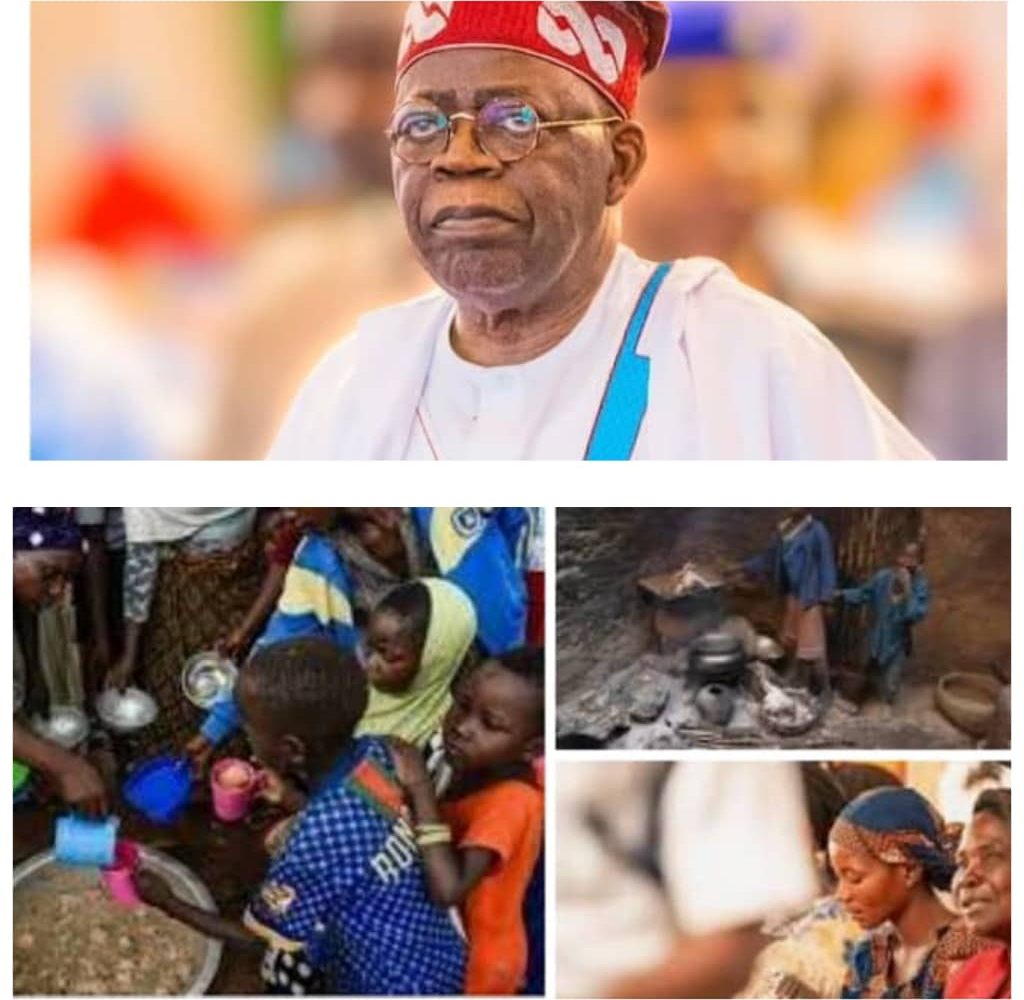
When the National Bureau of Statistics (NBS) yesterday announced that Nigeria’s inflation rate had dropped to 18.02 percent in September 2025, the news was met with official applause. Government officials hailed it as evidence that the economy is recovering. Yet, for the millions of Nigerians struggling to buy food, pay rent, or fuel their generators, the question remains painfully simple: has life become any easier? The answer, for most Nigerians, is no.

Inflation has long been one of Nigeria’s most stubborn economic afflictions that has been eroding purchasing power, distorting markets, and deepening poverty. The recent “decline” in inflation has not eased the everyday hardship of ordinary people. Prices are still rising, incomes remain stagnant, and hope for relief feels distant.

Nigeria’s inflation is fundamentally cost-push in nature, not demand-driven. Rising energy prices, unstable foreign exchange, high transport costs, and insecurity in food-producing regions continue to fuel cost increases across all sectors. The removal of fuel subsidies and the floating of the naira, though intended to restore fiscal discipline, have instead unleashed a new wave of inflationary pain. Each naira devaluation has made imports costlier, and with Nigeria’s heavy dependence on imported food, fuel, and raw materials, the consequences are devastating for consumers.

This disconnect between the headline figures and the lived reality has deepened public distrust. Many Nigerians believe official inflation data do not reflect the economic pain they face daily. Critics, including the International Monetary Fund (IMF), have flagged weaknesses in Nigeria’s inflation measurement system: outdated expenditure weights dating back to 2003/2004, poor representation of the informal sector, and underweighted essentials like food and energy. Because the Consumer Price Index (CPI) is infrequently rebased, it often lags behind real market conditions, which makes the official inflation rate appear lower than what citizens actually experience.

Independent trackers such as the “Jollof Index,” which measures the cost of cooking a basic Nigerian meal, consistently show higher inflation than the NBS reports. To most households, this is not a debate about methodology but about survival. A N1,000 note that once covered dinner now barely buys a few milk cups of rice. A civil servant’s salary, unchanged for years, has lost more than half its value. The supposed inflation “drop” is deceptive to those whose plates are emptier and whose transport costs have tripled.

Inflation has been a recurring symptom of Nigeria’s economic fragility since the return to democracy in 1999. Under Olusegun Obasanjo (1999-2007), inflation briefly spiked to 28 percent but eventually stabilized at single digits through reforms and debt relief. Umaru Musa Yar’Adua (2007-2010) faced steady price rises amid Niger Delta unrest and weak policy continuity. Goodluck Jonathan (2010-2015) managed to keep inflation moderate, averaging about 10 percent, helped by oil windfalls and tighter monetary policy. However, under Muhammadu Buhari (2015-2023), inflation more than doubled, peaking above 21 percent as recession, currency crises, and supply shocks battered the economy. The current administration of Bola Tinubu (2023-present) has witnessed the sharpest surge yet, which was above 34 percent in late 2024, as this was driven by subsidy removal, naira float, and imported inflation. Though the official rate now claims to have fallen to 18.02 percent after statistical rebasing, Nigerians still endure the steepest cost-of-living crisis in the nation’s history.

Across these 24 years of democratic governance, the pattern is unmistakable, showing that Nigeria’s inflation is structural, not cyclical. It is rooted in weak productivity, fiscal indiscipline, policy inconsistency, and dependence on imports. While numbers fluctuate, the hardship remains constant. Inflation may fall on paper, but it never leaves the market stalls, the bus parks, or the kitchens of ordinary Nigerians.

Efforts by the Central Bank of Nigeria (CBN) to fight inflation through higher interest rates have achieved little because monetary tools alone cannot fix structural weaknesses. The way forward demands a broader agenda through reviving domestic production, securing farmlands, stabilizing the foreign exchange market, curbing fiscal leakages, and reforming energy and transport infrastructure to cut costs. Until then, inflation data will continue to serve as statistical comfort in an economic storm.

Inflation is not just a number; it is a mirror of national mismanagement. For now, Nigerians have learned to distrust figures that contradict the evidence of their daily struggles. A fall to 18.02 percent may please policymakers and investors, but it changes nothing for the teacher whose salary buys less each month or the parents who must choose between school fees and food.

Economic recovery is not when inflation falls; it’s when Nigerians can afford to live again, not living impoverished.

The latest World Bank Nigeria Development Update delivers a chilling verdict, as 139 million Nigerians, over half of the nation’s population, are said to be living in poverty. The report, titled “From Policy to People: Bringing the Reform Gains Home,” praises Nigeria’s bold macroeconomic reforms but warns that the gains have yet to trickle down to the people.

Poverty in Nigeria is not just growing; it’s metastasizing. The World Bank’s 139 million estimate translates to roughly six in ten Nigerians living below the poverty line.

The numbers are stark. The implications are severe. And the solutions will require more than incremental policy tweaks. What the nation is witnessing is an emergency, one that demands bold leadership, systemic change, and national resolve.

Despite measurable progress on paper indicating improved revenue inflows, a more stable foreign exchange market, and the easing of inflationary pressures, the truth in the streets tells a very different story. Nigeria today sits at a troubling crossroads where official statistics clash with the bitter truth of daily survival. Each month, the National Bureau of Statistics (NBS) releases inflation figures suggesting a country “stabilising.” Yet in the kitchens of Lagos, in the weary sighs of market women, and in the hollowed eyes of hungry children, a harsher reality unfolds, which is that empty pots don’t lie. Hunger, not percentages, is Nigeria’s truest inflation index.

Contrary to the promise by this administration of sweeping reforms to “reset” the economy, they unleashed an economic storm that continues to batter households. A bag of rice that sold for N35,000 two years ago now costs between N70,000 and N90,000. A crate of eggs has jumped from N1,200 to N6,200. Tomatoes, garri, and pepper, which are staples of everyday life, have drifted beyond the reach of ordinary Nigerians.

This statistical adjustment may appear elegant on paper, but for millions who now spend 70 to 80 percent of their income on food, such figures are not just implausible; they’re insulting. Nigeria may have changed its base year, but it hasn’t changed the harsh arithmetic of survival.

Until the supposed recovery begins to show up in the kitchen, the market, and the wallet, the fall in inflation will remain what it truly is a statistical victory and a national deceit.

Again, we must understand that economic recovery is not when inflation falls; it’s when Nigerians can afford to live again.

Blaise, a journalist and PR professional writes from Lagos, can be reached via: [email protected]

Feature/OPED

Directing the Dual Workforce in the Age of AI Agents

Published

on

Linda Saunders Trusted AI

By Linda Saunders

We will be the last generation to work with all-human workforces. This is not a provocative soundbite but a statement of fact, one that signals a fundamental shift in how organisations operate and what leadership now demands. The challenge facing today’s leaders is not simply adopting new technology but architecting an entirely new operating model where humans and autonomous AI agents work in concert.

According to Salesforce 2025 CEO research, 99% of CEOs say they are prepared to integrate digital labor into their business, yet only 51% feel fully prepared to do so. This gap between awareness and readiness reveals the central tension of this moment: we recognise the transformation ahead but lack established frameworks for navigating it. The question is no longer whether AI agents will reshape work, but whether leaders can develop the new capabilities required to direct this dual workforce effectively.

The scale of change is already visible in the data. According to the latest CIO trends, AI implementation has surged 282% year over year, jumping from 11% to 42% of organisations deploying AI at scale. Meanwhile, the IDC estimates that digital labour will generate a global economic impact of $13 trillion by 2030, with their research suggesting that agentic AI tools could enhance productivity by taking on the equivalent of almost 23% of a full-time employee’s weekly workload.

With the majority of CEOs acknowledging that digital labor will transform their company structure entirely, and that implementing agents is critical for competing in today’s economic climate, the reality is that transformation is not coming, it’s already here, and it requires a fundamental change to the way we approach leadership.

The Director of the Dual Workforce

Traditional management models, built on hierarchies of human workers executing tasks under supervision, were designed for a different era. What is needed now might be called the Director of the dual workforce, a leader whose mandate is not to execute every task but to architect and oversee effective collaboration between human teams and autonomous digital labor. This role is governed by five core principles that define how AI agents should be structured, deployed and optimised within organisations.

Structure forms the foundation. Just as organisational charts define human roles and reporting lines, leaders must design clear frameworks for AI agents, defining their scope, establishing mandates and setting boundaries for their operation. This is particularly challenging given that the average enterprise uses 897 applications, only 29% of which are connected. Leaders must create coherent structures within fragmented technology landscapes as a strong data foundation is the most critical factor for successful AI implementation. Without proper structure, agents risk operating in silos or creating new inefficiencies rather than resolving existing ones.

Oversight translates structure into accountability. Leaders must establish clear performance metrics and conduct regular reviews of their digital workforce, applying the same rigour they bring to managing human teams. This becomes essential as organisations scale beyond pilot projects and we’ve seen a significant increase in companies moving from pilot to production, indicating that the shift from experimentation to operational deployment is accelerating. It’s also clear that structured approaches to agent deployment can deliver return on investment substantially faster than do-it-yourself methods whilst reducing costs, but only when proper oversight mechanisms are in place.

To ensure agents learn from trusted data and behave as intended before deployment, training and testing is required. Leaders bear responsibility for curating the knowledge base agents access and rigorously testing their behaviour before release. This addresses a critical challenge: leaders believe their most valuable insights are trapped in roughly 19% of company data that remains siloed. The quality of training directly impacts performance and properly trained agents can achieve 75% higher accuracy than those deployed without rigorous preparation.

Additionally, strategy determines where and how to deploy agent resources for competitive advantage. This requires identifying high-value, repetitive or complex processes where AI augmentation drives meaningful impact. Early adoption patterns reveal clear trends: according to the Salesforce Agentic Enterprise Index tracking the first half of 2025, organisations saw a 119% increase in agents created, with top use cases spanning sales, service and internal business operations. The same research shows employees are engaging with AI agents 65% more frequently, and conversations are running 35% longer, suggesting that strategic deployment is finding genuine utility rather than novelty value.

The critical role of observability

The fifth principle, to observe and track, has emerged as perhaps the most critical enabler for scaling AI deployments safely. This requires real-time visibility into agent behaviour and performance, creating transparency that builds trust and enables rapid optimisation.

Given the surge in AI implementation, leaders need unified views of their AI operations to scale securely. Success hinges on seamless integration into core systems rather than isolated projects, and agentic AI demands new skills, with the top three in demand being leadership, storytelling and change management. The ability to observe and track agent performance is what makes this integration possible, allowing leaders to identify issues quickly, demonstrate accountability and make informed decisions about scaling.

The shift towards dual workforce management is already reshaping executive priorities and relationships. CIOs now partner more closely with CEOs than any other C-suite peer, reflecting their changing and central role in technology-driven strategy. Meanwhile, recent CHRO research found that 80% of Chief Human Resources Officers believe that within five years, most workforces will combine humans and AI agents, with expected productivity gains of 30% and labour cost reductions of 19%. The financial perspective has also clearly shifted dramatically, with CFOs moving away from cautious experimentation toward actively integrating AI agents into how they assess value, measure return on investment, and define broader business outcomes.

Leading the transition

The current generation of leaders are the crucial architects who must design and lead this transition. The role of director of the dual workforce is not aspirational but necessary, grounded in principles that govern effective agent deployment. Success requires moving beyond viewing AI as a technical initiative to understanding it as an organisational transformation that touches every aspect of operations, from workflow design to performance management to strategic planning.

This transformation also demands new capabilities from leaders themselves. The skills that defined effective management in all-human workforces remain important but are no longer sufficient. Leaders must develop fluency in understanding agent capabilities and limitations, learn to design workflows that optimally divide labor between humans and machines, and cultivate the ability to measure and optimise performance across both types of workers. They must also navigate the human dimensions of this transition, helping employees understand how their roles evolve, ensuring that the benefits of productivity gains are distributed fairly, and maintaining organisational cultures that value human judgement and creativity even as routine tasks migrate to digital labor.

The responsibility to direct what comes next, to architect systems where human creativity, judgement and relationship-building combine with the scalability, consistency and analytical power of AI agents, rests with today’s leaders. The organisations that thrive will be those whose directors embrace this mandate, developing the structures, oversight mechanisms, training protocols, strategic frameworks and observability systems that allow dual workforces to deliver on their considerable promise.

Continue Reading

Feature/OPED

Energy Transition: Will Nigeria Go Green Only To Go Broke?

Published

on

energy transition plan

By Isah Kamisu Madachi

Nigeria has been preparing for a sustainable future beyond oil for years. At COP26 in the UK, the country announced its commitment to carbon neutrality by 2060. Shortly after the event, the Energy Transition Plan (ETP) was unveiled, the Climate Change Act 2021 was passed and signed into law, and an Energy Transition Office was created for the implementations. These were impressive efforts, and they truly speak highly of the seriousness of the federal government. However, beyond climate change stress, there’s an angle to look at this issue, because in practice, an important question in this conversation that needs to be answered is: how exactly will Nigeria’s economy be when oil finally stops paying the bills?

For decades, oil has been the backbone of public finance in Nigeria. It funds budgets, stabilises foreign exchange, supports states through monthly FAAC allocations, and quietly props up the naira. Even when production falls or prices fluctuate, the optimism has always been that oil will somehow carry Nigeria through the storms. It is even boldly acknowledged in the available policy document of the energy transition plan that global fossil fuel demand will decline. But it does not fully confront what that decline means for a country of roughly 230 million people whose economy is still largely structured around oil dollars.

Energy transition is often discussed from the angle of the emissions issue alone. However, for Nigeria, it is first an economic survival issue. Evidence already confirms that oil now contributes less to GDP than it used to, but it remains central to government revenue and foreign exchange earnings. When oil revenues drop, the effects are felt in budget shortfalls, rising debt, currency pressure, and inflation. Nigerians experienced this reality during periods of oil price crashes, from 2014 to the pandemic shock.

The Energy Transition Plan promises to lift 100 million Nigerians out of poverty, expand energy access, preserve jobs, and lead a fair transition in Africa. These are necessary goals for a future beyond fossil fuels. But this bold ambition alone does not replace revenue. If oil earnings shrink faster than alternative sources grow, the transition risks deepening fiscal stress rather than easing it. Without a clear post-oil revenue strategy tied directly to the transition, Nigeria may end up cleaner with the net-zero goals achieved, but poorer.

Jobs need to be considered, too. The plan recognises that employment in the oil sector will decline over time. What should be taken into consideration is where large-scale employment will come from. Renewable energy, of course, creates jobs, but not automatically, and not at the scale oil-related value chains once supported, unless deliberately designed to do so. Solar panels assembled abroad and imported into Nigeria will hardly replace lost oil jobs. Local manufacturing, large-scale skills development, and industrial policy are what make the difference, yet these remain weak links in Nigeria’s transition conversation.

The same problem is glaringly present in public finance. States that depend heavily on oil-derived allocations are already struggling to pay salaries, though with improvement after fuel subsidy removal. A future with less oil revenue will only worsen this unless states are supported to proactively build formidably productive local economies. Energy transition, if disconnected from economic diversification, could unintentionally widen inequality between regions and states and also exacerbate dependence on internal and external borrowing.

There is also the foreign exchange question. Oil export is still Nigeria’s main source of dollars. As global demand shifts and revenues decline, pressure on the naira will likely intensify unless non-oil exports rise in a dramatically meaningful way. However, Nigeria’s non-oil export base remains very narrow. Agriculture, solid minerals, manufacturing, and services are often mentioned, but rarely aligned with the Energy Transition Plan in a concrete and measurable way.

The core issue here is not about Nigeria wanting to transition, but that it wants to transition without rethinking how the economy earns, spends, and survives. Clean energy will not automatically fix public finance, stabilise the currency, or replace lost oil income and jobs. Those outcomes require deliberate and strategic economic choices that go beyond power generation and meeting emissions targets. Otherwise, the country will be walking into a future where oil is no longer dependable, yet nothing else has been built strongly enough to pay the bills as oil did.

Isah Kamisu Madachi is a policy analyst and development practitioner. He writes from Abuja and can be reached via [email protected]

Continue Reading

Feature/OPED

Why Access Champions Africa’s Biggest Race

Published

on

roosevelt ogbonna access bank

On a particular Saturday each February, before dawn breaks over Lagos and thousands of participants prepare for the event, the city is filled with an unmistakable sense of anticipation. Roads typically bustling with traffic become thoroughfares devoted to new possibilities. Whether it is first-time runners adjusting their bibs or elite athletes focusing on the challenge ahead, a recurring question arises in both public discourse and executive meetings: What motivates Access to consistently support Africa’s largest road race year after year?

The response does not lie merely within sponsorship objectives or marketing strategies. Rather, it emanates from a philosophy of leadership, one that recognises institutions as interconnected with society, measuring true success by purpose, people, and enduring social impact, not solely by financial outcomes.

For Access, the Lagos City Marathon is a statement of belief in Africa’s potential, a commitment to collective progress, and a powerful reflection of the values that guide how we build businesses and engage with communities across the continent.

Marathon as Metaphor for Africa’s Journey

A marathon is not won in the first kilometre. It demands patience, resilience, discipline, and an unshakable belief in the finish line, even when it feels impossibly far away. These qualities mirror Africa’s own development journey and the realities of building enduring institutions on the continent.

Access sees the marathon as a living metaphor for what it takes to create sustainable impact. Growth is rarely linear. Progress often comes with setbacks. But those who stay the course, who invest consistently, and who keep moving forward ultimately create lasting change. This philosophy shapes how we approach banking, partnerships, innovation, and leadership.

Supporting Africa’s biggest road race is therefore not incidental. It reinforces the idea that success, whether personal, corporate, or national, is built through long-term commitment rather than short-term wins.

People at the Centre of Progress

What makes the Lagos City Marathon truly special is its inclusivity. On race day, the streets belong to everyone: professionals running for personal bests, young people discovering the joy of movement, families cheering from the sidelines, and communities coming together in shared celebration.

This diversity reflects Access’s people-first philosophy, believing that progress is most powerful when it is inclusive, when platforms are designed to welcome participation rather than privilege exclusivity. By championing the marathon, we invest in a space where people from all walks of life are united by a common goal: to push beyond perceived limits.

Leadership Beyond Profit

Today’s business environment demands more from corporate leaders. Stakeholders increasingly expect institutions to contribute meaningfully to society, not as an afterthought, but as an integral part of strategy. Access embraces this responsibility.

Championing the Lagos City Marathon is one of the ways leadership is projected from Access. It is an opportunity to demonstrate what values-driven leadership looks like in action. The race promotes physical and mental wellness, encourages healthy lifestyles, and reinforces the importance of balance,lessons that are as relevant in the workplace as they are on the road.

More importantly, it shows that leadership is not about standing apart from society, but about standing with it. Running alongside communities. Investing in shared experiences. Creating platforms that inspire confidence and ambition, especially for young Africans who are redefining what is possible.

Economic and Social Impact That Lasts

The impact of the marathon extends far beyond race day. Each edition generates economic activity across multiple sectors, hospitality, transportation, logistics, retail, media, and tourism. Small businesses thrive, jobs are created, and local vendors benefit from increased footfall.

By attracting international runners and visitors, the marathon positions Lagos as a global destination capable of hosting world-class events. It challenges outdated narratives and showcases Nigeria’s ability to deliver excellence at scale. This visibility matters, not just for the city, but for the continent.

Building a Legacy of Inspiration

Perhaps the most enduring value of the marathon lies in inspiration. For many runners, crossing the finish line is a personal victory, proof that they can commit, endure, and succeed. For spectators, it is a powerful reminder of human potential and collective spirit.

These moments matter. They shape mindsets. They encourage people to set bigger goals, whether in health, career, or community. They reinforce the belief that with the right support and determination, progress is possible.

Access champions this race because of the belief that Africa deserves platforms that inspire millions to move, dream, and achieve more.

Leading the Long Race Together

Leadership, like a marathon, is not a sprint. It requires vision, endurance, and the willingness to keep going even when results are not immediate. Access is committed to running this long race with Africa, investing in people, institutions, and platforms that drive sustainable growth.

As runners take their marks every February, we are reminded that progress is built one step at a time. By championing Africa’s biggest road race, Access shows its belief in collective effort, long-term impact, and the power of leadership that moves with society, not ahead of it, and never apart from it.Because when Africa runs, we all move forward.

Continue Reading

Trending