Education
How African Governments Can Make Foundational Learning Achievable—Ezekwesili
By Modupe Gbadeyanka
A former Minister of Education in Nigeria, Mrs Obiageli “Oby” Ezekwesili, has disclosed that foundational learning in Africa can be achieved it governments have the political will.
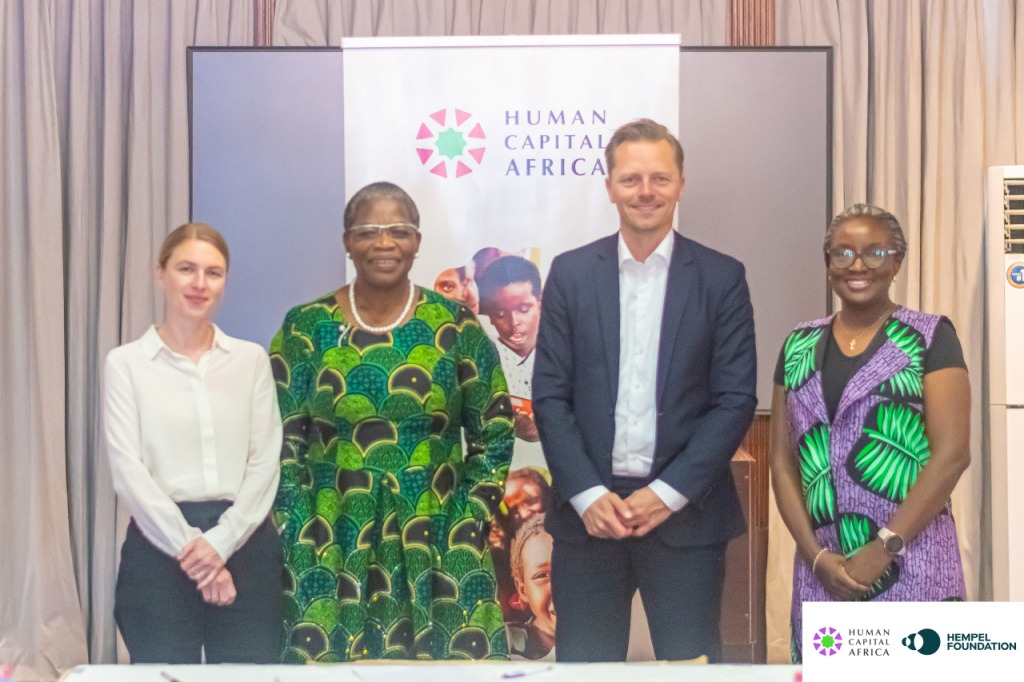
She said this after her organisation, Human Capital Africa, sealed a two-year partnership with the Hempel Foundation to strengthen political commitment, accountability, and data-driven reform for foundational learning across sub-Saharan Africa.
“We already know what works to get children learning — what Africa needs now is the political will, the discipline, and the partnerships to take those solutions to scale.
“Foundational learning is achievable when governments lead decisively, when accountability is clear, and when the private sector and philanthropy step up alongside them.
“This partnership between the Hempel Foundation and Human Capital Africa is one more example of what collaboration can do when it is anchored in evidence, transparency, and a shared belief that every African child deserves the chance to learn,” the activist stated.
The collaboration between both parties was struck at the 2025 ADEA Triennale. The initiative underscores a shared commitment to ensuring that every child in Africa learns to read, write, and count by age ten, a milestone that lays the foundation for all future learning and human capital development.
Africa is home to the world’s fastest-growing youth population, yet nine out of ten children in sub-Saharan Africa cannot read or do basic mathematics by age 10.
This learning crisis limits opportunity, deepens inequality, and threatens the continent’s economic potential, with the World Bank estimating a global loss of $21 trillion in lifetime earnings in present value.
The HCA–Hempel Foundation partnership seeks to tackle this challenge by embedding foundational learning at the heart of education systems, fostering stronger political leadership, institutional accountability, and evidence-based decision-making through the use of data in advocacy, policy, and planning.
The partnership will drive system-wide transformation across Africa by strengthening political leadership, deepening accountability, and reinforcing the institutions that sustain lasting reform.
At the policy level, it will build and sustain high-level political momentum by engaging Heads of State, Ministers of Education and Finance, and other senior leaders to position foundational learning as a top development priority.
A core pillar of this effort will be the strengthening of the African Foundational Learning Ministerial Coalition—a minister-led platform for peer learning, collaboration, and mutual accountability.
Complementing this advocacy focus, the partnership will support governments, in Malawi and Uganda, to embed data use and accountability at the system and district levels. By applying tools such as the Adoption Tracker and FLAT, it will strengthen monitoring, promote evidence-based decision-making, and ensure that lessons from the classroom inform policy at every level.
“Accelerating progress in children’s learning requires strong political leadership, accountability, and the smart use of data and evidence.
“Through our partnership with Human Capital Africa, we aim to strengthen all three — helping governments place foundational learning at the heart of national policies, track progress more effectively, and translate data into tangible improvements in classrooms,” the chief executive of Hempel Foundation, Mr Anders Holm, stated.
Education
WAEC Releases 2026 WASSCE Results, 61.54% Candidates Pass
By Adedapo Adesanya
The West African Examinations Council (WAEC) has released the results of the 2026 West African Senior School Certificate Examination (WASSCE) for school candidates, with 61.54 per cent of candidates obtaining credits in at least five subjects, including English Language and Mathematics.
The Head of WAEC’s Nigeria National Office, Mr Amos Dangut, announced the results at a press briefing in Lagos on Wednesday.
Mr Dangut said 1,200,514 candidates met the benchmark for admission to higher institutions, out of the 1,950,726 candidates who sat the examination nationwide, held between April 24 and June 19.
He said 102,708 examiners were engaged in the marking exercise held at 88 marking venues across the country between 2 July and 20 July.
“Today, I am happy to inform you that all the processes leading to the release of results have been completed. It is now my pleasure to announce the release of the results of candidates who sat the WASSCE for School Candidates, 2026 in Nigeria,” he said, directing candidates to the agency’s portal to access their results.
“UPDATE: 2026 WASSCE (SC) results have been released. Generate your PIN at waec.org and check your results now on waecdirect.org,” the examination body said, noting that candidates must obtain their Serial Number and PIN before they can check their results.
To generate the required credentials, candidates are expected to visit WAEC’s official website and select the “Serial Number and PIN” option at the top of the page.
They are then required to select the appropriate examination year and diet, enter their examination number and National Identification Number (NIN), and ensure that the NIN provided is the same one used during registration for the examination.
Candidates must also provide their email address and phone number to receive a One-Time Password (OTP).
After entering the OTP, candidates can recover their Serial Number and PIN, which they can subsequently use to check their results through WAEC Direct.
Education
Groups Tutor Female Students About Risks Associated With Shisha, Vaping
By Aduragbemi Omiyale
Over 200 senior students of Cleggs Girls High School, Surulere, Lagos, were on July 23, 2026, engaged in practical knowledge about the risks associated with smoking, vaping, and shisha.
This engagement was made possible through a collaboration between Breathe Life Foundation and Teach Nigeria Fellow.
Participants were students aged 15–19 years. They were also informed about the misconception that shisha is a safer alternative to cigarettes or other substances.
Through an engaging and interactive discussion, students explored the influence of peer pressure and learned practical strategies for making healthier, more informed lifestyle choices.
They also gained a better understanding of common environmental triggers of asthma and other respiratory conditions, including cigarette smoke, generator fumes, bush burning, mosquito coil smoke, candles, charcoal, and firewood.
The session highlighted an important reality: young people may not always recognise how seemingly routine lifestyle choices and environmental exposures can gradually affect their respiratory health, quality of life, and long-term wellbeing.
For Breathe Life Foundation, this reinforces the importance of shifting the conversation from treatment to prevention through awareness and education.
By equipping young people with the knowledge to identify risks and make healthier choices early, the foundation is helping to build a generation that is more conscious of – and better prepared to protect – its respiratory health.
The organisation said it is dedicated to advancing respiratory health, an often-neglected public health priority. Healthy lungs are essential to life, yet respiratory diseases remain among the world’s leading causes of death and disability, even though many are preventable and treatable.
Education
Dangote Cement Distributes Essential Learning Aids to Kogi Pupils
By Aduragbemi Omiyale
As part of its Corporate Social Responsibility (CSR) schemes, the Obajana Plant of Dangote Cement Plc has distributed some educational materials to some pupils in Kogi State.
The items shared to the beneficiaries included school bags, exercise books, writing materials, water bottles, and other essential learning aids aimed at enhancing the learning experience of the pupils and preparing them for the next academic session.
The General Manager for the Social Performance Department of Dangote Cement at Obajana Plant, Mr Ademola Adeyemi, said the materials were donated days after Dangote Cement distributed similar education materials to pupils in public schools in its catchment communities of Oyo, Iwaa, Obajana and Apata; and commissioned a multi-million-naira hospital in Obajana, which added to the growing list of social investments that includes an earlier hospital project in Iwaa and Oyo Communities.
He noted that, over the years, the company has invested billions of naira in a wide range of social programmes for host communities, including empowerment programmes, road construction, and potable water projects, and it remains resolute in its commitment to sustaining and expanding its interventions.
He noted that the company’s corporate social responsibility programmes are aligned with government development priorities and are implemented through sustained, mutually beneficial partnerships.
“The intervention was informed by findings from a needs assessment conducted by Dangote Cement. During the assessment, it was observed that several pupils attended school without school bags, while others carried their books by hand. It was also discovered that many students lacked essential learning materials such as exercise books, pens, pencils, and other basic learning materials,” the cement firm said.
The Head Teacher of UBE LGEA School, St. Luke Model II, Adankolo, Lokoja Local Government Area, Mr Abubakar Sanni, expressed profound appreciation to the management of Dangote Cement for the gesture.
The Head Teacher expressed gratitude to the Group President of the conglomerate, Aliko Dangote, for extending the company’s educational support programme beyond its host and impacted communities to schools located at the state headquarters.
The beneficiaries, school management, parents, and community stakeholders expressed gratitude to Dangote Cement for the timely intervention and prayed for the continued growth and success of the company in its efforts to improve lives and support sustainable community development.